Artwork
川豊春画 「浮絵境町葺屋町顔見世夜芝居之図」|Perspective Print (Uki-e) of the Theaters in Sakaichō and Fukiyachō on Opening Night
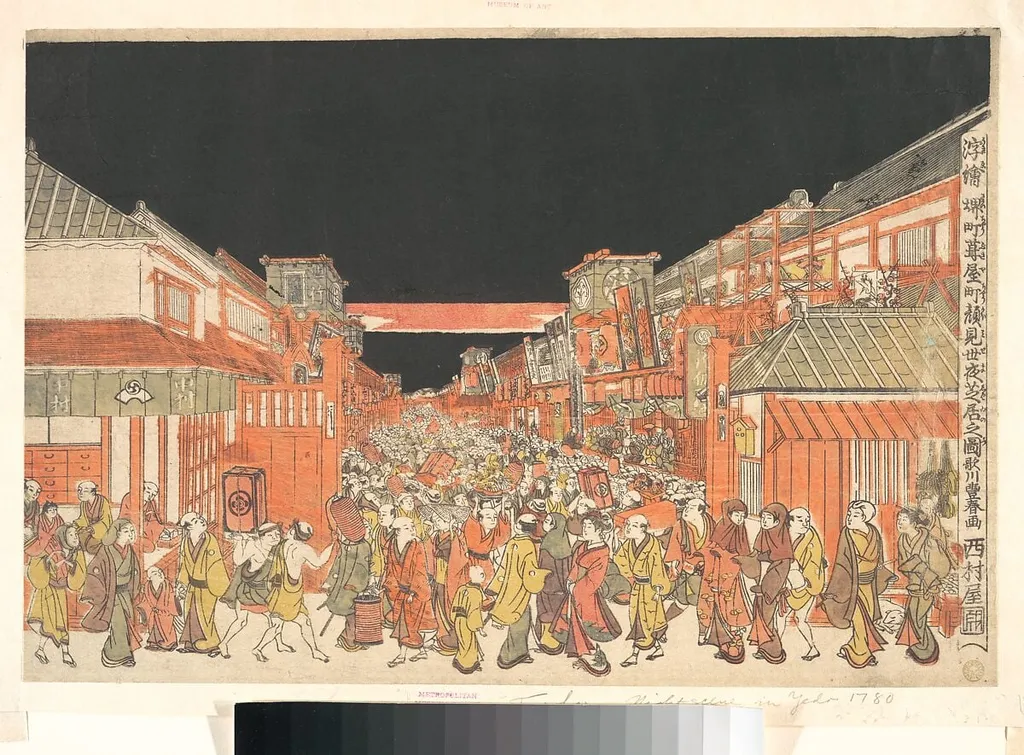
川豊春画 「浮絵境町葺屋町顔見世夜芝居之図」|Perspective Print (Uki-e) of the Theaters in Sakaichō and Fukiyachō on Opening Night is an ink print by the Romanticist artist Utagawa Toyoharu. It dates from 1780 and is held in the collection of the Metropolitan Museum of Art.
About this work
Overview
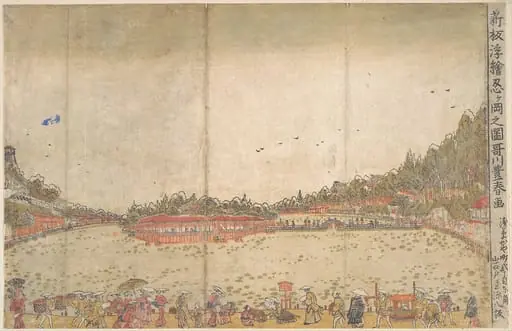
This horizontal woodblock print, created around 1780 by Utagawa Toyoharu, captures a bustling night scene in Edo’s theater districts of Sakaichō and Fukiyachō.
This horizontal woodblock print, created around 1780 by Utagawa Toyoharu, captures a bustling night scene in Edo’s theater districts of Sakaichō and Fukiyachō. Executed in nishiki-e technique with ink and color on paper, it employs linear perspective to simulate spatial depth—a rare feature in Japanese prints of the period. The composition frames a crowded street under a dark night sky, with illuminated buildings and theatrical banners suggesting a festive opening night.
Subject & Meaning
The scene depicts the lively atmosphere of Edo’s entertainment quarter on the opening night of a kabuki performance. Crowds of townspeople in seasonal attire move along the street, drawn by the spectacle. Banners and signs advertise actors and plays, emphasizing the commercial and social vitality of urban theater culture. The print functions as both a record of public life and a promotional artifact, reflecting the popularity of kabuki among commoners.
Technique & Style
Toyoharu applies Western-style one-point perspective to create an illusion of receding space, a technique newly adapted into ukiyo-e. Bold outlines define figures and architecture, while layered colors—deep blues overhead, vivid reds and yellows on banners—enhance the nocturnal drama. The print’s ōban format allows for expansive detail, and the careful registration of multiple blocks achieves subtle gradations in tone and hue, characteristic of mature nishiki-e.
History & Provenance
Produced circa 1780, the print emerged during a period when ukiyo-e artists began experimenting with perspective to depict urban spectacle. It was likely commissioned by a publisher to commemorate a popular theater opening. The print entered The Metropolitan Museum of Art’s collection through documented acquisitions in the 20th century, preserving its original condition and provenance within the context of Edo-period print culture.
Context
In late 18th-century Edo, kabuki theaters were central to urban leisure, drawing audiences from all classes. The proliferation of printed images like this one coincided with rising literacy and consumer culture. Toyoharu’s use of perspective reflected broader interest in foreign techniques, introduced via Dutch trade, yet adapted to Japanese visual traditions. This print situates theater-going as a defining experience of Edo’s civic identity.
Legacy
Toyoharu’s integration of perspective influenced later ukiyo-e artists, including his pupil Toyokuni, and helped expand the genre’s narrative scope. While not widely copied, this print remains a key example of how Japanese artists synthesized external visual ideas without abandoning本土 aesthetics. It continues to inform scholarly understanding of Edo’s visual culture and the evolution of spatial representation in printmaking.
Artist & collection


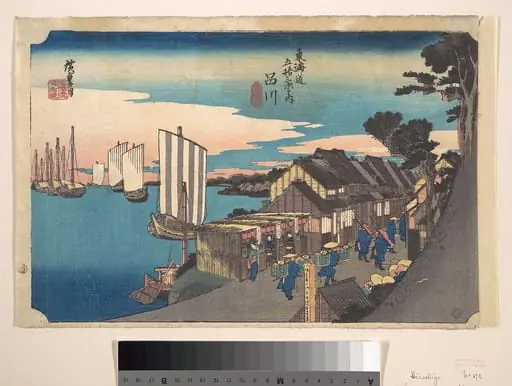 東海道五十三次之内 品川 日之出|Daybreak at Shinagawa
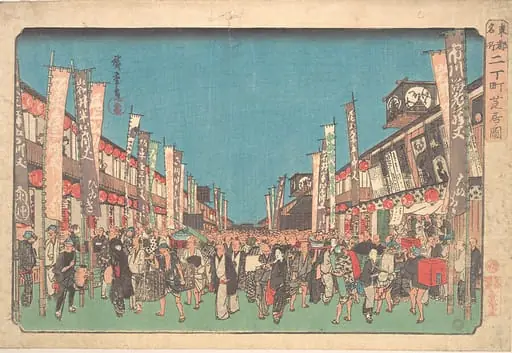 東都名所 二丁町芝居の図|Sakai Cho Shibai no Zu
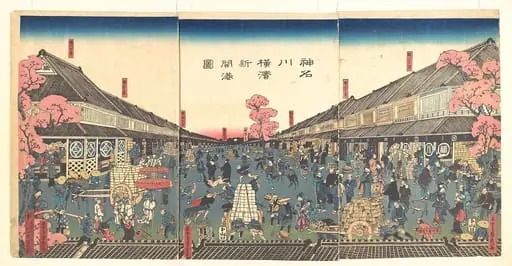 歌川五雲亭貞秀画 『神名川横浜新開港圖』|The Newly Opened Port of Yokohama in Kanagawa Prefecture (Kanagawa Yokohama shinkaikōzu)
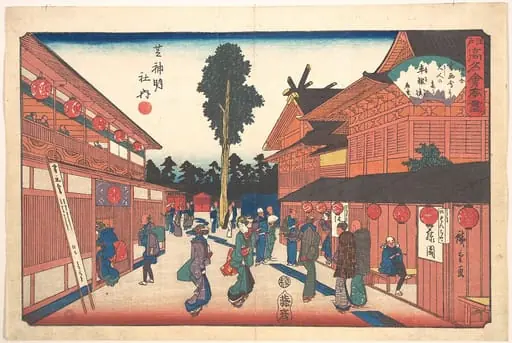 江戸高名会亭尽 芝神明社内 車轍楼|Shiba Shinmeisha Uchi (Shatetsu-ro)
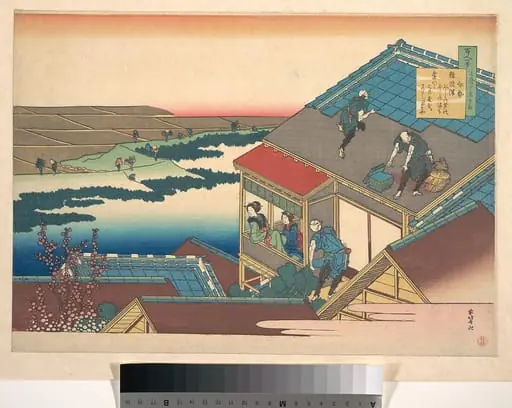 百人一首 うばがゑとき 伊勢|Poem by Ise, from the series One Hundred Poems Explained by the Nurse (Hyakunin isshu uba ga etoki)
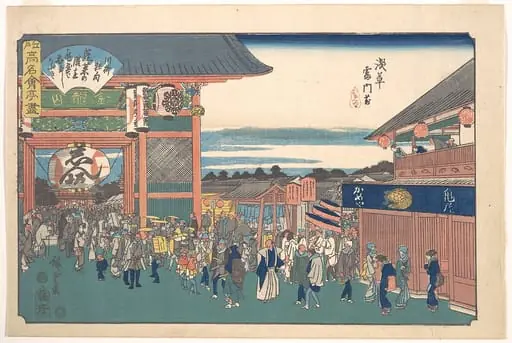 江戸高名会亭尽 浅草雷門前 かめや|Asakusa Kaminarimon Mae (Kameya)
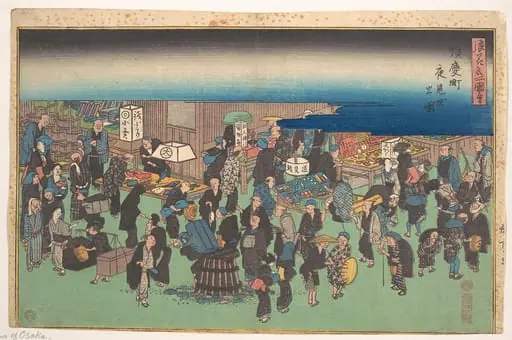 浪花名所図会 順慶町夜見世の図|Junkei machi Yomise no Zu
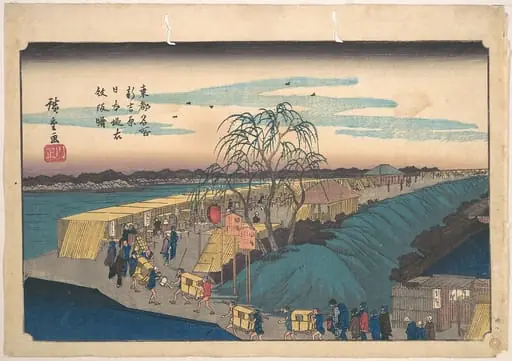 東都名所 新吉原日本堤衣紋坂曙|Shin Yoshiwara Nihon Tsutsumi Emonzaka Akatsuki