Artwork
Cooling Off at Ryōgoku Bridge in Edo, a Pentaptych (Edo Ryôgoku suzumi no zu, gomai tsuzuki)
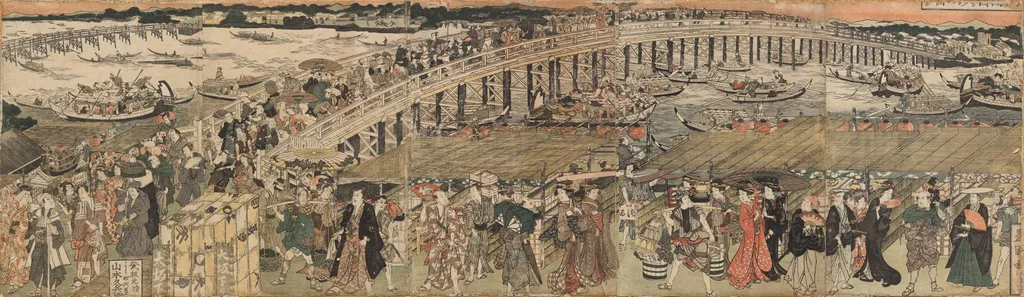
Cooling Off at Ryōgoku Bridge in Edo, a Pentaptych (Edo Ryôgoku suzumi no zu, gomai tsuzuki) is a print by the Romanticist artist Utagawa Toyokuni I. It dates from 1811 and is held in the collection of the Cleveland Museum of Art. This five-panel woodblock print, created in 1811 by Utagawa Toyokuni, depicts a summer evening scene along the Ryōgoku Bridge in Edo.
About this work
Overview
This five-panel woodblock print, created in 1811 by Utagawa Toyokuni, depicts a summer evening scene along the Ryōgoku Bridge in Edo. Designed as a continuous composition, the panels unfold to show a crowded riverside promenade where residents seek relief from the heat. The work exemplifies the ukiyo-e tradition of capturing everyday urban life with precision and narrative flow.
Subject & Meaning
The title references the custom of 'suzumi'—cooling off during hot nights—reflecting seasonal rituals in Edo society.
The scene portrays Edo citizens from various social classes gathered on the bridge and riverbanks, engaging in leisure activities like fanning themselves, drinking tea, and watching boats. The title references the custom of 'suzumi'—cooling off during hot nights—reflecting seasonal rituals in Edo society. The composition emphasizes communal experience over individual drama, highlighting shared rhythms of urban life.
Technique & Style
Toyokuni employed fine linework and muted, layered pigments typical of early 19th-century ukiyo-e. The pentaptych format allowed for a panoramic view, with figures arranged in rhythmic groupings that guide the eye across the panels. Subtle gradations in color and careful attention to clothing textures convey depth and social distinction without overt realism.
History & Provenance
The print was produced during Toyokuni’s peak years as a leading ukiyo-e artist, commissioned for commercial distribution. It entered the Cleveland Museum of Art’s collection in the 20th century through established Japanese print acquisitions. Its survival in near-complete condition is rare, as multi-panel prints were often separated or damaged over time.
Context
Ryōgoku Bridge was a well-known public space in Edo, especially popular in summer for its open air and proximity to the Sumida River. The print reflects the city’s growing culture of public recreation and seasonal customs among townspeople. Similar scenes by Toyokuni and his contemporaries helped define the visual language of Edo’s urban leisure.
Legacy
The pentaptych stands as a representative example of Toyokuni’s ability to translate daily life into cohesive, large-scale compositions. While not widely reproduced today, it remains a key reference for understanding how ukiyo-e artists structured narrative space and documented the social fabric of Edo during its urban zenith.
Artist & collection

Artist
Toyokuni was a born showman who made sure the energy of Edo’s kabuki stage never faded on paper.

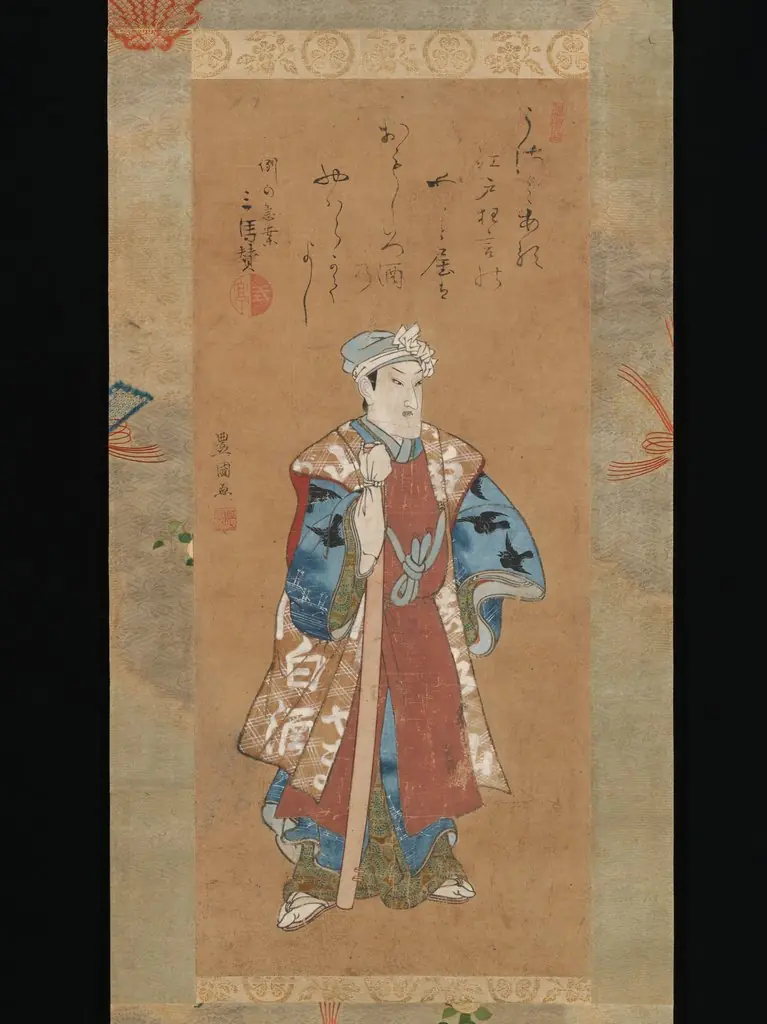 Bandō Mitsugorō II as Shinbei in the Kabuki Play "Sukeroku"
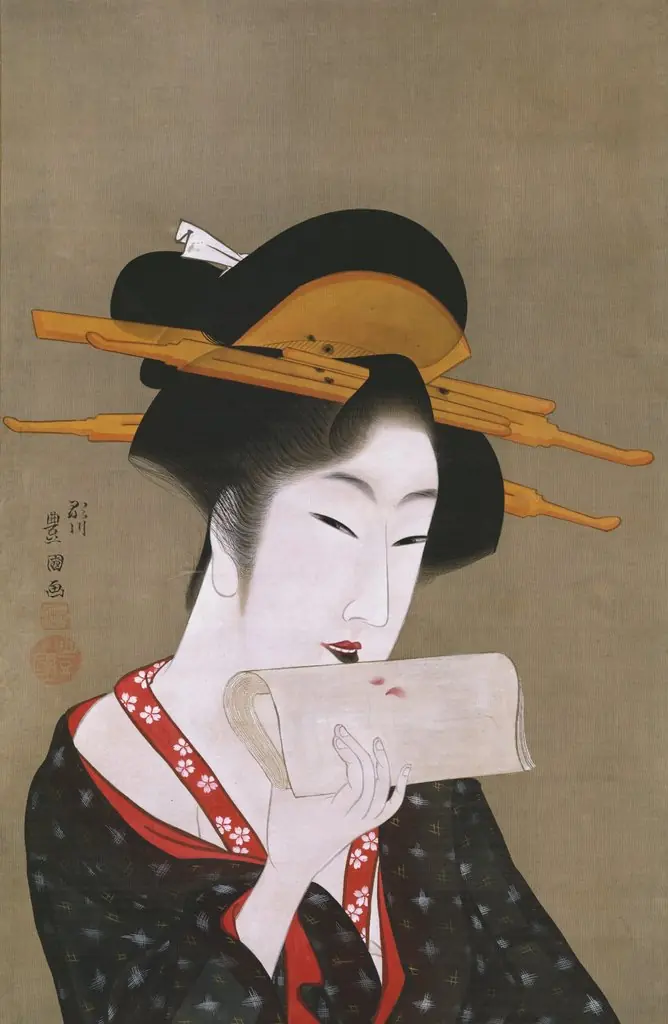 Beauty Blotting Her Lip Rouge
 Portrait of Kinokuniya Bunzaemon
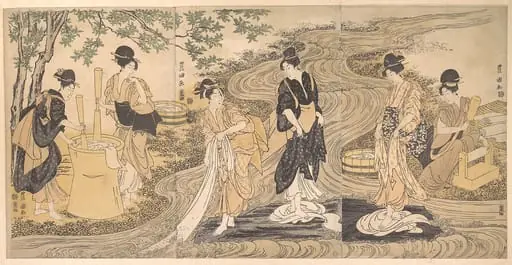 Untitled
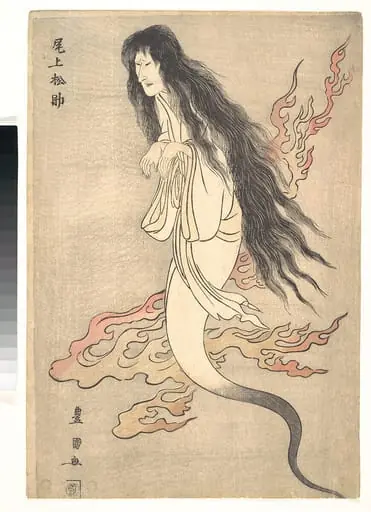 Tokaido Yotsuya Kaidan|Onoe Matsusuke as the Ghost of the Murdered Wife Oiwa, in "A Tale of Horror from the Yotsuya Station on the Tokaido Road"
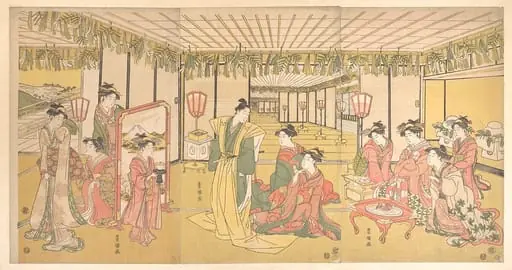 Untitled
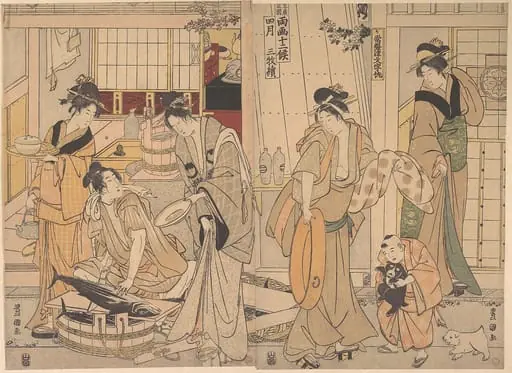 Untitled
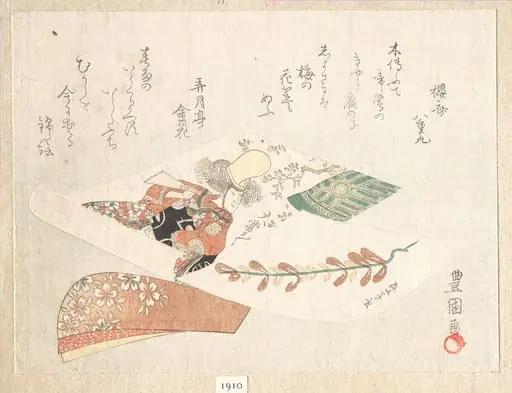 娘道成寺図の錦絵|Print of a Kabuki Dancer from the Maiden of the Dōjōji Temple (Musume Dōjōji)
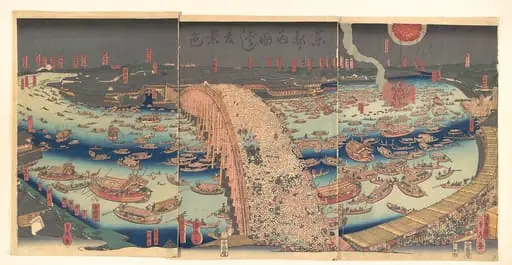 Tōtō Ryōgokubashi natsu keshiki|Panoramic View of Ryōgoku Bridge in the Summer
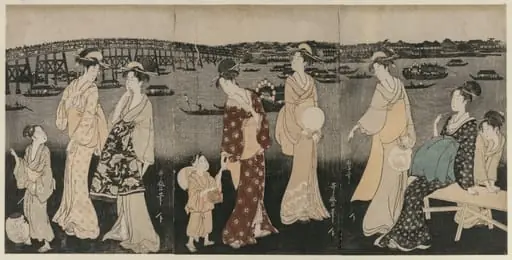 Enjoying the Evening Cool Along the Sumida River
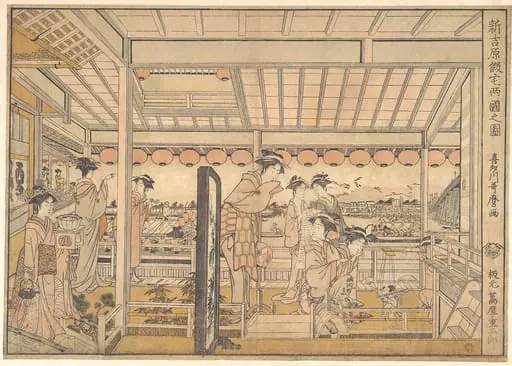 新吉原仮宅両国之図|Picture of the Temporary Lodgings of the New Yoshiwara Pleasure Quarter at Ryōgoku (Shin Yoshiwara Karitaku Ryogoku no zu)
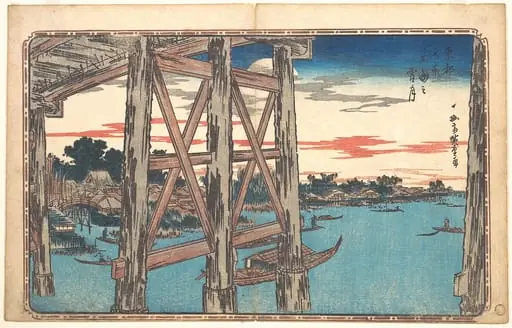 Ryogoku no yoizuki|東都名所 両国之宵月|Twilight Moon at Ryōgoku Bridge
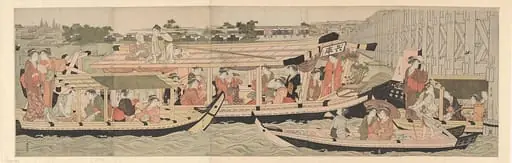 新大橋橋下の涼み船|Pleasure Boats on the Sumida River beneath Shin-Ōhashi Bridge
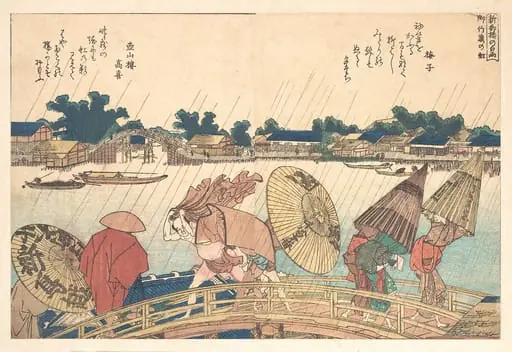 新柳橋の白雨|Shower at the New Yanagi Bridge
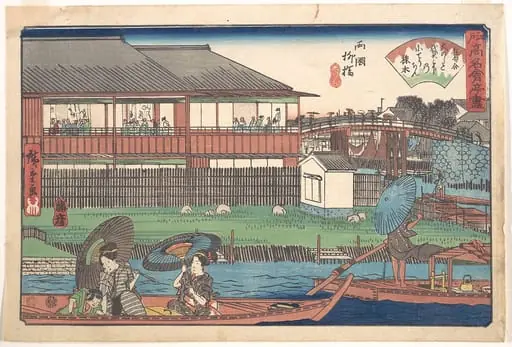 江戸高名会亭尽 両国柳橋 大のし|The Ono at Ryogoku Yanagibashi
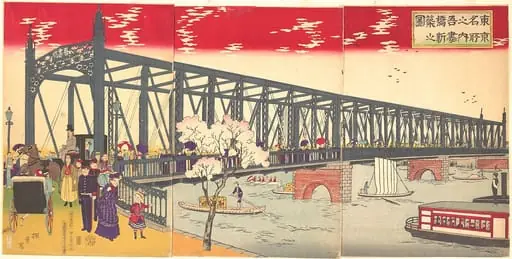 東京名所之内吾妻橋新築之図|Illustration of the Opening of Azuma Bridge in Tokyo (Tokyo meisho no uchi azuma bashi shinchiku no zu)