Artwork
Miyozaki no shūgetsu|Autumn Moon at Miyozaki
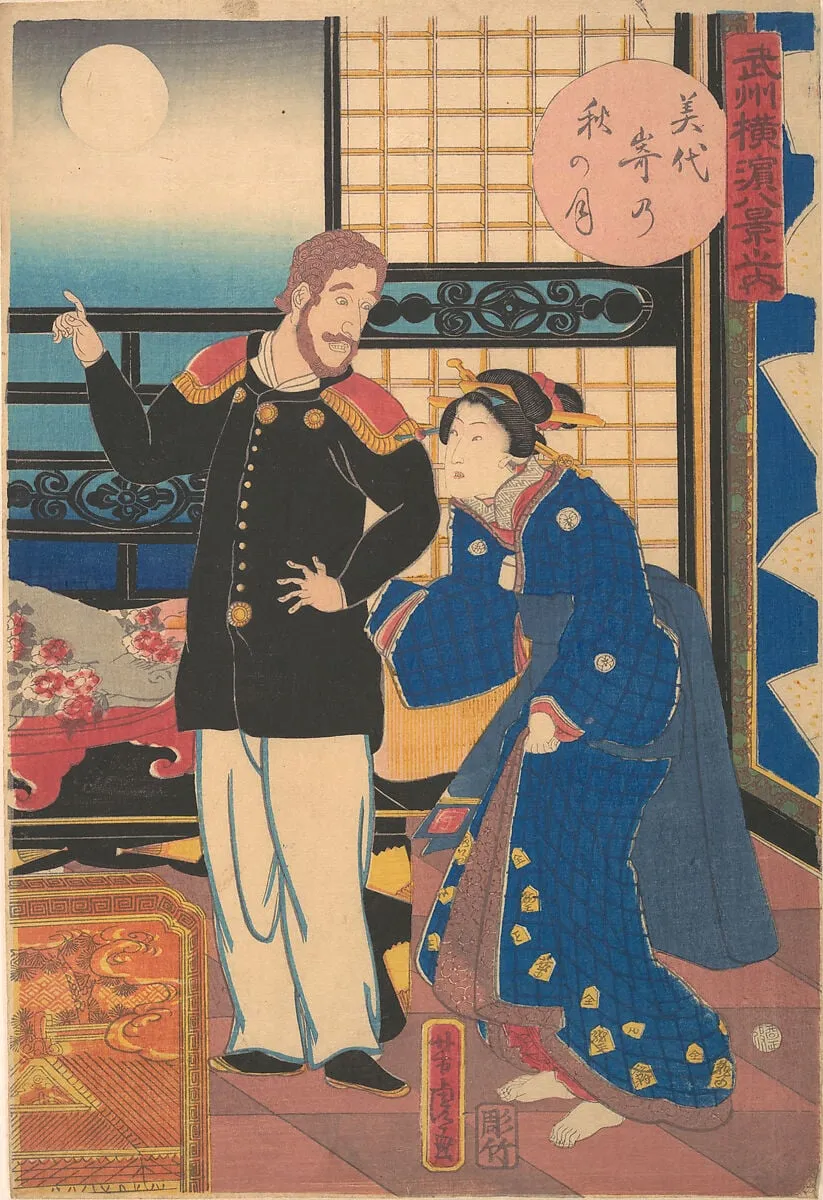
Miyozaki no shūgetsu|Autumn Moon at Miyozaki is an ink print by the Impressionist artist Utagawa Yoshitora. It dates from 1 and is held in the collection of the Metropolitan Museum of Art.
About this work
Overview
Miyozaki no shūgetsu is a woodblock print by Utagawa Yoshitora, produced in the late Edo period. Executed in ink and color on paper, it belongs to the ukiyo-e tradition of Japanese printmaking. The work is part of the collection at The Metropolitan Museum of Art, where it is preserved as an example of 19th-century Japanese graphic art, reflecting both domestic intimacy and seasonal symbolism.
Subject & Meaning
The title references a famous viewing spot, implying a shared contemplation of nature’s transience, a theme central to Japanese aesthetics and seasonal poetry.
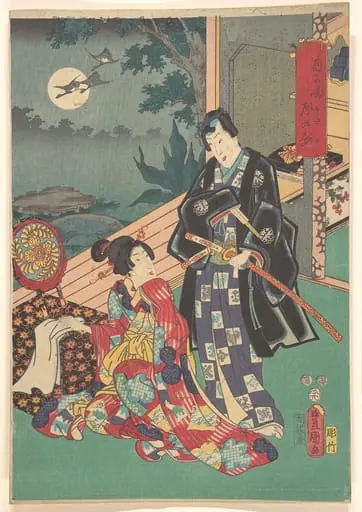
The scene portrays a man and woman in a quiet interior moment, their postures suggesting silent communication rather than action. The man, gesturing toward the window, and the woman, seated in stillness, may be responding to the autumn moon visible beyond. The title references a famous viewing spot, implying a shared contemplation of nature’s transience, a theme central to Japanese aesthetics and seasonal poetry.
Technique & Style
The print employs fine linework and restrained color palettes typical of late Edo woodblock printing. Soft gradients in the robes, precise rendering of textile patterns, and the grid-patterned window demonstrate technical precision. The composition balances figures against architectural elements, using spatial depth and minimal background detail to focus attention on the figures’ quiet exchange.
History & Provenance
Created in the 1860s, the print was likely produced for a broad urban audience interested in domestic scenes and seasonal motifs. It entered the Metropolitan Museum of Art’s collection through documented acquisitions of Japanese prints in the early 20th century, aligning with broader Western interest in ukiyo-e during that period.
Context
During the late Edo period, domestic interiors became popular subjects in ukiyo-e, reflecting shifting social norms and urban life. Prints like this one often blended everyday moments with poetic references to nature, serving both decorative and cultural functions. The inclusion of seasonal imagery, such as the autumn moon, connected private scenes to broader literary and philosophical traditions.
Legacy
Though not among Yoshitora’s most widely reproduced works, Miyozaki no shūgetsu exemplifies the quiet elegance of late Edo printmaking. It contributes to the understanding of how artists encoded emotional nuance within domestic settings, influencing later collectors and scholars interested in the intersection of daily life and poetic symbolism in Japanese art.
Artist & collection

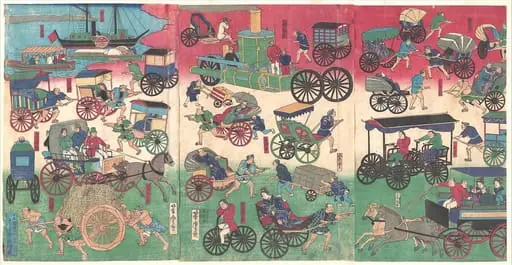 Untitled
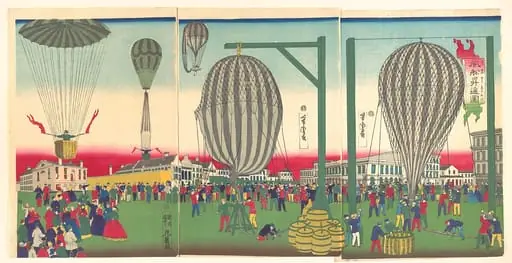 風船昇遥図|Illustration of a Balloon Ascending (Fūsen shōyō no zu)
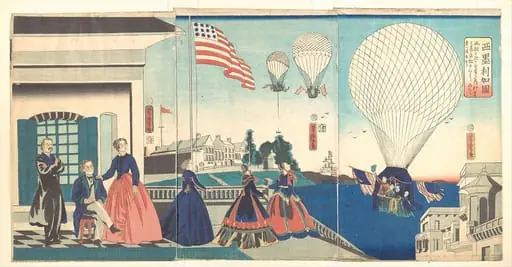 「亜墨利加國」|“America”: Enjoying Hot Air Balloons
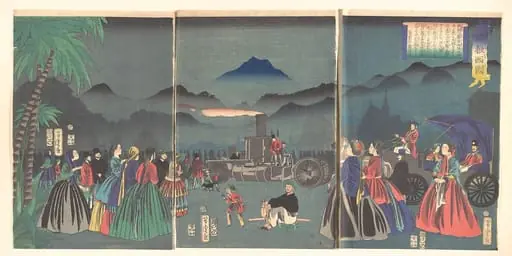 仏蘭西国|France (furansukoku)
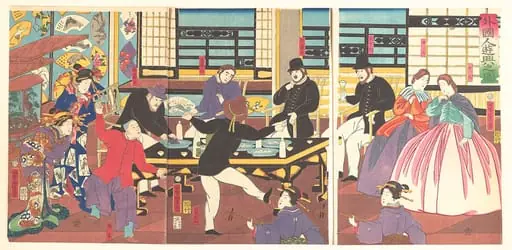 歌川義虎画 『外国人遊興之図』|Foreigners Enjoying a Party (Gaikokujin yūkyō no zu)
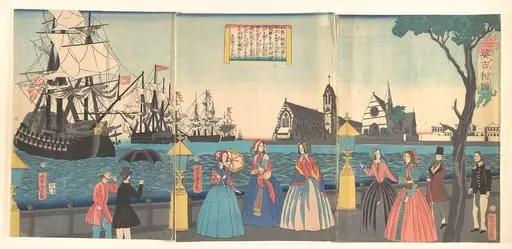 英吉利国|England (Igirisukoku)
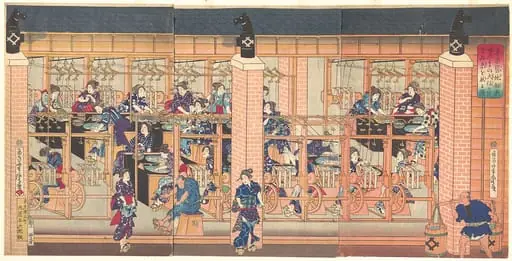 『東京築地舶来ぜんま い大仕かけきぬ糸をとる図』|Imported Silk Reeling Machine at Tsukiji in Tokyo
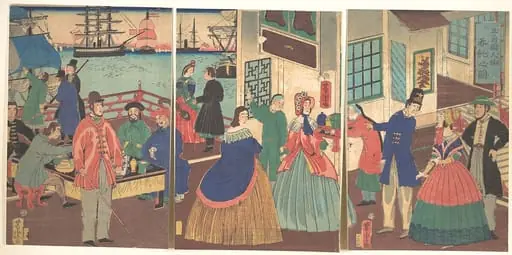 歌川芳虎画 『五箇国人物 呑飥之図』|People of the Five Nations Drinking and Eating (Gokakoku jinbutsu dontaku no zu)
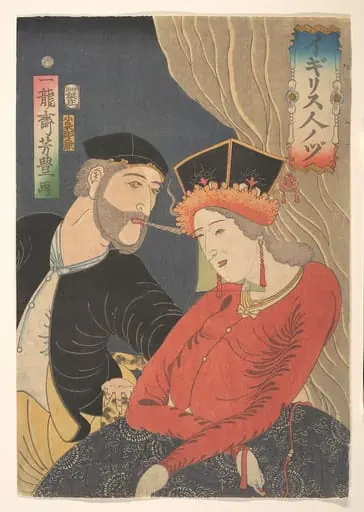 英吉利人之図|Illustration of English People (Igirisujin no zu)
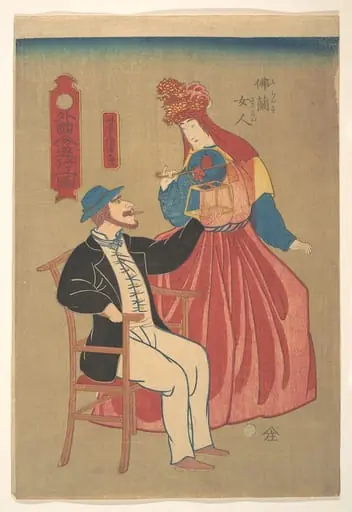 Furansu nyōjin|French Housewife and Her Husband
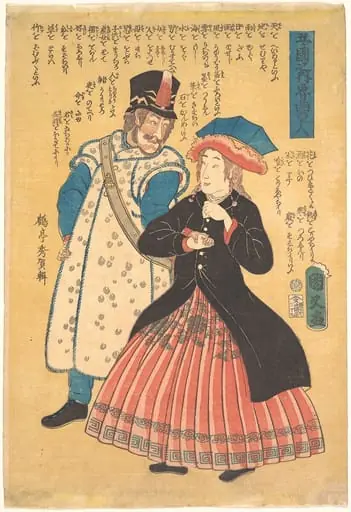 Roshiajin|Russians
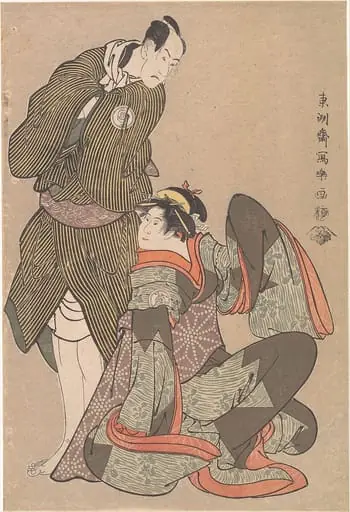 東洲斎写楽画 三代目坂東彦三郎の帯屋長右衛門と四代目岩井半四郎の信濃 屋お半 『二本松陸奥生長』|Bandō Hikosaburō III in the Role of Obiya Chōemon and Iwai Hanshiro IV in the Role of Shinanoya Ohan, from the Play “Nihonmatsu Michinoku sodachi”
 Untitled
 Untitled
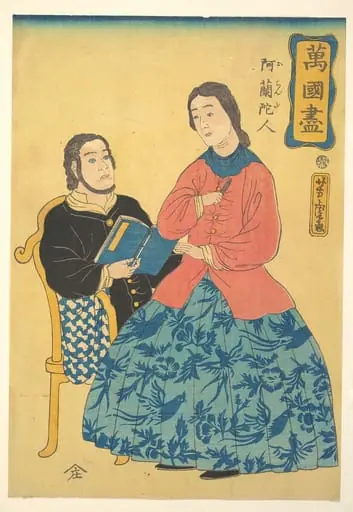 Orandajin|Dutchmen
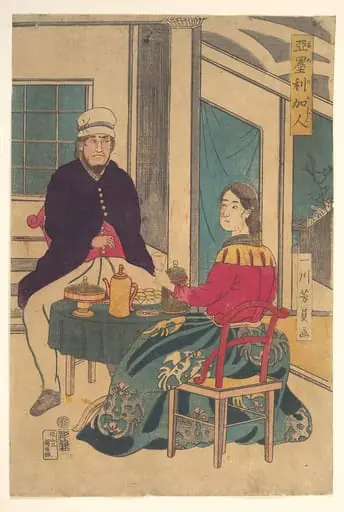 亜墨利加人|Amerikajin
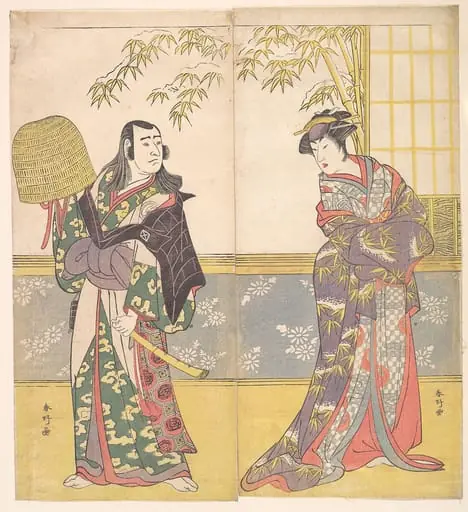 勝川春好画 三代目澤村宗十郎 三代目佐野川市松 |Kabuki Actors Sawamura Sōjūrō III and Sanogawa Ichimatsu III in "A Courtesan’s Mirror for the Eastern Provinces" (Keisei Azuma kagami)
![Nōgei no seiran|Returning Sails at Nōgei [American couple riding over the Nōgei Bridge], by Utagawa Yoshitora](https://artifactworldgallery.com/img/utagawa-yoshitora--nogei-no-seiran-returning-sails-at-nogei-american-couple-rid--332c5cab5263a5c5-w320.webp) Nōgei no seiran|Returning Sails at Nōgei [American couple riding over the Nōgei Bridge]
Nōgei no seiran|Returning Sails at Nōgei [American couple riding over the Nōgei Bridge]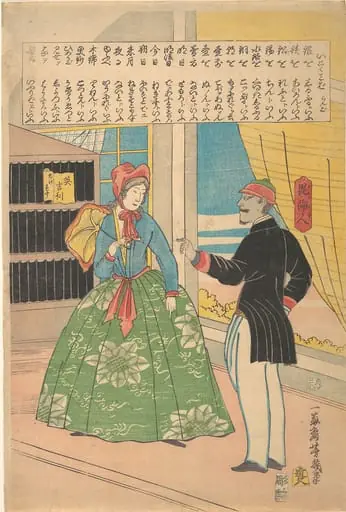 Igirisu to korombojin|English Woman with Black Man
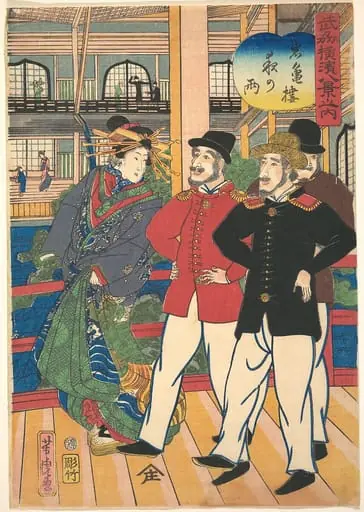 Gankirō yoru no ame|Night Rain at Gankirō