Artwork
Cottage with well
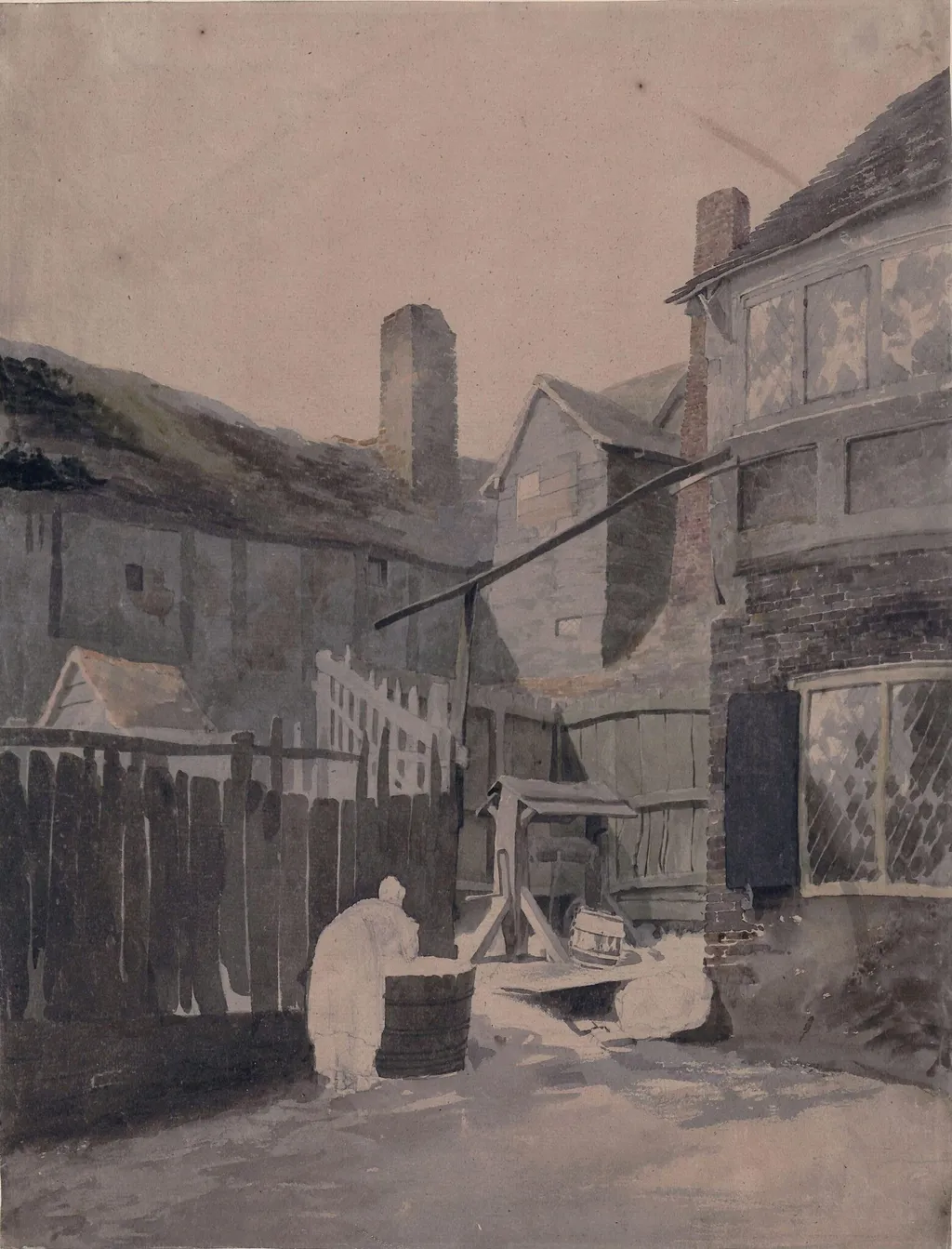
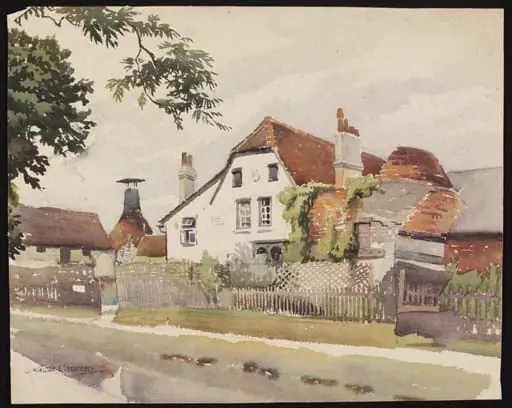
Cottage with well is a watercolor work on paper by the Romanticist artist Cornelius Varley. It dates from 1800 and is held in the collection of the Victoria and Albert Museum. This watercolour, left unfinished, presents a modest brick cottage beside a well enclosed by a simple wooden fence.
About this work
Overview
This watercolour, left unfinished, presents a modest brick cottage beside a well enclosed by a simple wooden fence. The composition places the well in the foreground, while the dwelling and surrounding landscape recede toward a horizon marked by trees and low hills. The scene is rendered in a muted palette that suggests early evening light.
Subject & Meaning
The work captures a rural domestic setting, emphasizing the everyday relationship between shelter and water source. The modest scale of the structures and the tranquil surrounding nature convey a sense of quiet self‑sufficiency, reflecting a common Romantic interest in the simplicity of countryside life.
Technique & Style
The artist employs layered washes of pink‑gray for the sky and varied greens and browns for foliage, creating atmospheric depth through tonal modulation. Warm earth tones define the brick cottage and well, while the unfinished areas reveal underlying sketches, illustrating the watercolour process of building form with translucent pigment.
History & Provenance
The piece is catalogued simply as a watercolour titled "Cottage with well"; no documented date, artist, or acquisition record accompanies it. Its unfinished state suggests it may have been a study or a work in progress that was never completed, a circumstance not uncommon among works of the Romantic period.
Artist & collection

Artist
Cornelius Varley, FRSA (21 November 1781 – 2 October 1873) was a British painter, mostly in watercolour, printmaker and optical instrument-maker. He invented the graphic telescope and the graphic microscope.

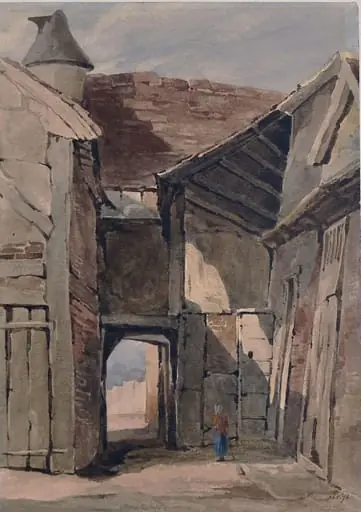 Old House, Bristol
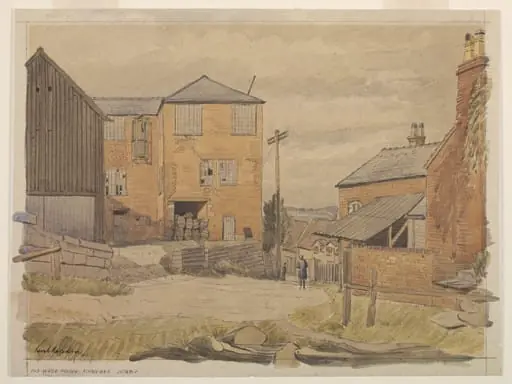 Old Warehouse, Ashbourne
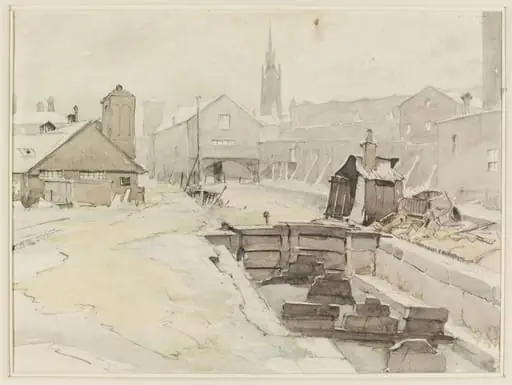 Manchester Ship Canal, Quay Street, Manchester
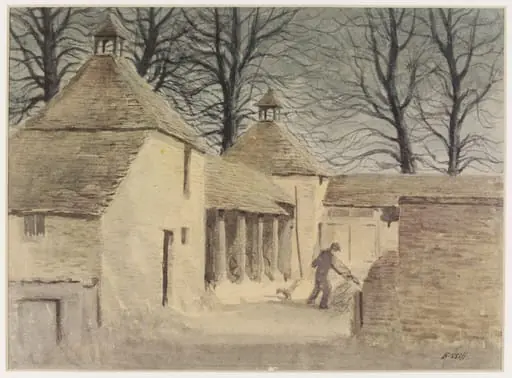 Double Dovecot, Williamstrip, Coln St. Aldwyn
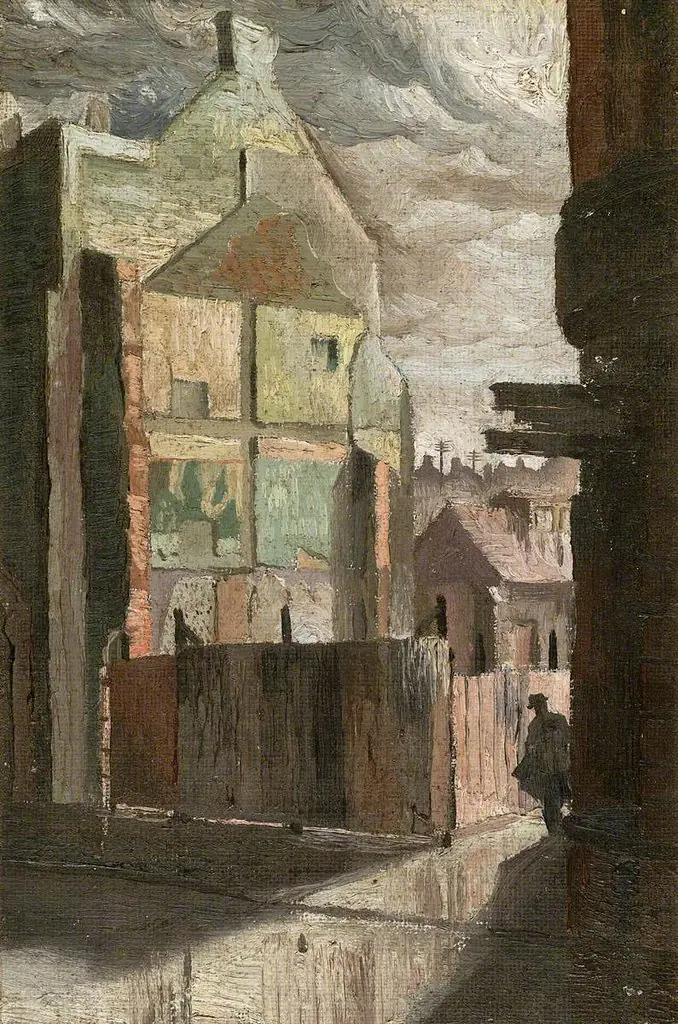 Cleared Site with Hoarding and a Figure
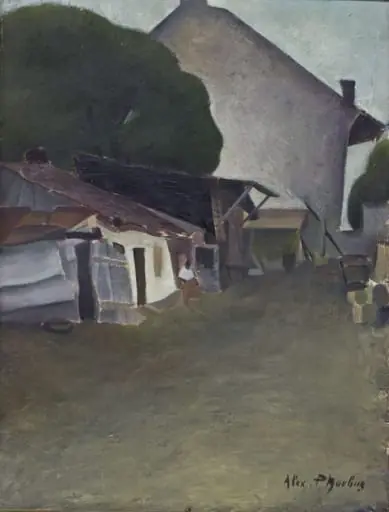 Peisaj rustic
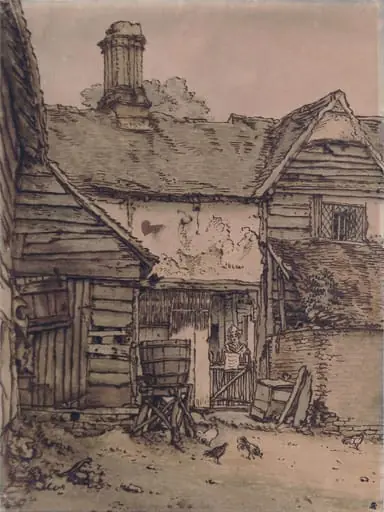 A Cottage Door
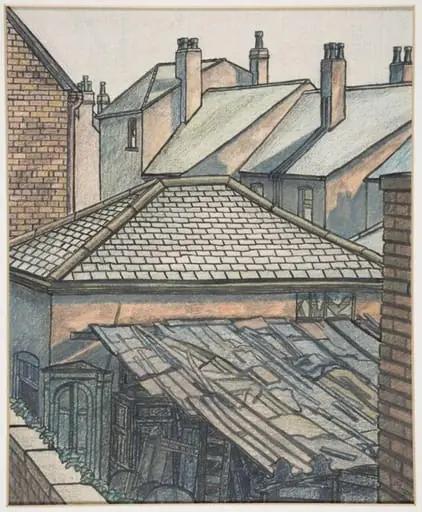 Cottages, Leeds
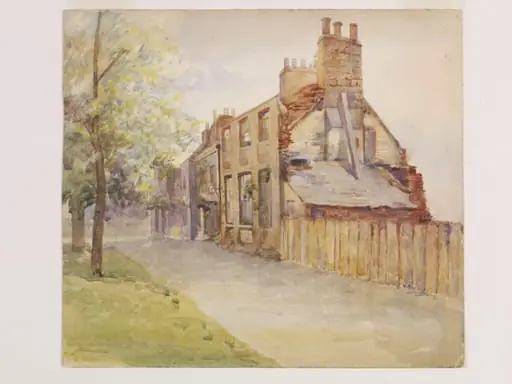 Old brick residences in the grounds of the South Kensington Museum (now the Victoria and Albert Museum)
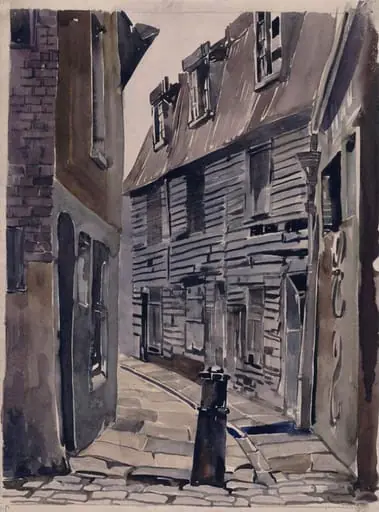 Wagstaff Buildings, Southwark
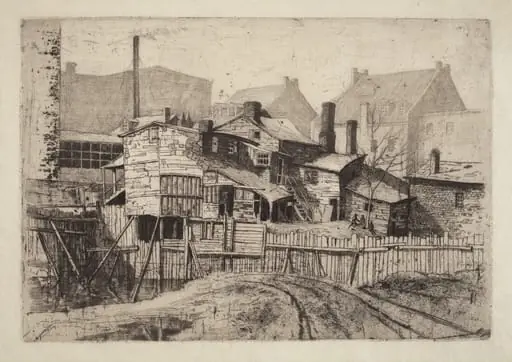 Untitled (Wooden House in City)
 Kilns and Maltings on the Canal Bank, Bishop's Stortford