Artwork
Barthelemy Tremblay
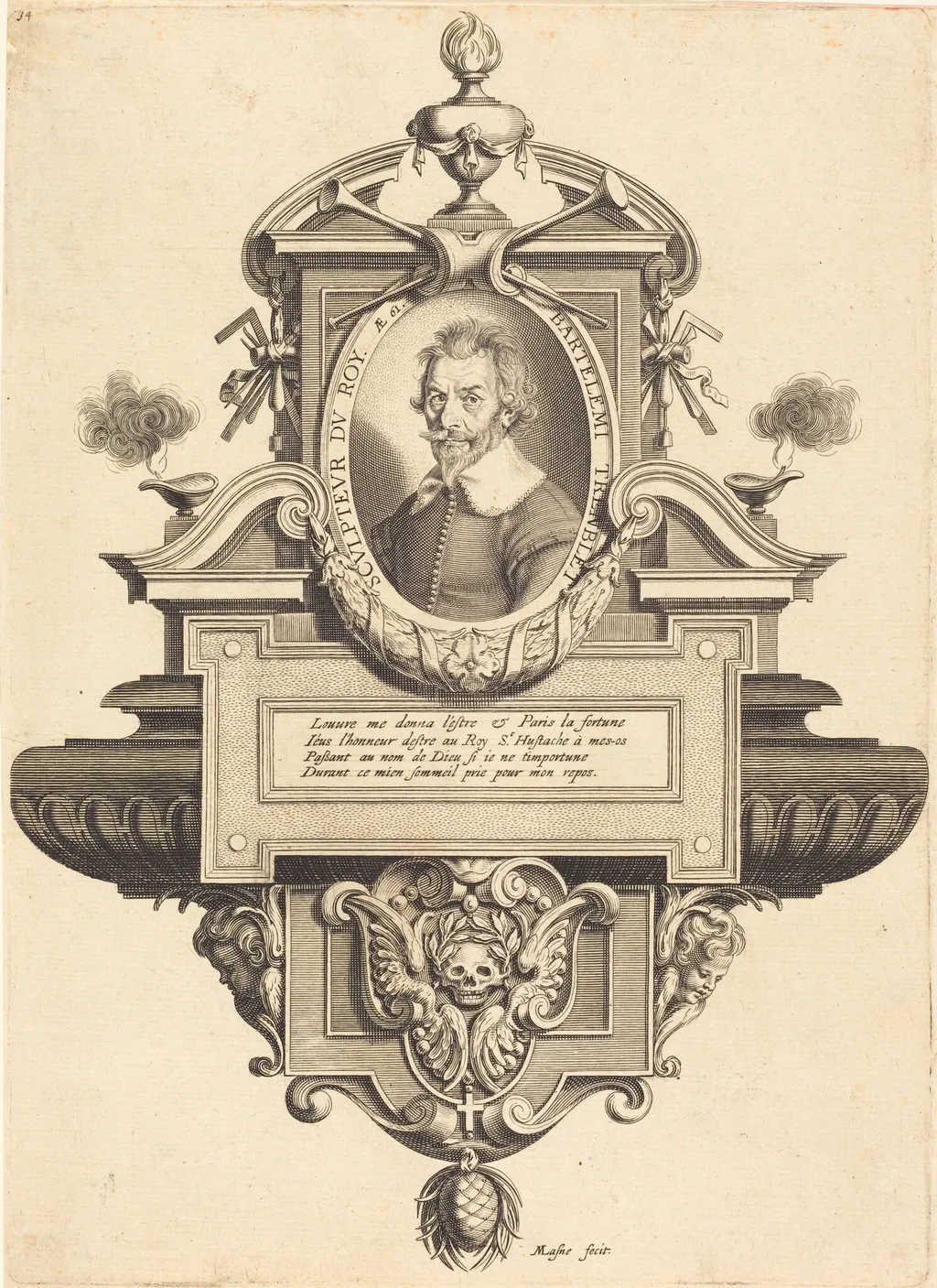
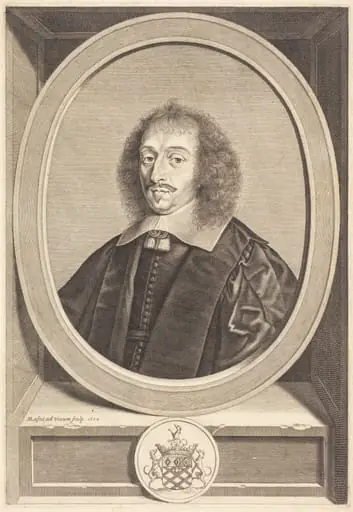
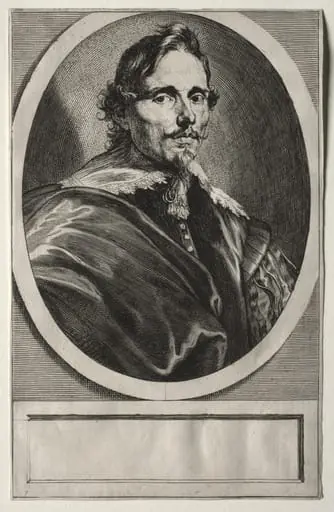
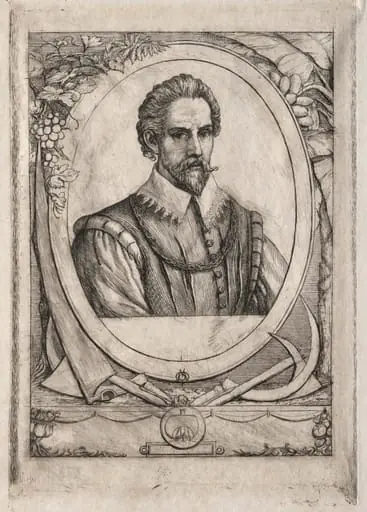
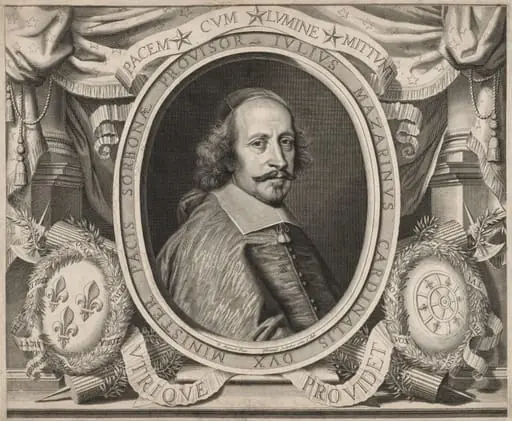
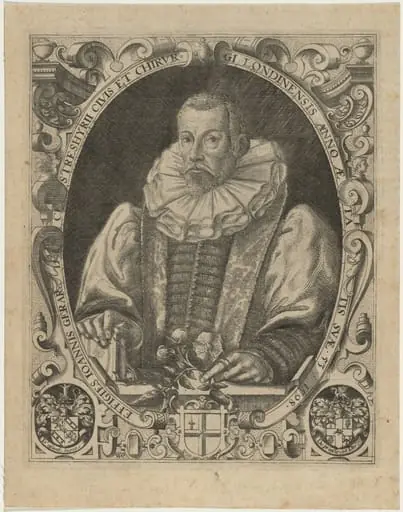
Barthelemy Tremblay is an ink print by the Baroque artist Michel Lasne. It dates from 1639 and is held in the collection of the National Gallery of Art.
About this work
Overview
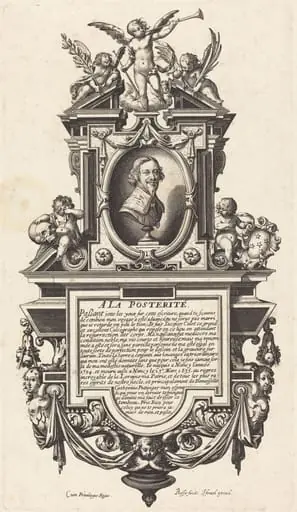
This 1639 engraving by Michel Lasne portrays Barthélemy Tremblay, a court official, in a three-quarter view on laid paper.
This 1639 engraving by Michel Lasne portrays Barthélemy Tremblay, a court official, in a three-quarter view on laid paper. The work is mounted on a support sheet and framed by an ornate border featuring symbolic motifs. Lasne, a French printmaker trained in the Netherlands, produced this portrait during his tenure as official engraver to Louis XIII, reflecting his role in documenting the French court’s elite.
Subject & Meaning
The sitter, Barthélemy Tremblay, is identified as 'Valet de Chambre du Roy,' a position of intimate access to the king. His composed expression and formal attire convey dignity, while the border’s imagery—skull with wings, crown, and cherubs with tools—juxtaposes mortality and authority. Such iconography, typical of Baroque portraiture, underscores the transient nature of power and the inevitability of death even for the highest-ranking servants of the crown.
Technique & Style
Lasne employed fine, precise lines characteristic of stippling and hatching to model the sitter’s features and fabric textures. The engraving’s tonal range is achieved through controlled ink density, enhancing the three-dimensionality of the face and clothing. The elaborate border, rendered with intricate detail, demonstrates Lasne’s skill in integrating decorative elements with portraiture, a hallmark of his style developed under Rubens and van Dyck.
History & Provenance
Created in 1639, the engraving was likely commissioned to commemorate Tremblay’s service at the French court. Lasne, established in Paris by 1621 and appointed royal engraver by 1633, produced numerous portraits of court figures. The work’s survival in good condition suggests it was preserved within royal or aristocratic collections, possibly as part of a series documenting court personnel.
Context
In early 17th-century France, portraiture served both commemorative and political functions. Engravings like this allowed the dissemination of courtly imagery beyond the palace walls. The fusion of vanitas symbols with royal titles reflects broader European trends where aristocratic identity was framed through moral and spiritual contemplation, aligning with the Counter-Reformation’s emphasis on earthly transience.
Legacy
Lasne’s engravings, including this portrait, contributed to the visual record of Louis XIII’s court and influenced later French printmaking. His synthesis of Flemish draftsmanship with French courtly aesthetics helped define a distinct national style. While not widely known today, his works remain important for understanding the intersection of art, power, and mortality in early modern France.
Artist & collection
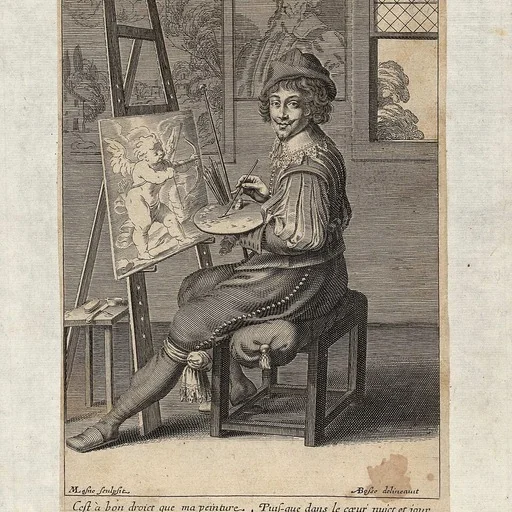
Artist
Michel Lasne (Caen, ca. 1590–4 December 1667, Paris), was a French engraver, draughtsman and collector. Lasne was born in Caen and was the son of a goldsmith. He was a member of the Guild of Saint Luke in Antwerp for…