Artwork
Moïse enfant présenté à Pharaon
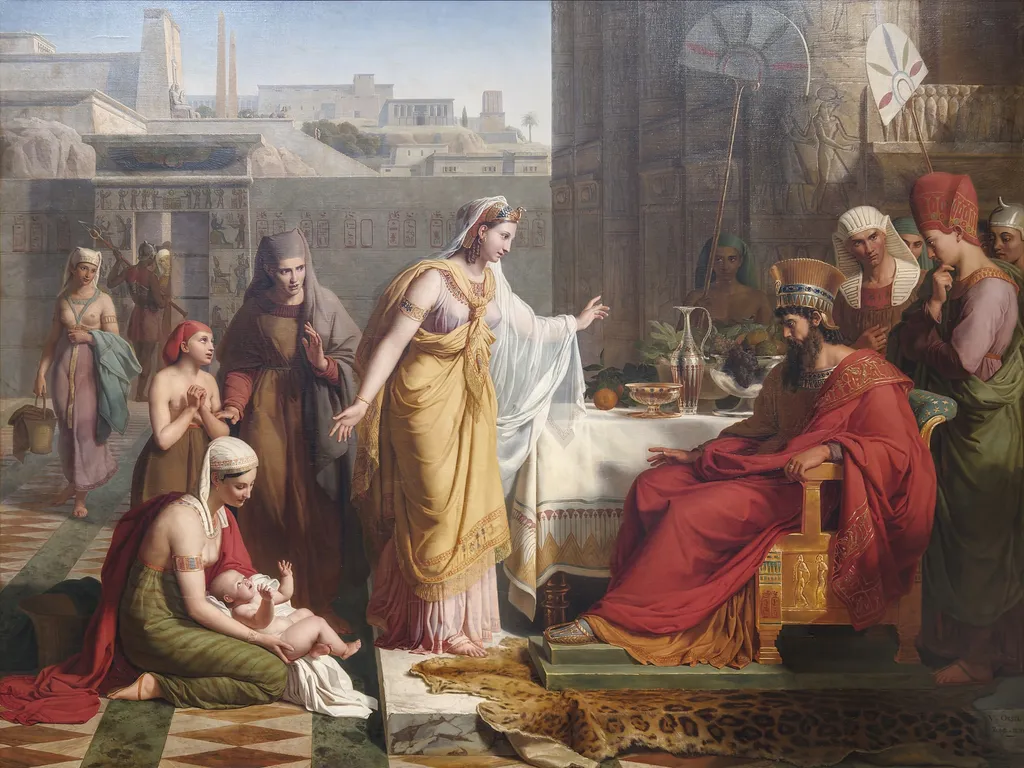
Moïse enfant présenté à Pharaon is an unspecified painting by the Realist artist Victor Orsel. It dates from 1830 and is held in the collection of the Museum of Fine Arts of Lyon.
About this work
Overview
Executed in the style of early 19th-century academic realism, the painting is part of the permanent collection at the Museum of Fine Arts of Lyon.
Painted in 1830 by French artist André Jacques Victor Orsel, this work depicts a moment from the biblical narrative of Moses’ early life. Executed in the style of early 19th-century academic realism, the painting is part of the permanent collection at the Museum of Fine Arts of Lyon. Orsel, known for religious and historical subjects, rendered this scene with attention to architectural detail and ceremonial dress, reflecting contemporary interest in biblical storytelling through visual grandeur.
Subject & Meaning
The scene illustrates the moment when the infant Moses, saved from the Nile, is presented to Pharaoh. A woman in yellow, likely his sister or nurse, stands near a table laden with offerings, while Pharaoh, clad in red, sits upon a throne. The composition emphasizes the tension between divine providence and royal authority. The presence of attendants and a distant cityscape suggests a world of power and ritual, underscoring the political and spiritual stakes of the child’s survival.
Technique & Style
Orsel employed a controlled palette of earth tones, deep reds, and cool blues to convey both opulence and solemnity. Figures are rendered with precise drapery and facial expression, reflecting academic training. The background reveals a meticulously detailed cityscape under a clear sky, anchoring the scene in a tangible, earthly realm. Lighting is even and diffuse, avoiding dramatic contrasts, in keeping with the period’s preference for clarity over emotional intensity.
History & Provenance
Completed in 1830, the painting entered the collection of the Museum of Fine Arts of Lyon shortly after its creation. Orsel, active in French academic circles, produced several religious works during this period, often commissioned or exhibited in official salons. The painting’s early acquisition by the museum suggests it was well received by contemporary patrons and critics, aligning with the era’s taste for biblically inspired historical narratives.
Context
In early 19th-century France, biblical themes remained popular in academic art, even as secular subjects gained ground. Orsel’s work reflects a broader trend of reviving ancient narratives with archaeological precision and ceremonial realism. The emphasis on costume, architecture, and courtly ritual echoes contemporary scholarly interest in Egyptology, fueled by Napoleon’s campaigns and the deciphering of the Rosetta Stone.
Legacy
Though not widely reproduced or studied today, the painting remains a representative example of French academic religious painting from the July Monarchy period. It contributes to the understanding of how biblical stories were visually codified in institutional collections, serving both devotional and cultural functions. Its continued presence in Lyon’s collection affirms its role as a document of 19th-century artistic values.
Own this work as a print
Artist & collection
Artist
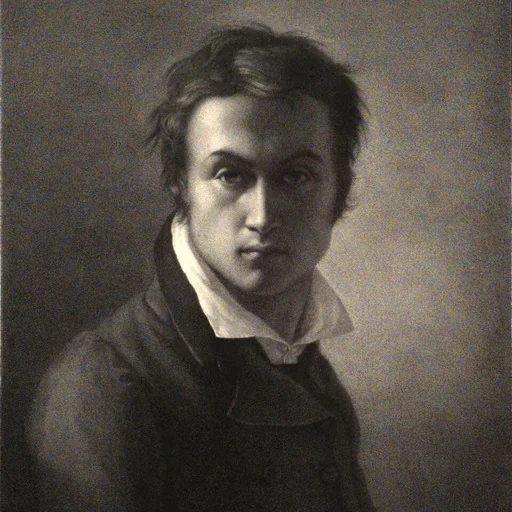
André Jacques Victor Orsel (25 May 1795, Oullins – 1 November 1850, Paris) was a French painter; primarily of religious subjects.

 Cleopatra’s Banquet
 The Banquet of Cleopatra
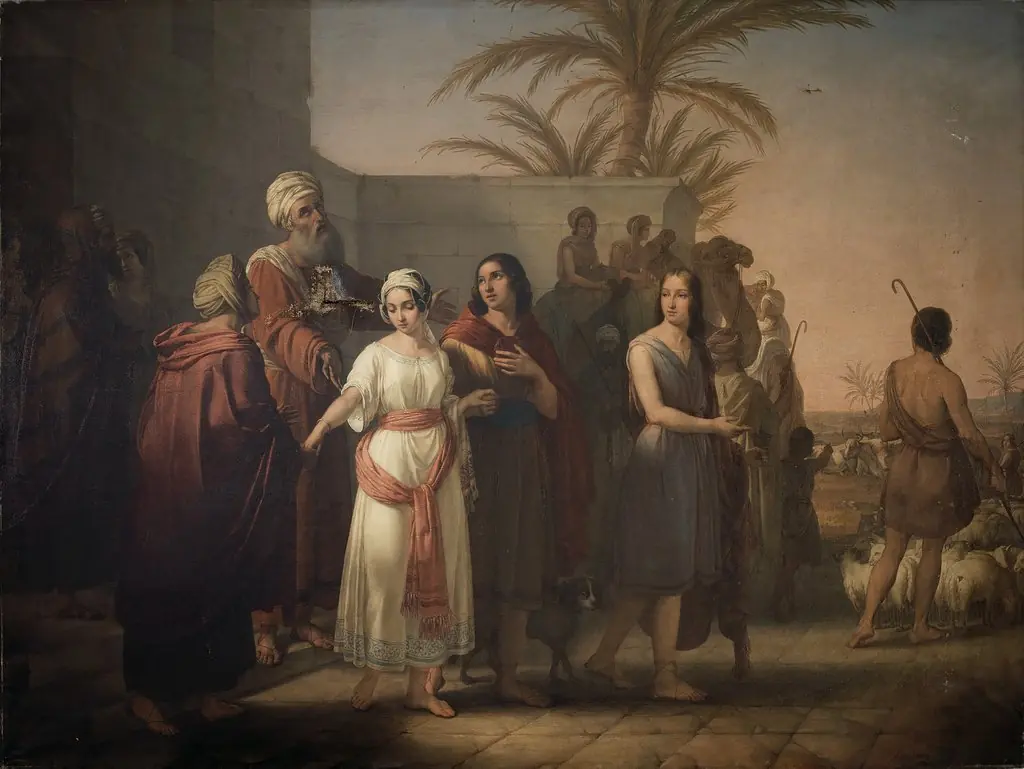 Tobias and his wife say goodbye to his in-laws in order to return to his father
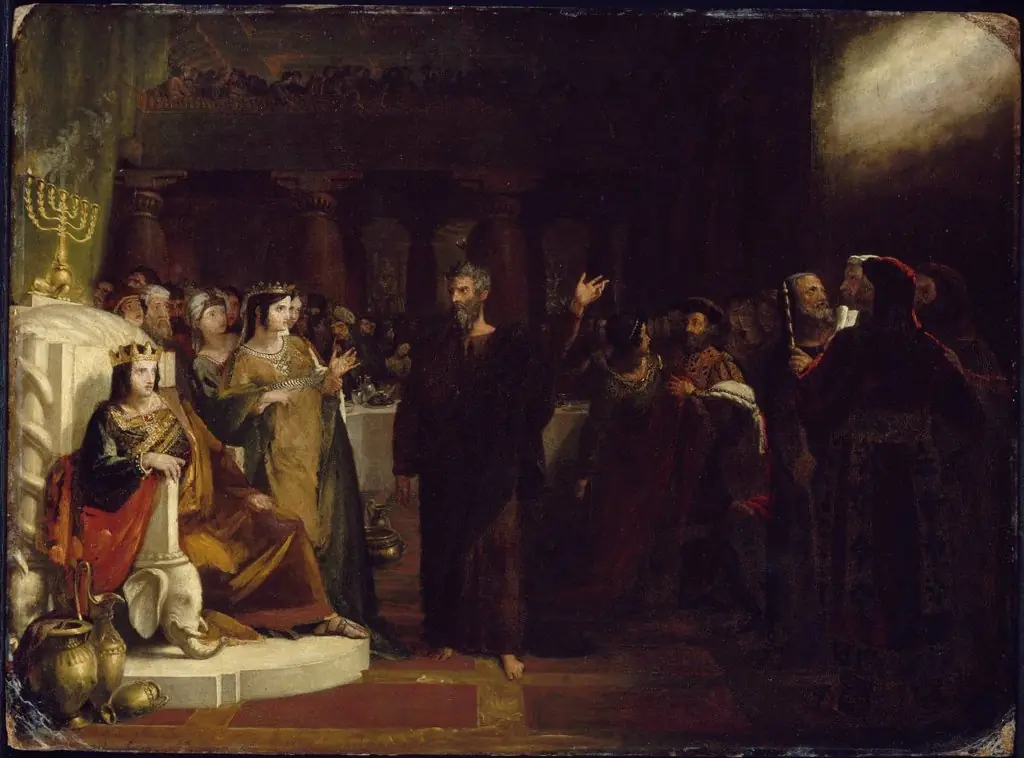 Study for Belshazzar's Feast
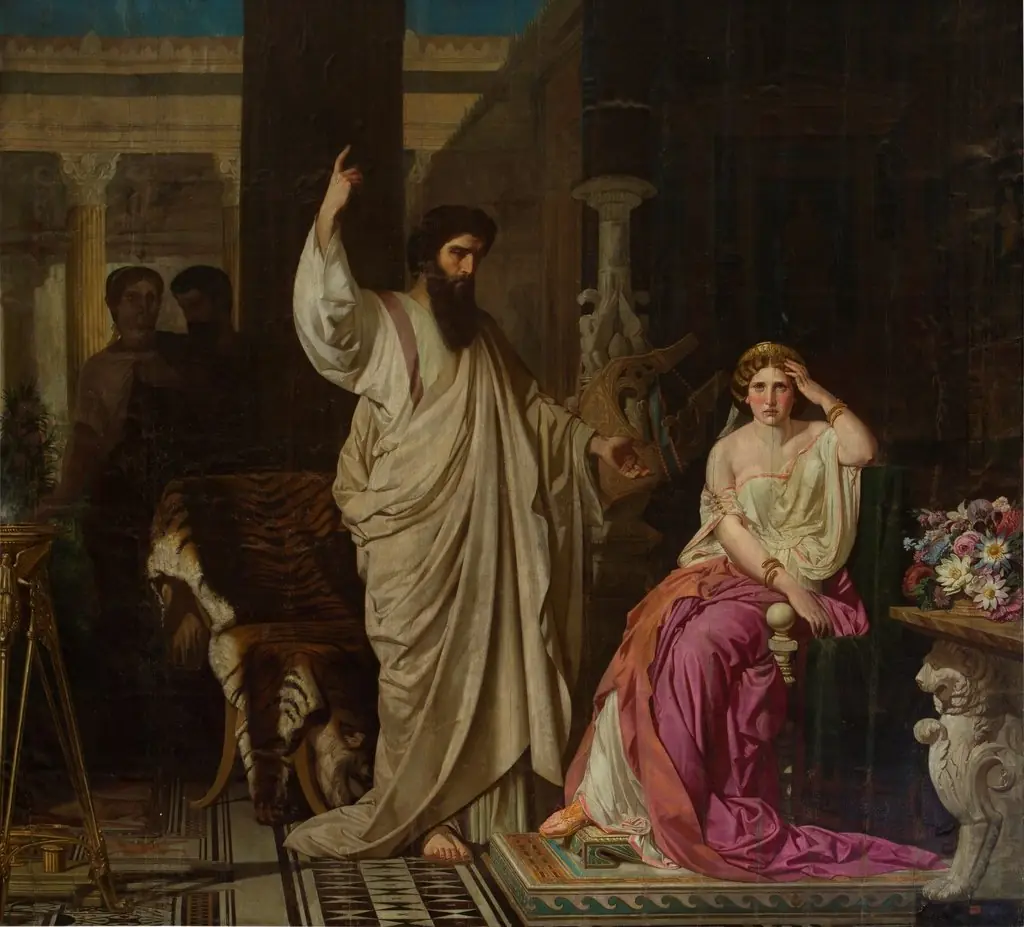 Saint Paul surprised by Nero at the moment of converting Sabina Poppaea
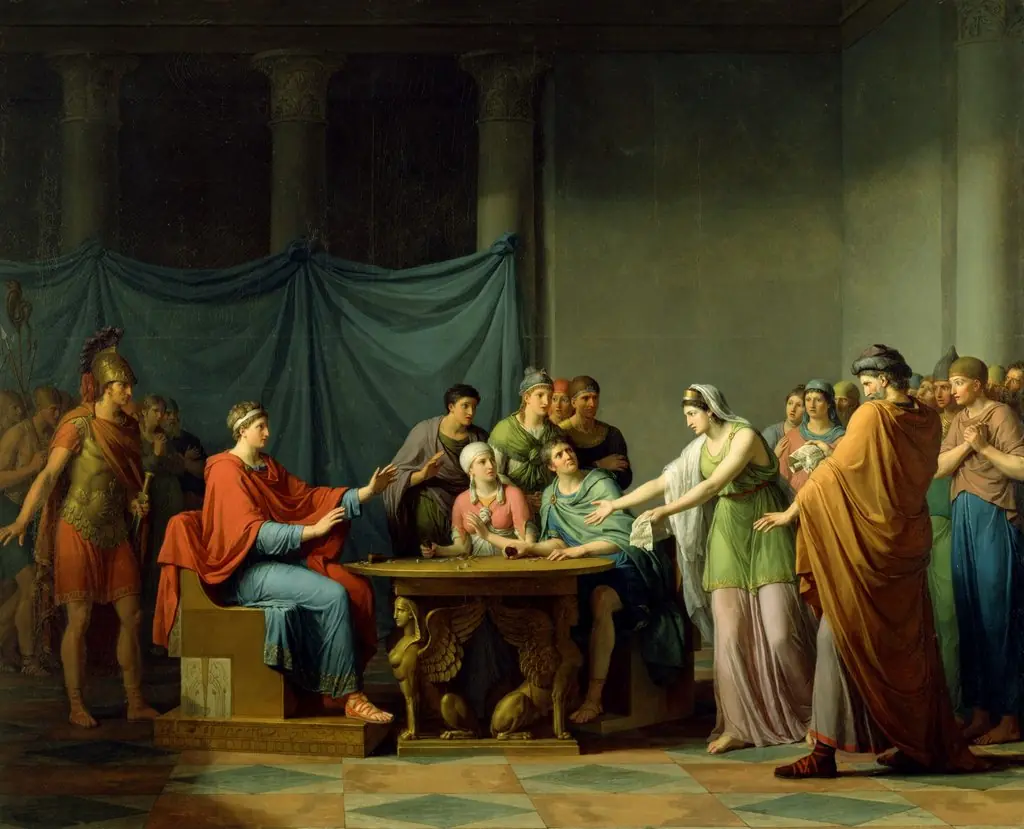 Berenice Reproaching Ptolemy
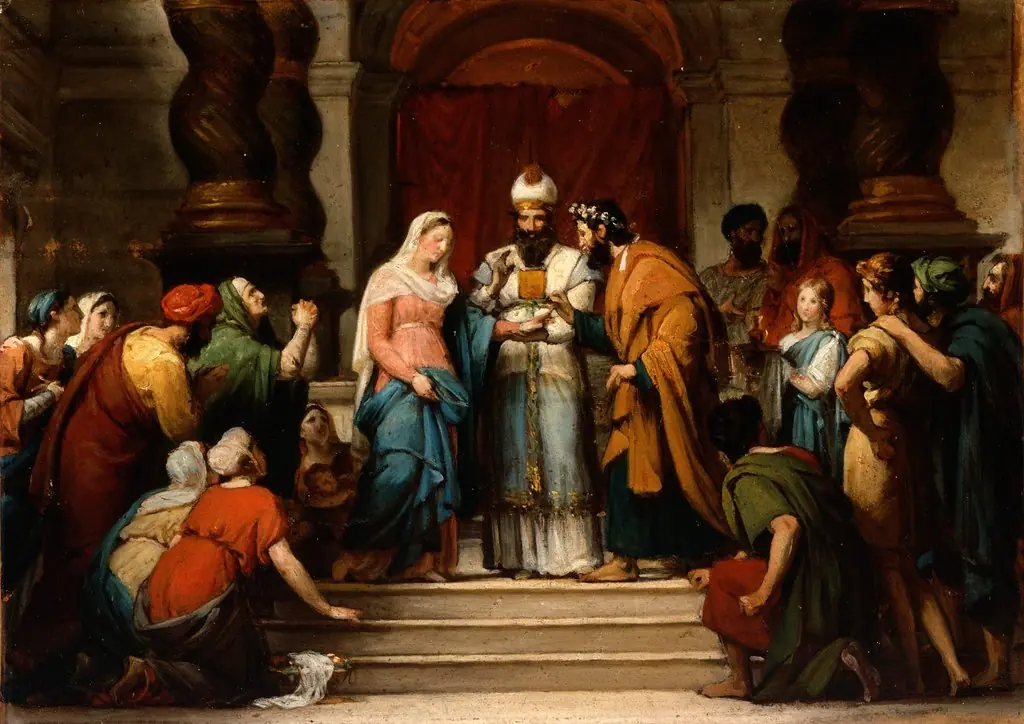 The Marriage of the Virgin
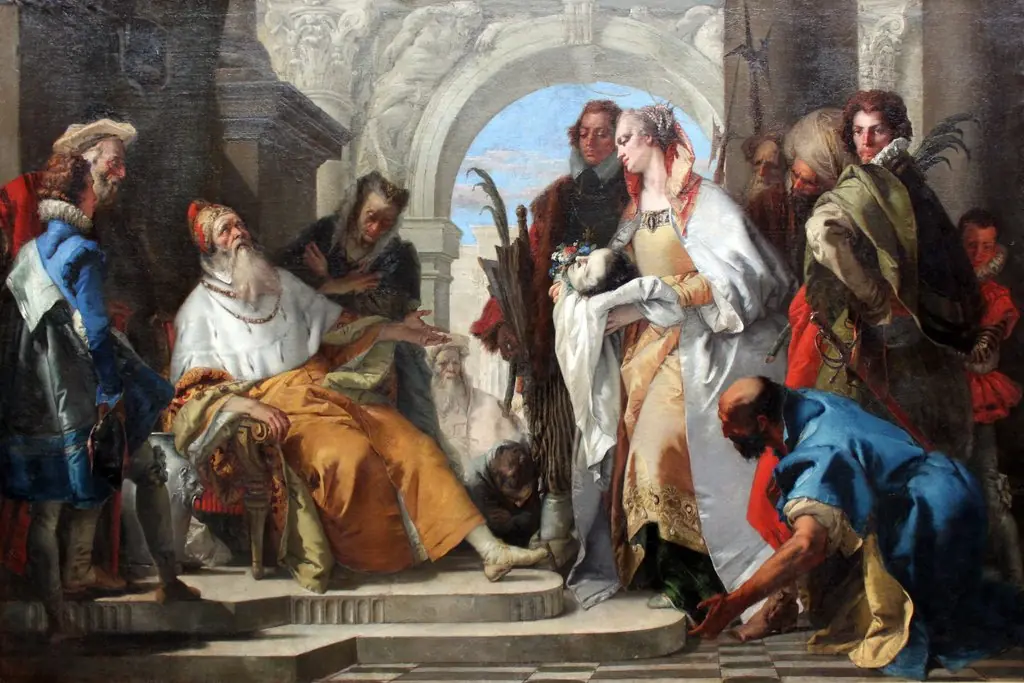 The Patron Saints of the Crotta Family
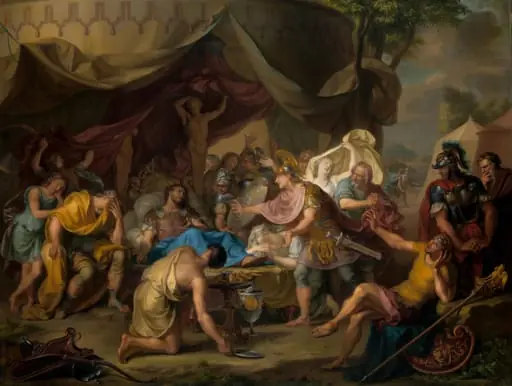 Het sterfbed van Epaminondas
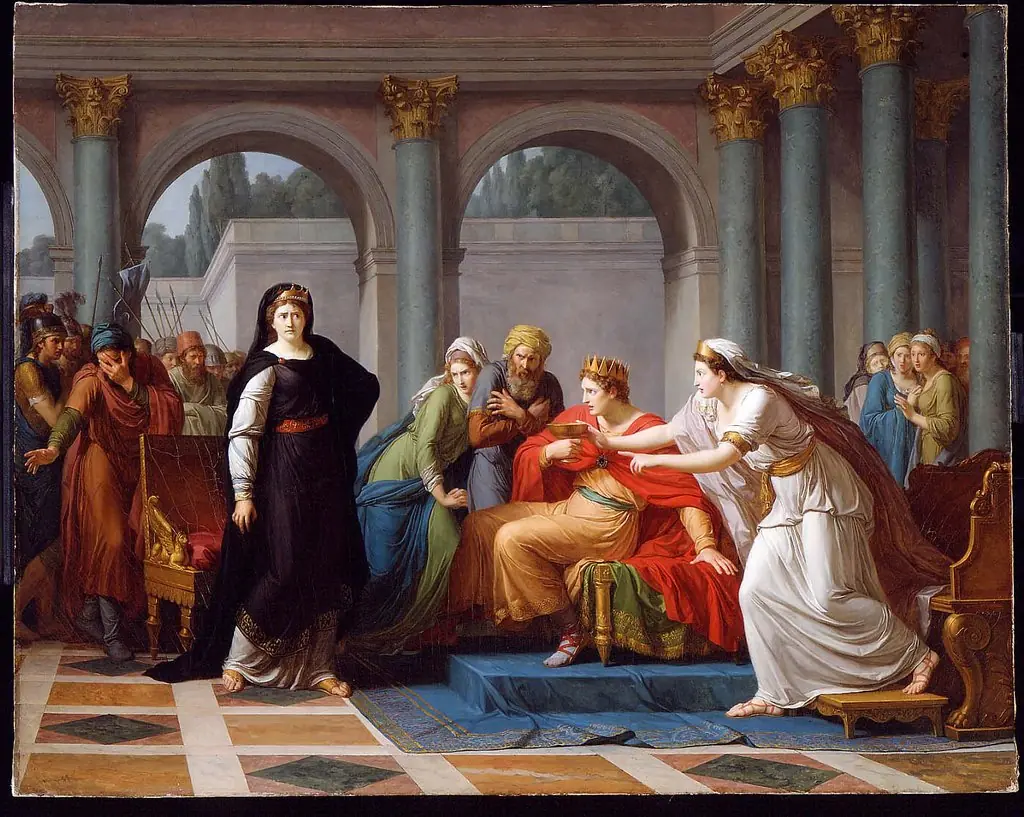 "Seigneur! Voyez ces yeux" (Cleopatra Discovered by Rodogune to Have Poisoned the Nuptial Cup)
 Continence of Scipio
 Maecenas Presenting the Liberal Arts to Emperor Augustus