Artwork
Chandur Seorposh Kaffir Boy
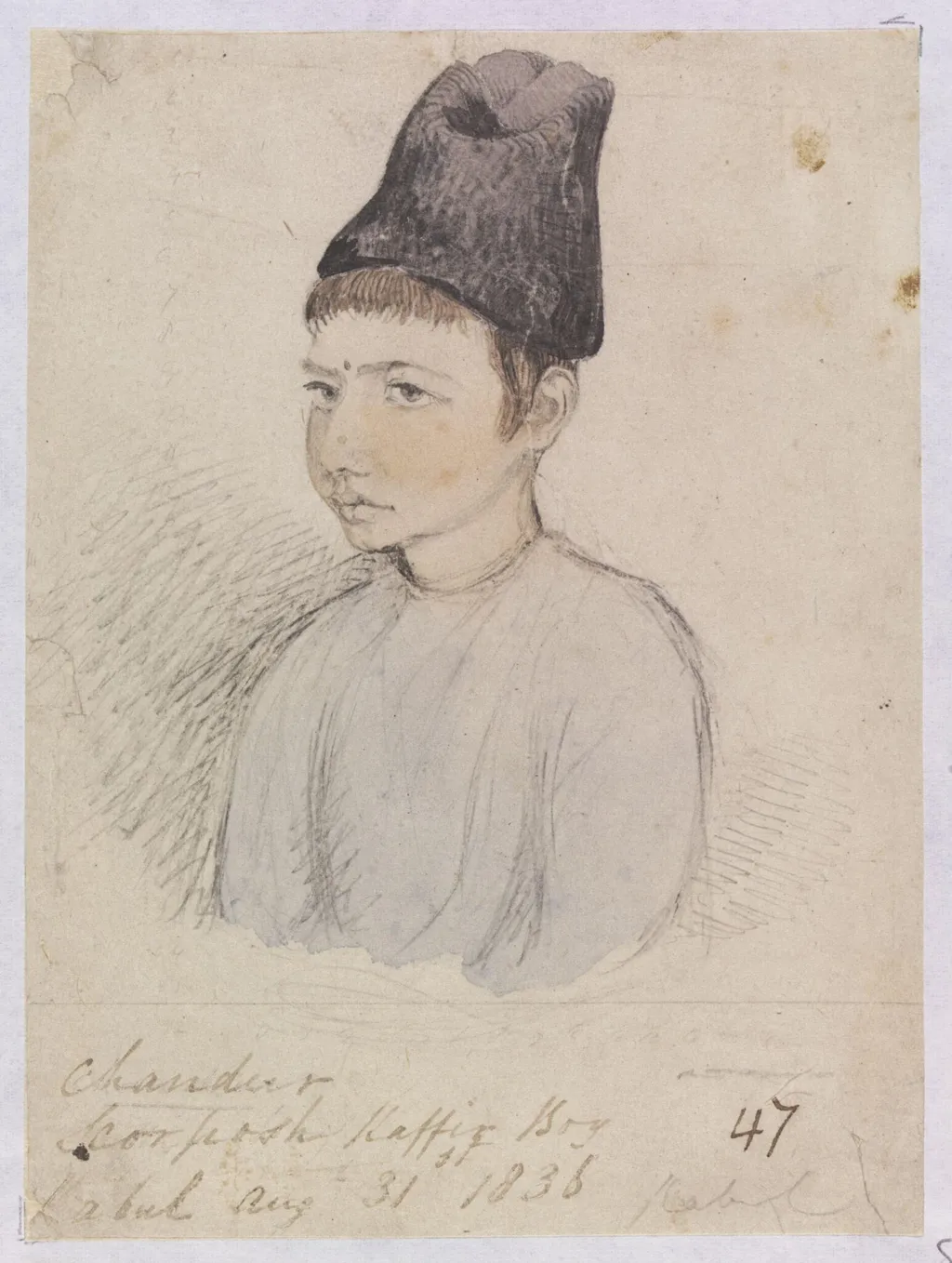
Chandur Seorposh Kaffir Boy is a watercolor work on paper by the Romanticist artist Godfrey Thomas Vigne. It dates from 1836 and is held in the collection of the Victoria and Albert Museum.
About this work
Overview
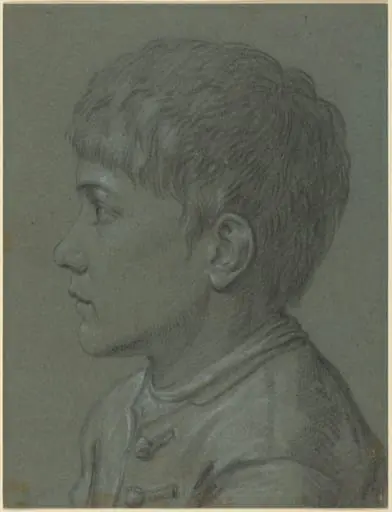
This 1836 watercolour by Godfrey Thomas Vigne portrays a young boy from the Kafir community of Kafiristan, an area in the Hindu Kush that today is called Nuristan. The work is a modest sketch on slightly yellowed, textured paper, rendered quickly with simple shading that defines the boy’s face and distinctive headwear.
Subject & Meaning
The figure represents a member of the Kafir people, a group historically labeled as “Kafir” – a Persian term meaning “infidel” – before their forced conversion to Islam at the close of the 19th century. The portrait offers a rare visual record of the community’s appearance prior to that cultural shift.
Technique & Style
Vigne employed a light wash of watercolour on rough paper, using minimal strokes to suggest form. The boy’s dark, tall hat dominates the composition, while subtle shading under the eyes and chin provides modest depth. The artist’s handwritten label beneath the image appears hurried, reinforcing the sketch‑like quality.
History & Provenance
The drawing entered the museum’s collection in 1971 after being purchased from Vigne’s great‑nephew. Its provenance traces directly to the artist’s family, confirming its authenticity and linking it to Vigne’s broader body of work documenting peoples encountered during his travels.
Context
Created during Vigne’s explorations of the Hindu Kush, the piece reflects 19th‑century European interest in documenting remote societies. The unusual hat and the informal execution suggest Vigne captured the subject quickly, perhaps as part of a larger series of ethnographic studies of the region’s inhabitants.
Artist & collection


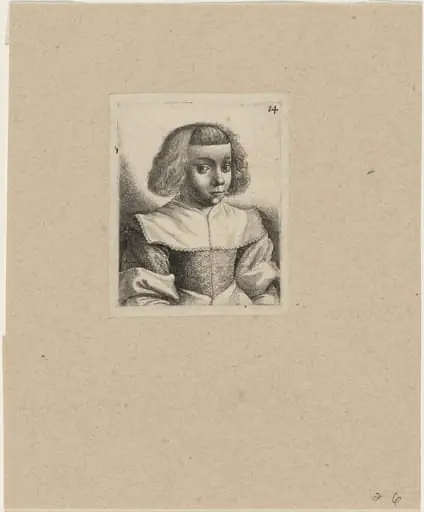 Portrait of a Young Girl, Plate 14
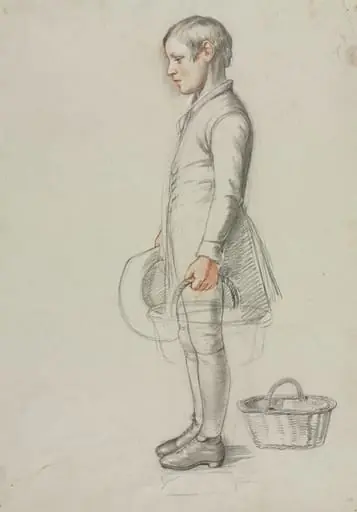 Study for "Country Cousins"
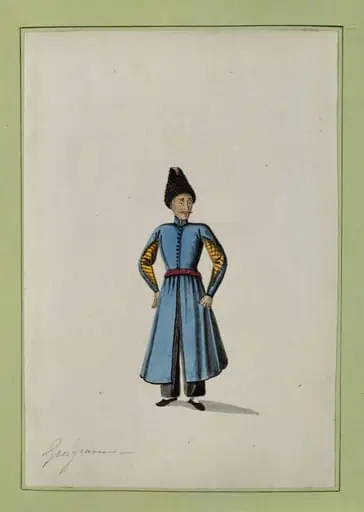 Georgian
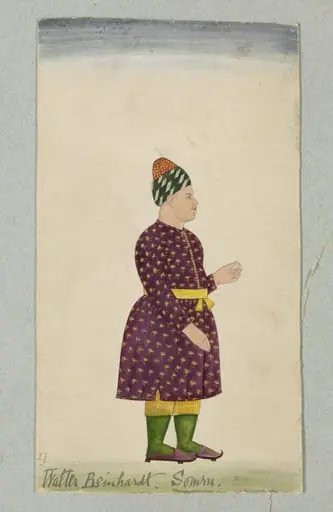 Walter Reinhardt
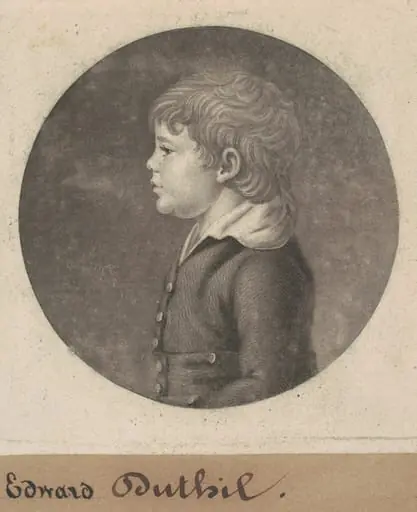 Edward Dutilh
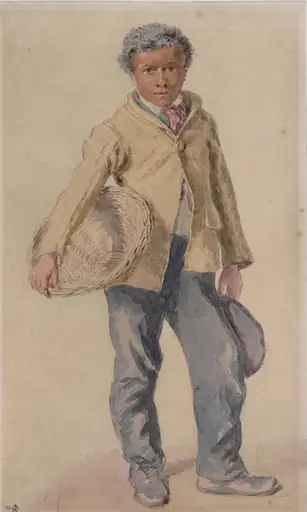 Mulatto Boy
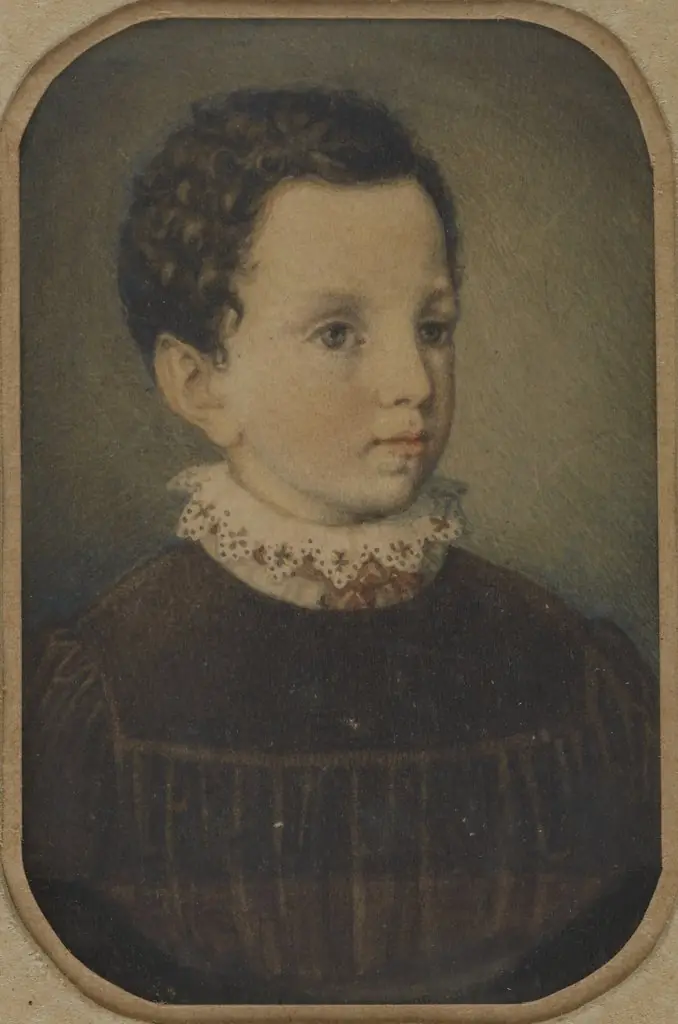 Portrait of Antoni Pleszowski
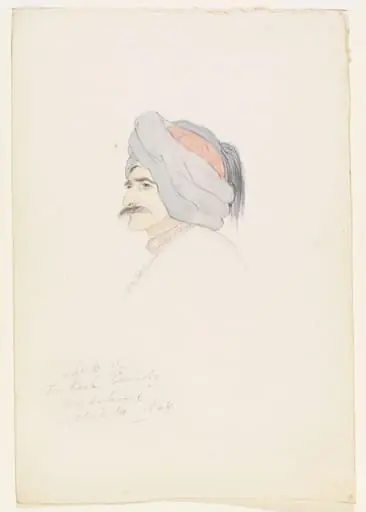 Sheik of Turkish Cavalry
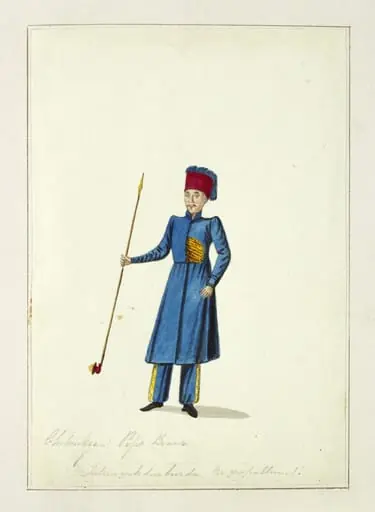 Chiboukge-: Pipe Bearer
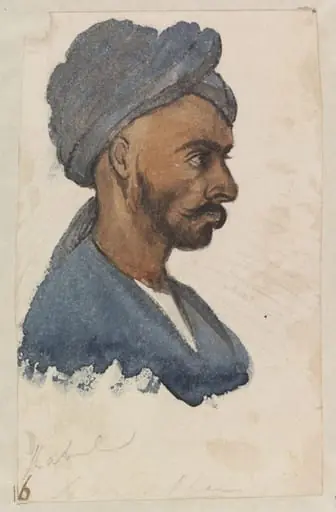 Suliman Khan Kabul
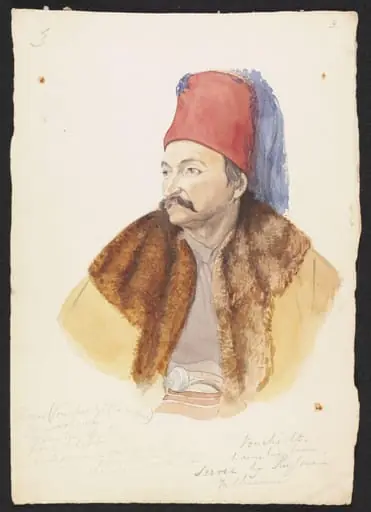 Thomas Vouchicht (the wolf's cub) Peri Schicsh, Minister of the home department in Servia
 Head of a Boy