Artwork
Cheshmagee Ahmet
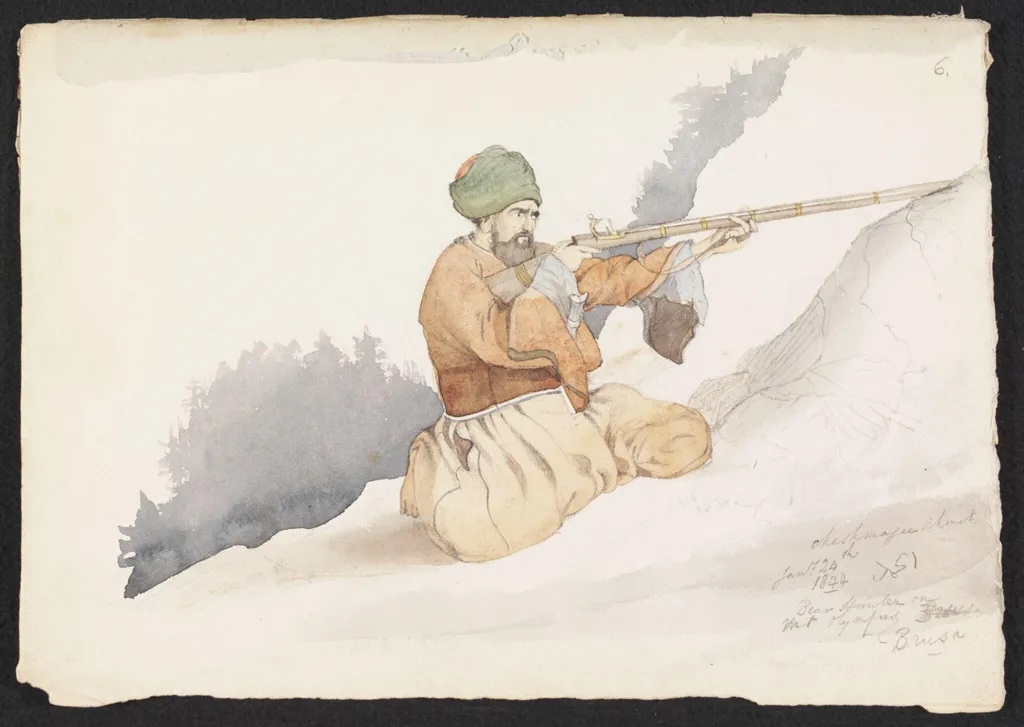
Cheshmagee Ahmet is a watercolor work on paper by the Romanticist artist Godfrey Thomas Vigne. It dates from 1844 and is held in the collection of the Victoria and Albert Museum.
About this work
Overview
The composition is restrained, with a pale background and muted shadow forms on the left, emphasizing the figure’s stillness.
Cheshmagee Ahmet is a watercolour portrait painted in 1844 by Godfrey Thomas Vigne. It depicts a seated male figure holding a long rifle, dressed in a green turban, orange jacket, and beige trousers. The composition is restrained, with a pale background and muted shadow forms on the left, emphasizing the figure’s stillness. The work belongs to a series of sketches Vigne made during his travels in South Asia.
Subject & Meaning
The subject, identified as Cheshmagee Ahmet, appears to be a local man from the region Vigne visited, possibly a soldier, guide, or hunter. His posture and attire suggest a role tied to mobility and vigilance. The title implies personal recognition, indicating Vigne’s engagement with individuals he encountered. The image avoids overt drama, instead conveying quiet dignity and cultural specificity through subtle detail.
Technique & Style
Vigne employed transparent watercolour washes to build soft tonal gradations, avoiding heavy outlines. The palette is restrained—ochres, greens, and greys—enhancing the calm atmosphere. Lightly rendered background shapes suggest distant terrain without defining it, directing focus to the figure. The brushwork is precise yet fluid, reflecting the artist’s training in topographical and ethnographic observation.
History & Provenance
The painting remained in the Vigne family after Godfrey’s death. In 1978 and 1979, Frank Vigne, a great-nephew, acquired it from Charles Griffin of Monmouth in two separate transactions totaling £320. Its journey from South Asia to private British ownership reflects the movement of colonial-era artworks into familial collections, preserved without public exhibition for over a century.
Context
Vigne traveled through Persia and northern India in the 1830s–40s, documenting landscapes and people for British audiences. His watercolours served as ethnographic records, often made on-site with minimal embellishment. Cheshmagee Ahmet aligns with this practice, capturing a moment of cross-cultural encounter during a period when British interest in regional identities was growing, though often filtered through colonial perspectives.
Legacy
The work survives as a modest but tangible record of 19th-century travel and observation. It contributes to a broader archive of colonial-era portraiture that, while not widely exhibited, offers insight into how individuals outside the British elite were visually documented. Its preservation within the family underscores the quiet persistence of such materials beyond institutional recognition.
Artist & collection


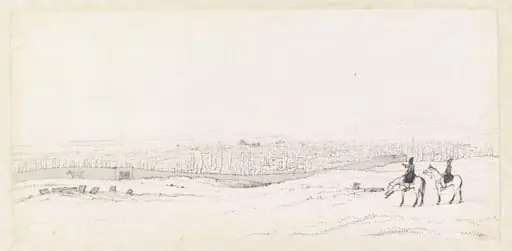
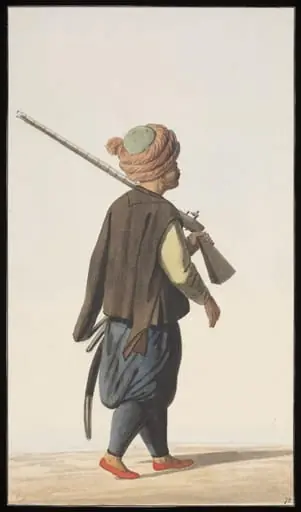 Tüfekçi, or Palace Guard armed with a musket
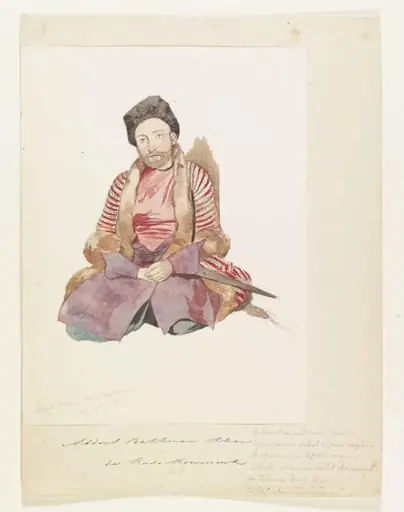 Abdoul-Rakhman - Khan de Kazi-Koumyk
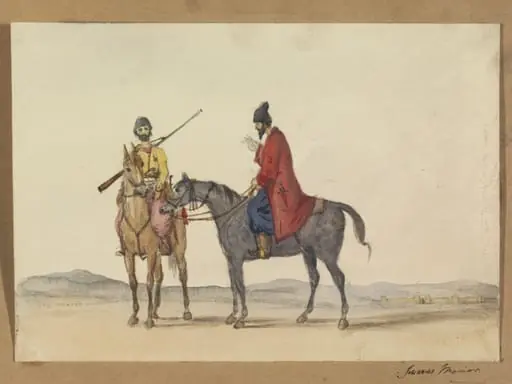 Two Persian Horsemen
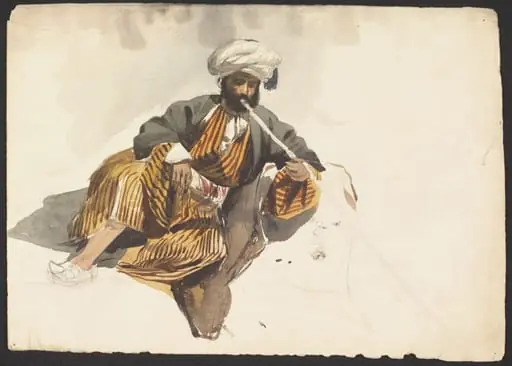 Figure of a Man in Arab dress, reclining, smoking a chibouk
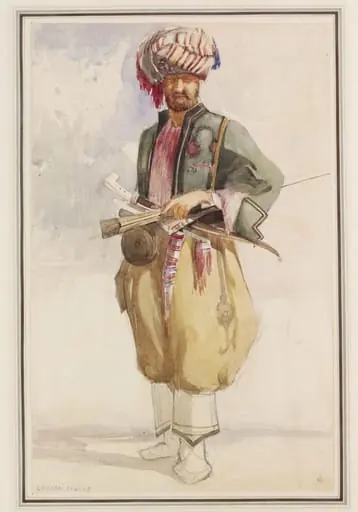 Lycian Figure
![Mounted crusader [?] holding discussion with standing man, by Unknown](https://artifactworldgallery.com/img/unknown--mounted-crusader-holding-discussion-with-standing-man--9b99697bca24a72f-w320.webp) Mounted crusader [?] holding discussion with standing man
Mounted crusader [?] holding discussion with standing man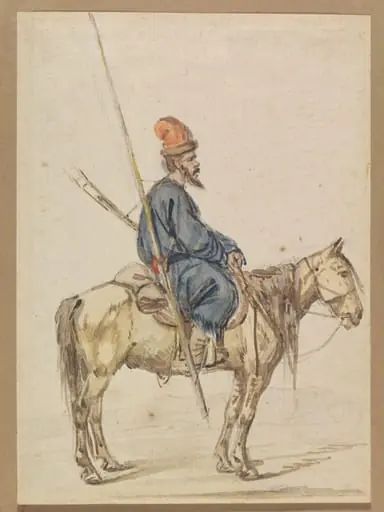 Armed horseman, possibly Russian
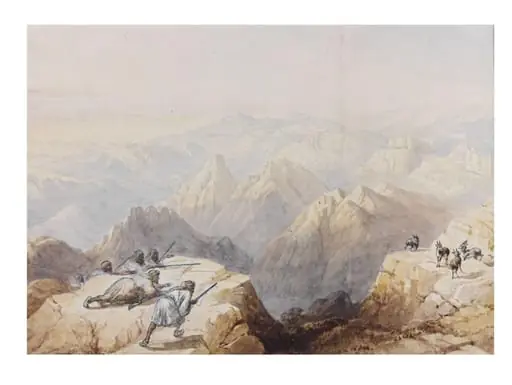 View from Mount Hor
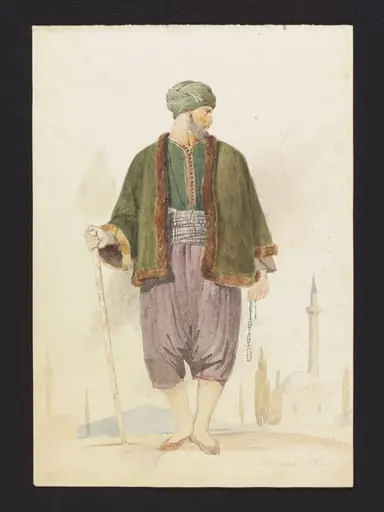 Mahmoud - Athens -
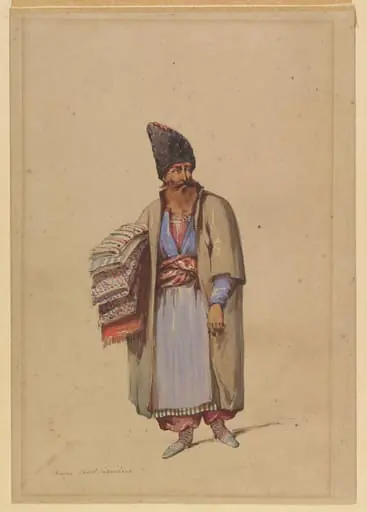 Persian Shawl-Merchant
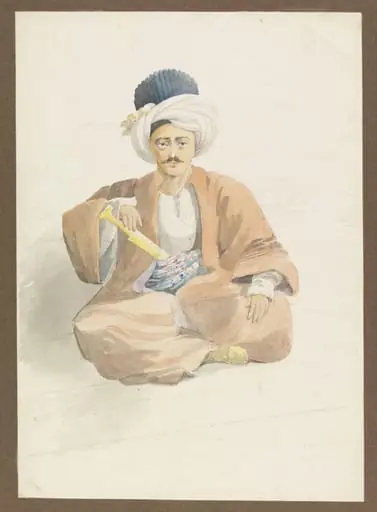 Jafer Beck Affendi
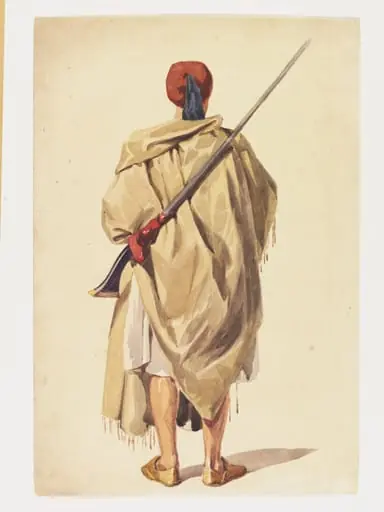 Soldier, back view