Artwork
The Exile's Dream
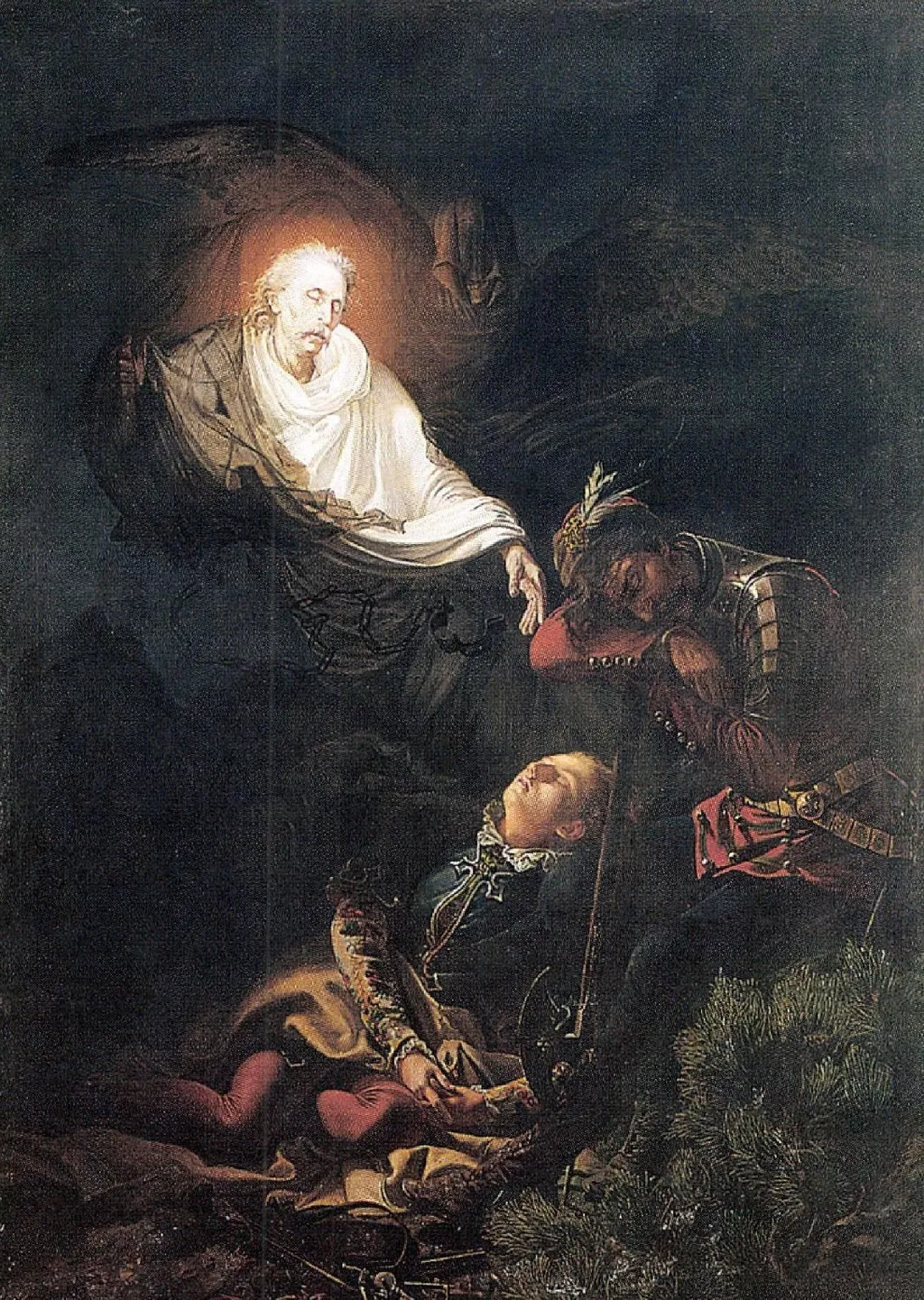
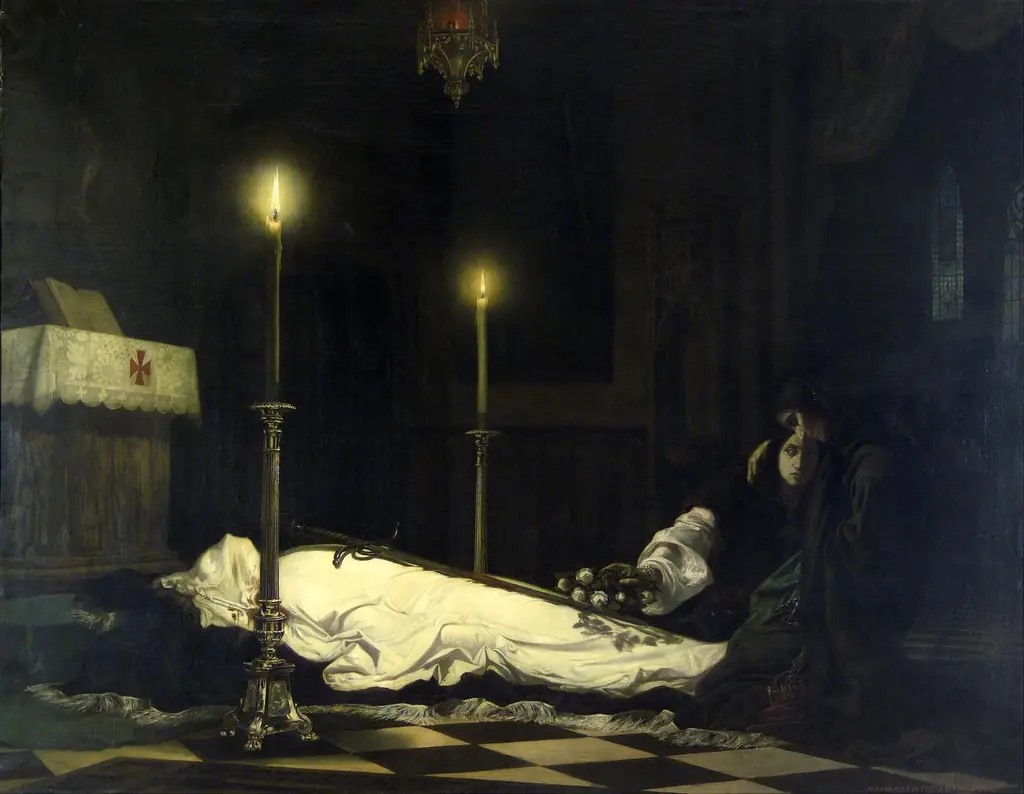
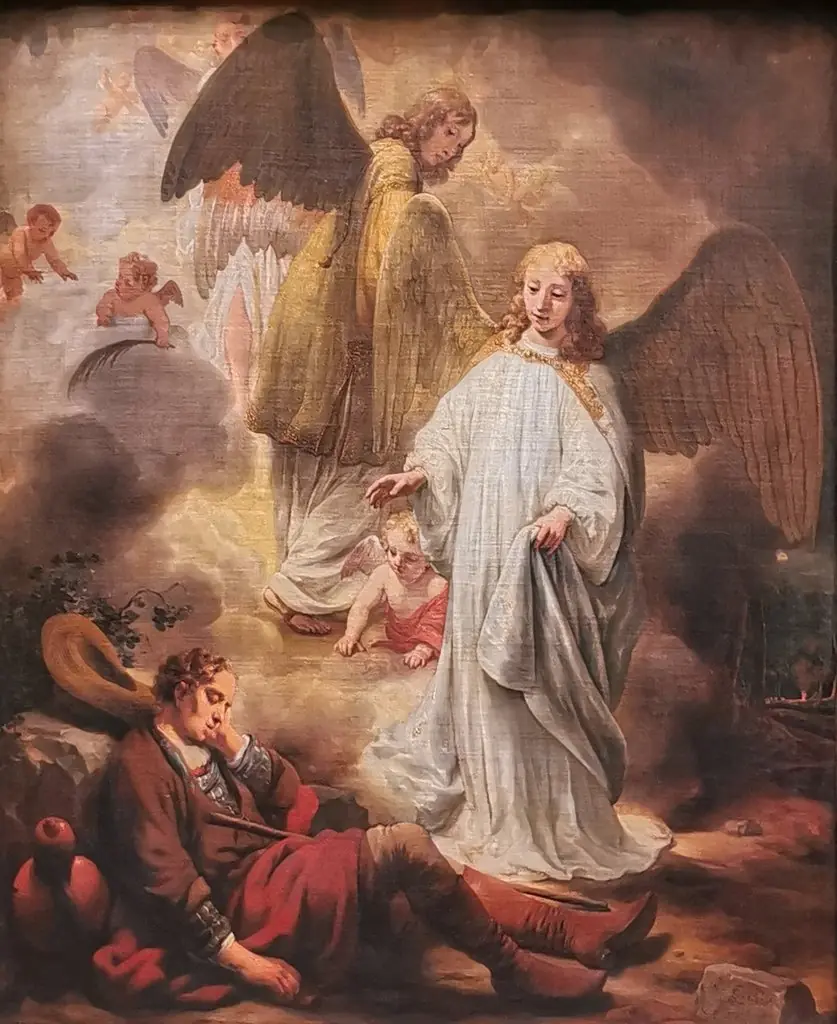
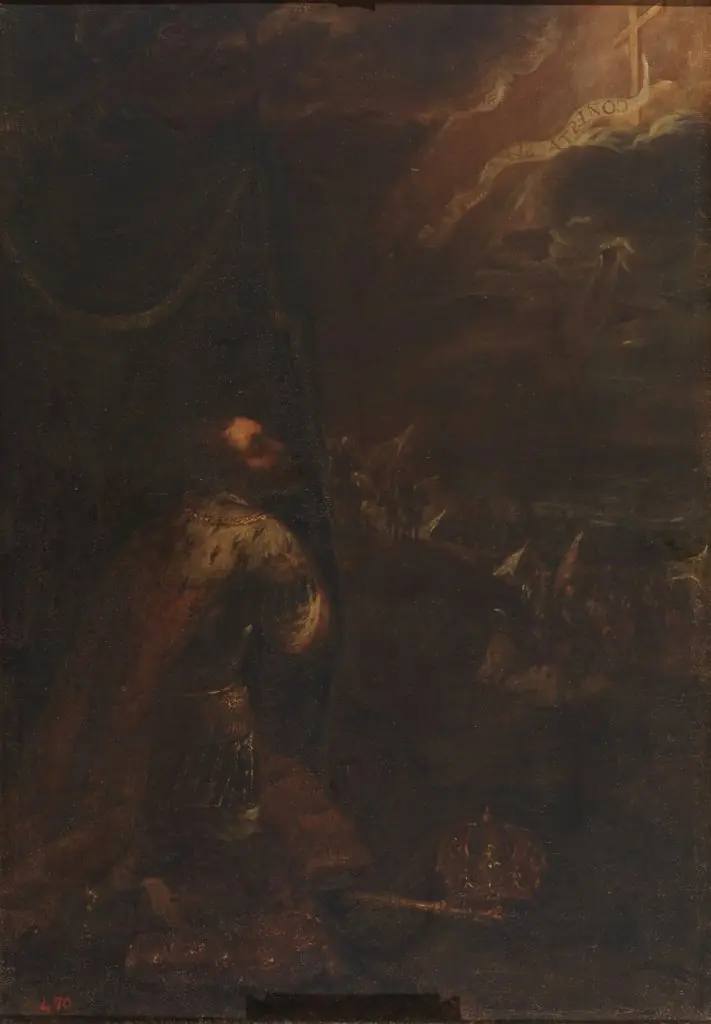
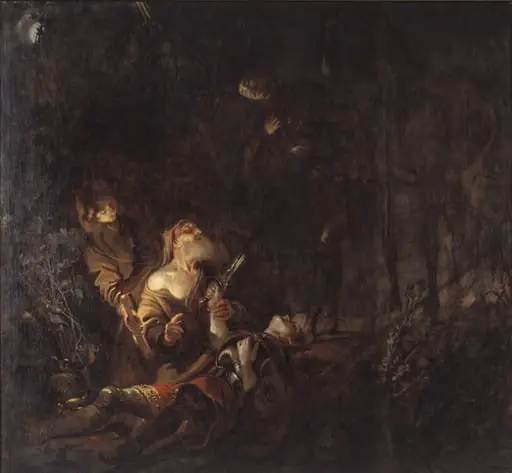
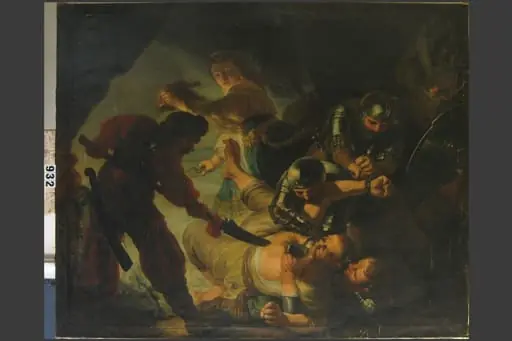
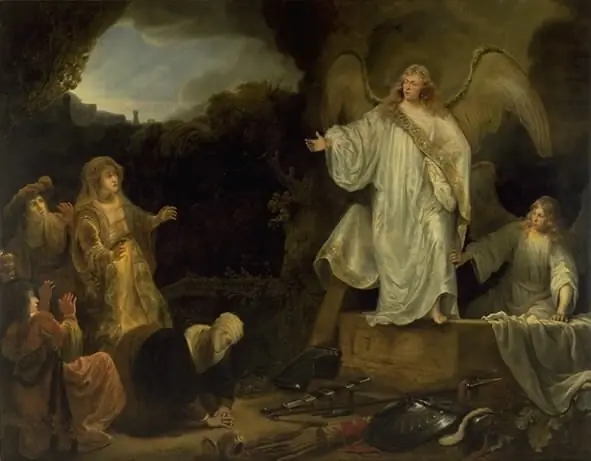
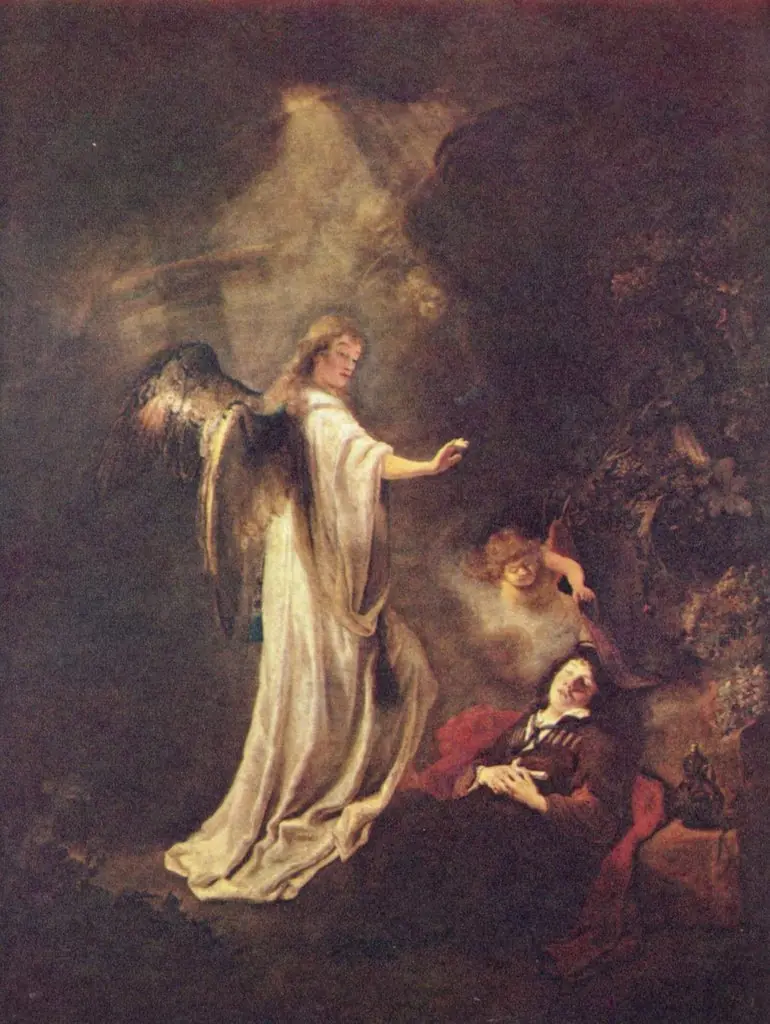
The Exile's Dream is an oil painting by the Biedermeier artist Viktor Madarász. It dates from 1856 and is held in the collection of the Hungarian National Gallery.
About this work
Overview
The Exile's Dream is a painting created by Viktor Madarász in 1856, exemplifying the Romantic style through its emotional and narrative focus. Executed in oil paint, it is a characteristic work from the Biedermeier period.
Subject & Meaning
The painting depicts a reclining figure lost in thought or dream, watched over by a haloed apparition. The contrast between the dark surroundings and the soft light from the halo creates a contemplative atmosphere, inviting reflection on the figure's emotional state and the nature of the vision above him.
Technique & Style
Madarász's use of chiaroscuro, with the halo as the sole light source, emphasizes the spiritual or otherworldly aspect of the scene. The detailed rendering of the figures' attire and the somber color palette are typical of Romantic painting, while the focus on a solitary figure reflects the period's interest in individual emotional experience.
History & Provenance
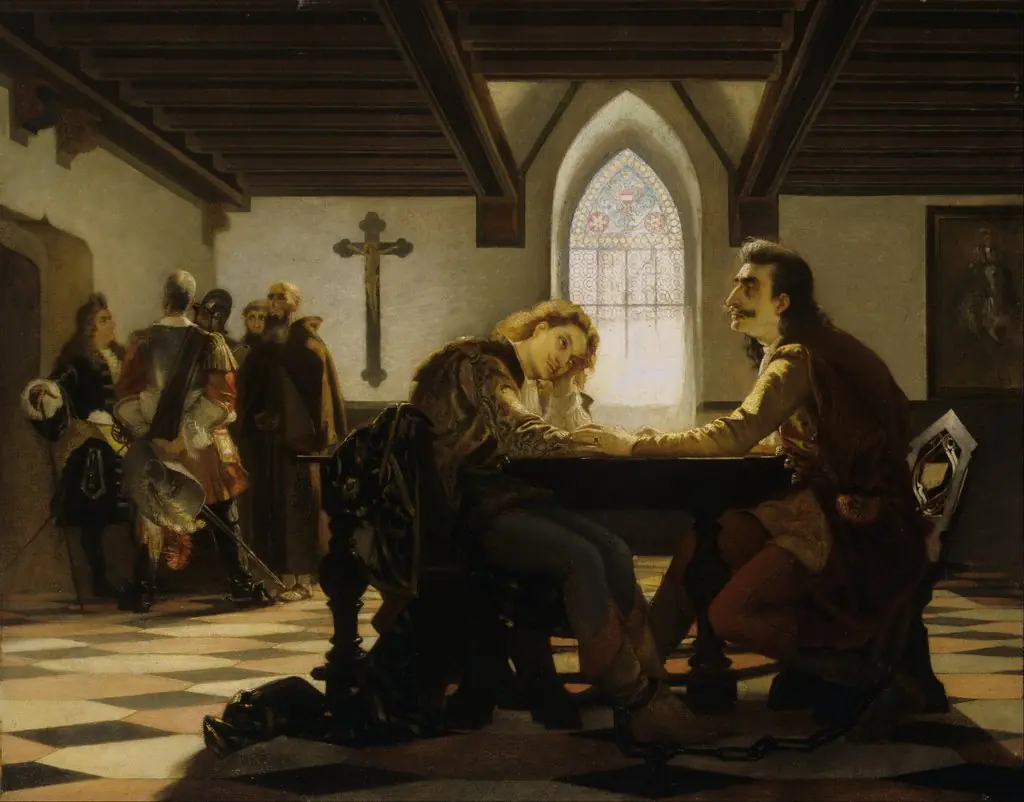
The Exile's Dream is part of the Hungarian National Gallery's collection, representing the work of Viktor Madarász, a Hungarian painter known for historical scenes and portraits.
Artist & collection
Artist
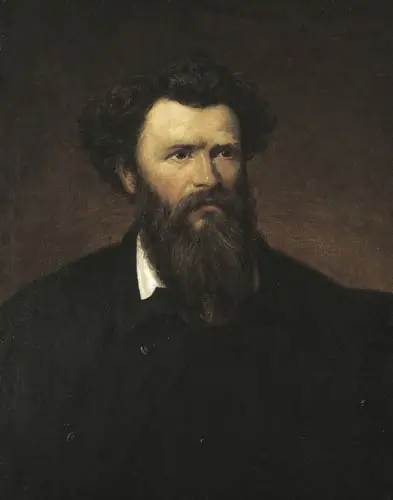
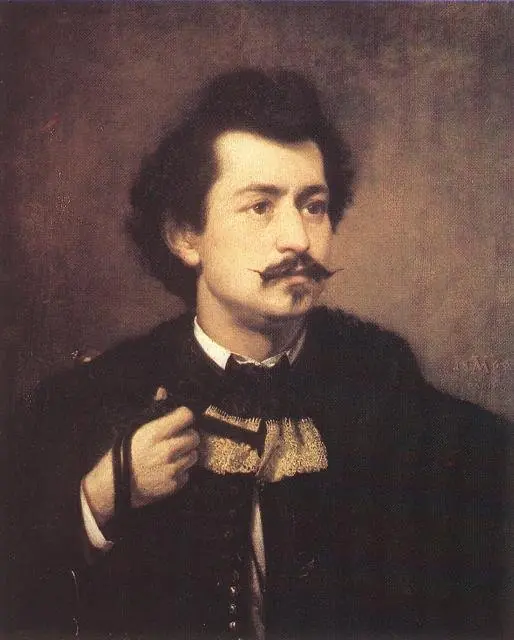
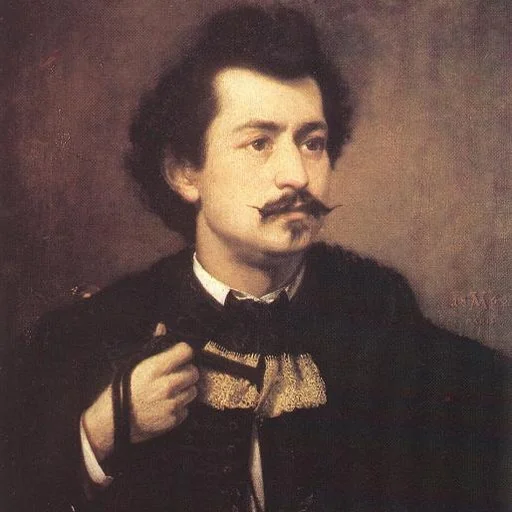
Viktor Madarász (14 December 1830 – 10 January 1917) was a Hungarian painter in the Romantic style. He is best known for his historical scenes and portraits.