Artwork
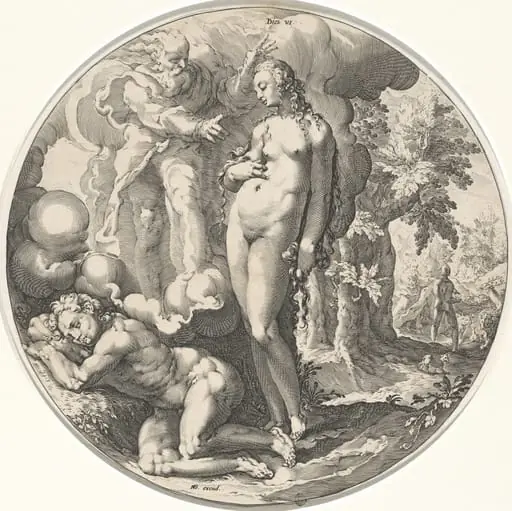
The Temptation of Adam
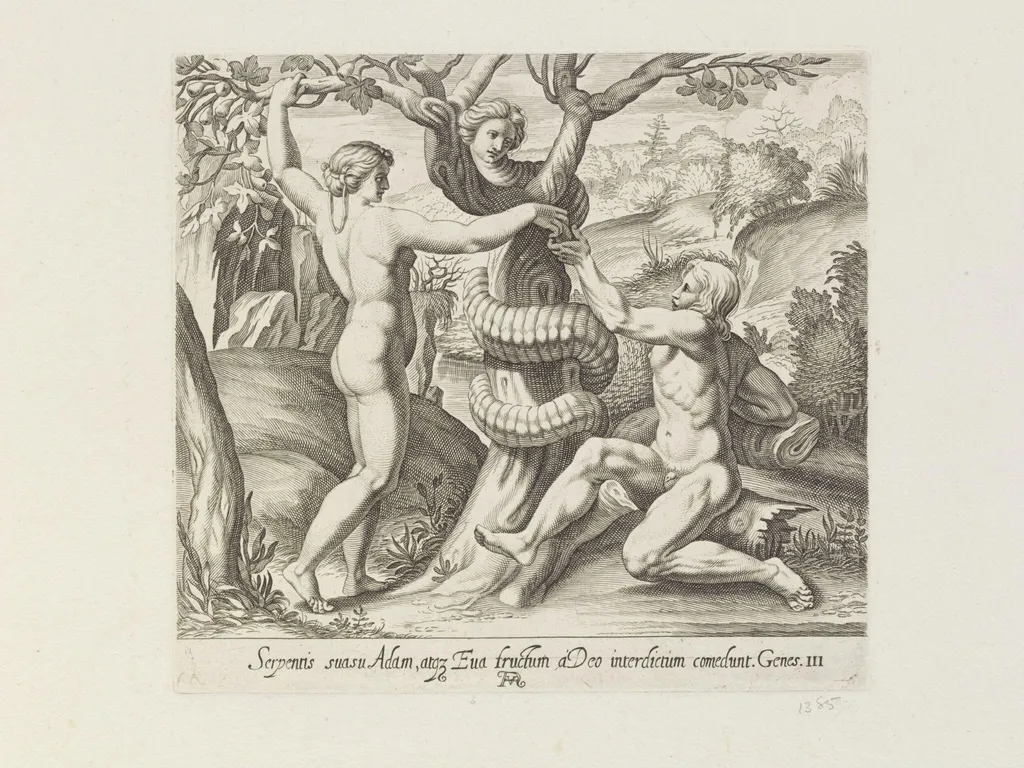
The Temptation of Adam is a print by the Baroque artist Francesco Villamena. It is held in the collection of the Victoria and Albert Museum.
About this work
Overview
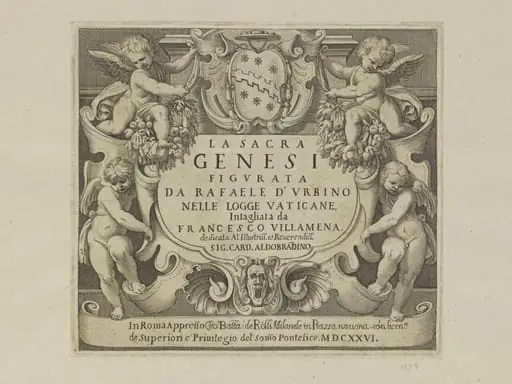
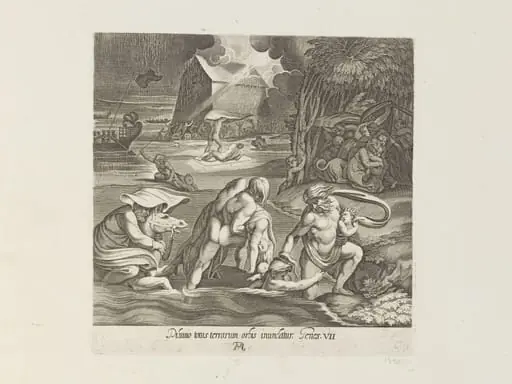
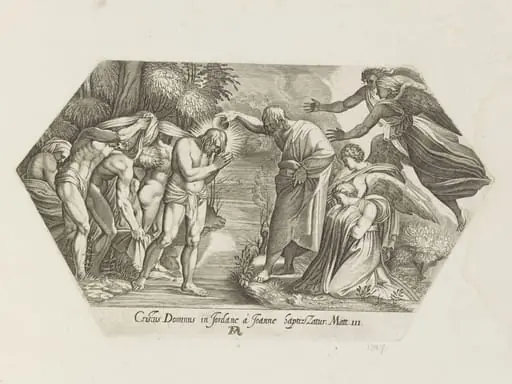
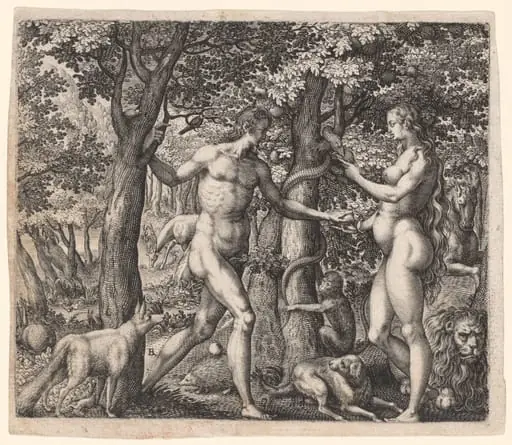
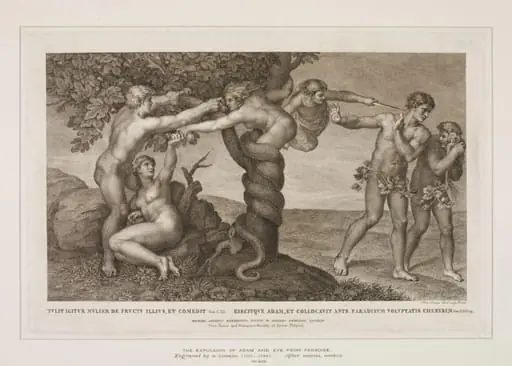
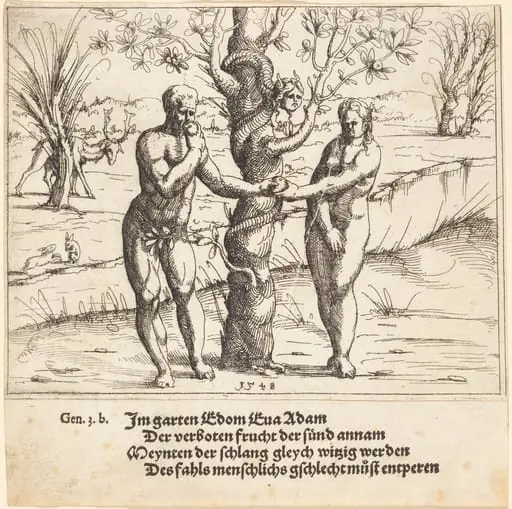
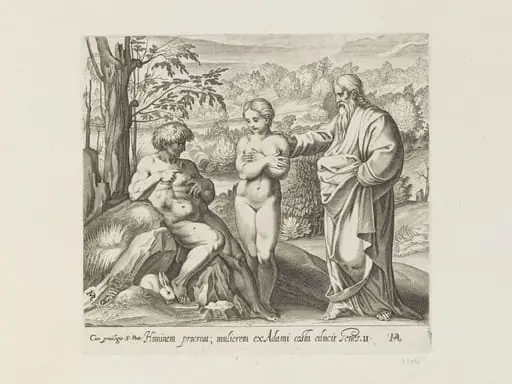
Francesco Villamena’s 1626 etching, titled The Temptation of Adam, presents a biblical episode in which the first humans encounter the serpent’s lure. Executed on paper, the work belongs to a series of twenty scriptural prints that reinterpret Raphael’s Vatican frescoes, commonly referred to as the ‘Raphael Bible.’
Subject & Meaning
The composition shows three figures amid a verdant landscape: a central woman extending a leafy branch, a nude woman to her left, and a kneeling nude man on the right. The arrangement foregrounds the moment of temptation, emphasizing the interaction with the branch as a visual focal point that underscores the narrative of fall and persuasion.
Technique & Style
Villamena translates Raphael’s painted scene into the linear language of etching, employing fine incised lines to render foliage, water, and the anatomy of the figures. The chiaroscuro achieved through varied line density reflects Baroque sensibilities, creating depth and dramatic tension within the confined space of the print.
History & Provenance
Part of a larger set designed to disseminate Raphael’s biblical imagery, the etching was produced shortly after the original frescoes were completed in the Vatican Loggie. The series circulated among collectors and religious institutions in the seventeenth century, serving both devotional and educational purposes.
Context
Created during the early Baroque period, the print aligns with contemporary interests in dramatizing sacred narratives through dynamic composition and emotional intensity. Villamena’s work exemplifies the era’s practice of reproducing celebrated paintings in print form, thereby extending their visual impact beyond the walls of the Vatican.
Artist & collection
Artist
Francesco Villamena (1564–1624) was an Italian engraver, drawing teacher and art collector.