Artwork
Frederick Henry of Nassau
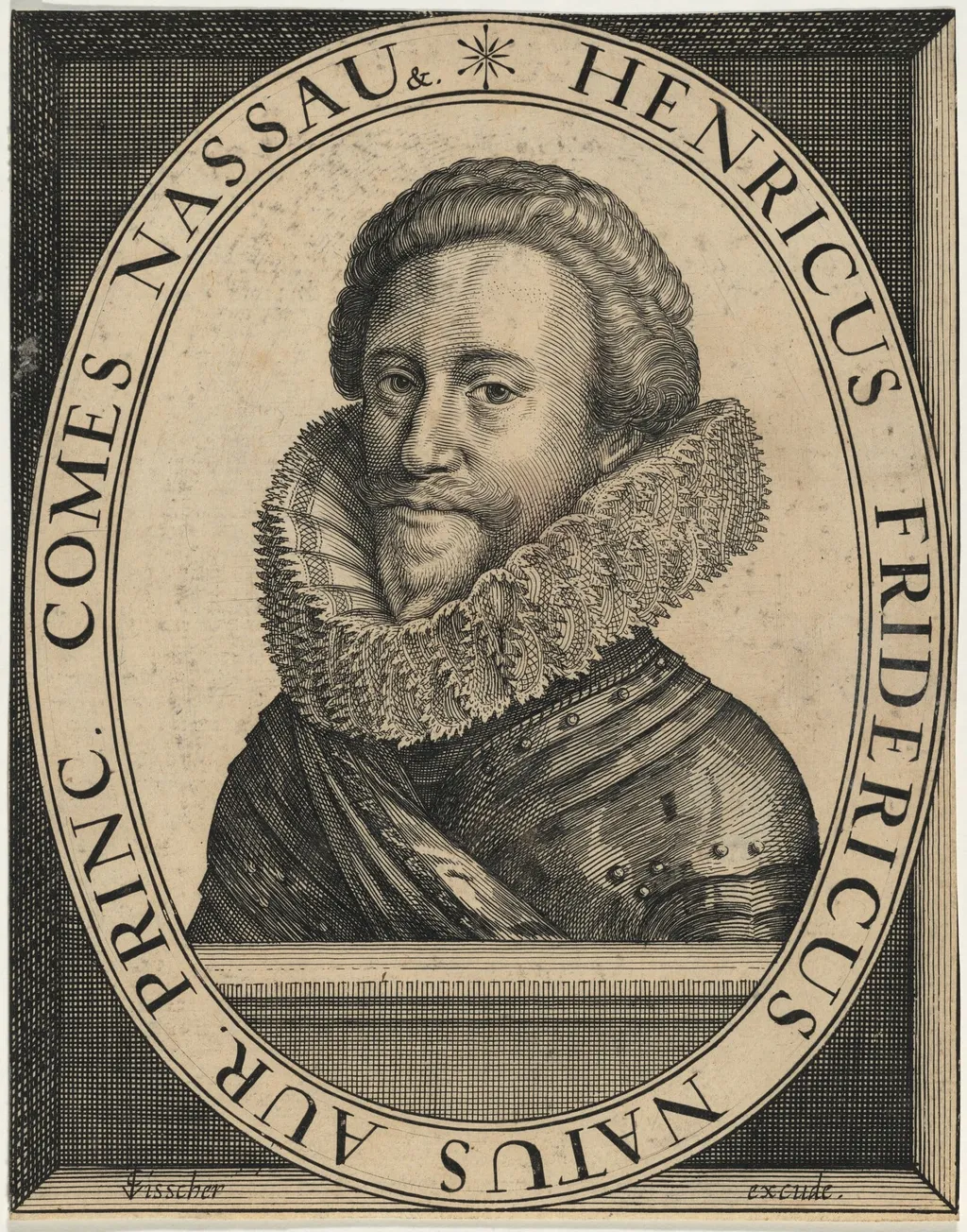
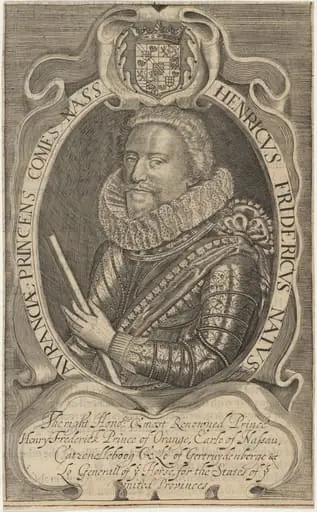
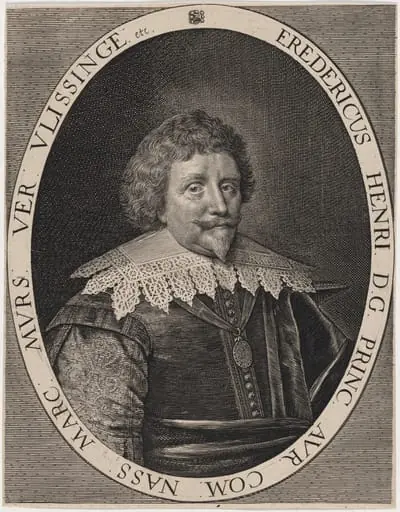
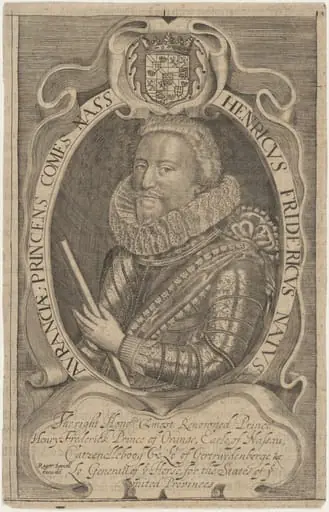
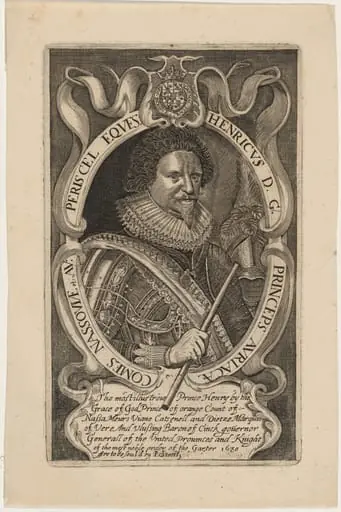
Frederick Henry of Nassau is an ink print by the Renaissance artist Claes Jansz Visscher. It dates from 1619 and is held in the collection of the National Gallery of Art. The 1619 engraving presents Frederick Henry, Prince of Orange, rendered in a tightly worked line composition.
About this work
Overview
The 1619 engraving presents Frederick Henry, Prince of Orange, rendered in a tightly worked line composition. The portrait focuses on his face, framed by a ruffled collar and dark attire, while his short, curled hair frames the expression. Visscher’s print captures the dignified bearing of the Dutch leader during the early seventeenth century.
Subject & Meaning
Frederick Henry (1584–1647) was a central military and political figure in the Dutch fight for independence, succeeding his half‑brother Maurice as Stadtholder. The portrait underscores his authority and the emerging national identity of the United Provinces, presenting him as a poised, resolute commander in the aftermath of the Eighty Years’ War.
Technique & Style
Claes Jansz Visscher employed fine cross‑hatching and delicate line work to model light and shadow across the subject’s features and garments. The intricate network of strokes creates a subtle gradation of tone, giving the portrait a three‑dimensional quality despite its monochrome medium. The meticulous rendering reflects the high level of craftsmanship typical of Dutch printmaking at the time.
History & Provenance
Visscher, a noted draughtsman, engraver, and mapmaker, produced the image during a flourishing period for print culture in the Dutch Republic. His family’s publishing house in Amsterdam continued to disseminate maps and prints for generations, ensuring the work’s wide distribution. Surviving copies are held in several European collections, attesting to its historical circulation.
Artist & collection

Artist
Claes Janszoon Visscher (1587 – 19 June 1652) was a Dutch Golden Age draughtsman, engraver, mapmaker, and publisher.