Artwork
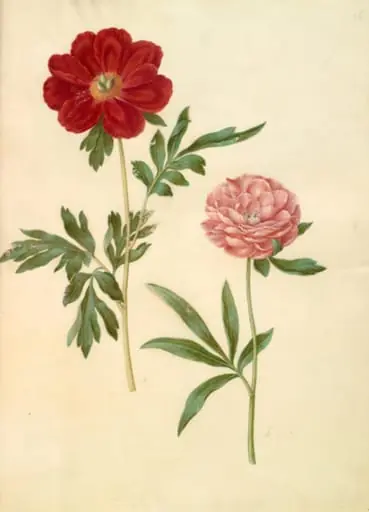
Paeonies (Paeonia officinalis)
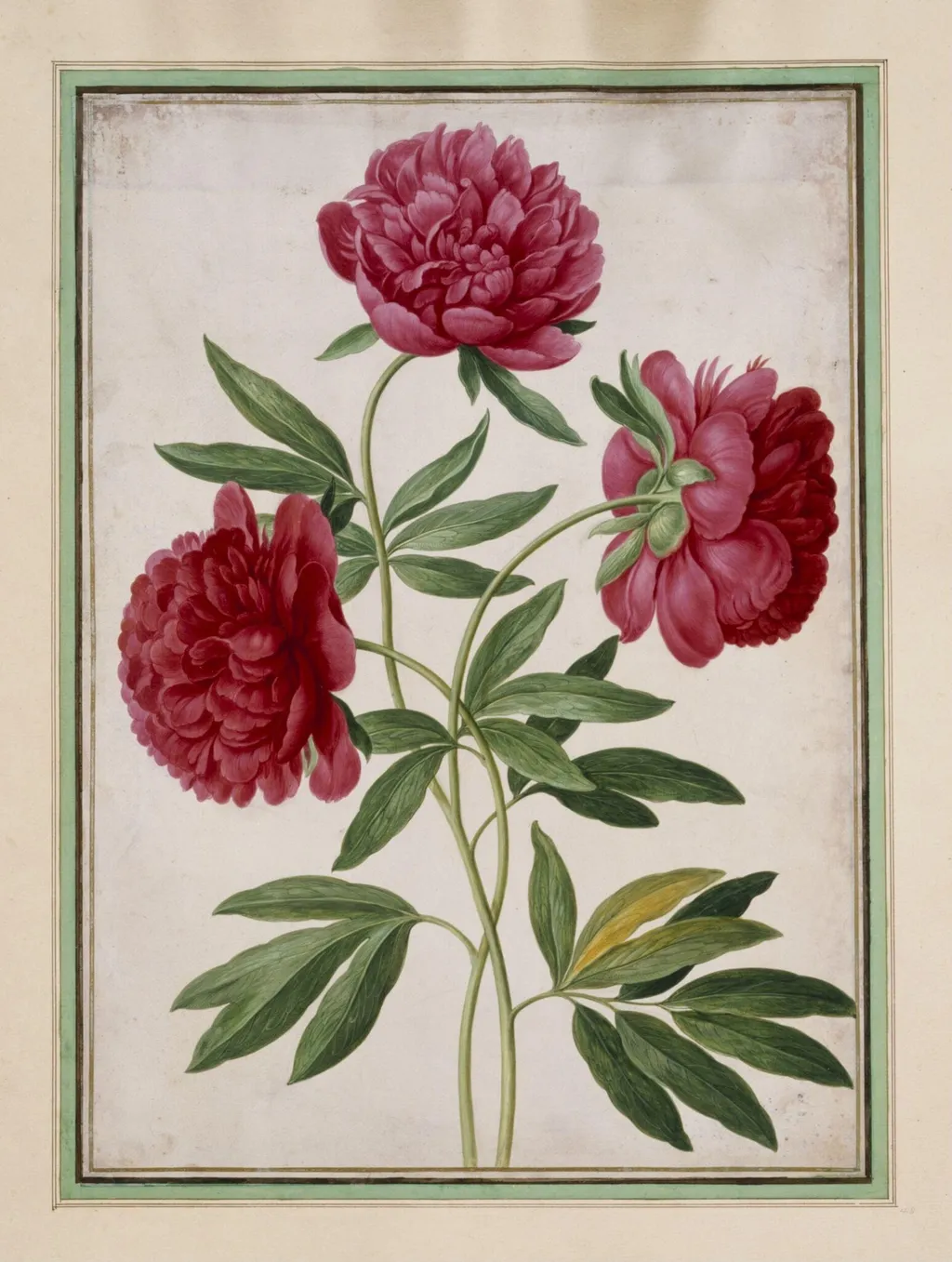
Paeonies (Paeonia officinalis) is a watercolor work on paper by the Baroque artist Johann Jakob Walther. It dates from 1660 and is held in the collection of the Victoria and Albert Museum.
About this work
Overview
Paeonies (Paeonia officinalis) is a watercolour floral piece from the 'Nassau Florilegium', a 17th-century manuscript compiled by Johann Jakob Walther, documenting the flora of the Count of Nassau's garden in Idstein.
Subject & Meaning
The work focuses on peonies, reflecting the 17th-century aristocratic trend of collecting and cultivating rare, beautiful flowers. As part of the florilegium, it catalogued the garden's ephemeral botanical collection.
Technique & Style
Characterized by a naive formalism, the piece depicts plants in a stiff, 'displayed' manner, mirroring the formal garden layouts of the time. This approach prioritizes composition over naturalism, typical of the period's florilegia.
History & Provenance
Created between 1650 and 1670, 'Paeonies' is part of the 'Nassau Florilegium's' two extant volumes (with 133 studies). Related versions exist in Paris (dated 1652-65) and a destroyed Darmstadt set.
Context
Emerging in the 17th century, florilegia like this served the wealthy's fascination with exotic flora, also influencing floral motifs in decorative arts. The piece aligns with Baroque-era artistic tendencies.
Own this work as a print
Artist & collection
Artist
Working in the 1600s, Johann Jakob Walther painted delicate watercolours of flowers and fruit, often naming each kind in Latin.

 Paeonia officinalis (bonderose)
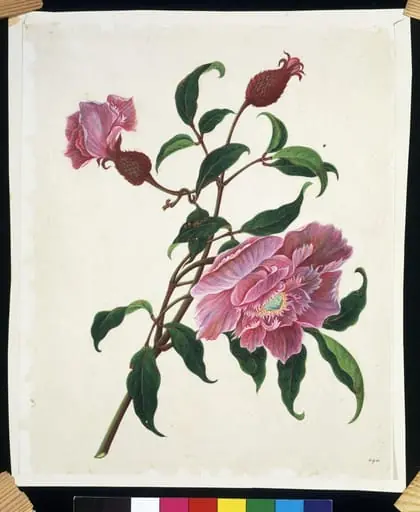 Chinese rose
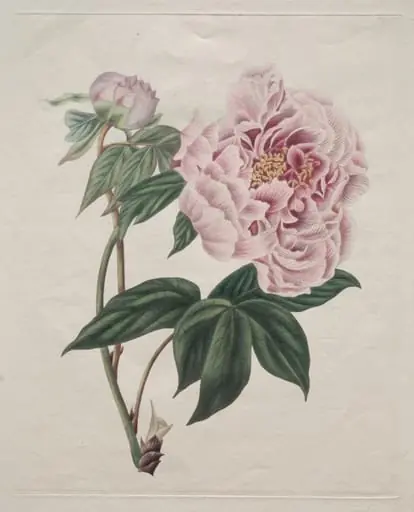 Chinese Tree Peony (Paeonia suffruticosa)
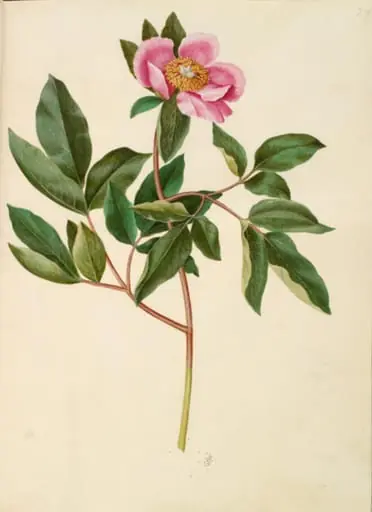 Paeonia mascula (storbladet pæon)
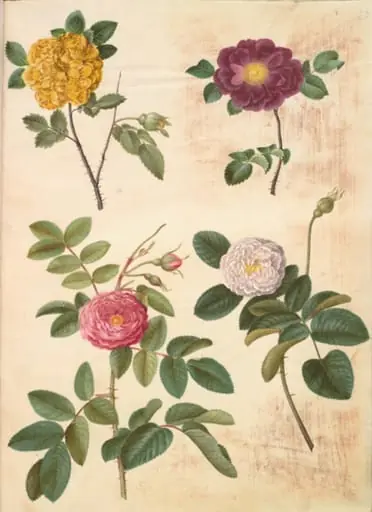 Rosa hemisphaerica (svovlgul rose); Rosa gallica (fløjls-rose); Rosa ×damascena (damascener-rose)
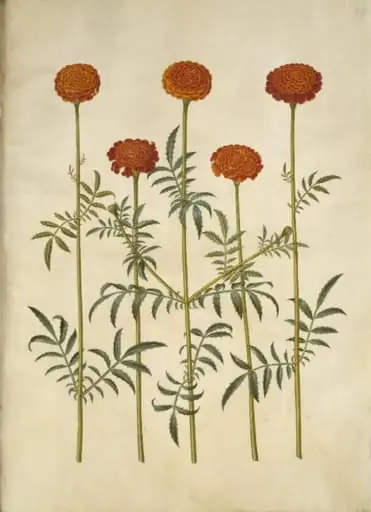 Tagetes patula (udspærret fløjlsblomst)
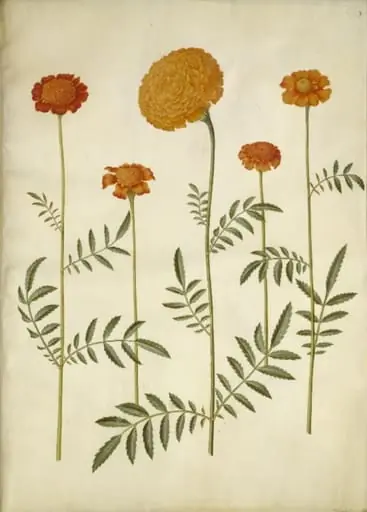 Tagetes patula (udspærret fløjlsblomst); Tagetes erecta (opret fløjlsblomst)
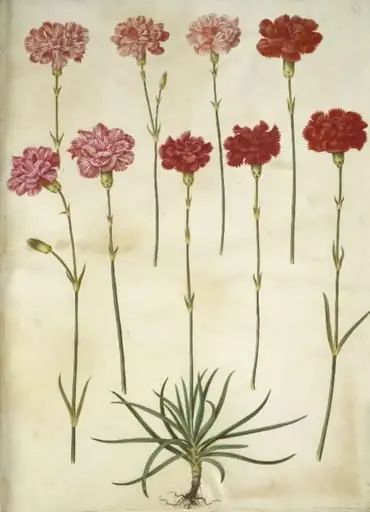 Dianthus caryophyllus (have-nellike)
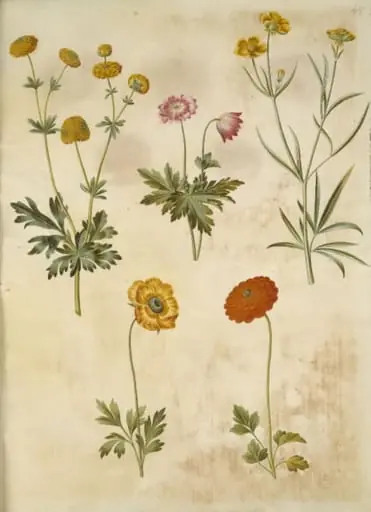 Ranunculus acris (guldknap-ranunkel); Anemone nemorosa (hvid anemone); Ranunculus illyricus (steppe-ranunkel); Ranunculus asiaticus (have-ranunkel)