Artwork
Long-billed Curlew
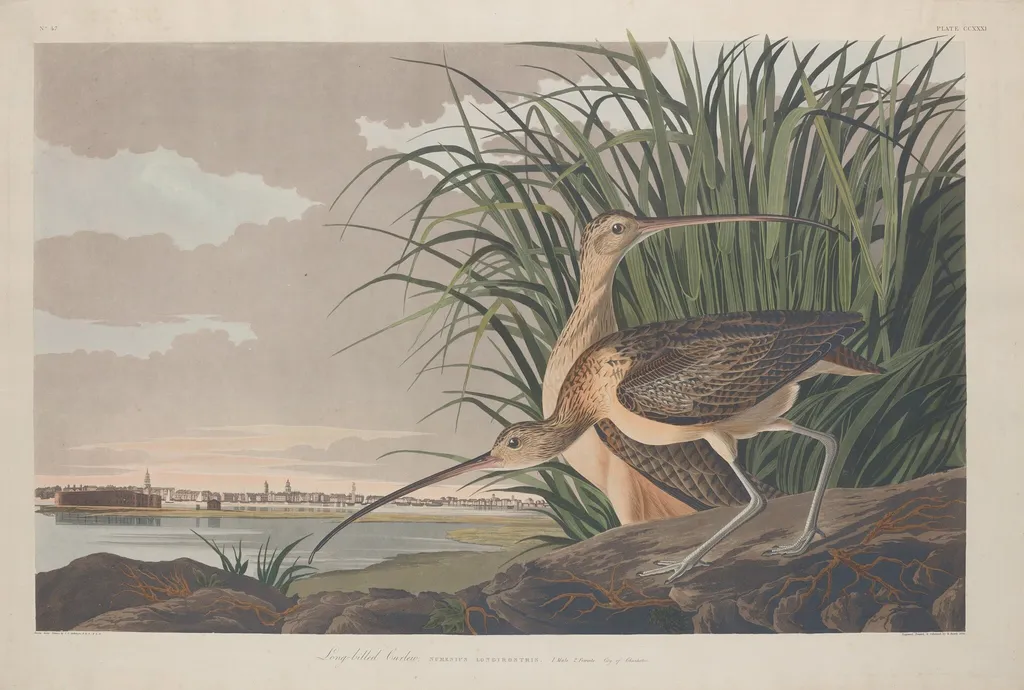
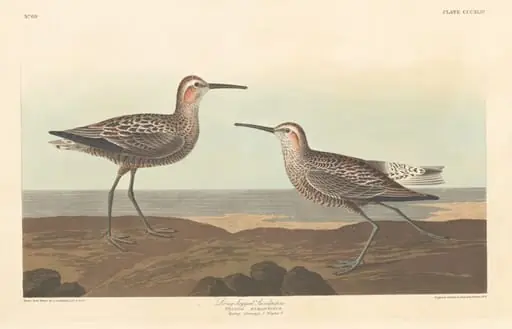
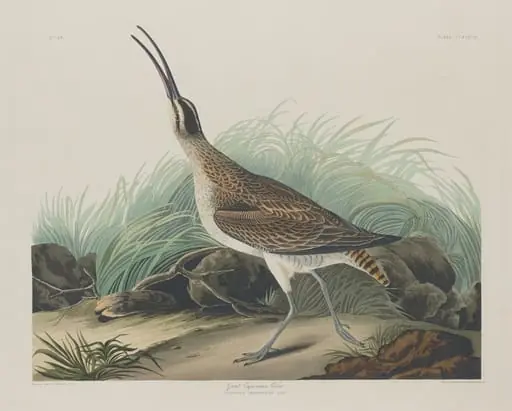
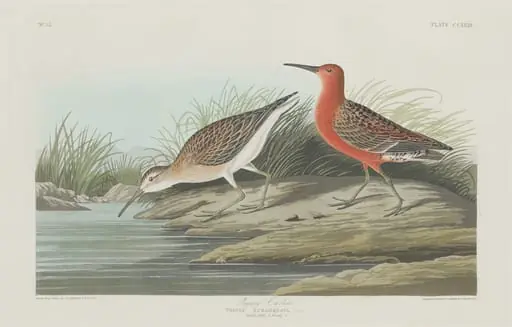
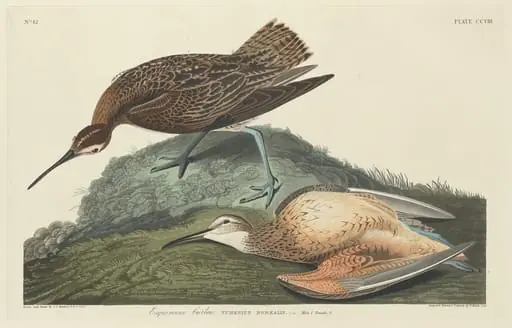
Long-billed Curlew is an ink print by the Romanticist artist Robert Havell Jr.. It dates from 1834 and is held in the collection of the National Gallery of Art. Created in 1834, this hand‑colored engraving and aquatint on fine Whatman wove paper presents a long‑billed curlew perched on a rocky ledge.
About this work
Overview
Created in 1834, this hand‑colored engraving and aquatint on fine Whatman wove paper presents a long‑billed curlew perched on a rocky ledge. The bird’s plumage is rendered in earthy browns and whites, its curved beak angled downward as it surveys the water below. A muted sky and distant cityscape frame the scene, giving the work a quiet, observational character.
Subject & Meaning
The print focuses on a large shorebird, the long‑billed curlew, known for its distinctive curved bill and coastal habitat. By placing the bird on a rugged outcrop with water and distant urban elements, the image juxtaposes natural foraging behavior with the encroaching presence of human settlement, hinting at the tension between wildlife and expanding civilization.
Technique & Style
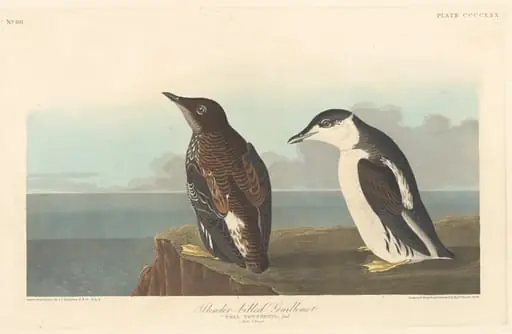
Robert Havell Jr. employed a combination of engraving and aquatint, then applied hand‑coloring to achieve tonal depth. The aquatint provides soft, watercolor‑like washes of blues and grays for sky and water, while the engraved lines define the bird’s feathers and rock texture. The use of Whatman wove paper, prized for its smooth surface, allows precise coloration and fine detail.
History & Provenance
The work belongs to the Havell family’s long tradition of printmaking; Robert Havell Jr. followed his father, Robert Havell the Elder, and uncle Luke Havell, who were noted for their expertise in aquatint and links to Indian art publishing. Produced during the early Victorian period, the print circulated among natural‑history enthusiasts and collectors of scientific illustration.
Artist & collection

Artist
The Havell family of Reading, Berkshire, England, included a number of notable engravers, etchers and painters, as well as writers, publishers, educators, and musicians.