Artwork
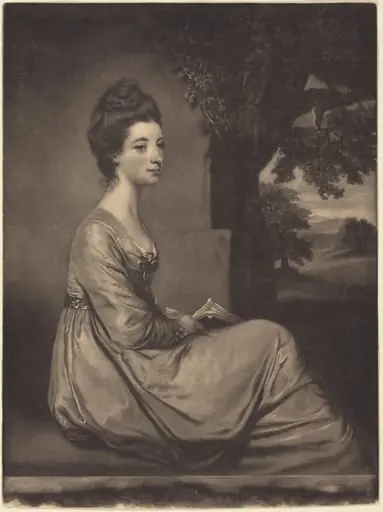
Lucinda, Miss Moore
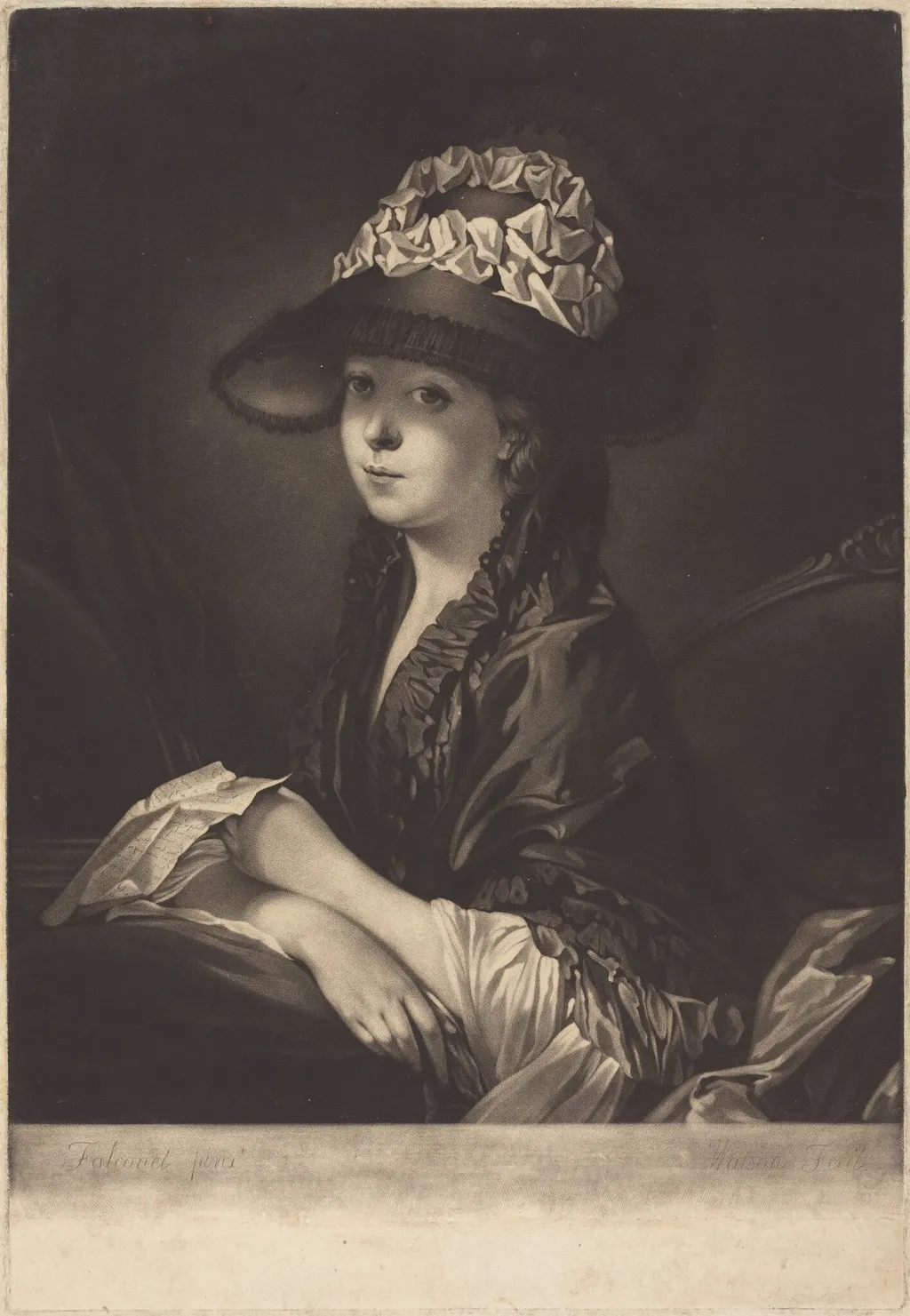
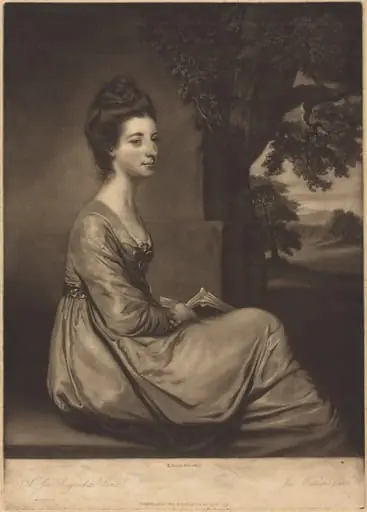
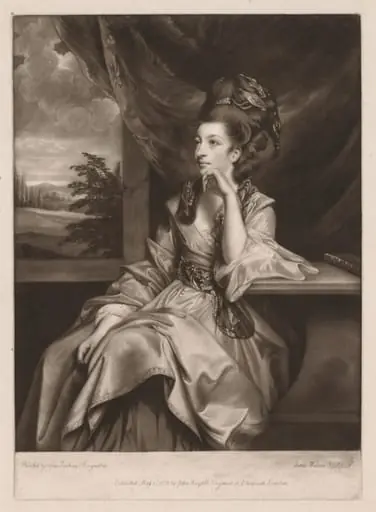
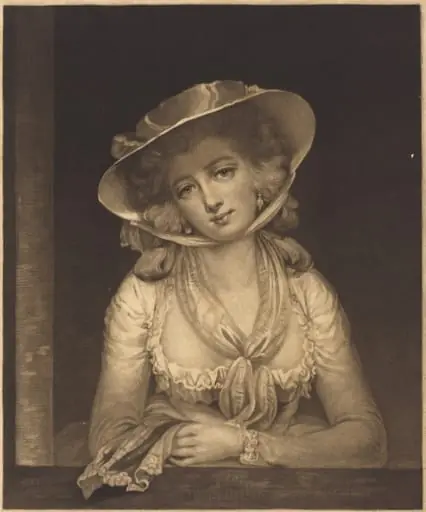
Lucinda, Miss Moore is an ink print by the Romanticist artist James Watson. It dates from 1772 and is held in the collection of the National Gallery of Art.
About this work
Overview
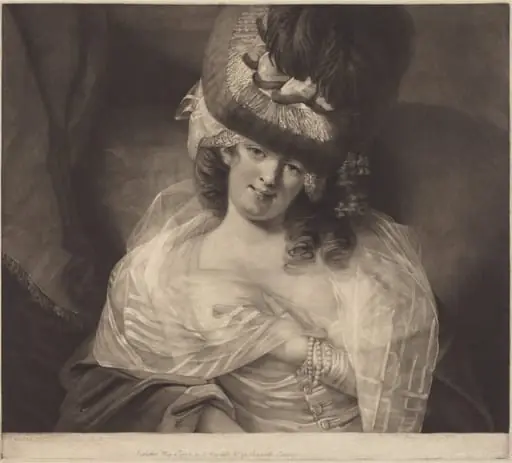
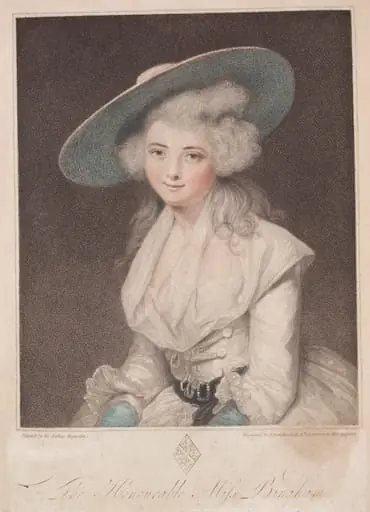
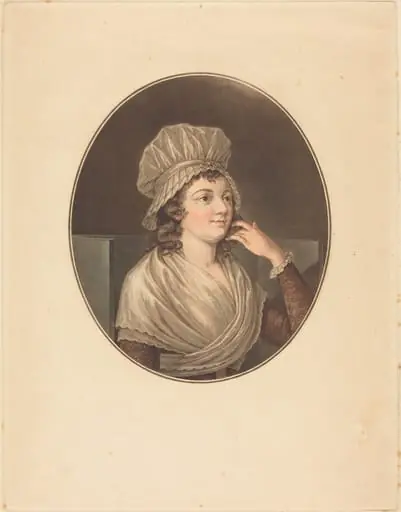
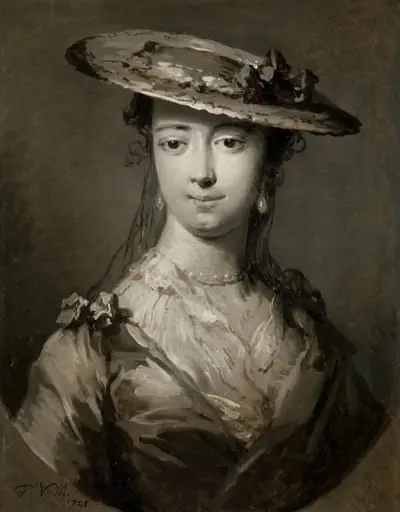
James Watson’s 1772 mezzotint, titled Lucinda, Miss Moore, presents a solitary female sitter. The composition isolates the figure against a dark, unadorned backdrop, drawing attention to her attire and expression. The portrait’s tonal range, rendered entirely in black and white, emphasizes the contrast between illuminated flesh and surrounding shadow.
Subject & Meaning
The sitter, identified as Lucinda Moore, is depicted in a fashionable gown with a high collar and a voluminous hat adorned with floral motifs. Her posture—one arm resting on a chair—conveys a poised yet informal presence, suggesting both genteel status and personal intimacy within the portrait’s limited setting.
Technique & Style
Watson employed the mezzotint process, a printmaking method known for its capacity to produce rich, velvety tones. Through meticulous shading, the artist achieved a three‑dimensional modeling of the face, creating a subtle, luminous quality. The work exemplifies the chiaroscuro effect popular in eighteenth‑century portraiture, where light and dark delineate form.
History & Provenance
Created in 1772, the print reflects the period’s demand for affordable portrait reproductions among the British middle class. While specific ownership records are scarce, the work has been catalogued in several collections of eighteenth‑century British prints, indicating its circulation among connoisseurs of the era.
Context
Mezzotint enjoyed prominence in the mid‑1700s as a means of reproducing painted portraits for a broader audience. Watson’s choice of this medium aligns with contemporary practices, allowing the likeness of Lucinda Moore to be disseminated beyond the original painted model, thereby contributing to the visual culture of the Georgian period.
Artist & collection