Artwork
Samuel Johnson
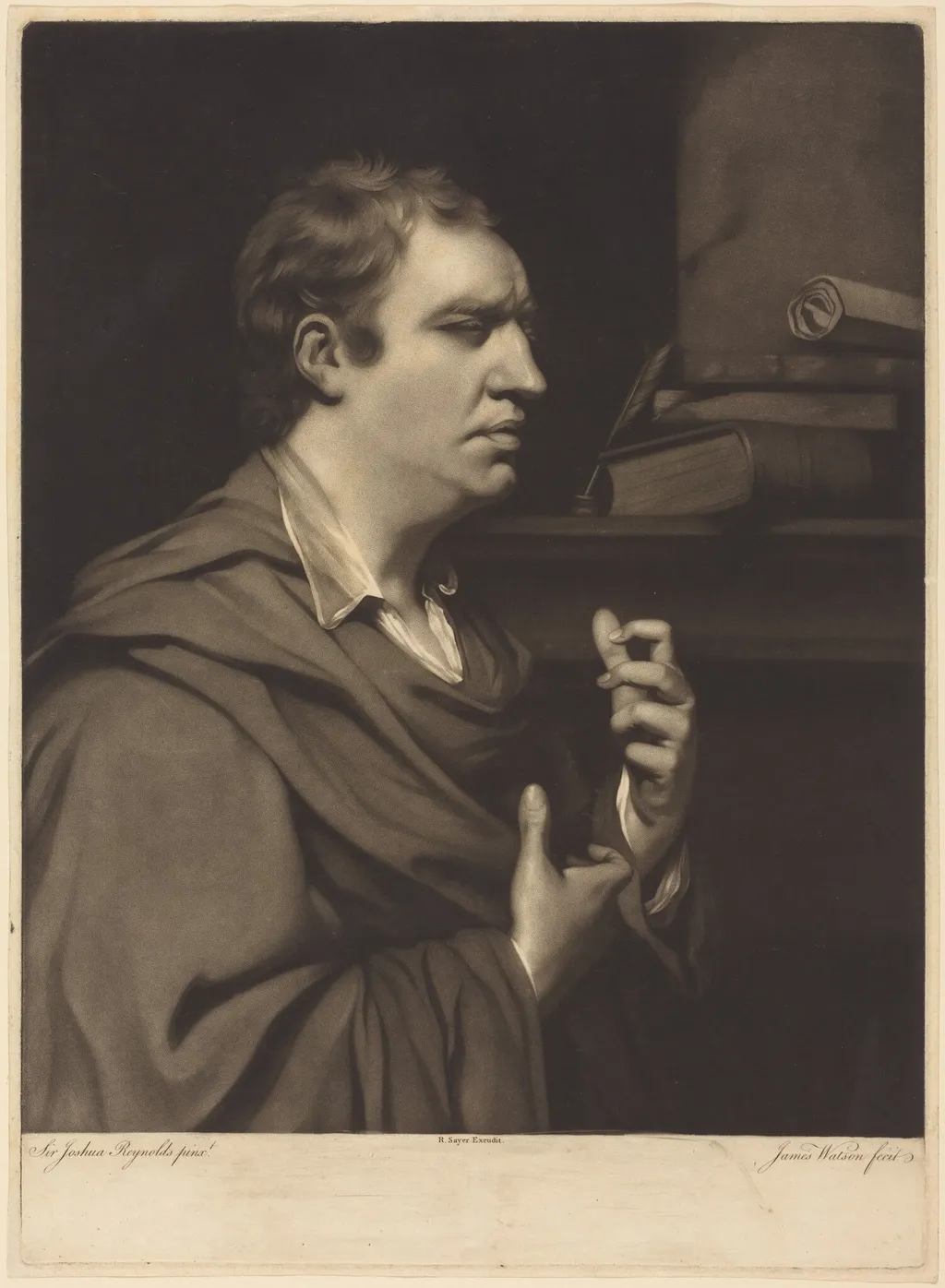
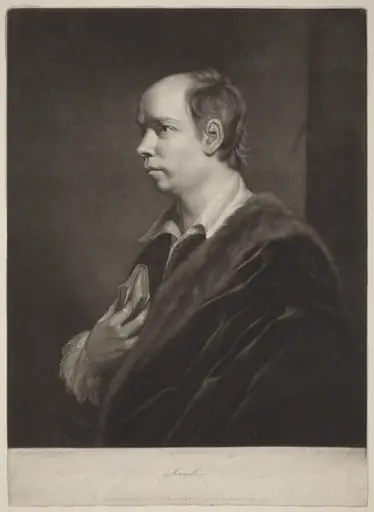
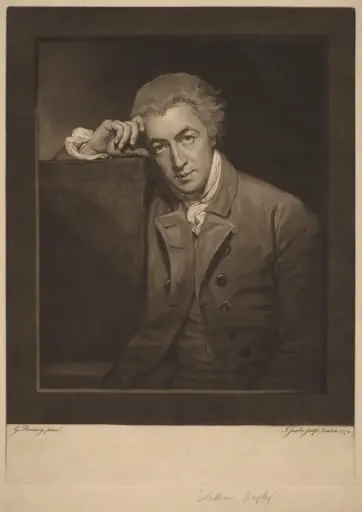
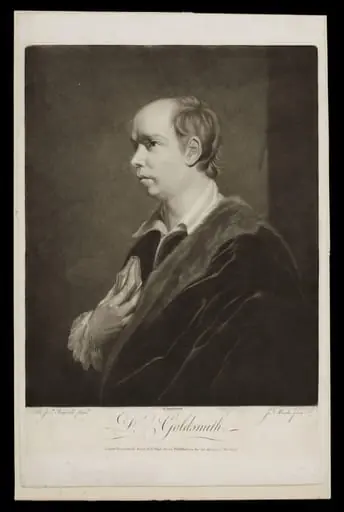
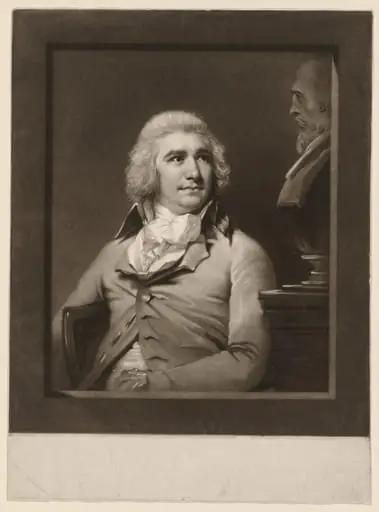
Samuel Johnson is an ink print by the Romanticist artist James Watson. It dates from 1770 and is held in the collection of the National Gallery of Art.
About this work
Overview
Executed in a tonal printmaking technique known for its rich gradations of gray, the portrait captures Johnson in a moment of quiet introspection.
This 1770 mezzotint by James Watson depicts the English writer and lexicographer Samuel Johnson. Executed in a tonal printmaking technique known for its rich gradations of gray, the portrait captures Johnson in a moment of quiet introspection. The dark, unadorned background focuses attention on his figure, while the medium’s capacity for subtle light shifts enhances the sense of physical presence and psychological depth.
Subject & Meaning
Johnson is portrayed in a dark robe over a white shirt, his right hand raised slightly as if mid-thought. His downward gaze and solemn expression convey a contemplative demeanor, consistent with his public image as a serious intellectual. The absence of symbolic objects or elaborate setting strips the image of ornamentation, reinforcing an emphasis on character rather than status or achievement.
Technique & Style
Watson employed mezzotint, a method that begins with a roughened copper plate to produce deep blacks, then smooths areas to create lighter tones. This allowed for nuanced modeling of Johnson’s face and fabric, with soft transitions between shadow and light. The chiaroscuro effect heightens the three-dimensionality of his form, while the muted palette and controlled contrasts reflect the restrained aesthetic of 18th-century portraiture.
History & Provenance
Created in 1770, shortly after Johnson’s rise to national prominence following the publication of his Dictionary, this print was likely made to meet public interest in his likeness. Watson, known for reproductive prints, based his image on an earlier painting. The work circulated widely as a printed portrait, contributing to Johnson’s visual legacy during his lifetime and beyond.
Context
In the late 1760s and 1770s, mezzotints were a popular medium for disseminating portraits of notable figures. Johnson, as a central figure in London’s literary circles, was frequently depicted in print. This image aligns with contemporary efforts to define intellectual identity through portraiture—emphasizing gravity, restraint, and inner life over theatricality or aristocratic display.
Legacy
Watson’s mezzotint became one of the most widely reproduced images of Johnson in the 18th century. Its sober tone and technical precision influenced later depictions of the writer, cementing a visual archetype of the thoughtful scholar. Though not the only portrait of Johnson, it remains a key reference for understanding how his public persona was visually constructed during his lifetime.
Artist & collection