Artwork
Brooch with Table-Stones, Butterflies at Top, and Peacocks and Hermes at Bottom
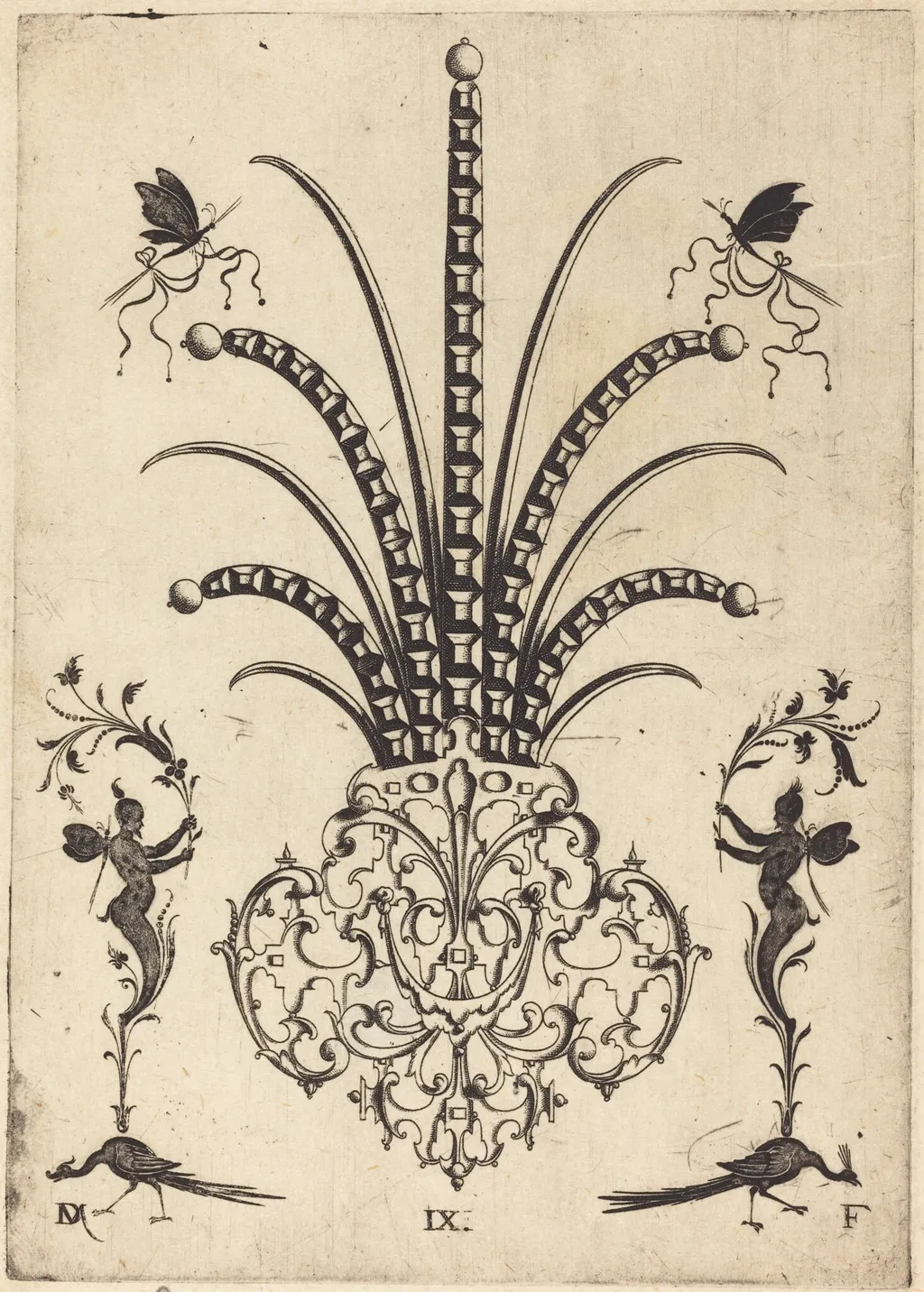
Brooch with Table-Stones, Butterflies at Top, and Peacocks and Hermes at Bottom is an ink print by the Renaissance artist Daniel Mignot. It dates from 1596 and is held in the collection of the National Gallery of Art.
About this work
Overview
The design is organized around a central, elongated flower‑like form with a lattice‑patterned stem, surrounded by smaller buds and foliage.
Daniel Mignot’s 1596 engraving presents a decorative brooch rendered in black‑and‑white. The design is organized around a central, elongated flower‑like form with a lattice‑patterned stem, surrounded by smaller buds and foliage. At the apex, two butterflies are perched, while the lower portion features a pair of peacocks with fanned tails and a diminutive figure wearing winged sandals, identified as Hermes.
Subject & Meaning
The composition combines natural and mythological motifs, juxtaposing delicate insects and avian splendor with the classical messenger god. The butterflies and peacocks evoke themes of transformation and beauty, while Hermes, a symbol of travel and communication, may allude to the brooch’s function as a portable, ornamental object that conveys status and cultural knowledge.
Technique & Style
Executed through fine line engraving, Mignot achieves intricate detail by incising the copper plate with a burin, allowing subtle gradations of tone. The lattice stem, feathered tails, and delicate wings are rendered with cross‑hatching and stippling, creating a sense of depth and texture that mimics the sheen of metalwork within a monochrome print.
History & Provenance
Created in the late sixteenth century, the print reflects the period’s fascination with ornamental design and classical references. While specific ownership records are scarce, the work is attributed to Mignot, a French engraver known for his decorative prints, and it survives in several museum collections that document the era’s printmaking practices.
Context
The brooch design aligns with Renaissance decorative arts, where motifs from nature and antiquity were frequently combined in jewelry and metalwork. Such prints served both as pattern books for craftsmen and as collectible artworks, illustrating the diffusion of artistic ideas across Europe during the late 1500s.
Artist & collection


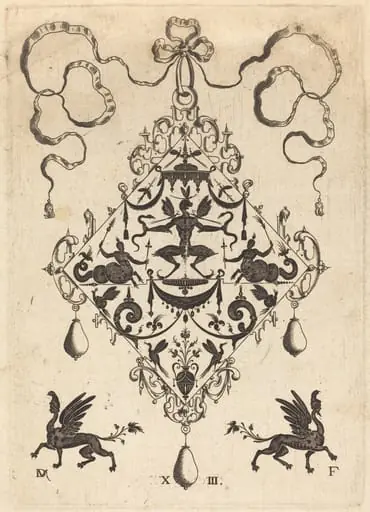 Large Pendant, Winged Fantasy Creature Holding Two Snakes
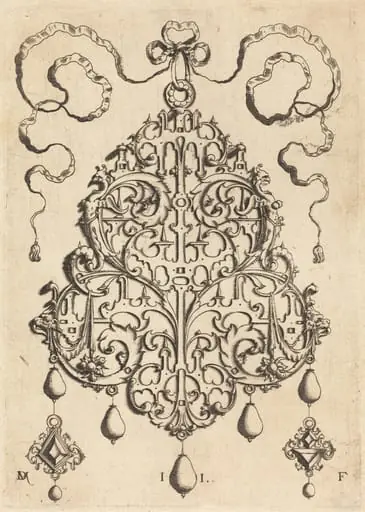 Large Strapwork Pendant with Two Hangers as Earrings at Left and Right
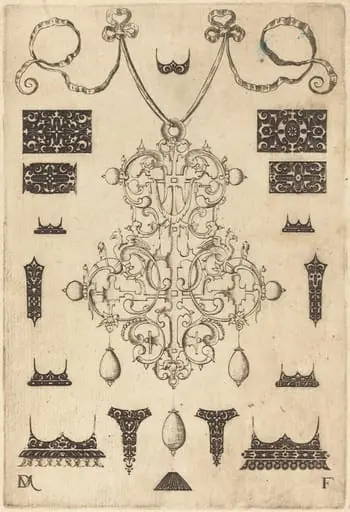 Large Pendant with Three Drops Below, Surrounded by Fifteen Different Studs
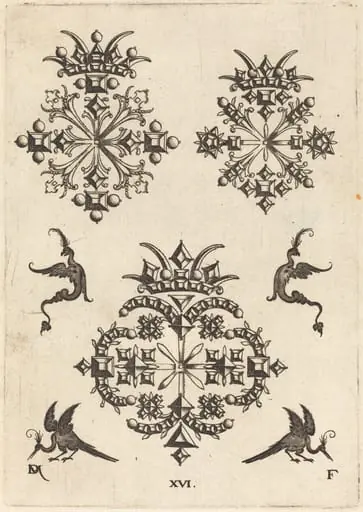 Three Brooches with Fantasy Birds at Left, Right, and Bottom
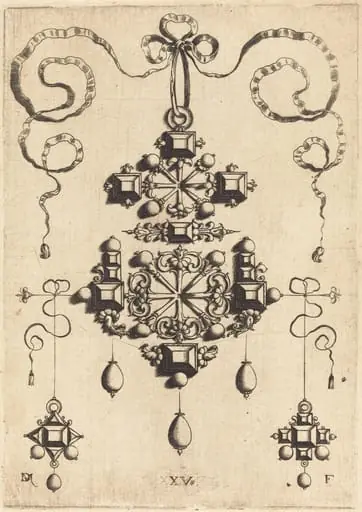 Pendant with Two Double Crosses, Surrounded by Four Diamond-Shaped Stones, Five Table-Stones, and Thirteen Pearls
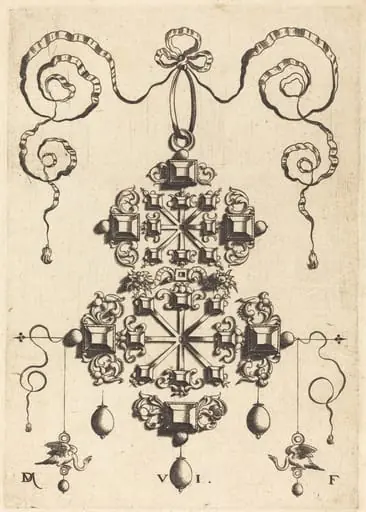 Large Pendant with Two Double Crosses, Surrounded by Six Large and Sixteen Small Table-Stones
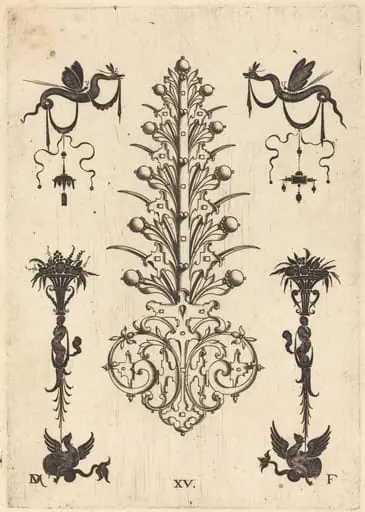 Hyacinth-Shaped Brooch with Winged Snakes at Top and Winged Animals at Bottom
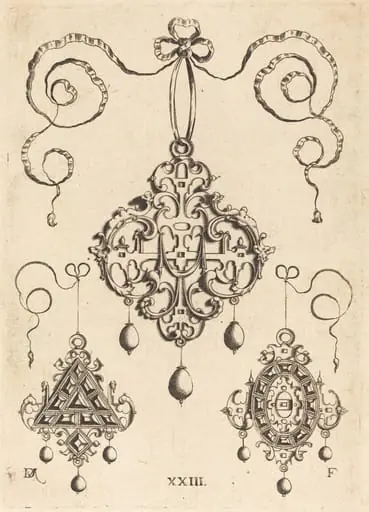 Three Strapwork Pendants, The Lower Ones Triangular and Oval
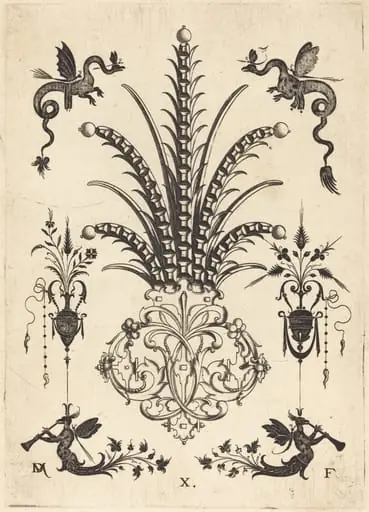 Brooch with Table-Stones, Dragons at Top, andWinged Monsters Blowing Horns at Bottom
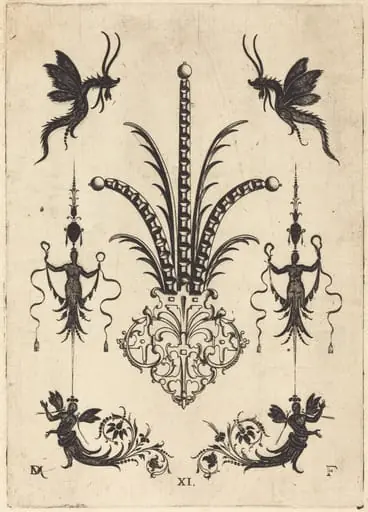 Brooch with Table-Stones, Winged Animals at Top, and Winged Human Beings at Bottom
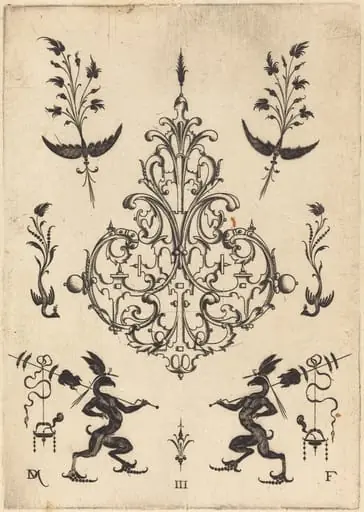 Brooch with Sprigs at Top and Griffins with Trophies at Bottom
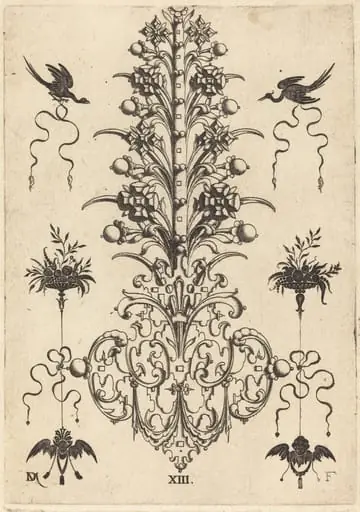 Hyacinth-Shaped Brooch with Birds at Top and Devil's- and Angel's-Head at Bottom
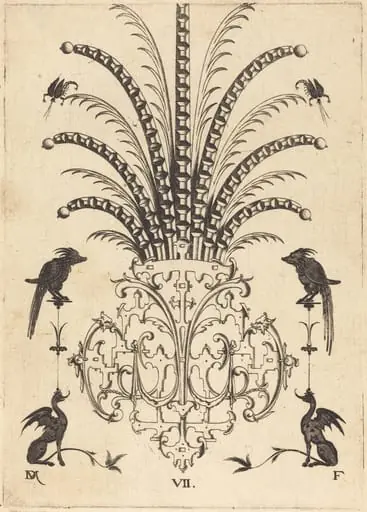 Brooch with Table-Stones, Flying Scorpions at Top, and Dogs at Bottom
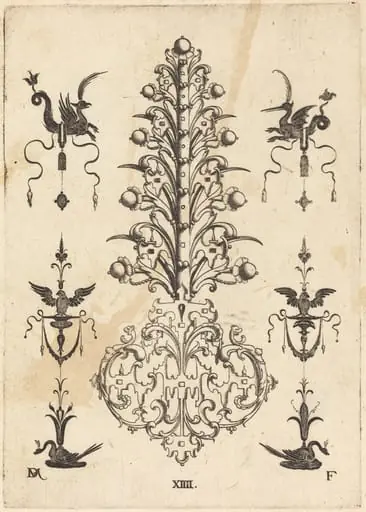 Hyacinth-Shaped Brooch with Winged Animals at Top and Crouching Swans at Bottom
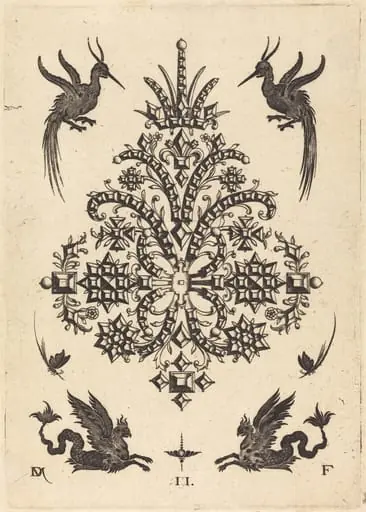 Brooch with Tablestones and Winged Griffins Above and at Bottom
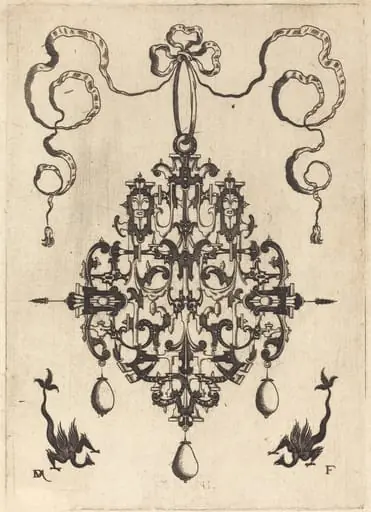 Large Pendant, Two Fantasy Creatures with Long Tails at Bottom
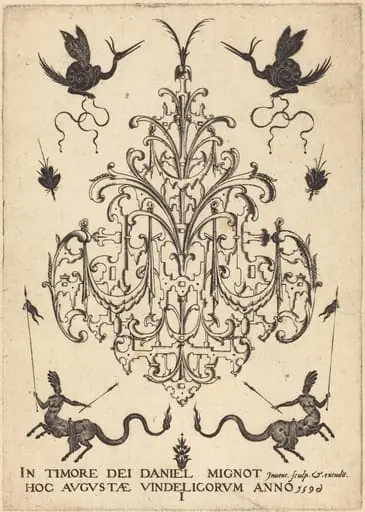 Title-Page: Brooch, Snail-like Animals Above, Centaurs with Banners at Bottom
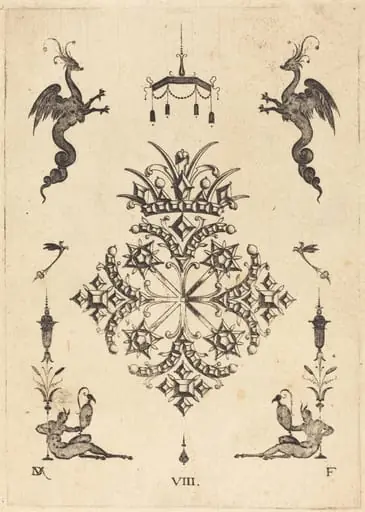 Brooch with Fantasy Animals at Top and Fauns with Vases at Bottom
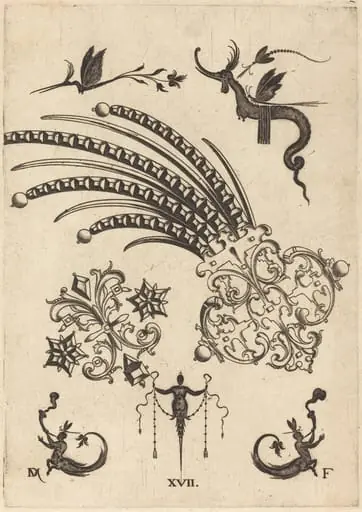 Two Brooches with Dragon and Insects at Top and Human Beings with Snake-like Tails atBottom