Artwork
The Victory of Judas Maccabeus Over Niccanor
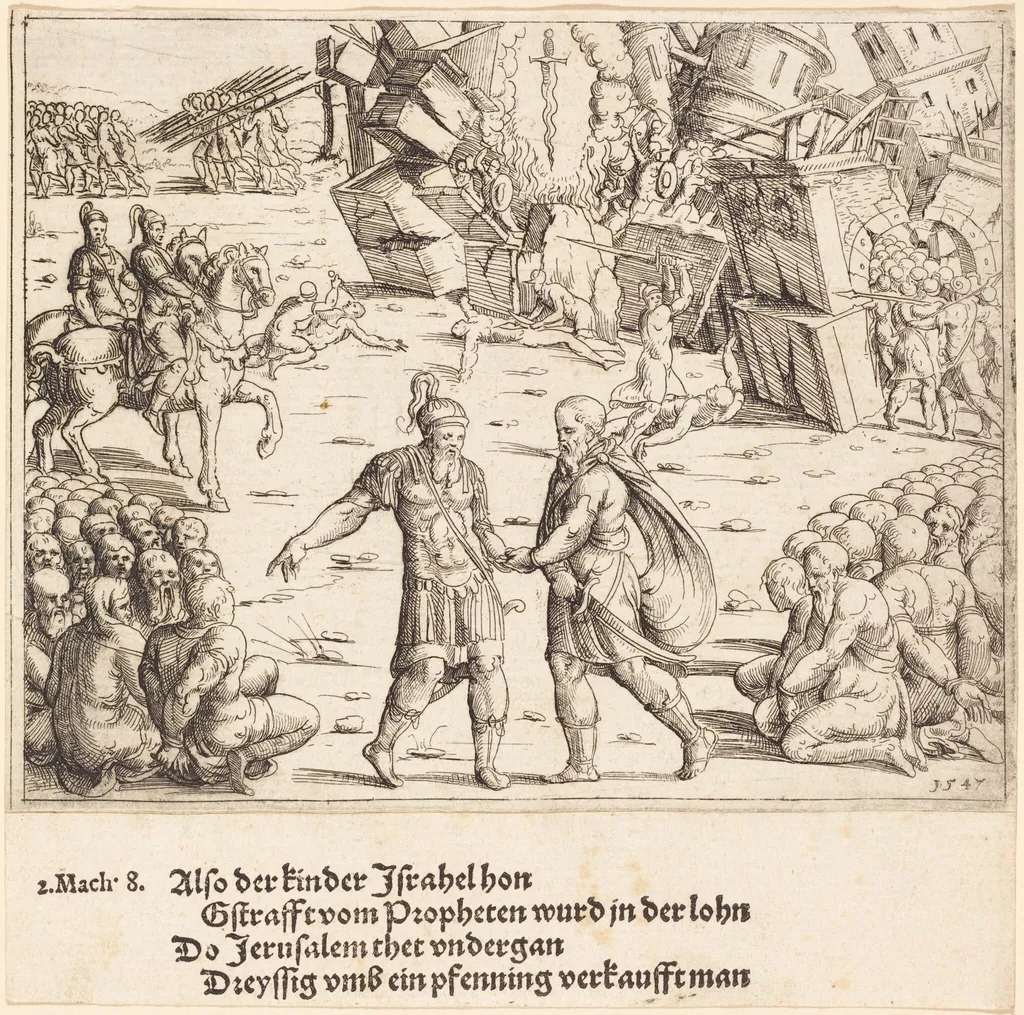
The Victory of Judas Maccabeus Over Niccanor is an ink print by the Renaissance artist Augustin Hirschvogel. It dates from 1547 and is held in the collection of the National Gallery of Art.
About this work
Overview
Though primarily known for cartography and mathematical illustrations, this work demonstrates his skill in dynamic composition through the etching technique.
Created in 1547 by the German artist Augustin Hirschvogel, this etching depicts a biblical battle scene from the Book of Maccabees. It belongs to a series of thirty-five small landscape prints Hirschvogel produced between 1545 and 1549, which reflect his interest in combining narrative action with detailed natural settings. Though primarily known for cartography and mathematical illustrations, this work demonstrates his skill in dynamic composition through the etching technique.
Subject & Meaning
The scene illustrates the defeat of the Seleucid general Nicanor by Judas Maccabeus during the Maccabean Revolt. Central figures engage in combat, while surrounding chaos—burning structures, fleeing civilians, and mounted soldiers—emphasizes the violence and upheaval of the conflict. The inclusion of German text at the base suggests the print was intended to communicate a moral or historical lesson to a contemporary audience familiar with biblical narratives and their political resonance.
Technique & Style
Hirschvogel employed fine, incised lines to render motion and depth, a hallmark of his etching style. The dense arrangement of figures and architecture creates a sense of crowded urgency, while contrasting tones of ink suggest light, shadow, and texture without color. His precise control of the burin allowed for intricate detail in armor, horses, and crumbling buildings, reflecting both technical mastery and a preference for dramatic, compressed space over naturalistic perspective.
History & Provenance
The print emerged during Hirschvogel’s most productive period in Nuremberg, where he collaborated with publishers to distribute his works widely. Though few original impressions survive, it was likely circulated among educated patrons interested in religious history and Renaissance print culture. Its inclusion in later collections indicates its recognition as a significant example of mid-16th-century German graphic art, though its exact early ownership remains undocumented.
Context
Produced during the Protestant Reformation, the story of Judas Maccabeus resonated with reformers who saw parallels between ancient Jewish resistance and their own struggle against religious oppression. Hirschvogel’s choice of subject aligns with a broader trend in Northern European art of using biblical history to comment on contemporary political and spiritual conflicts. His integration of landscape elements also reflects the Danube School’s interest in nature as a backdrop for human drama.
Legacy
While Hirschvogel’s etchings were not widely imitated, this work exemplifies the potential of the medium to convey complex narratives with precision. His fusion of historical subject matter with intricate draftsmanship influenced later generations of printmakers in the Holy Roman Empire. The print remains a rare surviving example of how religious history was visually interpreted in mid-century Germany, bridging devotional imagery and secular artistic innovation.
Own this work as a print
Artist & collection
Artist
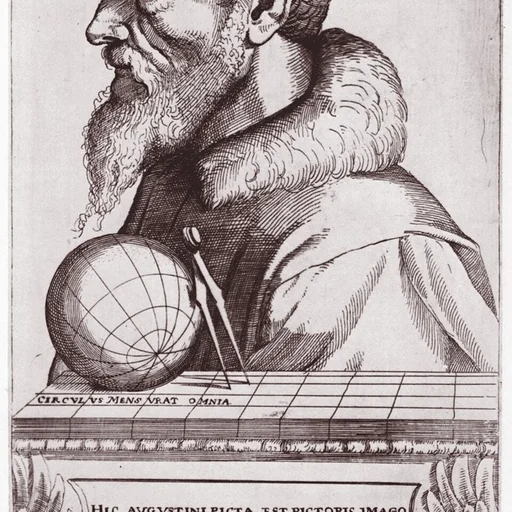
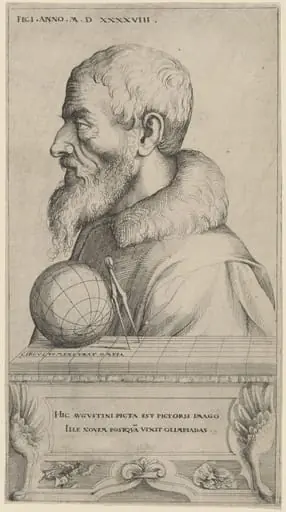
Augustin Hirschvogel (1503 – February 1553) was a German artist, mathematician, and cartographer known primarily for his etchings.

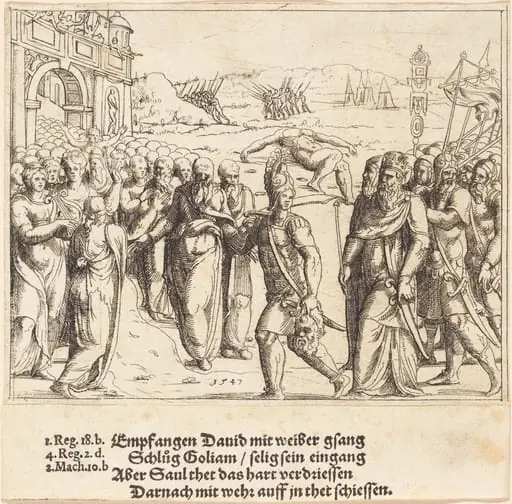 David is Welcomed after Killing Goliath, and Saul's Jealousy
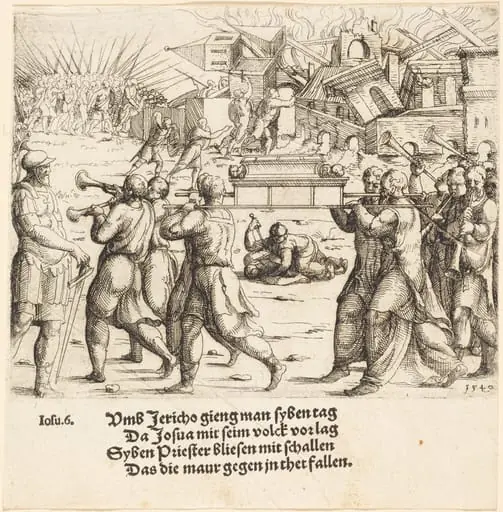 The Fall of Jericho
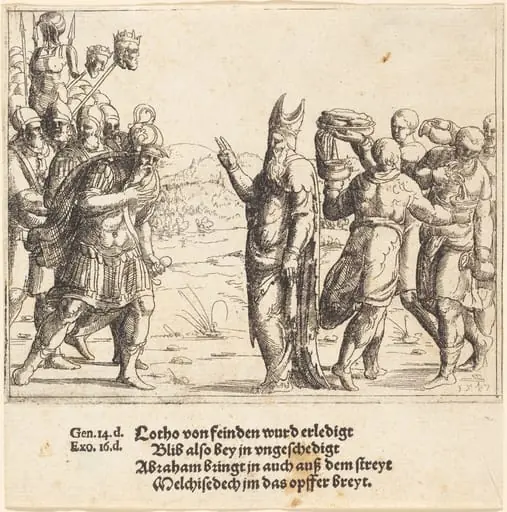 Melchizedek with Bread and Wine
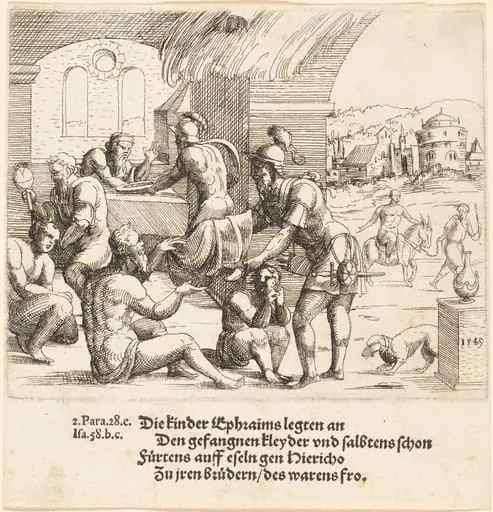 The Men of Ephraim Care for their Captives and Return Them to Jerico
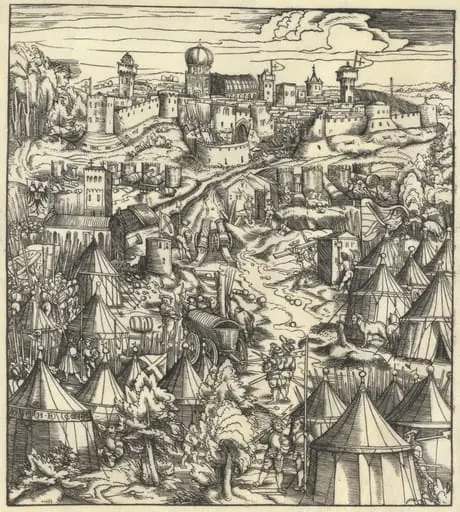 The Battle of Padua
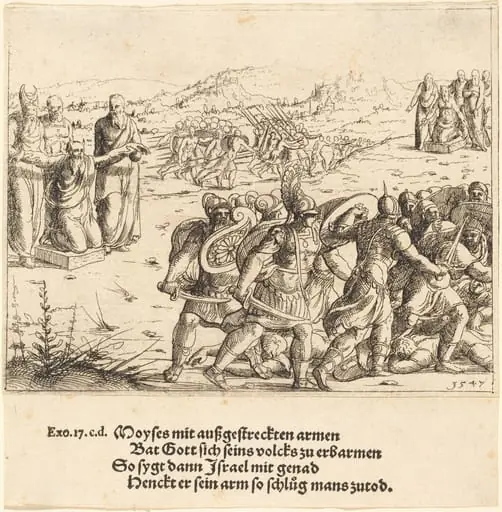 Moses with Outstretched Arms
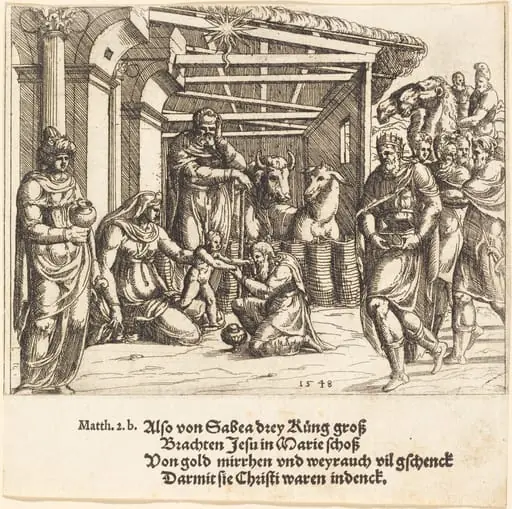 The Adoration of the Magi
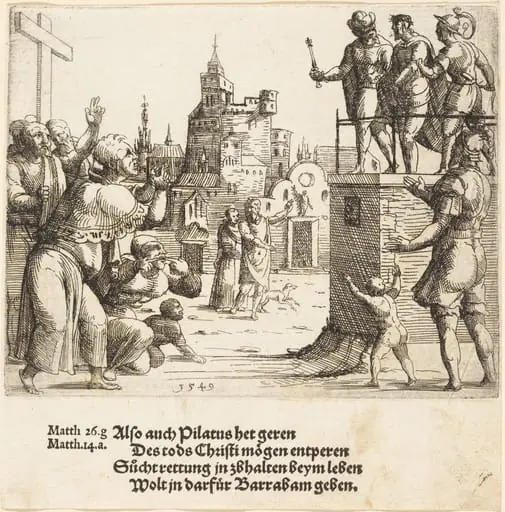 Ecce Homo
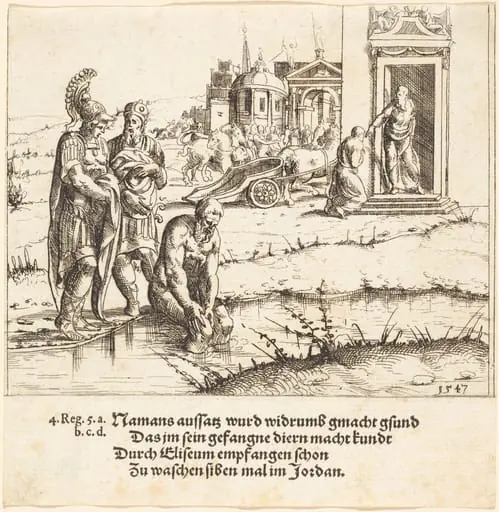 Naaman is Cured of Leprosy
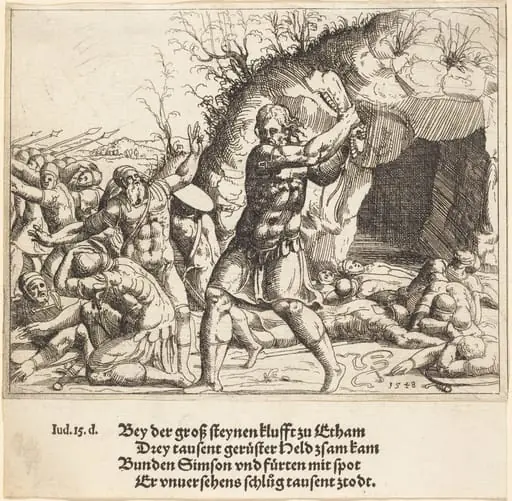 Samson Slays the Philistines
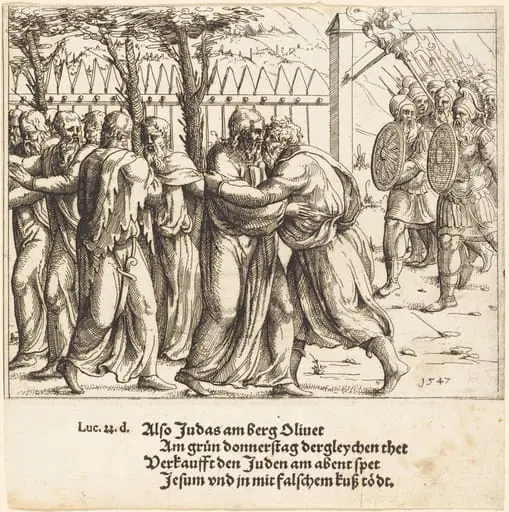 The Kiss of Judas
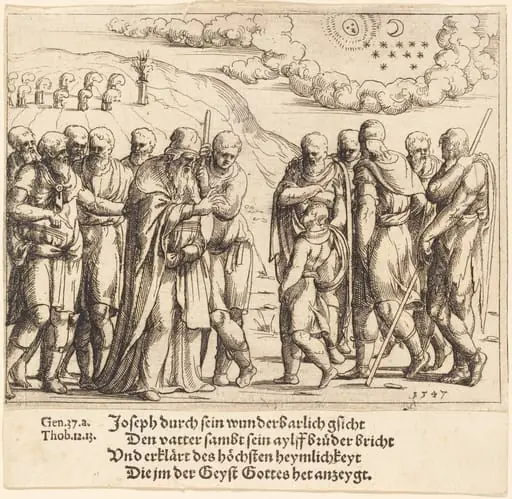 Joseph Recounts His Dreams