Artwork
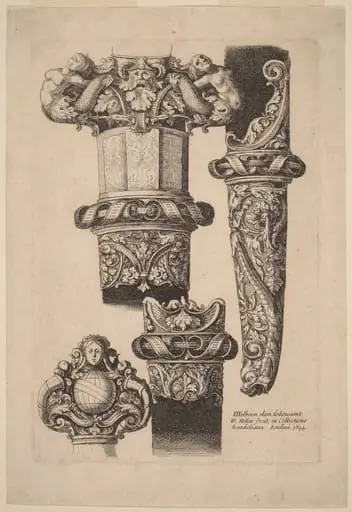
Design for Dagger Sheath
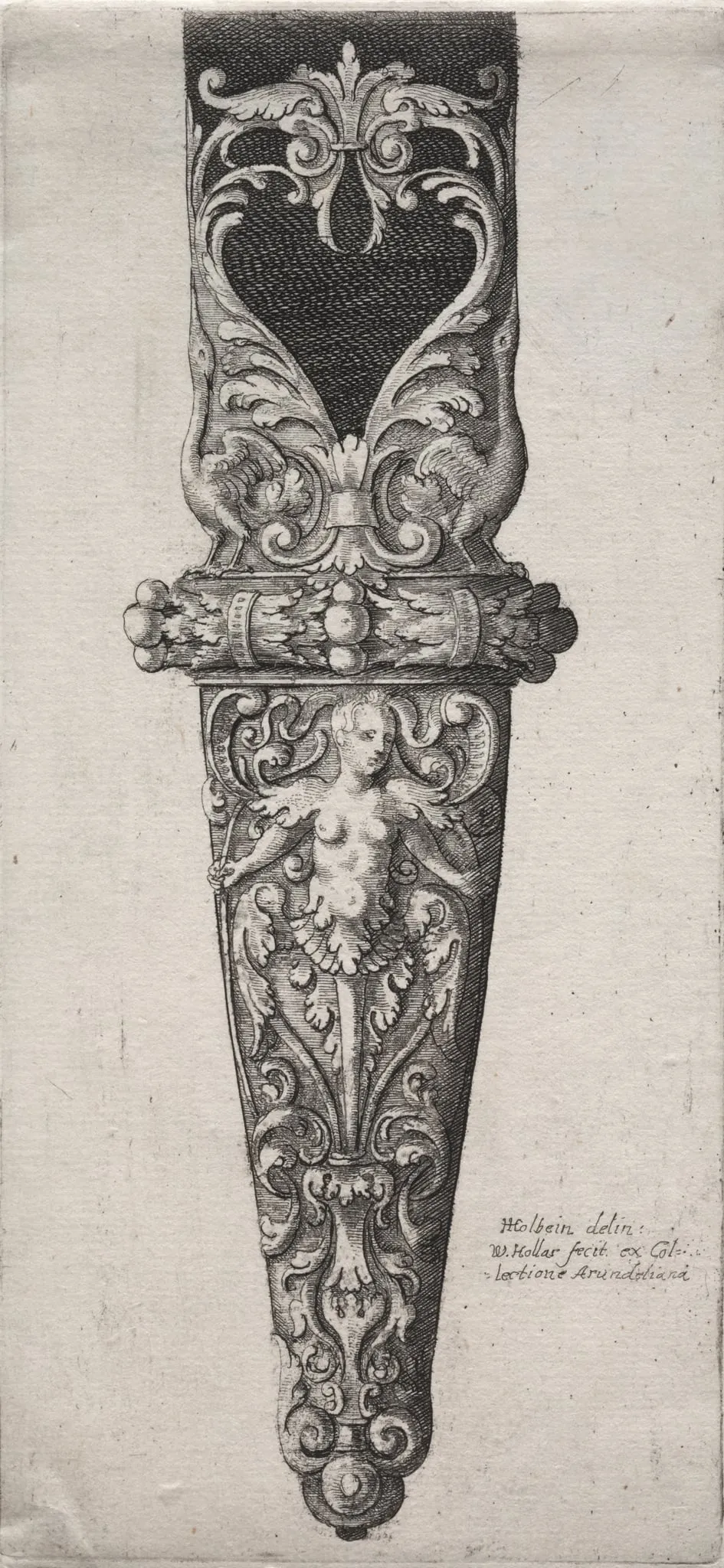
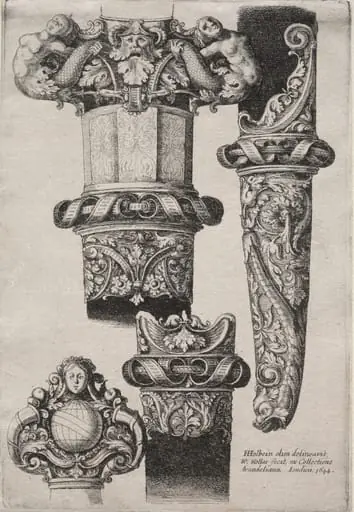
Design for Dagger Sheath is a print by the Baroque artist Wenceslaus Hollar. It dates from 1604 and is held in the collection of the Cleveland Museum of Art.
About this work
Overview
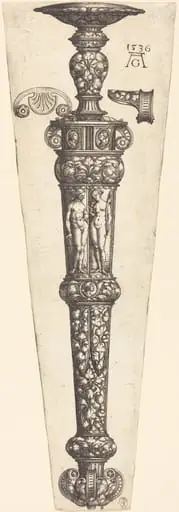
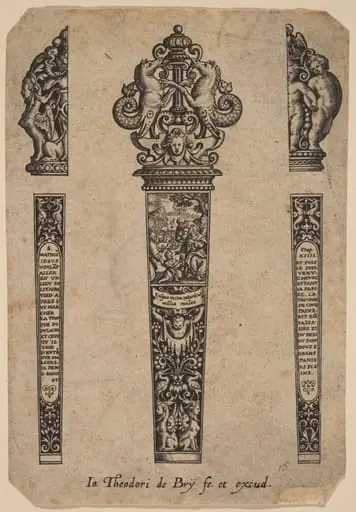
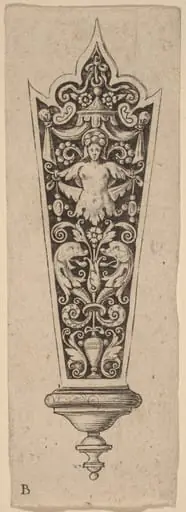
Design for Dagger Sheath is a print created by Wenceslaus Hollar, a renowned Bohemian engraver and etcher, around 1604. Unlike his more common cityscapes and landscapes, this work showcases a detailed decorative design intended for a dagger sheath.
Subject & Meaning
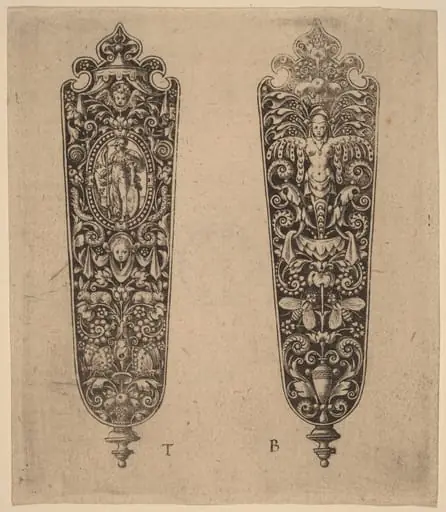
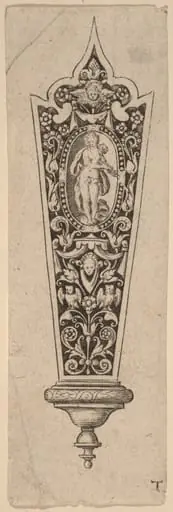
The design features intricate, Baroque-inspired elements including swirling patterns, leaves, floral motifs, and concealed miniature faces. A helmet-like form adorns the top, while the middle section incorporates floral and knotted designs, all rendered in black and white with subtle shading.
Technique & Style
Characteristic of Hollar's engraving and etching expertise, the piece exhibits meticulous detail and expressive use of line work. The incorporation of hidden faces within the design reflects the playful, ornate qualities of Baroque aesthetics.
History & Provenance
Created circa 1604 by Wenceslaus Hollar, who primarily worked in England despite his Bohemian origins. Specific provenance details are not provided.
Context
This design aligns with the popular Baroque style of its time, known for intricate, swirling patterns and ornamental complexity. It reflects the era's taste for elaborate decoration in both art and craftsmanship.
Legacy
While specific legacy details of *Design for Dagger Sheath* are not highlighted, it contributes to the broader appreciation of Hollar's versatility beyond landscapes and his contribution to the Baroque aesthetic in engraving and etching.
Artist & collection
Artist
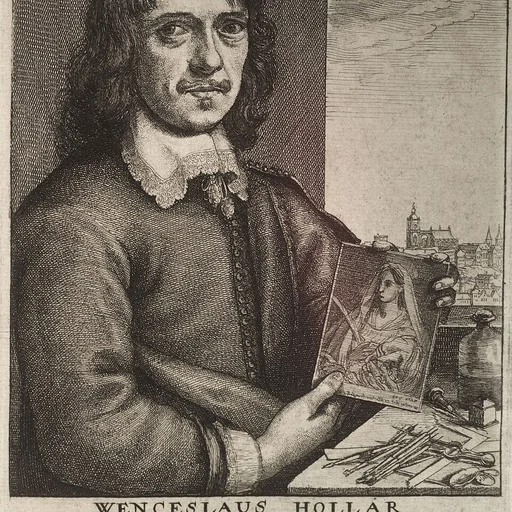
Wenceslaus Hollar (Czech: Václav Hollar (Czech pronunciation: ), German: Wenzel Hollar; 23 July 1607 – 25 March 1677) was a Czech engraver, etcher and painter.