Artwork
Ornament for Knife Handle
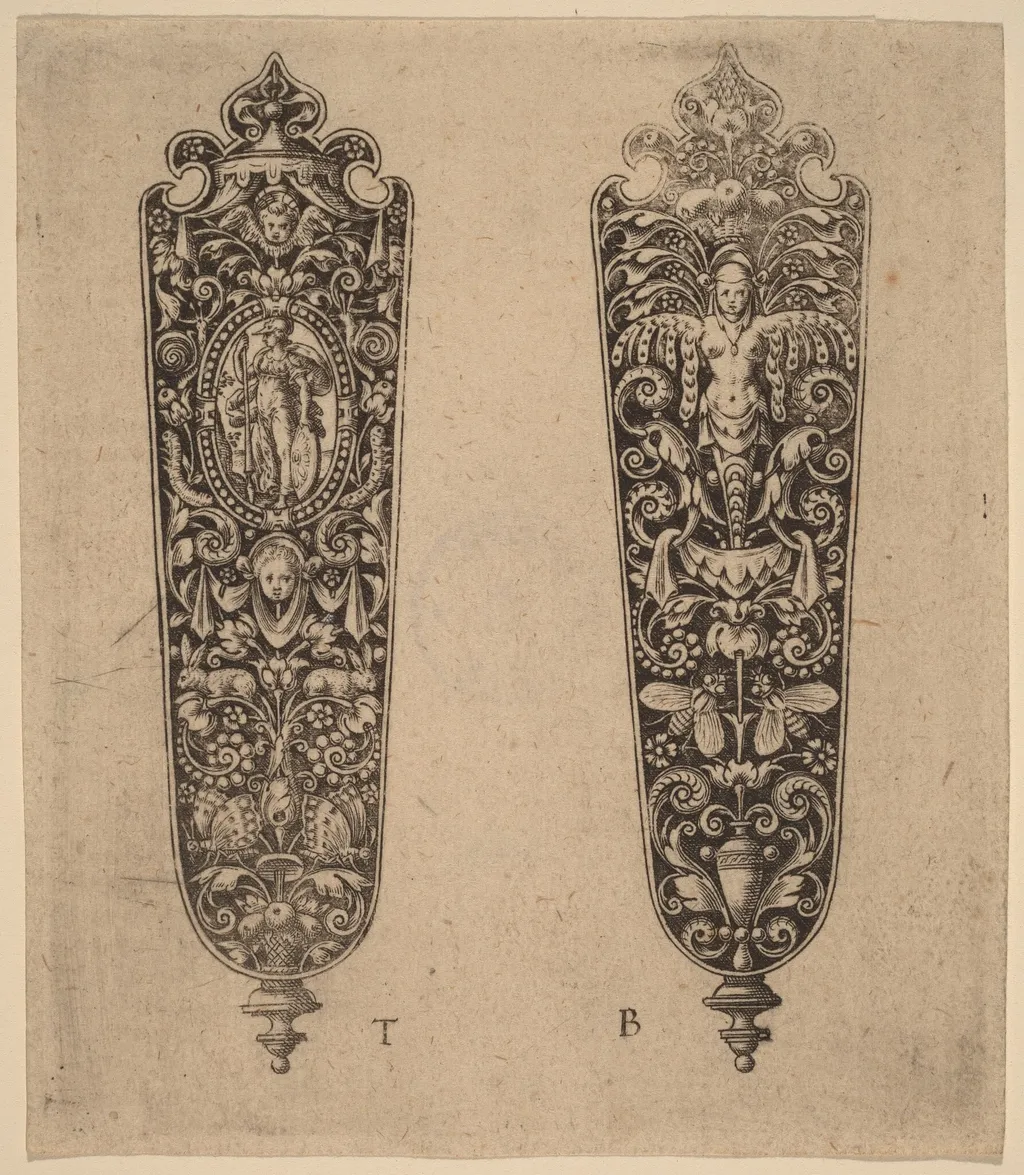
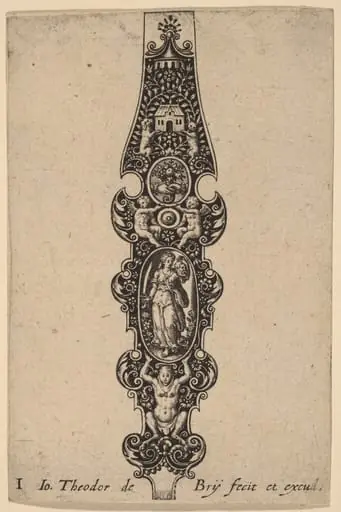
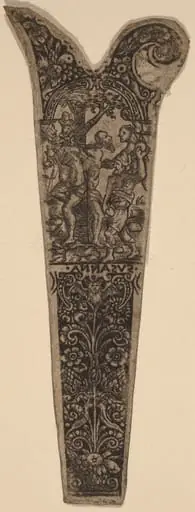
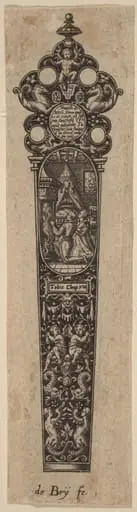
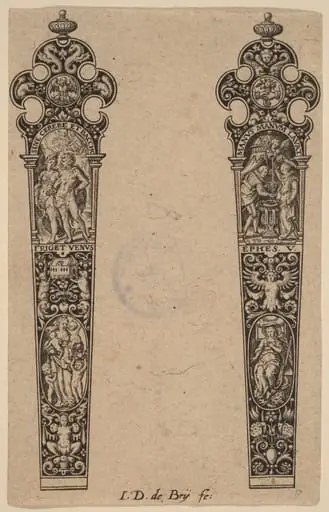
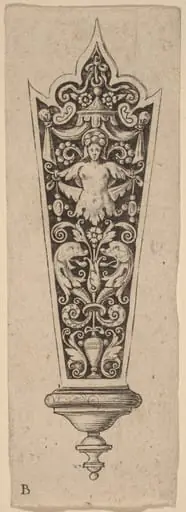
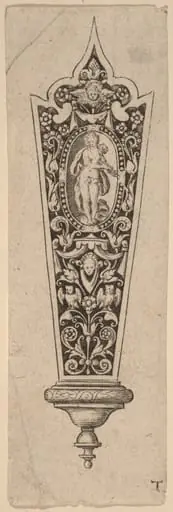
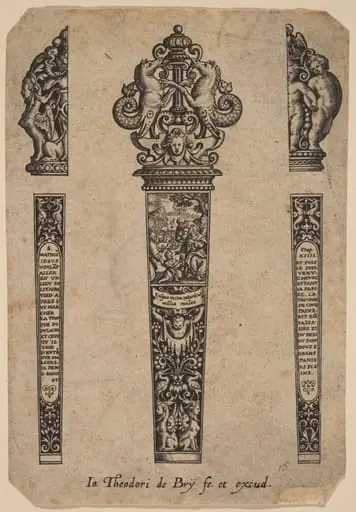
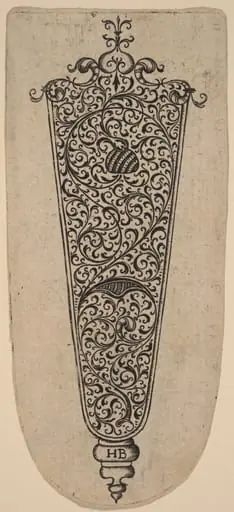
Ornament for Knife Handle is an ink print by the Renaissance artist Theodor de Bry. It dates from 1563 and is held in the collection of the National Gallery of Art.
About this work
Overview
Originally intended for reproduction in printed collections, it reflects the era’s demand for intricate designs used in personal adornments and metalwork.
Created in 1563 by Theodor de Bry, this engraving was designed as a decorative pattern for a knife handle. Though small in scale, it exemplifies de Bry’s skill in fine-line engraving and his ability to translate complex imagery into compact formats. Originally intended for reproduction in printed collections, it reflects the era’s demand for intricate designs used in personal adornments and metalwork.
Subject & Meaning
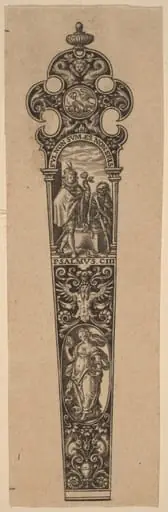
One panel depicts a religious scene with figures gathered around a cross, suggesting devotional intent. The opposite side presents a female figure holding a vase amid floral and vegetal motifs, possibly symbolizing abundance or classical allegory. Together, the two designs juxtapose sacred and secular themes, common in Renaissance decorative arts where spiritual and worldly imagery coexisted in domestic objects.
Technique & Style
Executed in black ink on a light ground, the engraving relies on fine, controlled lines to define form and texture. De Bry employed precise incisions to render dense scrollwork, delicate foliage, and minute human figures, creating visual depth through layering and contrast. The sharpness of the lines and the density of ornamentation reflect the precision expected in metalwork templates of the period.
History & Provenance
De Bry, a Protestant refugee from the Spanish Netherlands, produced this work during his early career in Strasbourg, before his later fame for American expedition illustrations. As a goldsmith and engraver, he regularly created patterns for artisans. This piece likely circulated among craftsmen as a model for knife handles or other small metal objects, though its exact early ownership remains undocumented.
Context
In mid-16th-century Europe, engraved designs like this were widely disseminated through pattern books, serving as references for metalworkers, jewelers, and woodcarvers. De Bry’s work fits within a broader tradition of Northern Renaissance ornament, where religious and mythological motifs were adapted for utilitarian objects, blending artistic refinement with functional design.
Legacy
Though not among de Bry’s most widely known works, this engraving illustrates his foundational role in the dissemination of visual motifs across Europe. His ability to condense narrative and decoration into small, reproducible formats influenced generations of artisans and printmakers, contributing to the standardization of decorative styles in applied arts.
Artist & collection
Artist
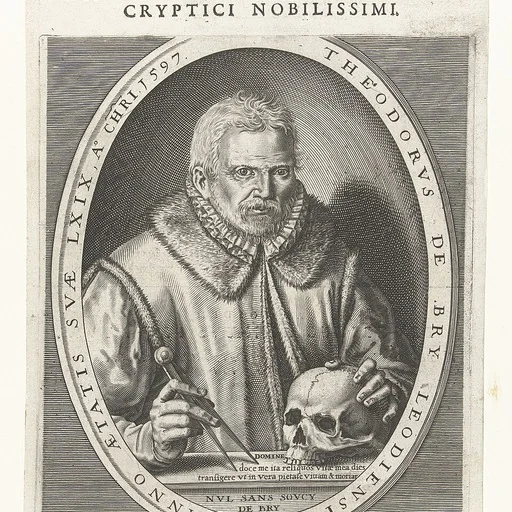
Theodor de Bry (also Theodorus de Bry; 1528 – 27 March 1598) was a Walloon engraver, goldsmith, editor and publisher, famous for his depictions of early European expeditions to the Americas.