Artwork
Dordrecht
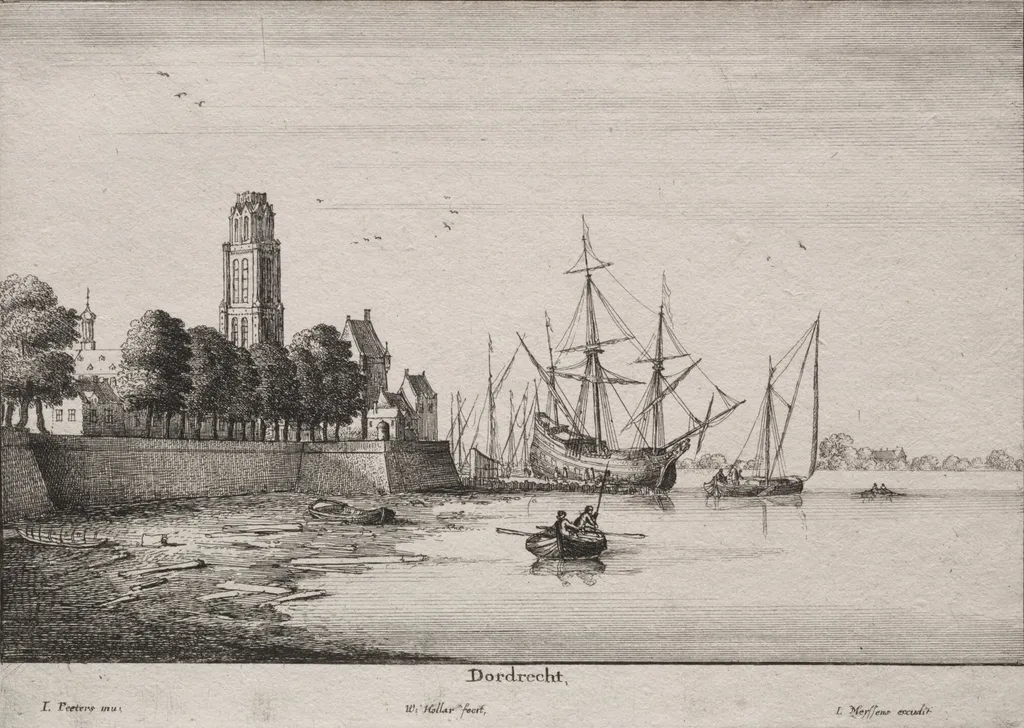
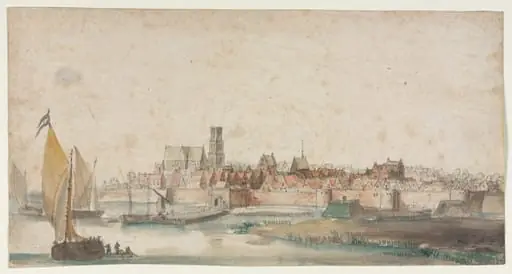
Dordrecht is a print by Wenceslaus Hollar. It dates from 1652 and is held in the collection of the Cleveland Museum of Art.
About this work
Overview
Though he lived and worked primarily in London, Hollar frequently depicted continental European cities with precision.
Wenceslaus Hollar, a Bohemian artist based in England, produced the etching *Dordrecht* circa 1652. Though he lived and worked primarily in London, Hollar frequently depicted continental European cities with precision. This print captures a quiet harbor scene, showcasing his technical mastery in etching and his interest in urban topography during a period of intense printmaking activity in the mid-seventeenth century.
Subject & Meaning
The scene portrays the Dutch city of Dordrecht, known for its commercial harbor and maritime significance. Hollar renders the waterfront with calm order: moored ships, low buildings, and a distant church tower suggest a functioning port town. The inclusion of two small rowboats adds human scale and movement, emphasizing daily life rather than grandeur. The work reflects an interest in documenting real places, not idealized views.
Technique & Style
Hollar employed fine-line etching to render intricate details—rigging on ships, texture of stone walls, and individual tree branches. His use of delicate cross-hatching creates depth without heavy shading, characteristic of his meticulous approach. The composition is balanced and horizontal, guiding the eye from foreground boats to the skyline. The precision suggests direct observation, possibly from sketches made on site or from reliable sources.
History & Provenance
Created during Hollar’s years in London, the print likely circulated among collectors and scholars interested in European cities. Though he never lived in Dordrecht, Hollar had access to maps, traveler accounts, and possibly drawings from Dutch merchants. The work was part of a broader trend in English print culture to document foreign urban landscapes, reflecting both curiosity and the era’s expanding geographic knowledge.
Context
In the 1650s, the Dutch Republic was a dominant maritime power, and its cities were subjects of international fascination. Hollar, working in England during the Interregnum, produced numerous city views that catered to a growing appetite for topographical accuracy. His prints served as both records and artifacts of a period when trade, science, and visual culture intersected, offering viewers a window into distant, economically vital places.
Legacy
Hollar’s *Dordrecht* exemplifies the role of printmaking in preserving urban landscapes before photography. His detailed, measured style influenced later topographical artists and remains a reference for historians studying seventeenth-century Dutch port cities. Though not widely exhibited today, his body of work continues to inform studies of early modern visual culture and the transmission of geographic knowledge through art.
Own this work as a print
Artist & collection
Artist
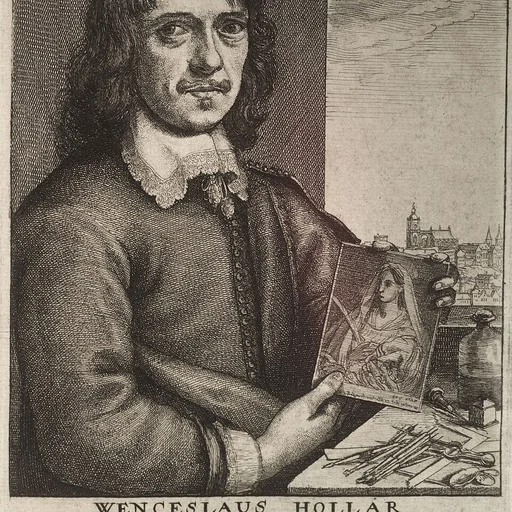
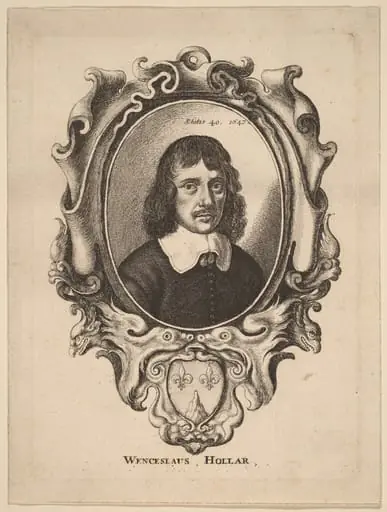
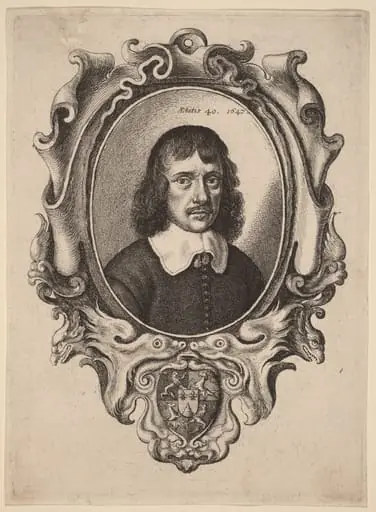
Wenceslaus Hollar (Czech: Václav Hollar (Czech pronunciation: ), German: Wenzel Hollar; 23 July 1607 – 25 March 1677) was a Czech engraver, etcher and painter.


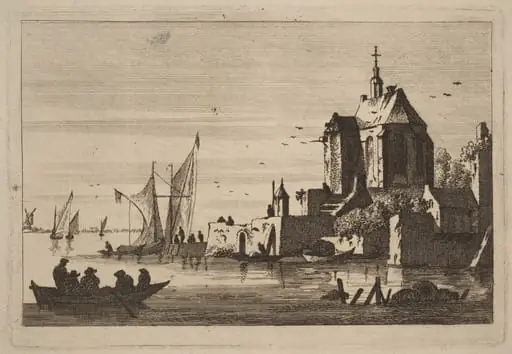 Church in an Inlet with Rowboat in the Foreground
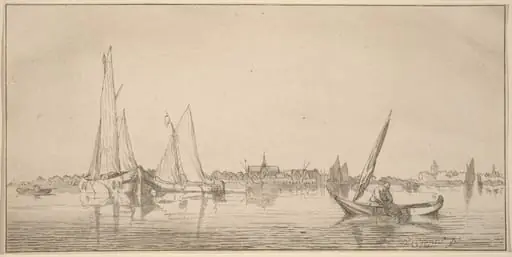 River with Town
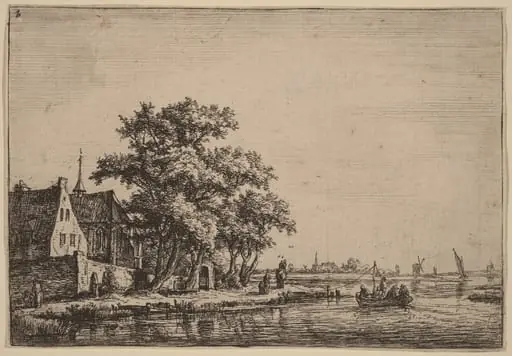 Churchyard at the Waterside
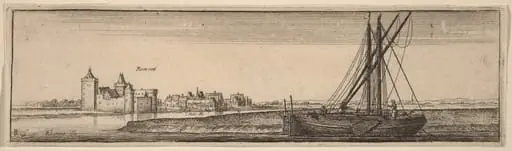 Roerort
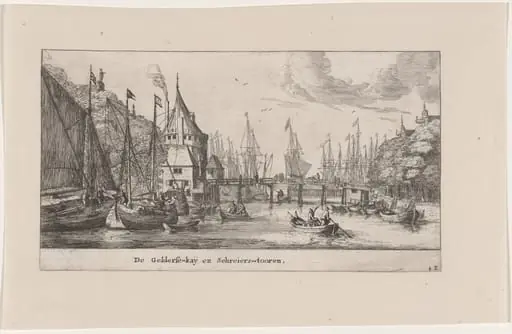 The Gelderse Quay and the Schreiers Tower, Amsterdam
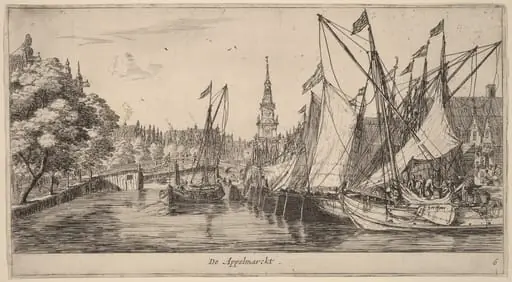 Appelmarkt (De Appelmarckt)
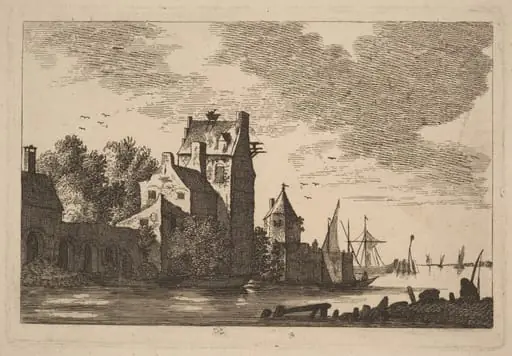 Houses on an Inlet
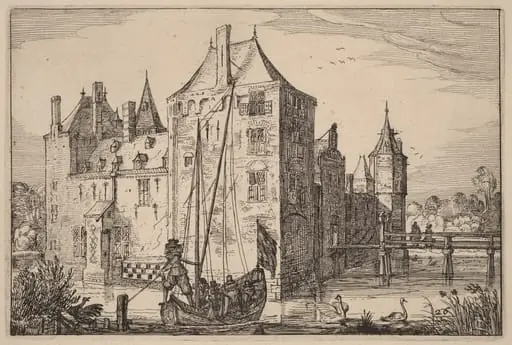 Castle (Warmond?)
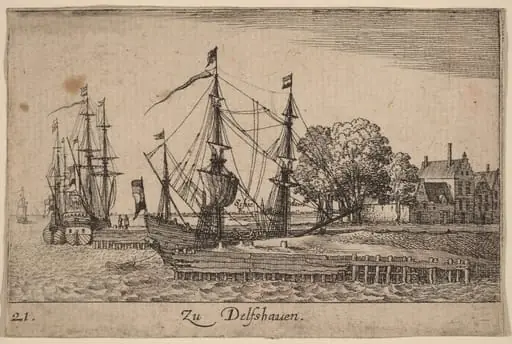 Delfshaven
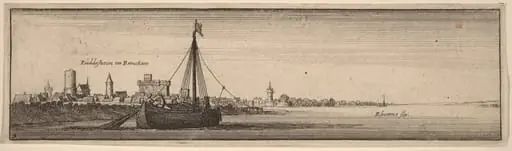 Rudesheim
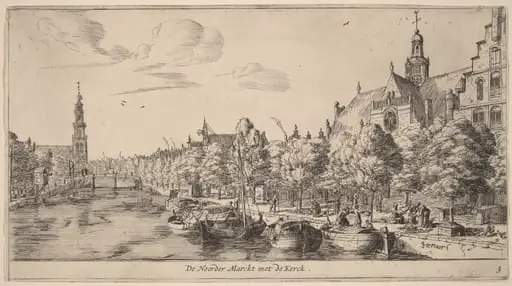 Noordenmarkt with the Noorden Kerk (De Noorder Marckt met de Kerck)
 View of St. Geertruidenberg