Artwork
Kaufmann's Frau aus Hanan
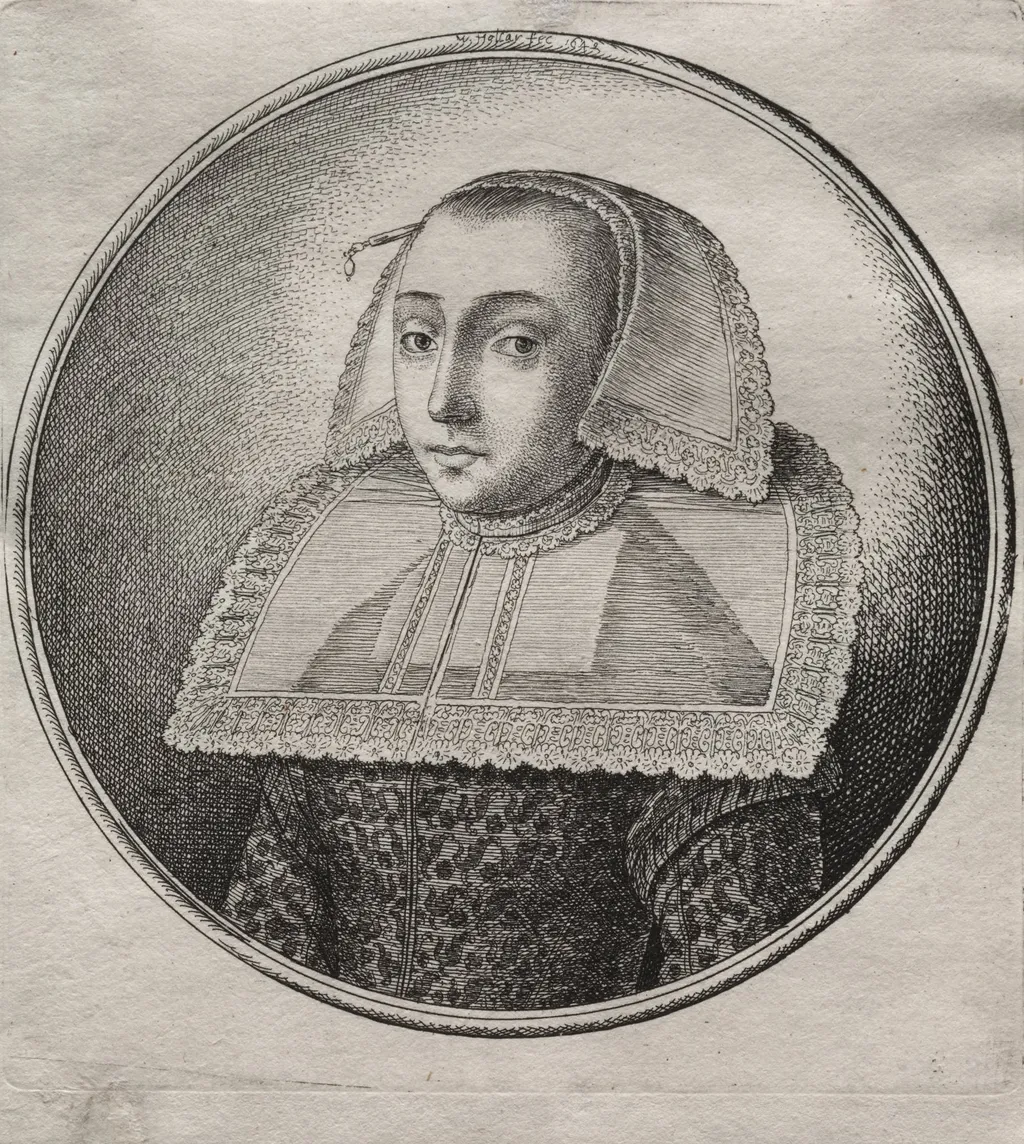
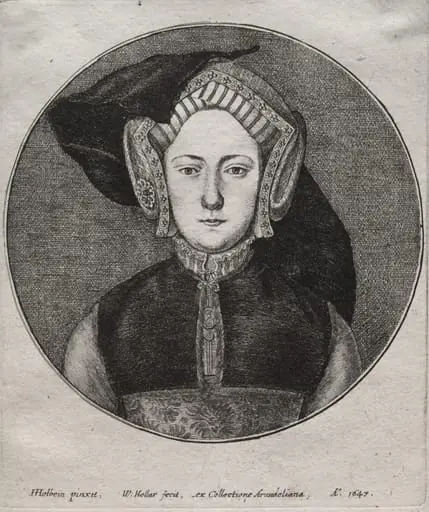
Kaufmann's Frau aus Hanan is a print by the Baroque artist Wenceslaus Hollar. It dates from 1649 and is held in the collection of the Cleveland Museum of Art.
About this work
Overview
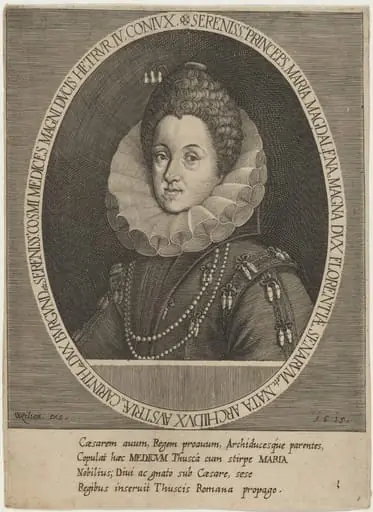
Wenceslaus Hollar, a Bohemian engraver and etcher who spent most of his professional life in London, produced the print titled *Kaufmann’s Frau aus Hanan* in 1649. The image is a monochrome portrait that captures a woman from the German town of Hanau, rendered with the precise line work for which Hollar is renowned. The print belongs to the collection of the Cleveland Museum of Art.
Subject & Meaning
The sitter is presented in a straightforward pose, facing the viewer with short hair and a high‑collared garment trimmed in lace. The composition focuses on the upper torso, allowing the viewer to observe the texture of the clothing and the subtle expression of the subject, suggesting a modest, perhaps domestic, representation of a Hanau merchant’s wife.
Technique & Style
Hollar employed fine etching lines to model the folds of the dress and the delicate lace, using a graduated shading that creates a sense of volume. Sharp, clean edges define the collar and lace, while softer gradations of tone render the skin and fabric, exemplifying the chiaroscuro effect that gives the portrait a three‑dimensional presence despite its flat medium.
History & Provenance
Created during Hollar’s European travels, the portrait forms part of a series of individual likenesses he produced in the mid‑17th century. After Hollar’s death in 1677, the work entered various collections before being acquired by the Cleveland Museum of Art, where it remains on view as part of the museum’s print and drawing holdings.
Artist & collection
Artist
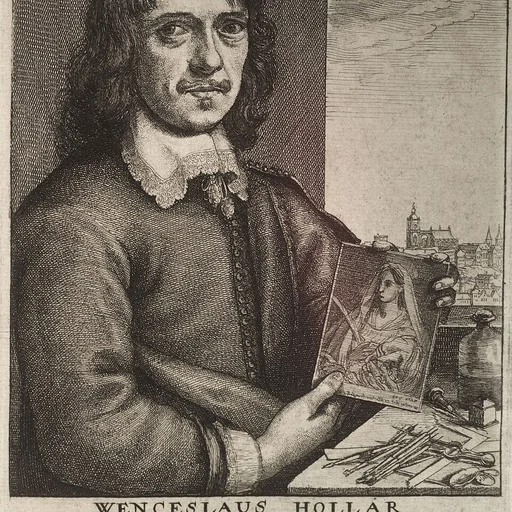
Wenceslaus Hollar (Czech: Václav Hollar (Czech pronunciation: ), German: Wenzel Hollar; 23 July 1607 – 25 March 1677) was a Czech engraver, etcher and painter.


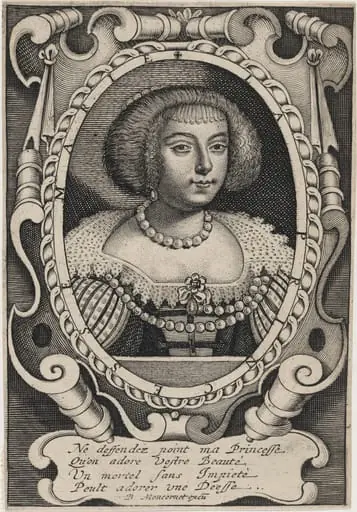 Henrietta Maria, Queen of Charles I
 Catherine of Aragon
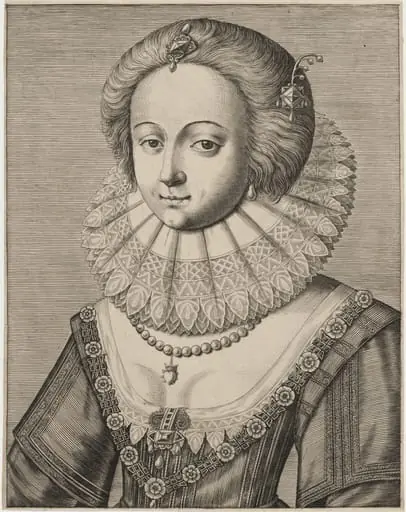 Elizabeth, Queen of Bohemia (?)
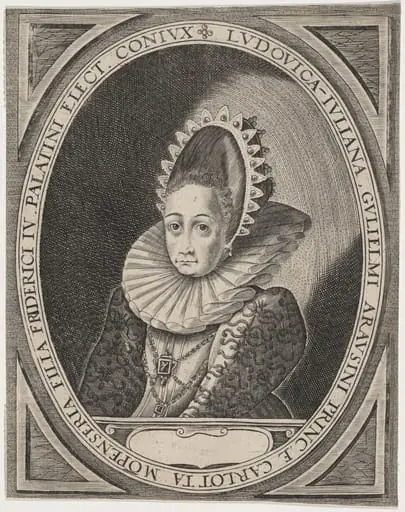 Louise Juliana, Wife of Frederick IV
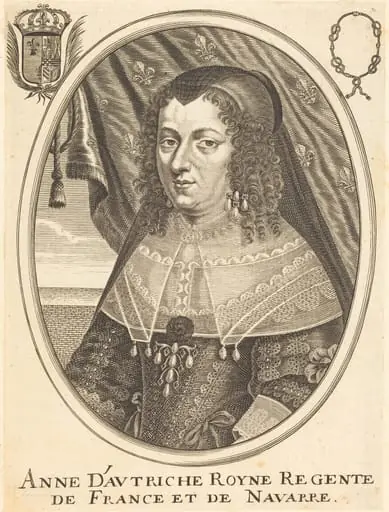 Anne of Austria
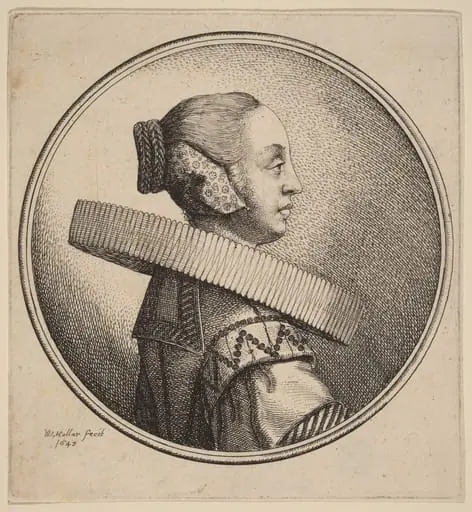 Woman with a Ruff in Profile
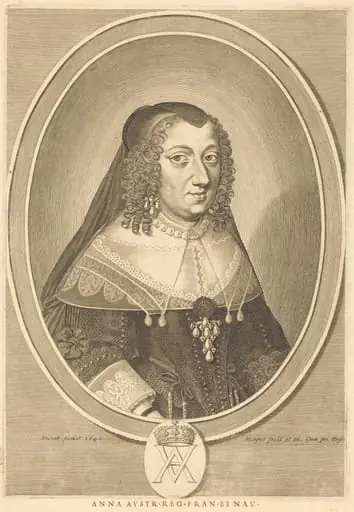 Anne of Austria
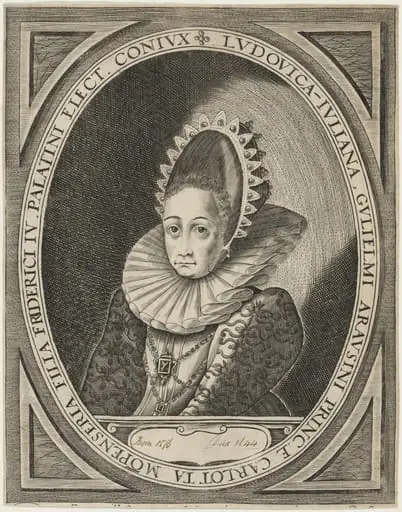 Louise Juliana, Wife of Frederick IV
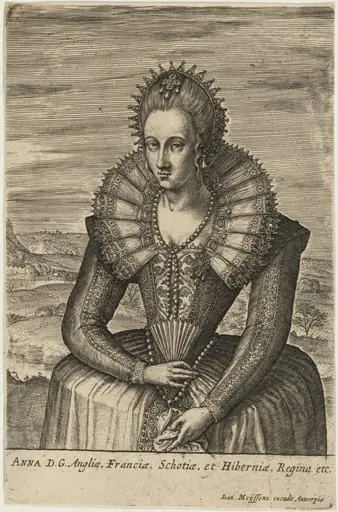 Anne of Denmark
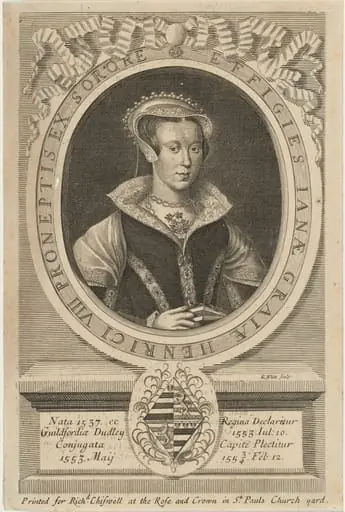 Lady Jane Grey
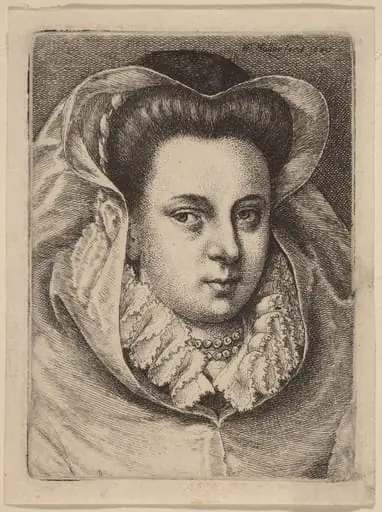 Woman with White Veil and Black Hat (Mary Stuart?)
 Princess Maria Magdalen