Artwork
Il Greco in Troia: Plate 9
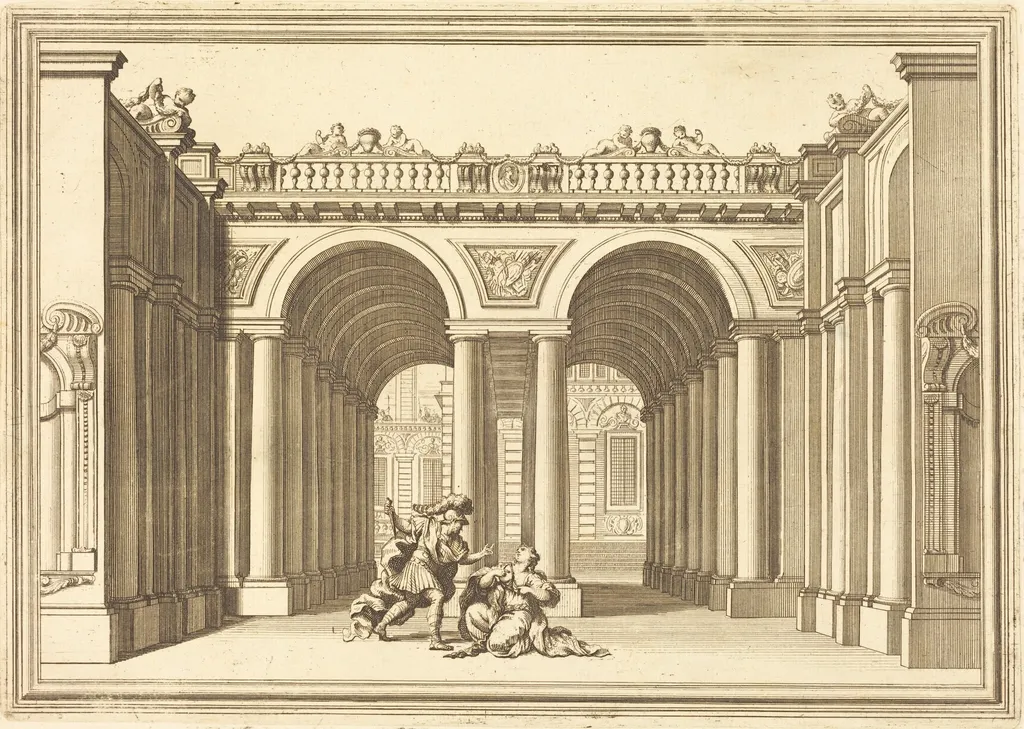
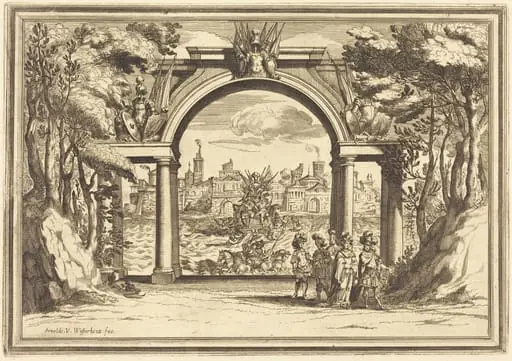
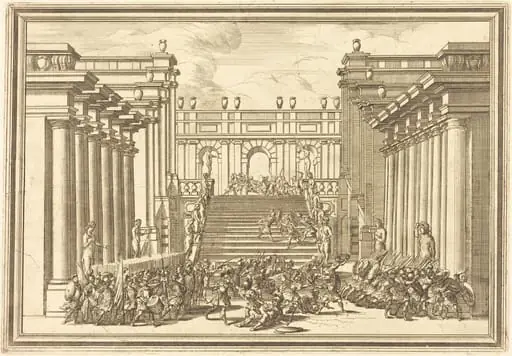
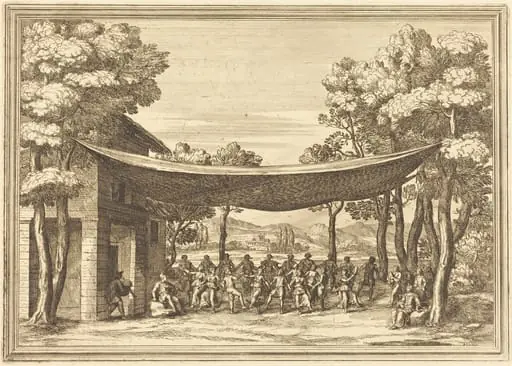
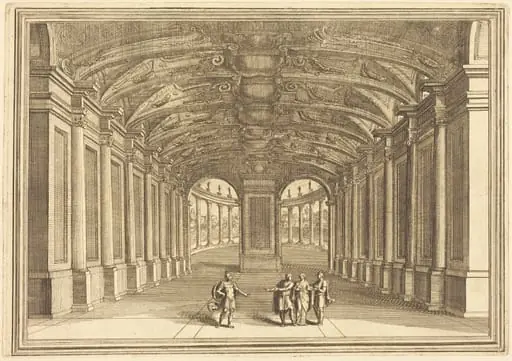
Il Greco in Troia: Plate 9 is an ink print by the Baroque artist Arnold von Westerhout. It dates from 1688 and is held in the collection of the National Gallery of Art.
About this work
Overview
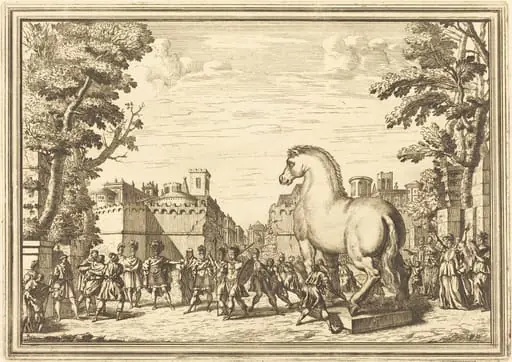
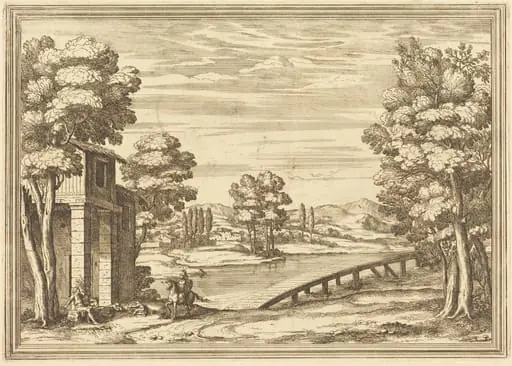
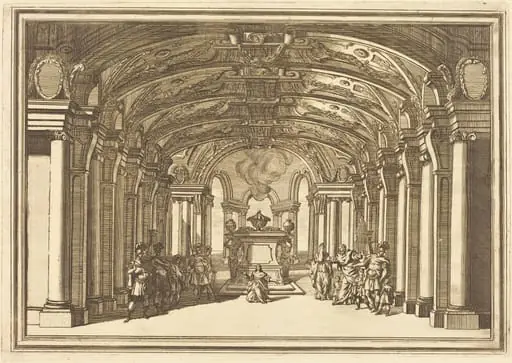
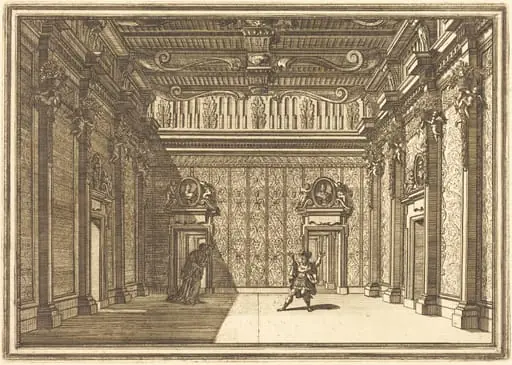
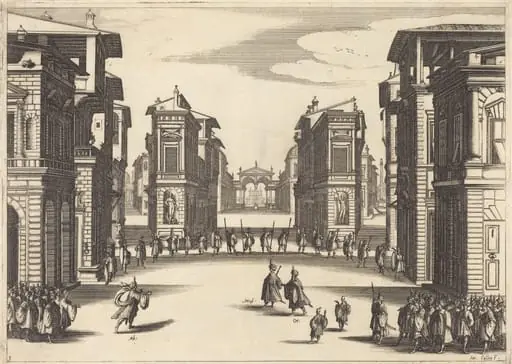
Il Greco in Troia: Plate 9 is a print produced by Arnold von Westerhout in 1688. Executed as an etching and engraving on laid paper, the image presents a theatrical set framed by monumental columns and an arched backdrop, populated by two figures—one in elaborate costume and another kneeling with a scroll.
Subject & Meaning
The composition suggests a staged representation of a historical or mythological episode, likely drawn from the story of the Greek presence in Troy. The empty stage, ornate architecture, and static figures evoke the conventions of Baroque theater, where drama is conveyed through setting as much as through action.
Technique & Style
Westerhout employed a dense network of lines to model deep shadows and highlight dramatic illumination, creating a convincing illusion of depth. The use of both etching and engraving allows for fine detailing in the carved wall motifs, statues, and patterned floor, reflecting the period’s preference for richly rendered, three‑dimensional effects.
History & Provenance
Created in the late seventeenth century, the print belongs to a series that documented theatrical designs of the era. As a restrike, it indicates that the plate was reprinted after its initial issue, a common practice for popular images. The work remains a valuable record of Baroque stage aesthetics and the printmaking techniques of its time.
Artist & collection