Artwork
Salvator Mundi
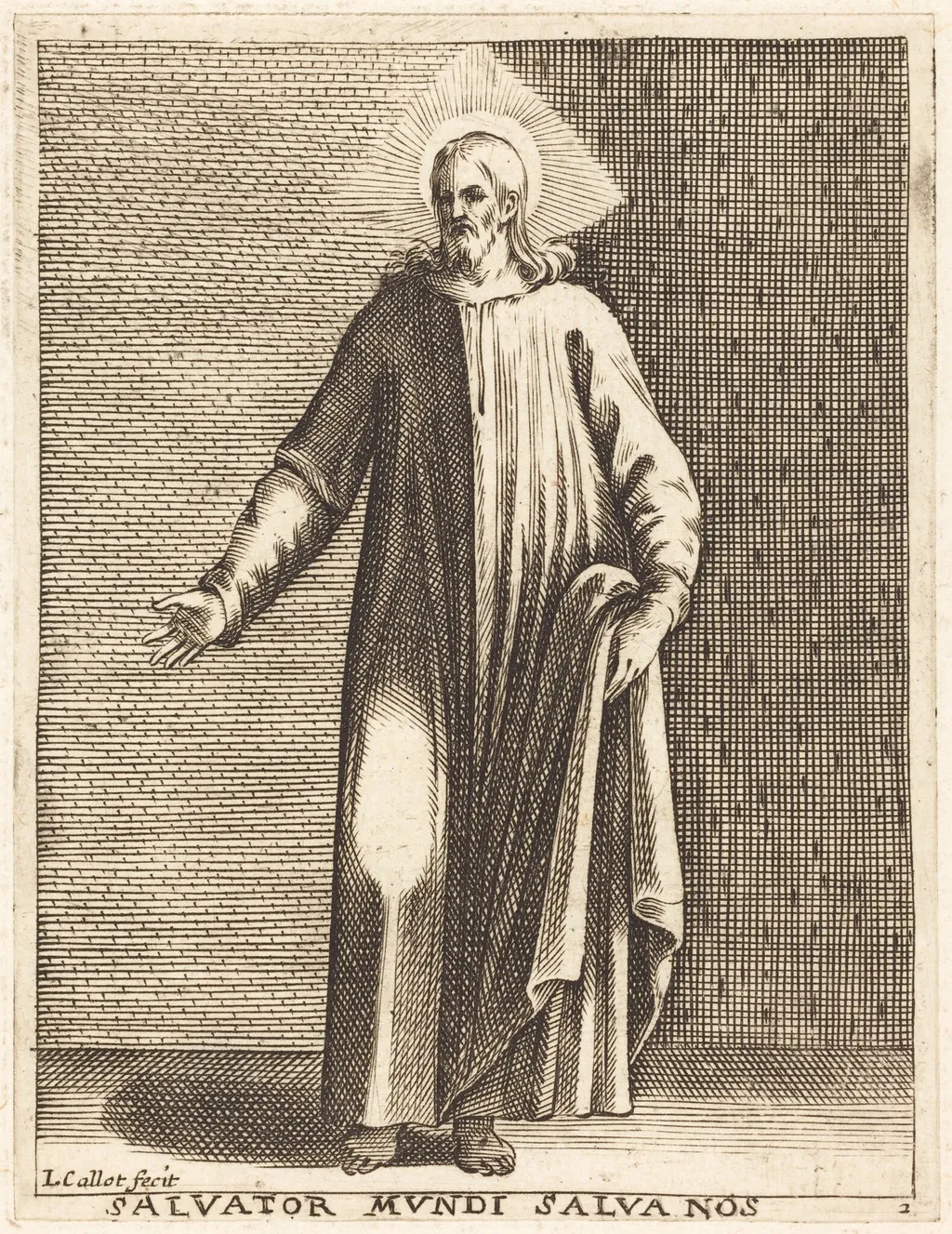
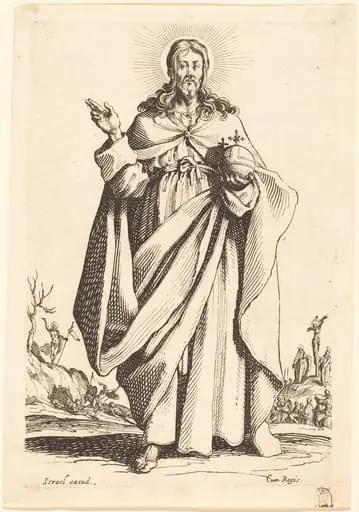
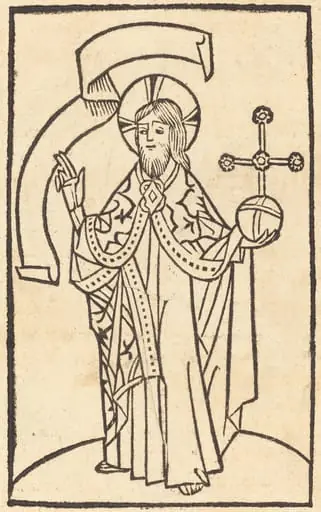
Salvator Mundi is an ink print by the Baroque artist Jacques Callot. It dates from 1610 and is held in the collection of the National Gallery of Art.
About this work
Overview
Jacques Callot’s *Salvator Mundi* is an early‑17th‑century engraving executed on laid paper. The print presents a standing figure of Christ before a brick wall, his right arm outstretched and a halo above his head. The composition is divided by a stark background that shifts from masonry on the left to a geometric grid on the right, emphasizing the figure’s central presence.
Subject & Meaning
The work portrays the Christian savior, a common devotional motif known as Salvator Mundi, or ‘Saviour of the World.’ By positioning Christ in a simple architectural setting, Callot underscores the universal accessibility of the divine, while the extended arm suggests blessing or benediction toward the viewer.
Technique & Style
Callot employs fine cross‑hatching to model the folds of the robe and the texture of the brickwork, creating a subtle gradation of tone that conveys depth. The contrast between the rough, stippled wall and the smooth, luminous surface of the figure reflects Baroque interests in chiaroscuro and tactile variety within a single print.
History & Provenance
Created around 1610, the engraving belongs to Callot’s prolific output of more than a thousand prints that documented religious, military, and courtly subjects. As a product of the French Baroque print tradition, it circulated among collectors and patrons of the period, contributing to Callot’s reputation as a leading innovator in etching techniques.
Artist & collection
Artist
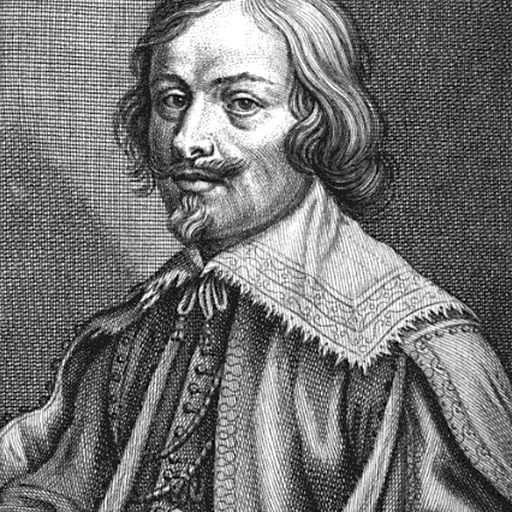
Jacques Callot was a baroque printmaker and draftsman from the Duchy of Lorraine.

 Holy Family at supper
 Restoration of the Aqueduct at Pisa
 Restoration of the Aqueduct at Pisa
 Square in Paris with Many Figures
 Square in Paris with Many Figures
 Horsemen Attacked by Robbers
 HOW WILL A COVERED PART BE CORRECTED?HOW WIKA A COVERED HEART DEED CORRECTED?
![Christ Walking on the Water [second plate], by Jacques Callot](https://artifactworldgallery.com/img/jacques-callot--christ-walking-on-the-water-second-plate--2069f3bfe4cb2126-w320.webp) Christ Walking on the Water [second plate]
Christ Walking on the Water [second plate]