Artwork
St. John with Serpent in Chalice
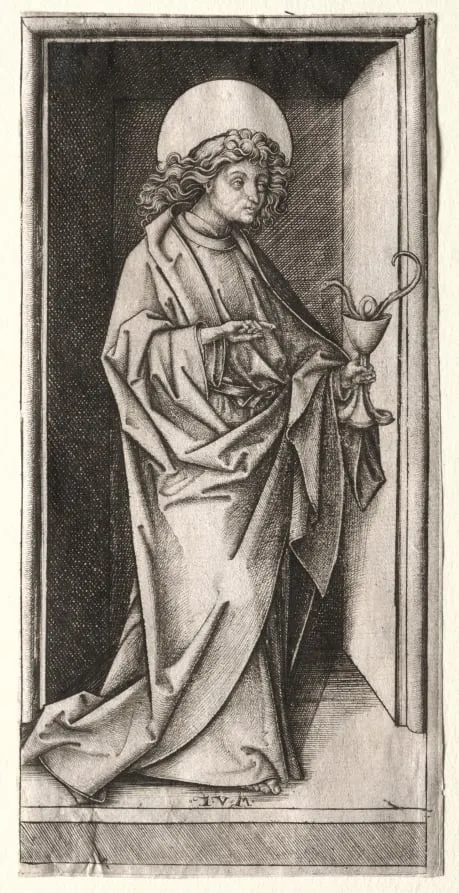
St. John with Serpent in Chalice is a print by the Renaissance artist Israhel van Meckenem. It dates from 1490 and is held in the collection of the Cleveland Museum of Art.
About this work
The artist made it look like a sculpture to make the holy image feel solid and real.
You see Saint John holding a golden cup with a snake slithering out of it. The scene is carved like stone inside a fancy archway.
This is a print, not a painting. Prints were new back then—cheap enough for regular people to hang in their homes. The snake stands for poison, but John stays calm, showing faith wins. The artist made it look like a sculpture to make the holy image feel solid and real.
To see more prints like this, look up Israhel van Meckenem (German, c. 1440–1503).
Overview
This woodcut by Israhel van Meckenem depicts Saint John the Evangelist holding a chalice from which a serpent emerges. Created around the late 15th century, it reproduces a sculpted image in relief, mimicking the appearance of stone carving. As a printed work, it made devotional imagery accessible beyond church walls, allowing private ownership by laypeople during a period when print technology was expanding religious visual culture.
Subject & Meaning
The scene references the legend in which Saint John, confronted with a poisoned chalice, drank without harm, demonstrating divine protection. The serpent, symbolizing poison and death, is rendered as emerging from the vessel, yet the saint remains composed, embodying steadfast faith. The imagery affirms the triumph of spiritual conviction over physical danger, a common theme in late medieval hagiography.
Technique & Style
Meckenem employed fine linear carving to simulate the texture and depth of sculpted stone within an architectural niche. The print’s detailed architecture and controlled shading give the figure a sculptural solidity, enhancing its devotional presence. The technique reflects the artist’s skill in translating three-dimensional forms into the flat plane of woodcut, balancing realism with symbolic clarity.
History & Provenance
Produced in the late 1400s in Germany, this print belongs to a series of devotional images circulated widely through the burgeoning print trade. Meckenem, active in Bocholt and later in Wesel, was among the earliest German printmakers to produce religious subjects for domestic use. Surviving impressions suggest the image was distributed across northern Europe, indicating its popularity among middle-class households.
Context
During the late medieval period, prints like this served as affordable alternatives to painted altarpieces or stained glass. As literacy and private devotion grew, images of saints in domestic settings became more common. Meckenem’s work reflects this shift, adapting ecclesiastical iconography for personal contemplation outside institutional spaces.
Legacy
Meckenem’s prints helped standardize the visual representation of saints for lay audiences. His use of architectural framing and sculptural illusion influenced later printmakers in Germany and the Low Countries. Though not widely known today, his output contributed to the democratization of religious imagery, laying groundwork for the broader visual culture of the Reformation era.
Artist & collection
Artist
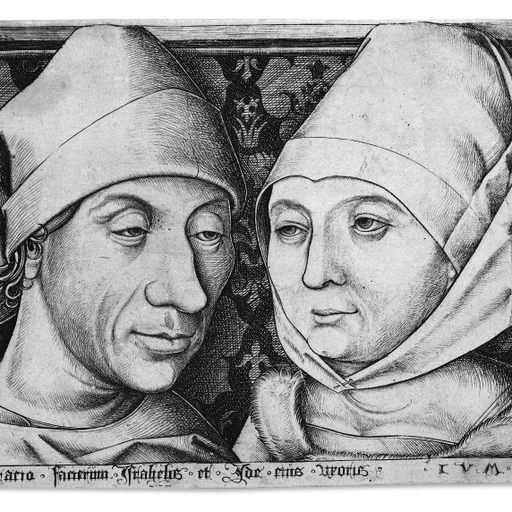
Israhel van Meckenem (c. 1445 – 10 November 1503), also known as Israhel van Meckenem the Younger, was a German printmaker and goldsmith, perhaps of a Dutch family origin. He was the most prolific engraver of the…