Artwork
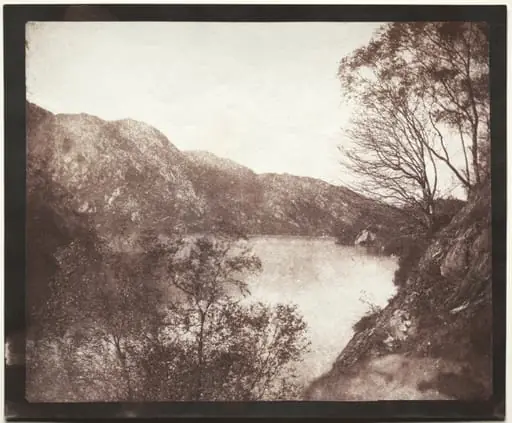
A Mountain Rivulet Which Flows at the Foot of Doune Castle
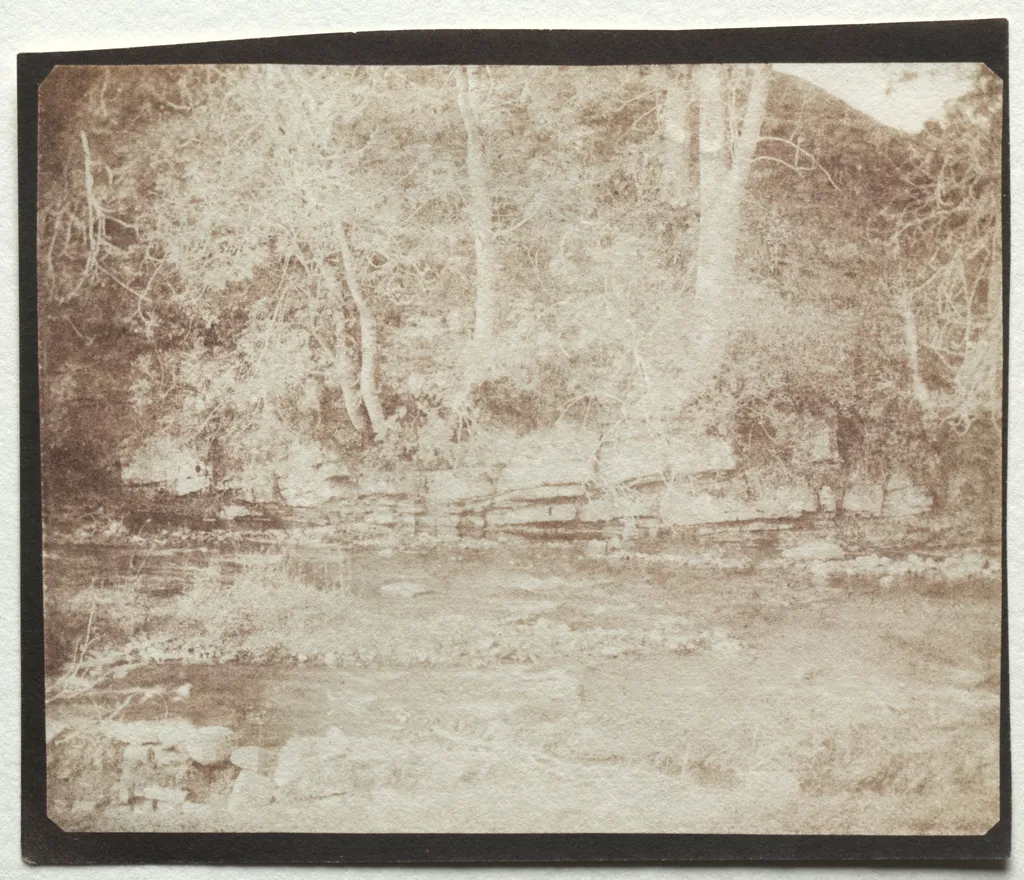
A Mountain Rivulet Which Flows at the Foot of Doune Castle is a photography by the Romanticist artist William Henry Fox Talbot. It dates from 1844 and is held in the collection of the Cleveland Museum of Art.
About this work
Overview
Taken in 1844, this photograph by William Henry Fox Talbot captures a quiet stream near Doune Castle in Scotland. It is one of many images from his series documenting the British landscape using the calotype process, an early photographic method he pioneered. The work reflects his interest in recording natural scenes with technical precision and poetic restraint.
Subject & Meaning
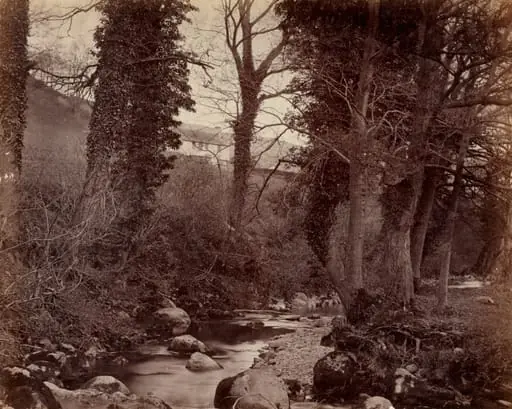
The image focuses on a narrow mountain rivulet winding through mossy stones at the base of Doune Castle. Though the castle itself is not visible, its presence is implied by the setting. The composition invites contemplation of nature’s quiet persistence, subtly framing the landscape as a place where time and geology unfold without human intervention.
Technique & Style
Talbot used the calotype process, which produced a paper negative that could yield multiple positive prints. This allowed for subtle tonal gradations and a soft, textured surface. The image’s delicate detail and muted contrasts reflect his commitment to capturing light and atmosphere with scientific care, while preserving a sense of intimacy.
History & Provenance
Created during Talbot’s extensive photographic expeditions in the early 1840s, the work entered The Cleveland Museum of Art’s collection as part of a broader acquisition of early British photography. Its preservation underscores its significance as a foundational example of photographic art from the medium’s formative years.
Context
In 1844, Talbot was actively promoting photography as both a scientific and artistic practice. This photograph was made during the same period he published The Pencil of Nature, the first commercially printed book illustrated with photographs. His work helped shift public perception of photography from mere documentation to a medium capable of aesthetic expression.
Legacy
Talbot’s calotypes, including this one, laid groundwork for later photographic practices by demonstrating the potential of paper-based negatives. Though overshadowed in popular memory by later technologies, his images remain vital for understanding the transition from manual illustration to mechanical image-making in the 19th century.
Artist & collection

![[Arquitectura rural], by Unknown](https://artifactworldgallery.com/img/unknown--arquitectura-rural--383a5809cd6a1cd8-w320.webp)
![The Park at Sceaux [April 1925, 7a.m.], by Eugène Atget](https://artifactworldgallery.com/img/eugene-atget--the-park-at-sceaux-april-1925-7a-m--af61d3e0a0050a6f-w320.webp)