Artwork
The First Wooden Temple of Jupiter
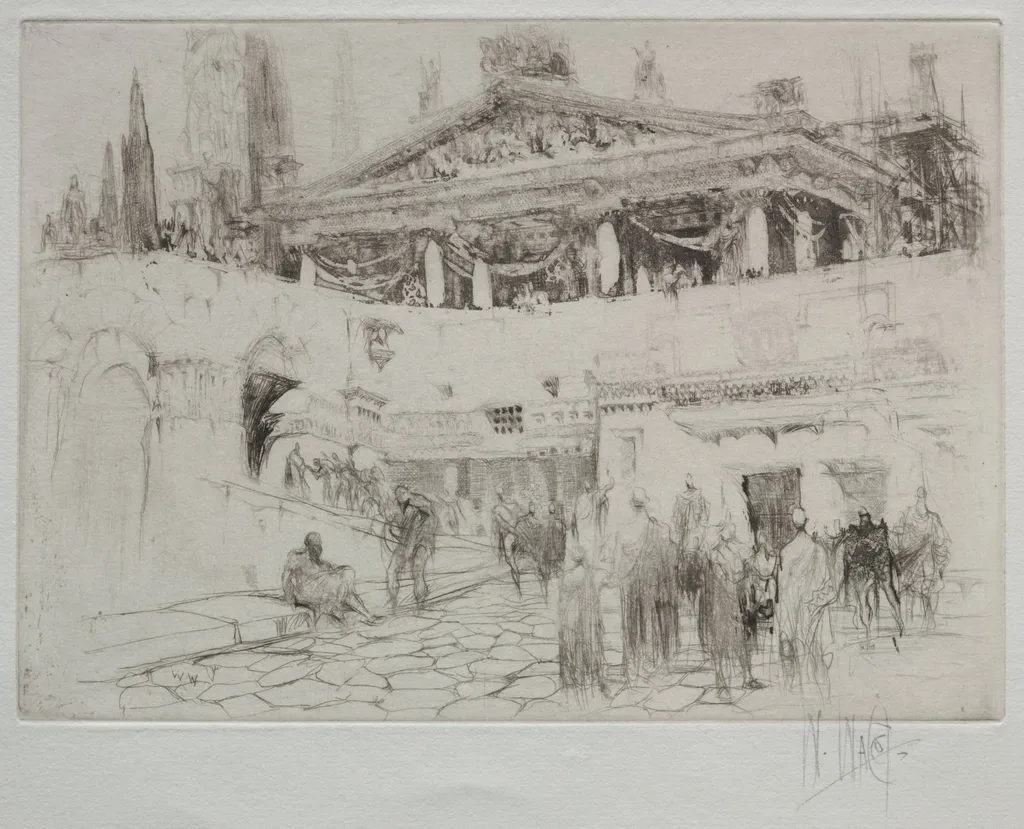
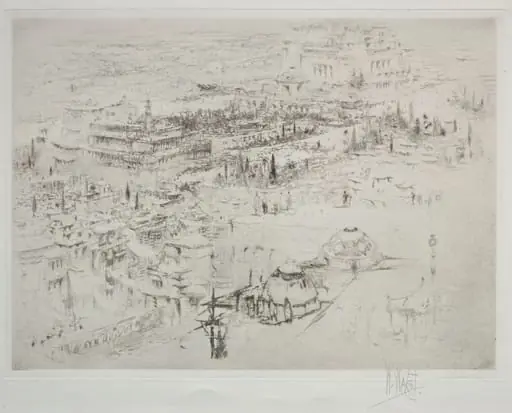
The First Wooden Temple of Jupiter is a print by William Walcot. It dates from 1918 and is held in the collection of the Cleveland Museum of Art.
About this work
Overview
The image portrays an imposing ancient temple with a pedimented roof and a colonnade, set before a gathering of figures in classical dress.
Created in 1918 by William Walcot, The First Wooden Temple of Jupiter is a print held in the collection of the Cleveland Museum of Art. The image portrays an imposing ancient temple with a pedimented roof and a colonnade, set before a gathering of figures in classical dress. The composition invites the viewer to contemplate the architectural grandeur and the ritual atmosphere surrounding the structure.
Subject & Meaning
The work depicts a massive wooden temple dedicated to Jupiter, surrounded by a crowd of men and women in togas, some bearing spears. The assembly stands on a stone platform, looking upward in a pose that suggests reverence or communal worship. By juxtaposing monumental architecture with a collective human presence, Walcot emphasizes the civic and religious significance of such sacred spaces in antiquity.
Technique & Style
Executed as a print, the image relies on strong chiaroscuro to model the temple’s mass and the figures’ forms, creating a pronounced sense of depth. Fine line work renders the texture of the wooden roof and the marble columns, while careful shading delineates the crowd’s drapery and the play of light across the stone platform. The overall effect is realistic yet staged, reminiscent of academic historicism.
History & Provenance
William Walcot produced the print shortly after World War I, a period when interest in classical motifs resurfaced in European art. The piece entered the Cleveland Museum of Art’s collection through a mid‑20th‑century acquisition, though the exact details of its donation remain undocumented in public records.
Context
The early twentieth century saw a revival of neoclassical themes in both architecture and visual arts, reflecting a desire for cultural continuity after the upheavals of war. Walcot, known primarily as an architect, applied his knowledge of classical forms to this print, translating architectural principles into a narrative scene that aligns with contemporary historicist trends.
Artist & collection

Artist
William Walcot RE was a Russian-Scottish architect, graphic artist and etcher, notable as a architect of refined Art Nouveau in Moscow, Russia.

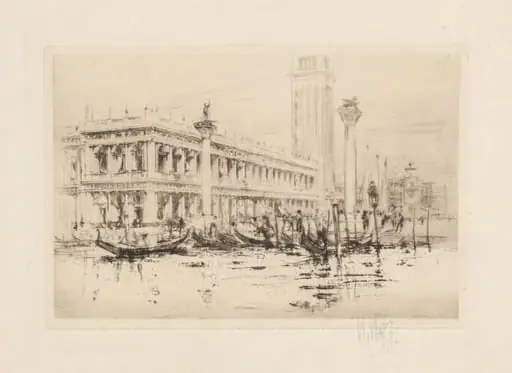 The Venice Set: The Library of St. Mark’s
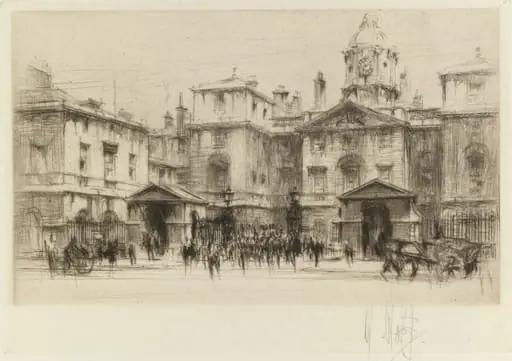 London Set: Horseguards
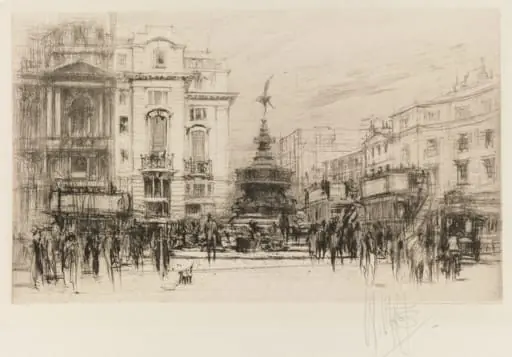 London Set: Piccadilly Circus (with Criterion Theatre)
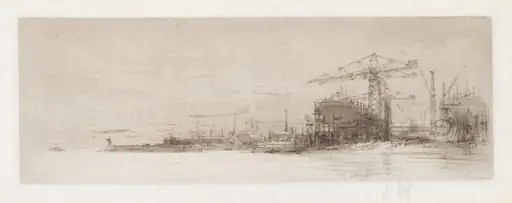 The Clyde from the series The Arteries of Great Britain
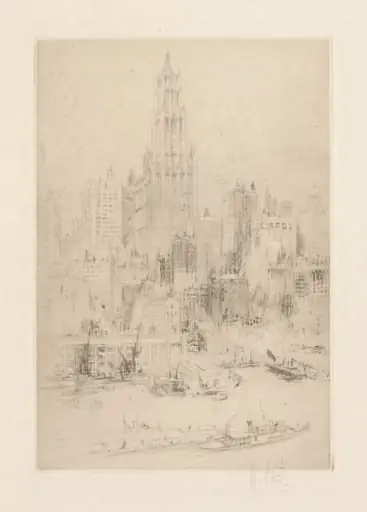 Downtown Manhattan from the East River, with the Woolworth Building
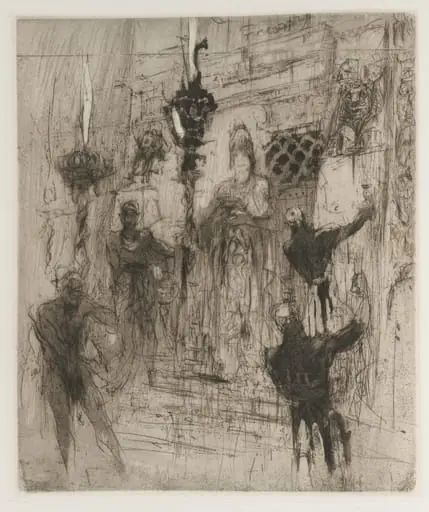 Herodias
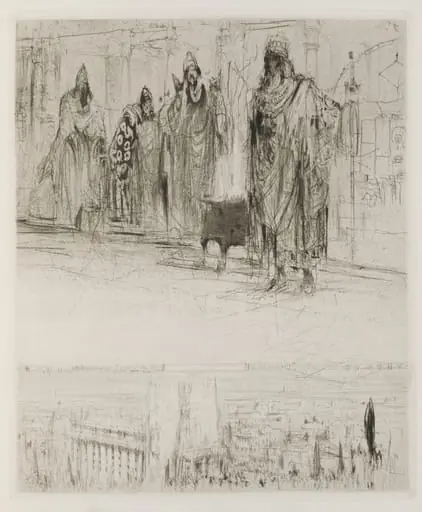 Herodias: Page 13, The tetrarch was awaited by several Galileans, the master of scribes, the chief of the land steward, the manager of the salt mines, and a Jew from Babylon commanding his troops on horse
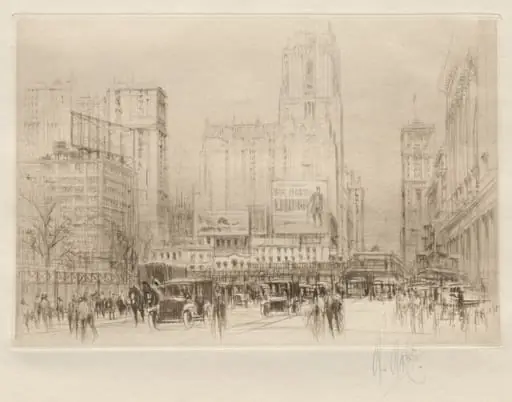 Forty-second Street NY
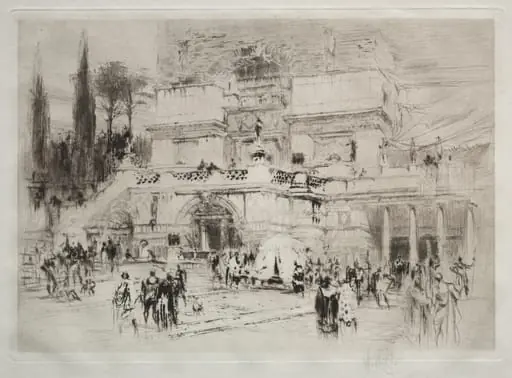 The Villa Quintillii
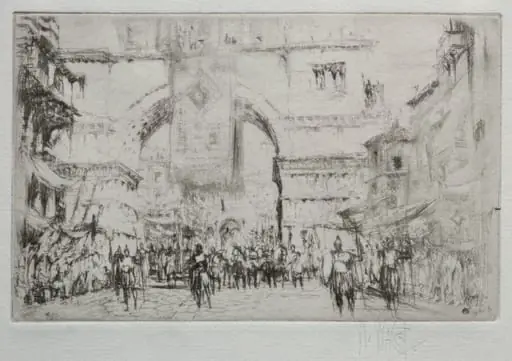 Hadrian Entering Salonica
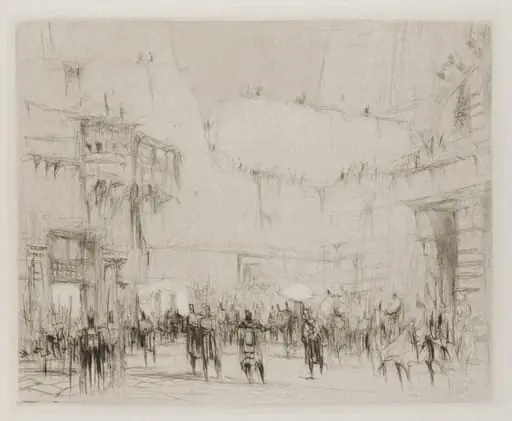 Herodias: Page 19, The ramparts were thronged with people when Vitellius entered the castle gates
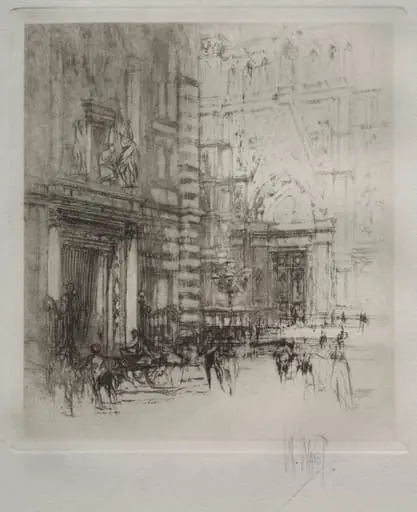 The Baptistry, Florence
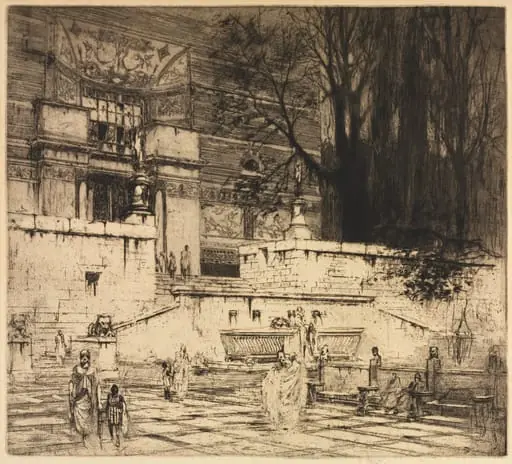 The Days of Ancient Rome: At the House of a Patrician
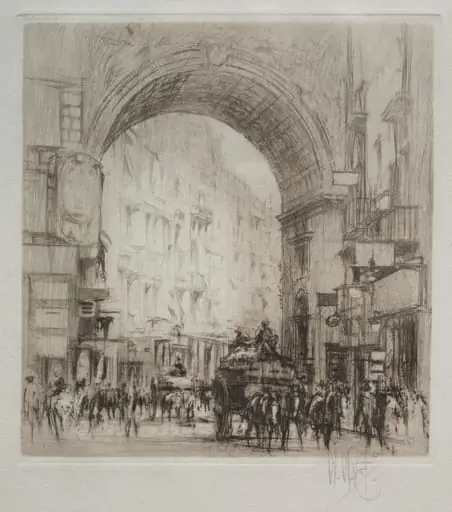 Arco San Carlo, Naples
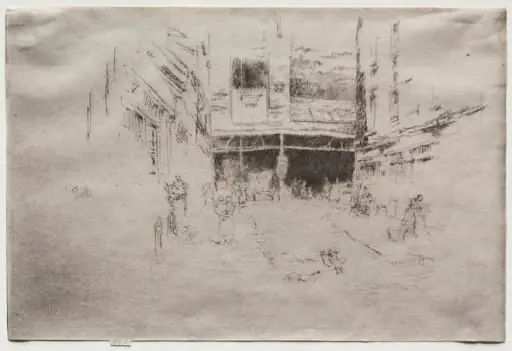 Clothes Exchange, No. 1
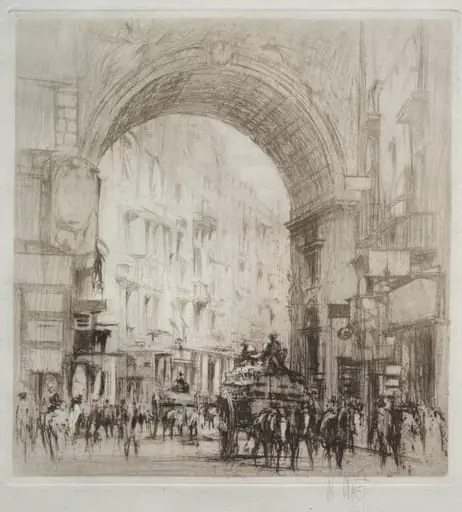 Arco San Carlo, Naples
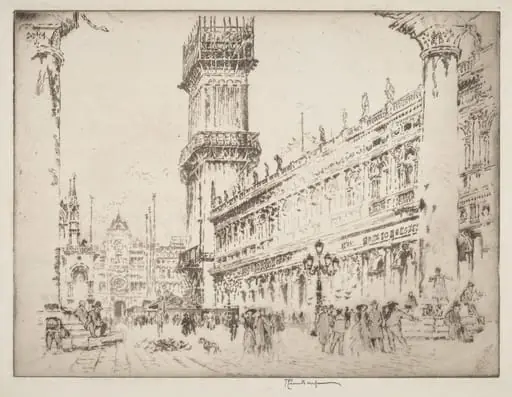 Rebuilding the Campanile, Venice, No.II
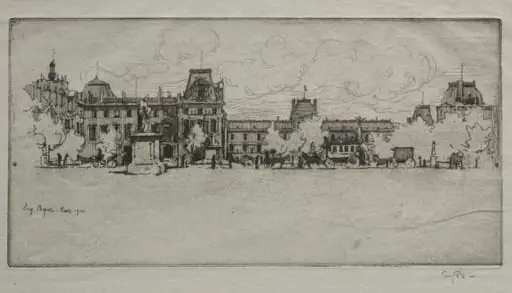 Les Tuileries
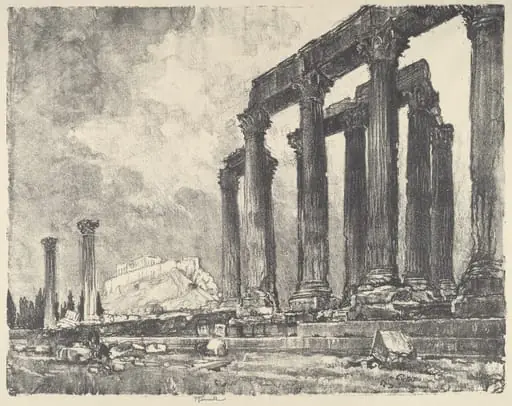 The Acropolis from the Temple of Jupiter, Athens
 Temple of Baal