Artwork
Mercury and Argus
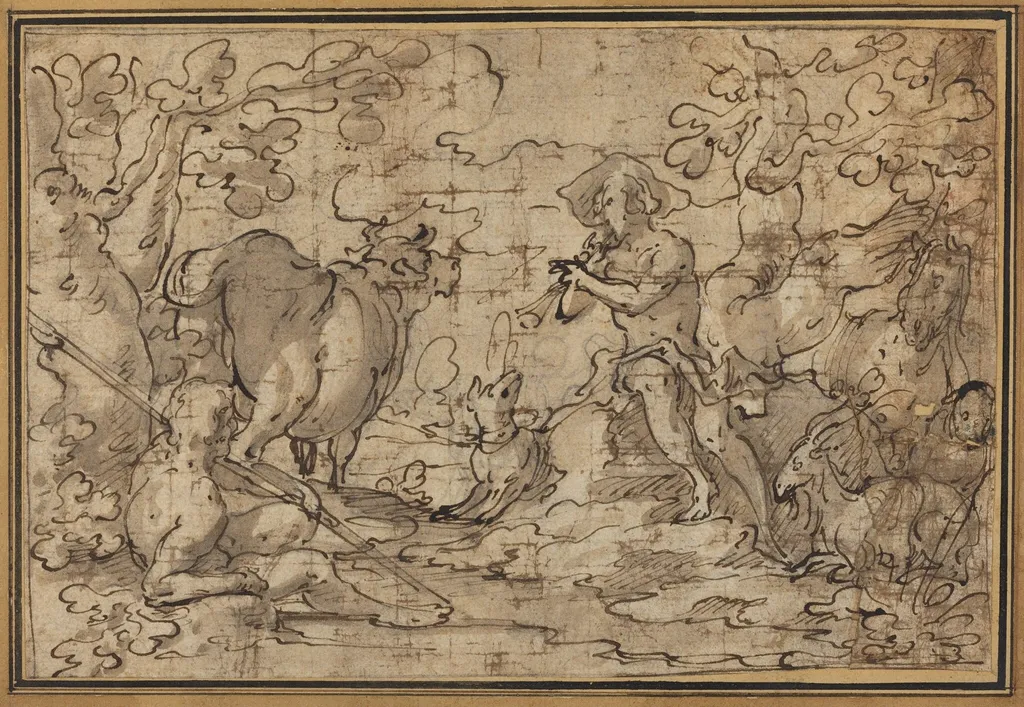
Mercury and Argus is an ink drawing by the Renaissance artist Joachim Anthonisz Wtewael. It dates from 1602 and is held in the collection of the National Gallery of Art.
About this work
Overview
Joachim Anthonisz Wtewael’s drawing titled *Mercury and Argus* dates from 1602. Executed on laid paper, the work combines pen work with brown ink and a gray‑brown wash, producing a finely detailed monochrome image. The composition presents a small narrative scene rendered with careful line work and varied shading to suggest depth.
Subject & Meaning
The foreground contains a man, positioned on the right, wearing a hat and holding a pipe, accompanied by a dog that looks upward toward him. In the distance, a winged figure—interpreted as a divine or mythological presence—occupies the background, suggesting a narrative drawn from classical mythology, likely the encounter between Mercury and the watchful giant Argus.
Technique & Style
Wtewael employs a combination of precise pen lines and broader ink washes to differentiate textures. The brown ink outlines the figures, while the gray‑brown wash adds tonal variation, creating a sense of volume and atmospheric perspective. The drawing’s surface shows both smooth, controlled strokes and looser, more expressive marks, highlighting the artist’s skill in manipulating line and tone.
Context
Created at the turn of the 17th century, the drawing reflects the lingering influence of Renaissance drawing practices in the Dutch artistic milieu. Wtewael, active in the early Baroque period, often incorporated classical themes, and this work exemplifies the period’s interest in mythological subjects rendered with meticulous draftsmanship.
Artist & collection


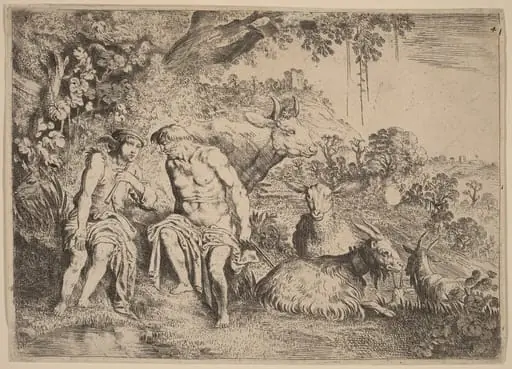 Mercury Lulling Argus to Sleep
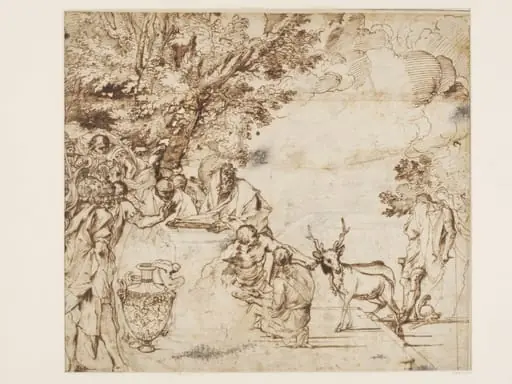 The Sacrifice of Iphigenia
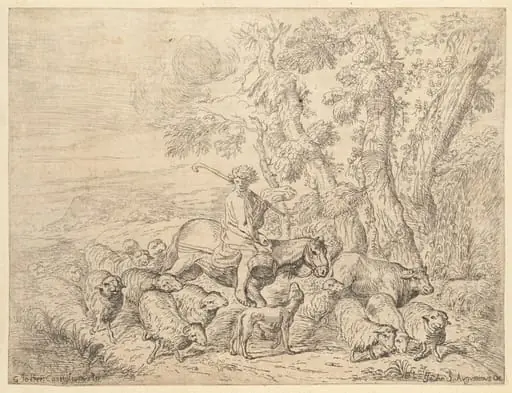 Shepherd on Horseback
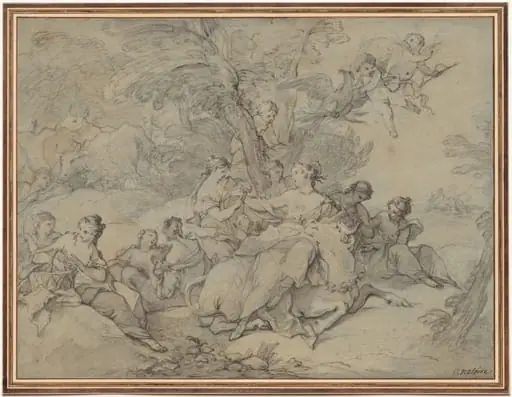 Rape of Europa
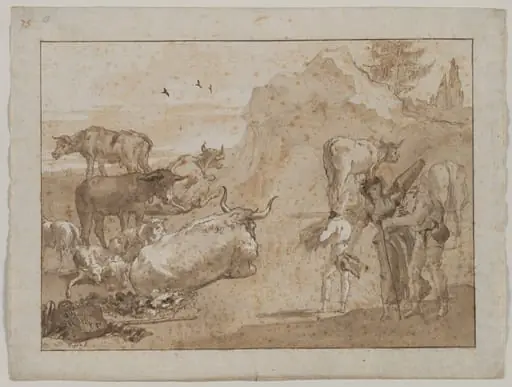 Sheep and Cows
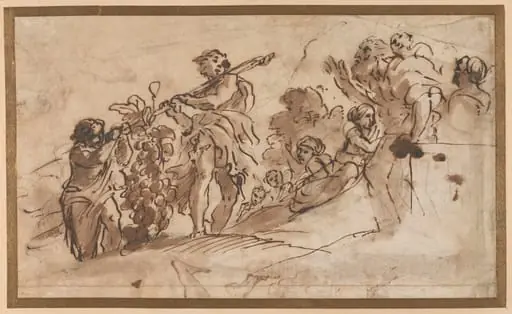 The Return of the Spies from the Promised Land
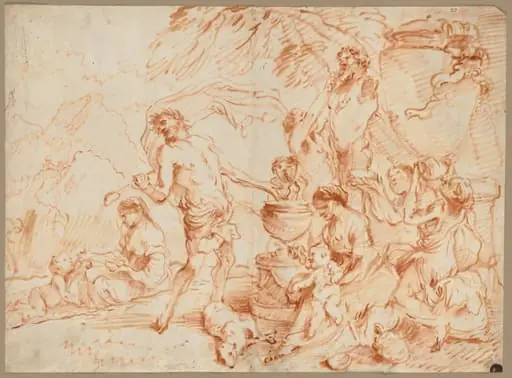 Bacchanal Before a Herm
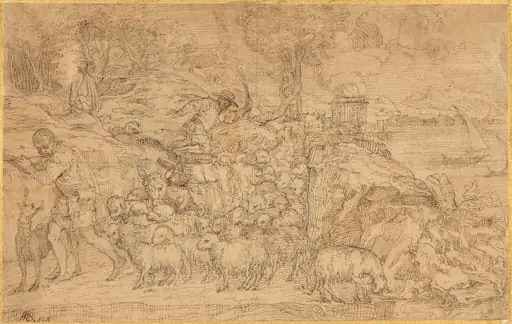 Shepherd Playing a Flute and Leading His Flock
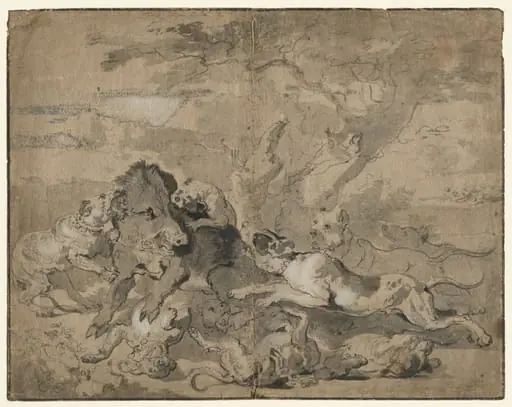 Boar Hunt
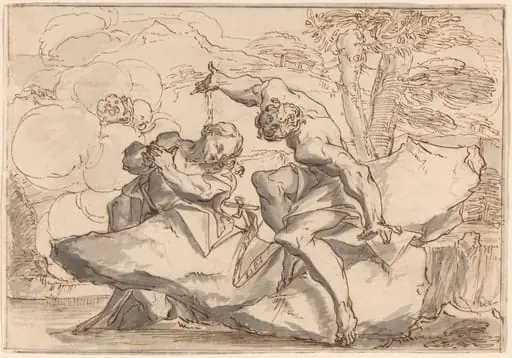 The Baptism of Christ
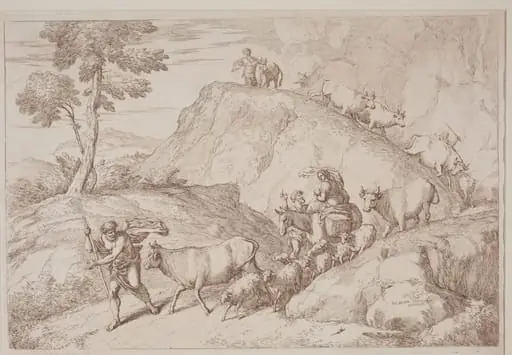 An Elderly Shepherd Leading the Flock
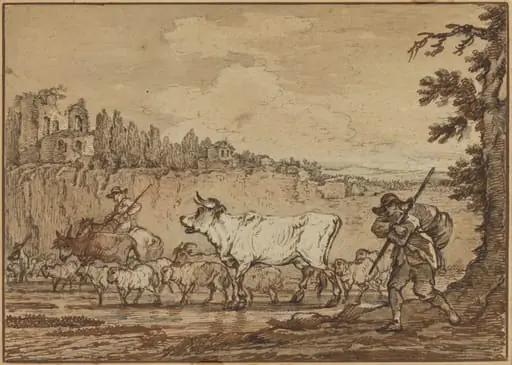 Herdsman Crossing a River