Artwork
Untitled
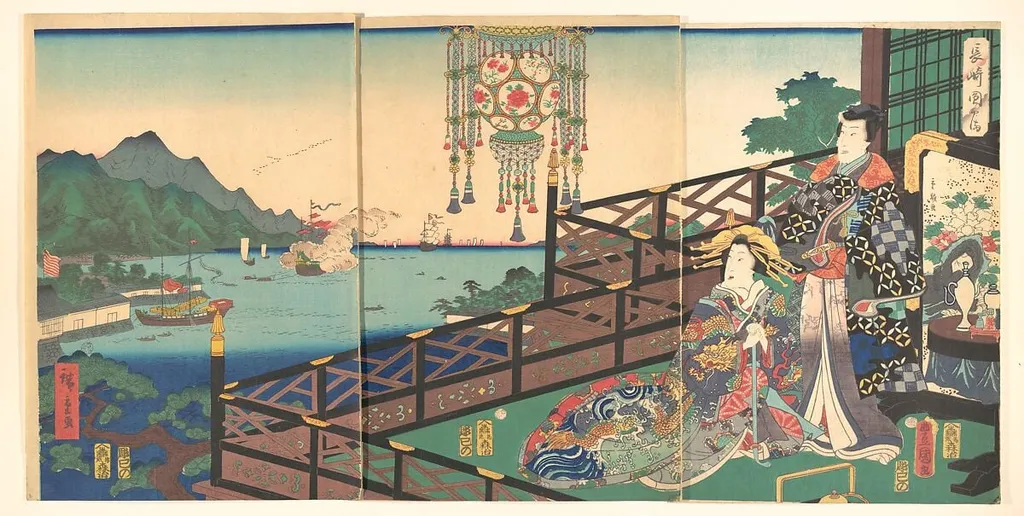
Untitled is an ink print by the Impressionist artist Utagawa Hiroshige II. It dates from 3 and is held in the collection of the Metropolitan Museum of Art.
About this work
This triptych painting shows a balcony with a man and woman in traditional Japanese clothing.
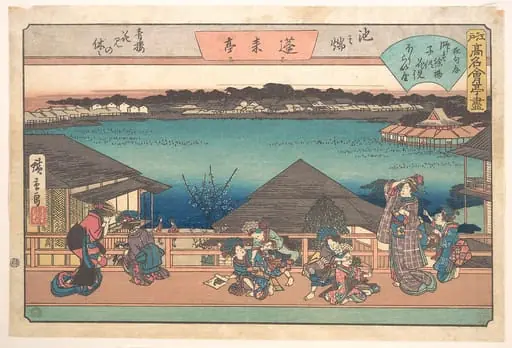
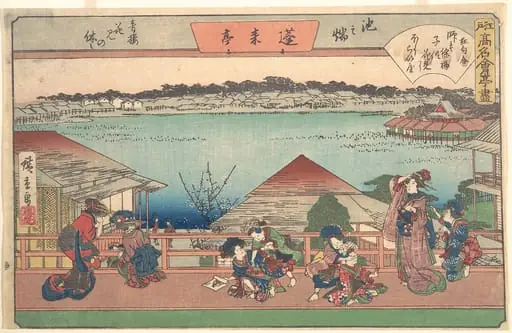
This triptych painting shows a balcony with a man and woman in traditional Japanese clothing. The woman sits on the floor, and the man stands beside her. They look out at a body of water with boats and a mountain in the distance. The balcony has a railing with a chandelier hanging above it.
The painting has many colors, including blues, greens, and reds. The woman's kimono is very colorful and has a pattern of flowers and leaves. The man's kimono is more subdued, with a geometric pattern. The background of the painting is a light blue sky.
The painting is very detailed, with many small elements that add to the overall scene. It is a beautiful example of Japanese art from the 19th century. You might also like to look at the work of Utagawa Hiroshige II.
Overview
This triptych consists of three woodblock prints on paper, created by Utagawa Hiroshige II in the mid-19th century. Executed in ink and color, it presents a single panoramic scene divided across three panels. The work is part of the collection at The Metropolitan Museum of Art, where it is cataloged as an example of ukiyo-e printmaking from the Edo period.
Subject & Meaning
The scene depicts a couple on a balcony overlooking a tranquil waterscape. The woman sits quietly while the man stands beside her, both gazing toward distant boats and a mountain. Their postures suggest contemplation, possibly evoking a moment of quiet intimacy or seasonal reflection. The setting, common in ukiyo-e, links human presence with nature, a recurring theme in Japanese visual culture.
Technique & Style
The prints employ fine linework and layered color applications typical of ukiyo-e. The woman’s kimono features intricate floral and vegetal patterns rendered in vibrant hues, contrasting with the man’s more restrained geometric design. The background blends soft gradients of blue for sky and water, while architectural details like the chandelier and railing are delicately outlined, enhancing spatial depth and texture.
History & Provenance
Created during the late Edo period, the triptych reflects the commercial print culture of Edo (modern Tokyo), where artists like Hiroshige II produced works for a broad urban audience. It entered The Metropolitan Museum of Art’s collection in the 20th century, likely through early Western acquisitions of Japanese prints, which gained international interest after Japan’s opening to foreign trade.
Context
Hiroshige II worked within the tradition of his predecessor, Utagawa Hiroshige, focusing on landscapes and scenes of daily life. This triptych aligns with the genre of 'famous places' prints, which celebrated scenic views and seasonal moods. The inclusion of a balcony with a chandelier hints at the blending of traditional Japanese architecture with imported Western elements, reflecting cultural shifts in 19th-century Japan.
Legacy
Though less widely known than his predecessor, Hiroshige II’s works contributed to the evolution of ukiyo-e during a period of rapid modernization. This triptych exemplifies the technical refinement and aesthetic sensitivity of late Edo printmaking. Its preservation in major Western institutions underscores its role in shaping global appreciation for Japanese print art beyond its original context.
Artist & collection

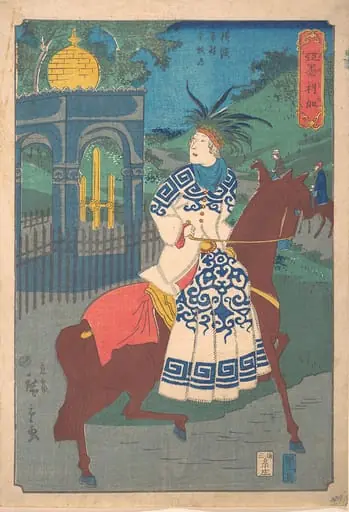 二代歌川広重画 『亜墨利加 横浜本村本牧道』|American Woman Riding Side-Saddle on the Road at Honmoku, Motomura, Yokohama (America Yokohama Motomura Honmoku michi)
 Untitled
 Untitled
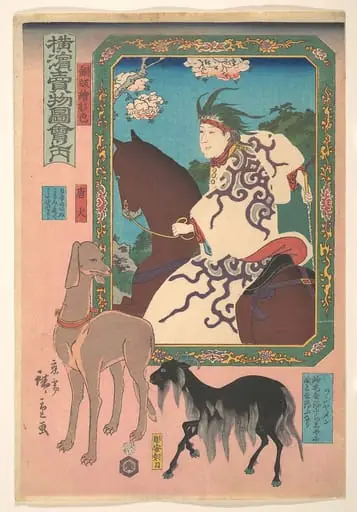 横浜賣物図会の内 唐犬|Copper Plate Engraving of a Woman Riding a Horse, a Goat and a Dog
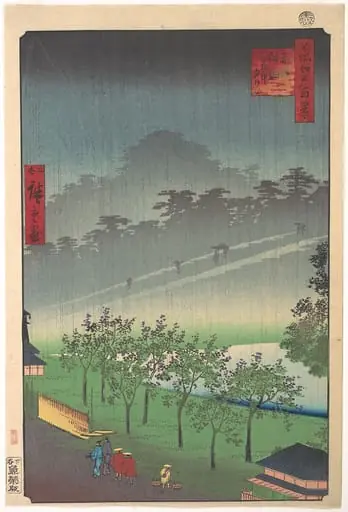 Untitled
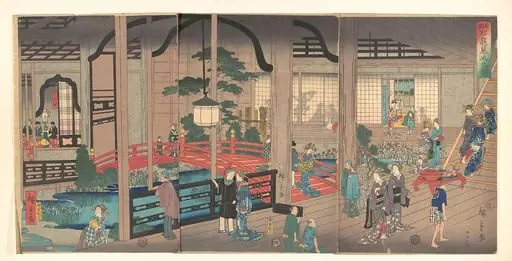 Yokohama Gankirō no zu|View of the Interior of the Gankirō Tea House in Yokohama
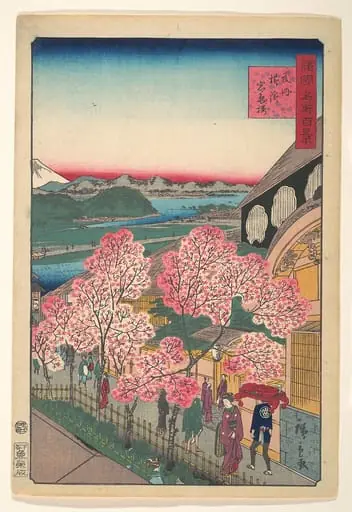 Bushu Yokohama Gankirō|諸国名所百景 武州横浜岩亀楼|Entrance to the Gankirō Tea House in the Miyozaki District, Yokohama, Bushu
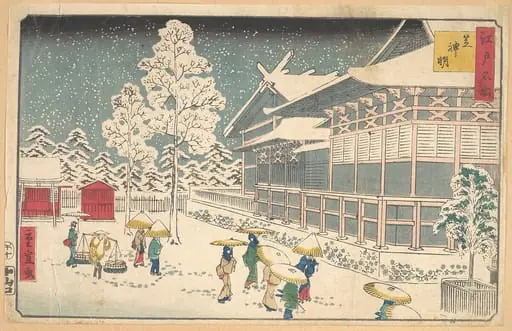 江戸名所 芝神明|Famous Places of Edo: Shiba Shinmei
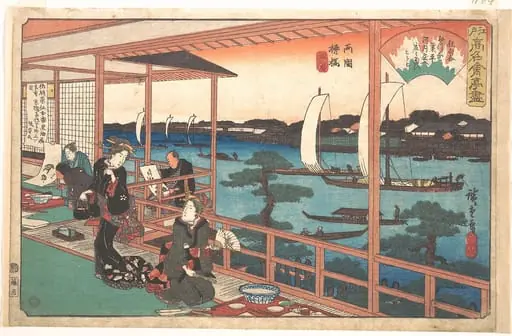 Ryogoku Yanagibashi (Kawachiya)|江戸高名会亭尽 両国柳橋 河内屋|Tea-house at the Willow Bridge
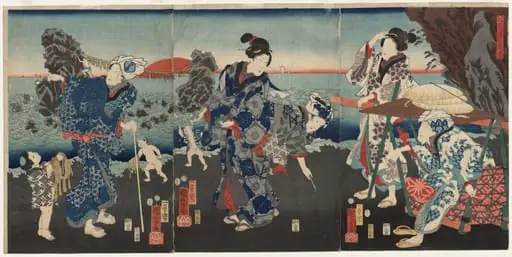 Splendid View at Futamigaura Bay
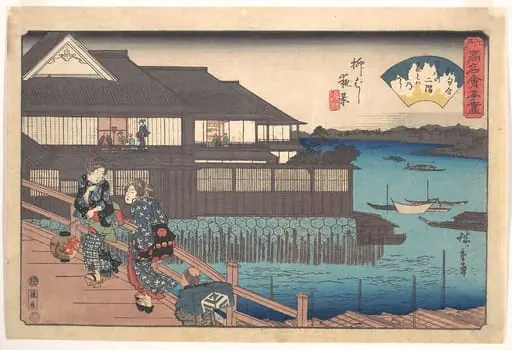 江戸高名会亭尽 柳ばし夜景 万八|The Manpachi at Evening in Yanagibashi
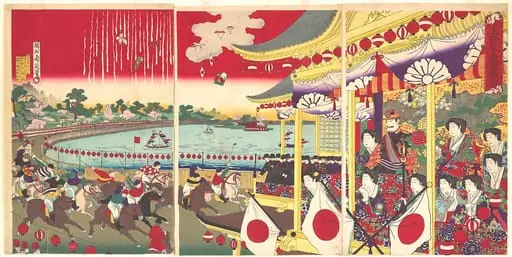 『上野不忍競馬図』|View of the Horse Track at Shinobazu in Ueno Park (Ueno shinobazu keiba zu)
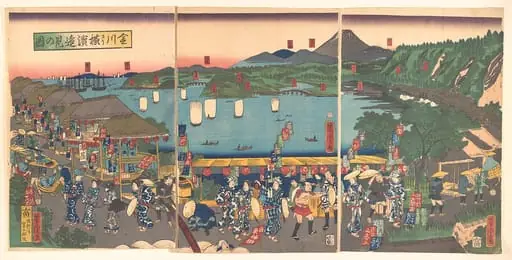 Kanagawa yōri Yokohama...ken no zu|A Distant View of Yokohama from Kanagawa
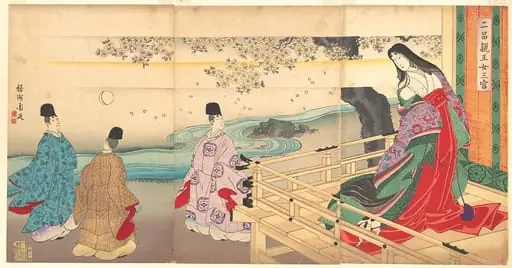 二品親王女三宮|The Third Princess and Kashiwagi, from Chapter 34, “New Herbs I (Wakana I)” (Nihon shinnō onna sannomiya)
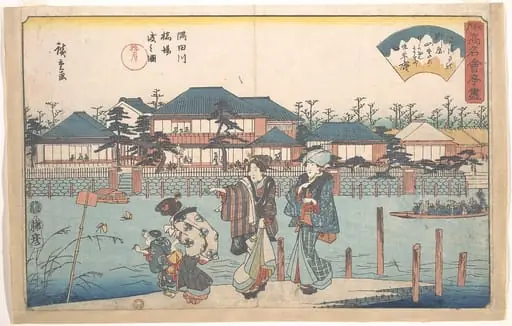 江戸高名会亭尽 隅田川橋場渡之図 柳屋|Sumidagawa Hashiba Watashi Zu (Yanagiya)
 江戸高名会亭尽 池之端 蓬莱亭 青楼花見の休み|Ikeno Mata (Horai-ya)
 Untitled
 Untitled
 東都名所 新吉原朝桜之図|Morning Cherries at Yoshiwara
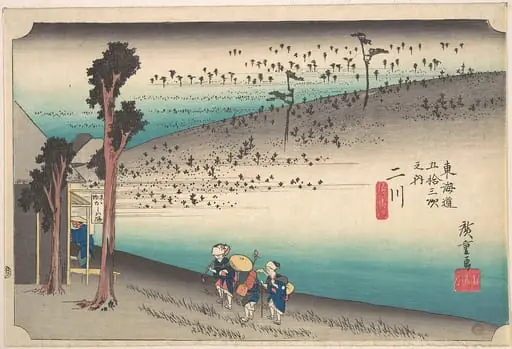 東海道五十三次之内 二川 猿ヶ馬場|Futagawa, Saru ga Baba