Artwork
Kamakura no Koshi|The Filial Son at Kamakura, From the Book: Sasekishu
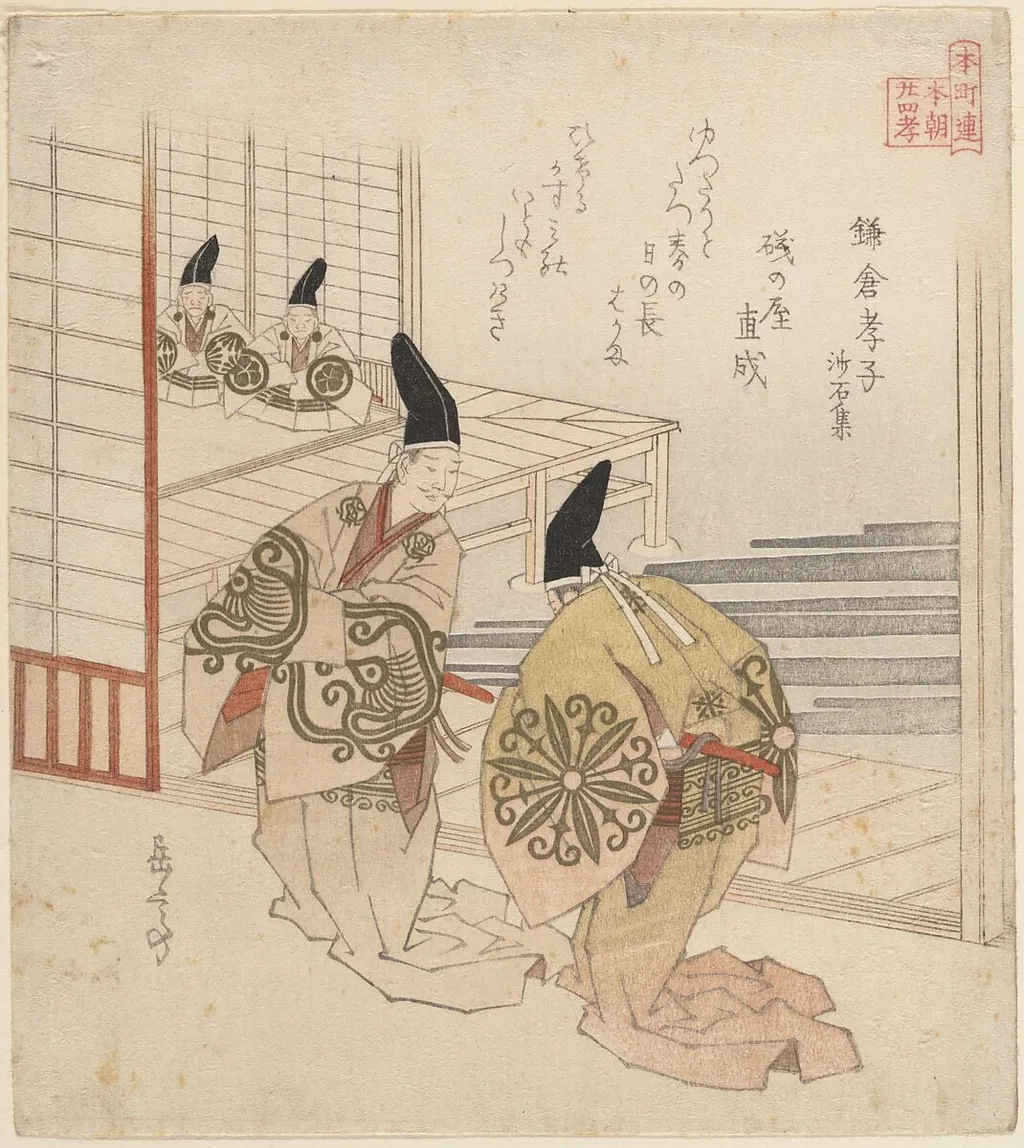
Kamakura no Koshi|The Filial Son at Kamakura, From the Book: Sasekishu is an ink print by the Romanticist artist Yashima Gakutei. It dates from 1835 and is held in the collection of the Metropolitan Museum of Art.
About this work
Overview
Created circa 1835 by Yashima Gakutei, this surimono woodblock print presents a domestic interior scene rendered in ink and color on paper.
Created circa 1835 by Yashima Gakutei, this surimono woodblock print presents a domestic interior scene rendered in ink and color on paper. The composition centers on two figures in traditional dress—a kneeling man in a yellow robe with black patterning and a standing companion in a white robe with similar motifs—both capped with black hats. A window reveals two additional figures, while architectural elements such as stairs and a building façade frame the tableau.
Subject & Meaning
The image likely illustrates a narrative drawn from classical Japanese literature or folklore concerning filial devotion, as suggested by the title’s reference to a dutiful son in Kamakura. The juxtaposition of the kneeling figure’s reverence and the standing figure’s attentive posture underscores themes of respect, duty, and familial hierarchy common in Edo‑period storytelling.
Technique & Style
Gakutei employs the refined surimono technique, combining precise line work with a limited but vivid palette of yellow, white, and black. Bold outlines define the garments and architectural forms, while geometric shapes create spatial depth. The careful application of color enhances contrast, allowing the figures to emerge sharply against the interior backdrop.
History & Provenance
A pupil of both Totoya Hokkei and the renowned Hokusai, Gakutei was active as a poet and printmaker from the late 1700s to the mid‑1800s. His surimono were often produced for private poetry gatherings, and this piece reflects that tradition. The print has circulated among collectors of Edo‑period prints and is documented in several catalogues of Gakutei’s work.
Context
During the early nineteenth century, surimono served as a specialized medium for literary societies, allowing artists to experiment with elaborate designs and sophisticated subjects. Gakutei’s involvement in kyōka poetry informed his visual choices, integrating textual nuance with visual narrative, a hallmark of the period’s interdisciplinary artistic culture.
Artist & collection
Artist
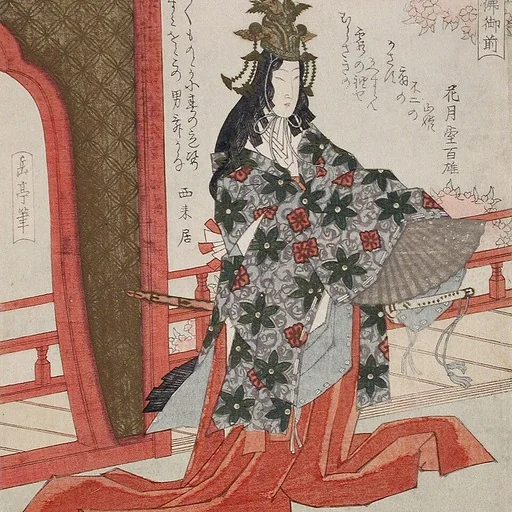
Yashima Gakutei (Japanese: 八島岳亭; c. 1786 – 1868) was a Japanese artist and poet who was a pupil of both Totoya Hokkei and Hokusai. Gakutei is best known for his kyōka poetry and surimono works.

 Untitled
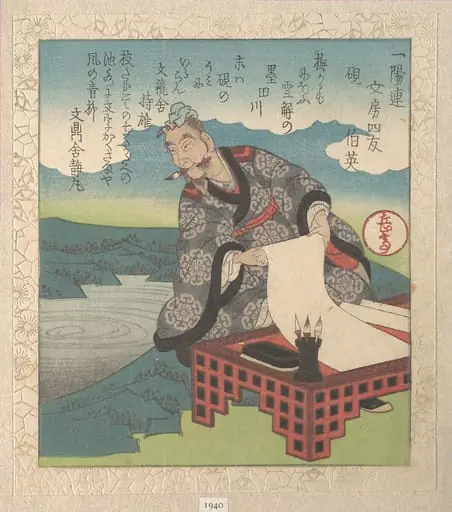 「一陽連文房四友 硯 伯英」『春雨集』 摺物帖|The Chinese Calligrapher Boying (Japanese: Hakuei; also known as the “Sage of Cursive Script”); “Inkstone” (Suzuri), from Four Friends of the Writing Table for the Ichiyō Poetry Circle (Ichiyō-ren Bunbō shiyū) From the Spring Rain Collection (Harusame shū), vol. 1
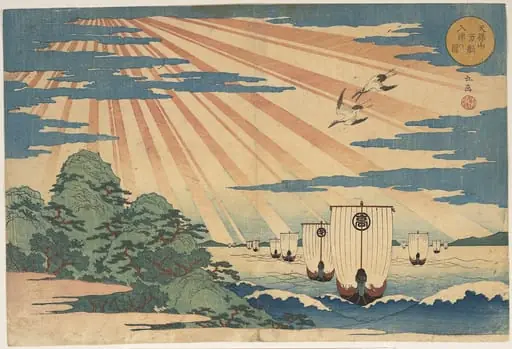 Untitled
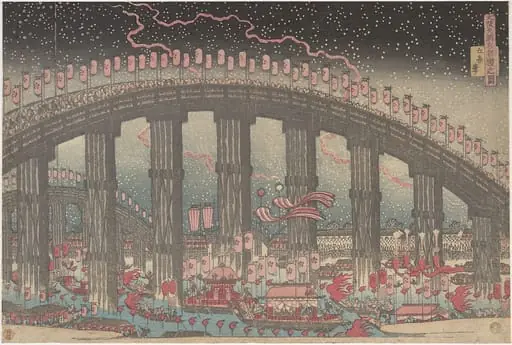 Osaka Tenmangu sairei no zu|The Tenmangu Festival at Osaka
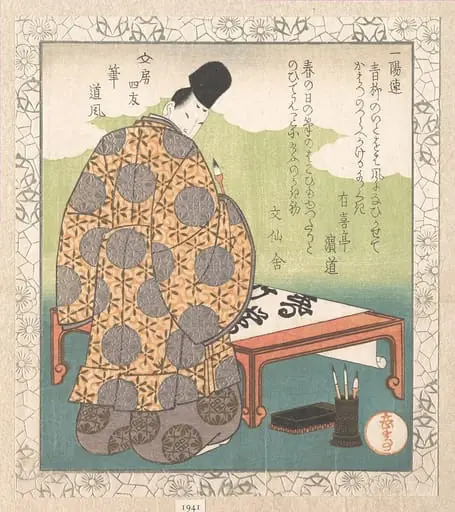 「一陽連文房四友 筆 道風」『春雨集』 摺物帖|The Heian Court Calligrapher Ono no Tōfū (894–966); “Calligraphy Brush” (Fude), from Four Friends of the Writing Table for the Ichiyō Poetry Circle (Ichiyō-ren Bunbō shiyū)From the Spring Rain Collection (Harusame shū), vol. 1
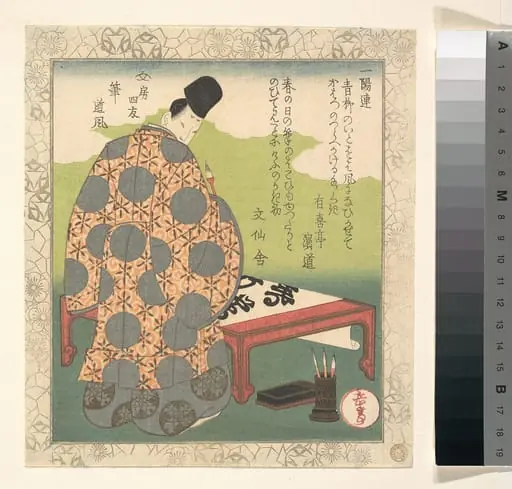 Untitled
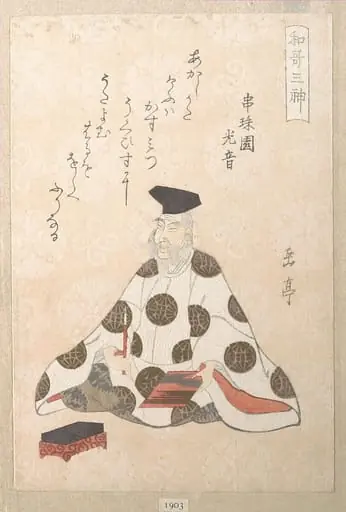 『和歌三神』 柿本人麻呂|Kakinomoto no Hitomaro (ca. 662–710), One of the Three Gods of PoetryFrom the Spring Rain Collection (Harusame shū), vol. 1
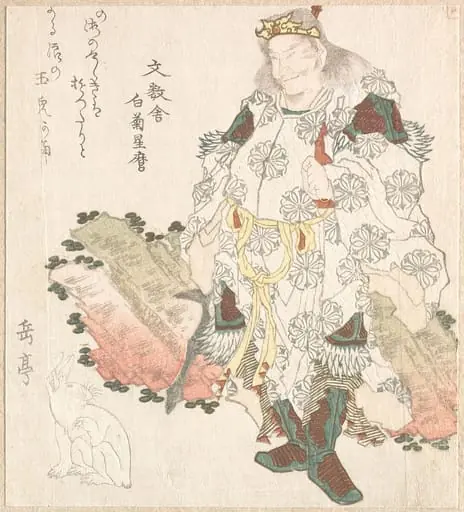 Untitled
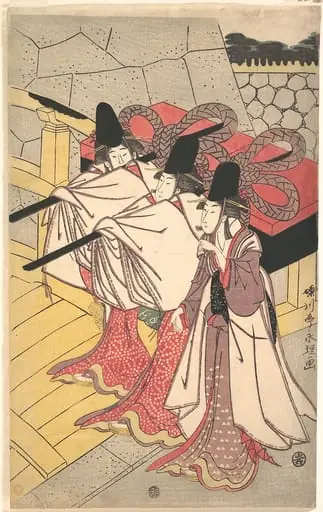 Untitled
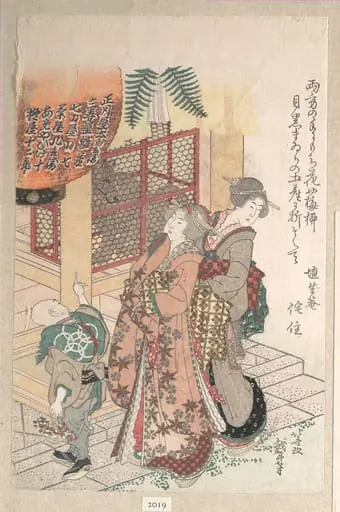 初詣|Young Women Visiting a Shinto Shrine
 Untitled
 Untitled
 Untitled
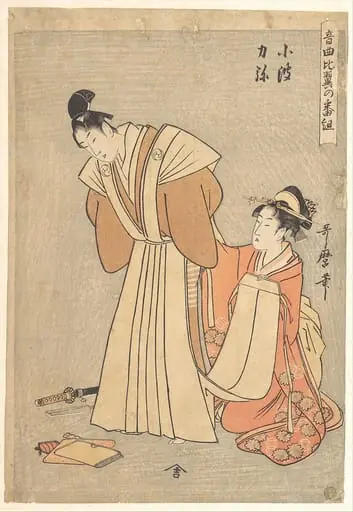 音曲比翼の番組 小波 力弥|Rikiya and Konami, from the series A Program with Music about Loving Couples (Ongyoku hiyoku no bangumi)
 Untitled
 Untitled
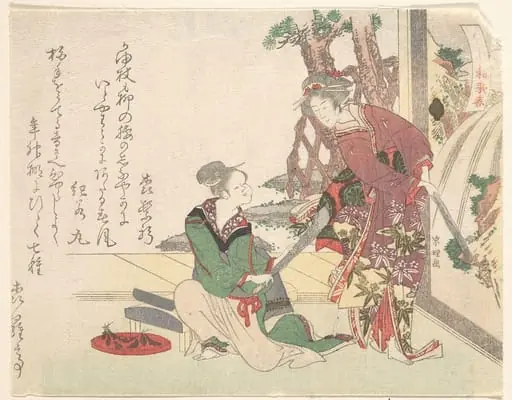 うし和歌春|Two Women, from the series Spring Poems on Ushiwaka for the Year of the Ox (Ushiwaka haru)
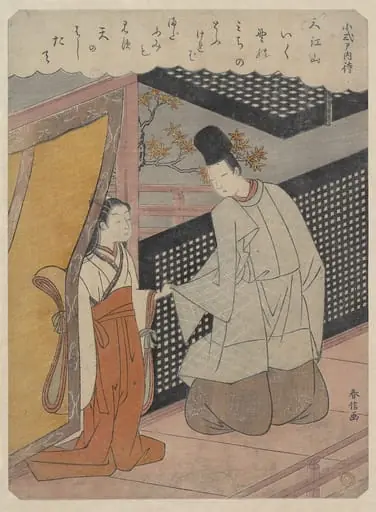 百人一首 小式の内持|Koshikibu no Naishi (999–1025), from "Hyakunin Isshu" (One Hundred Poems by One Hundred Poets)
 Untitled
 Untitled