Artwork
Untitled
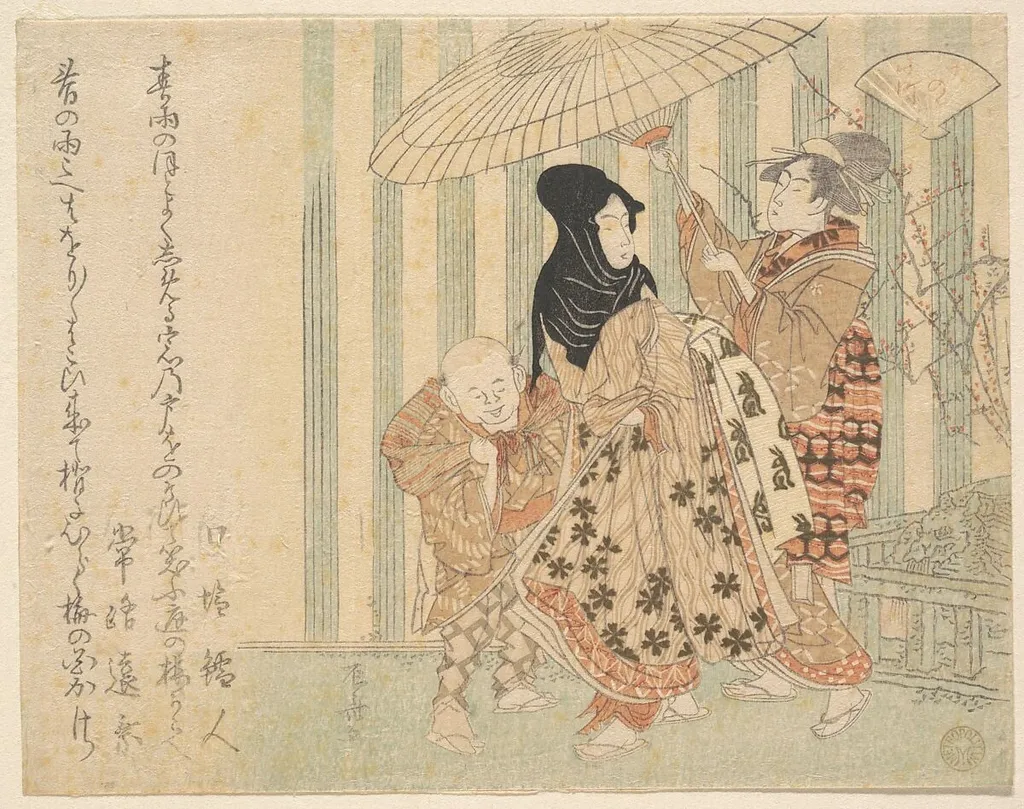
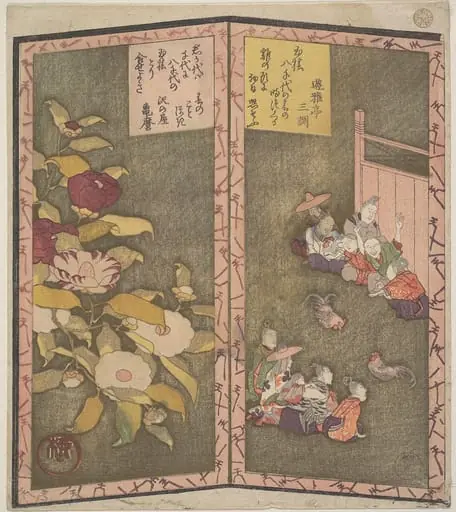
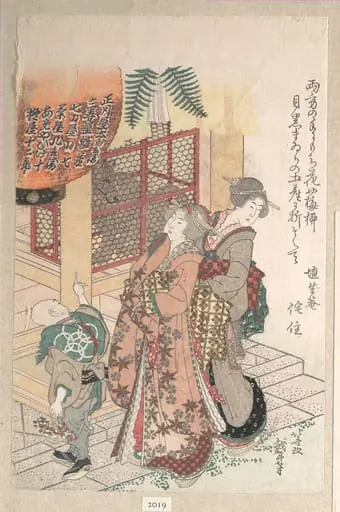
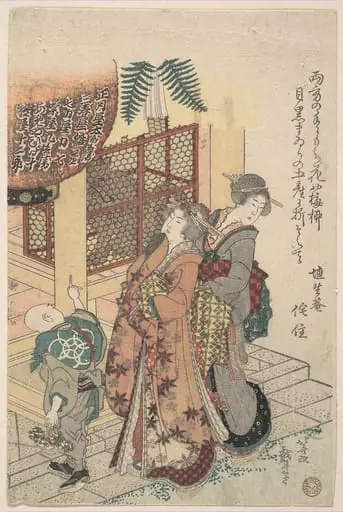
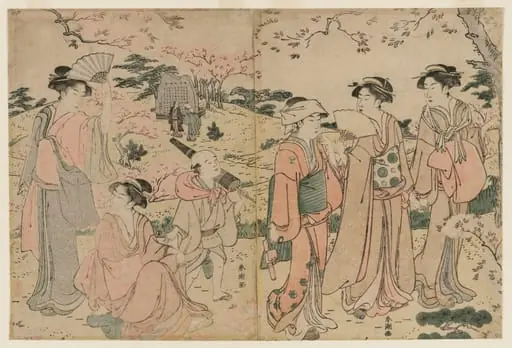
Untitled is an ink print by the Romanticist artist Ryūryūkyo Shinsai. It dates from 1800 and is held in the collection of the Metropolitan Museum of Art.
About this work
Overview
Executed in ink and color on paper, it reflects the refined aesthetic of early 19th-century Japanese printmaking.
This woodblock print, attributed to Ryūryūkyo Shinsai and dated around 1800, belongs to the surimono genre—privately commissioned prints often produced for poetic or seasonal occasions. Executed in ink and color on paper, it reflects the refined aesthetic of early 19th-century Japanese printmaking. The work is part of The Metropolitan Museum of Art’s collection, preserved as an example of intimate, high-quality ukiyo-e production outside mass-market circulation.
Subject & Meaning
The scene depicts a woman in a dark cloak cradling a child, accompanied by a servant holding an umbrella beneath a grove of bamboo. The figures suggest a quiet, possibly nocturnal journey, evoking themes of care, protection, and transience. The bamboo, a symbol of resilience in Japanese culture, frames the figures without dominating them, reinforcing a mood of understated dignity rather than narrative drama.
Technique & Style
The print employs fine, controlled lines to render texture and shadow, particularly in the bamboo stalks and fabric folds. Cross-hatching and delicate stippling create depth without heavy outlines, characteristic of surimono’s emphasis on subtlety. The use of muted colors and restrained composition reflects the genre’s preference for elegance over spectacle, prioritizing tactile detail and atmospheric nuance.
History & Provenance
Created around 1800, the print likely originated as a private commission, possibly for a literary gathering or seasonal celebration. Such surimono were often distributed among patrons and poets, making them rare and highly personal. It entered The Metropolitan Museum of Art’s collection through documented acquisition, preserving its origin within the elite print culture of Edo-period Japan.
Context
Surimono emerged in the late 18th century as luxury prints, distinct from commercial ukiyo-e. They were produced in small editions for connoisseurs, often incorporating poetry or seasonal references. This print aligns with that tradition, using natural motifs and restrained figures to appeal to an audience attuned to poetic suggestion and refined craftsmanship rather than popular imagery.
Legacy
Though not widely known outside specialist circles, this work exemplifies the technical precision and emotional restraint that defined surimono. Its preservation in major collections underscores its value as a record of Edo-period aesthetic ideals—where quiet moments, executed with meticulous care, held cultural weight equal to grander narratives.
Artist & collection

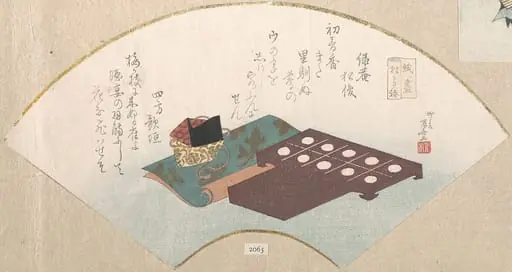 Untitled
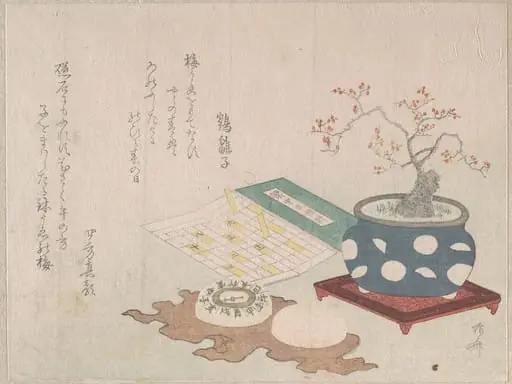 鉢梅、懐中日時計、羅針盤|Bonsai Plum, Compass, and Pocket Sundial with Design of Calendar, from Spring Rain Surimono Album (Harusame surimono-jō, vol. 3)
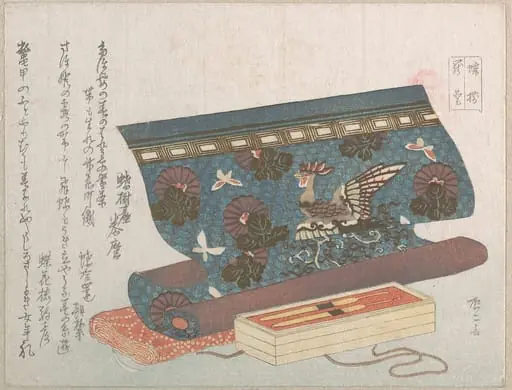 『蝶揃・寵愛』帯と簪|Roll of Cloth for an Obi and Tortoise-shell Hair Ornaments (“Presents for One’s Beloved”), from the Butterfly Series, from Spring Rain Surimono Album (Harusame surimono-jō, vol. 3)
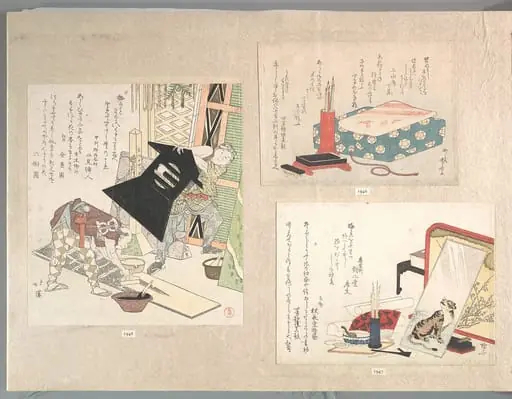 衝立、虎図、文具一式|Desk Screen, Writing Set, Painting of Tiger, and Mounting Paraphernalia, from Spring Rain Surimono Album (Harusame surimono-jō, vol. 1)
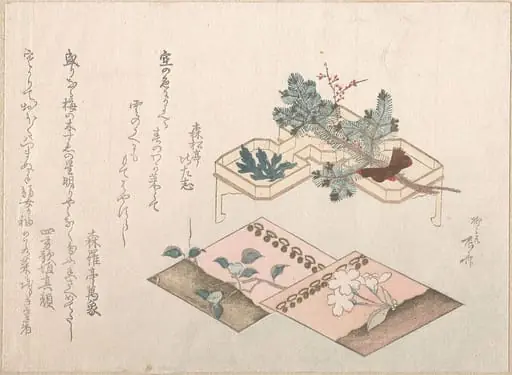 『春雨集』 摺物帖柳々居辰斎画 若松|Spring Rain Collection (Harusame shū), vol. 2: Pine Shoots and Accoutrements for New Year’s Celebrations
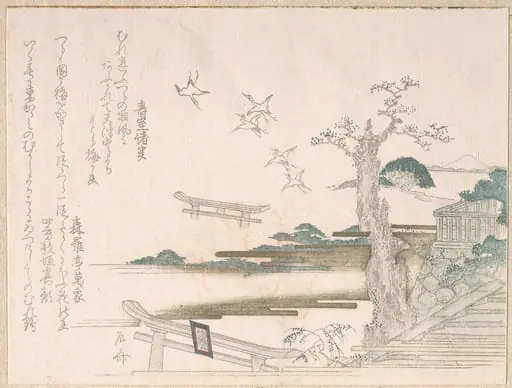 『春雨集』 摺物帖柳々居辰斎画 鎌倉の鶴岡八幡宮に鶴|Spring Rain Collection (Harusame shū), vol. 2: Cranes at Tsurugaoka Hachimangō Shrine in Kamakura
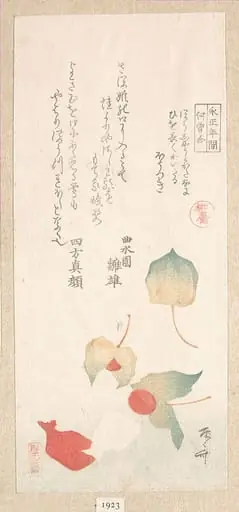 Untitled
 Untitled
 初詣|Young Women Visiting a Shinto Shrine
 Untitled
 Women Viewing Cherry Blossoms at Asukayama
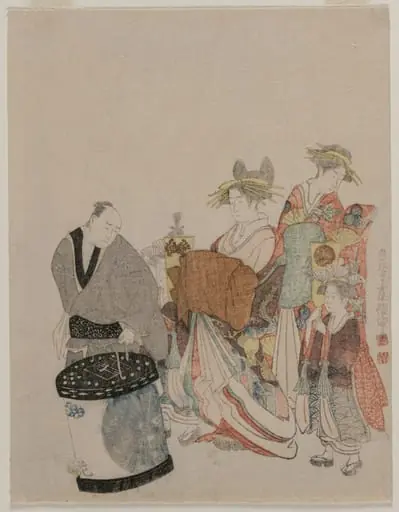 Courtesan on the Town with Attendants at Night
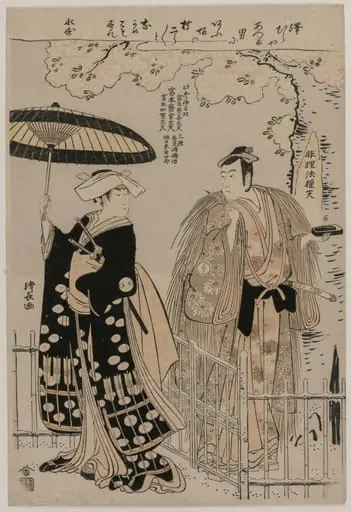 Sawamura Sojuro III and Arashi Murajiro as Kusunoki Masatsura and Koto no Naishi
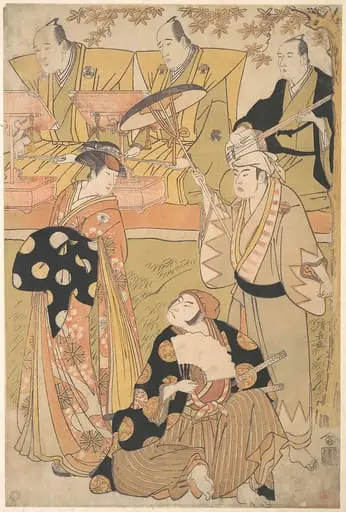 Untitled
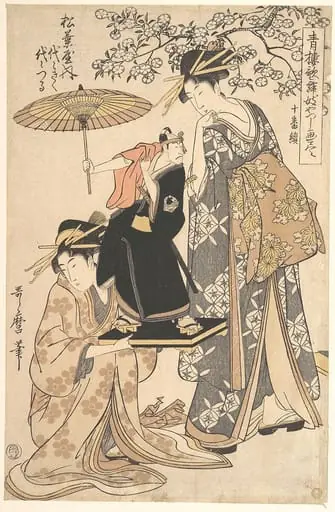 青楼歌舞妓やつし画尽 十番続|The Oiran Yoyogiku of Matsubaya Standing under a Cherry Tree
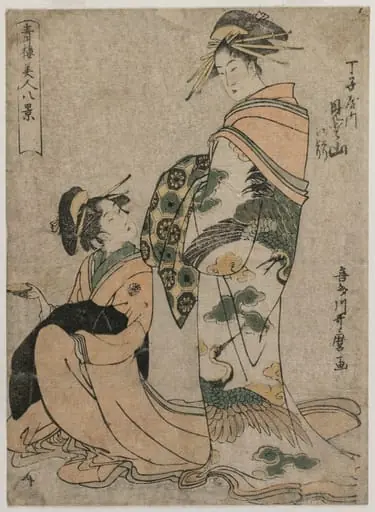 The Courtesan Misyama of Chojiya (from the series Eight Views of Beautiful Women of the Green Houses)
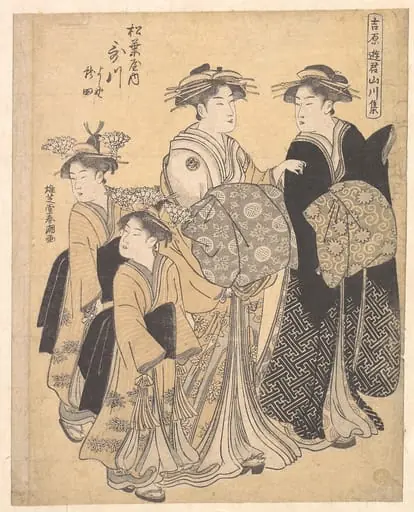 Untitled
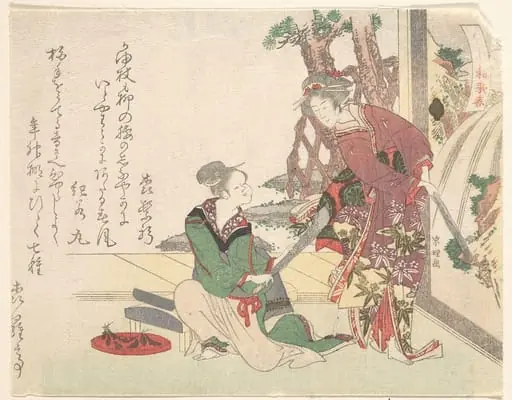 うし和歌春|Two Women, from the series Spring Poems on Ushiwaka for the Year of the Ox (Ushiwaka haru)
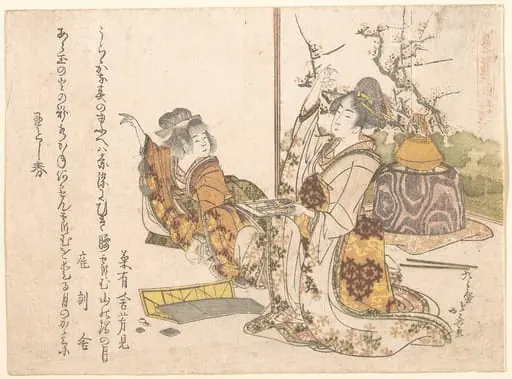 Untitled
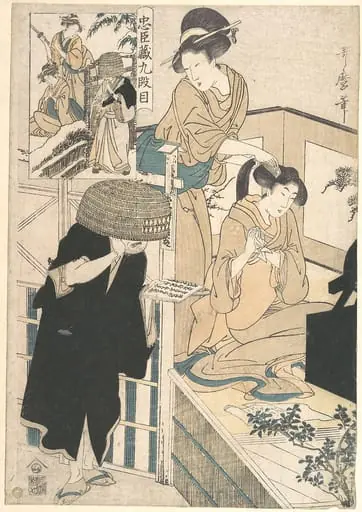 忠臣蔵九段目|A Woman at Her Toilet Seated before a Mirror, Having Her Hair combed by a Kameyui (Woman Hairdresser)