Artwork
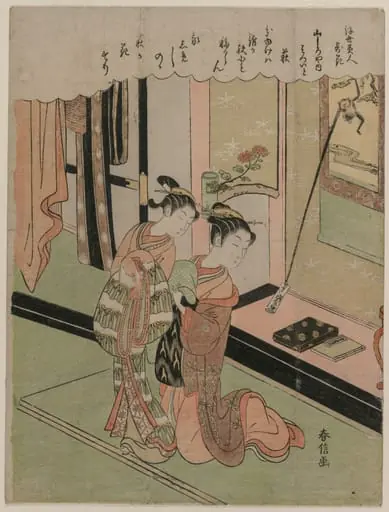
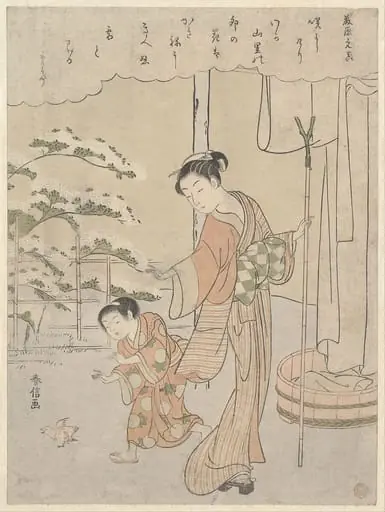
百人一首 小式の内持|Koshikibu no Naishi (999–1025), from "Hyakunin Isshu" (One Hundred Poems by One Hundred Poets)
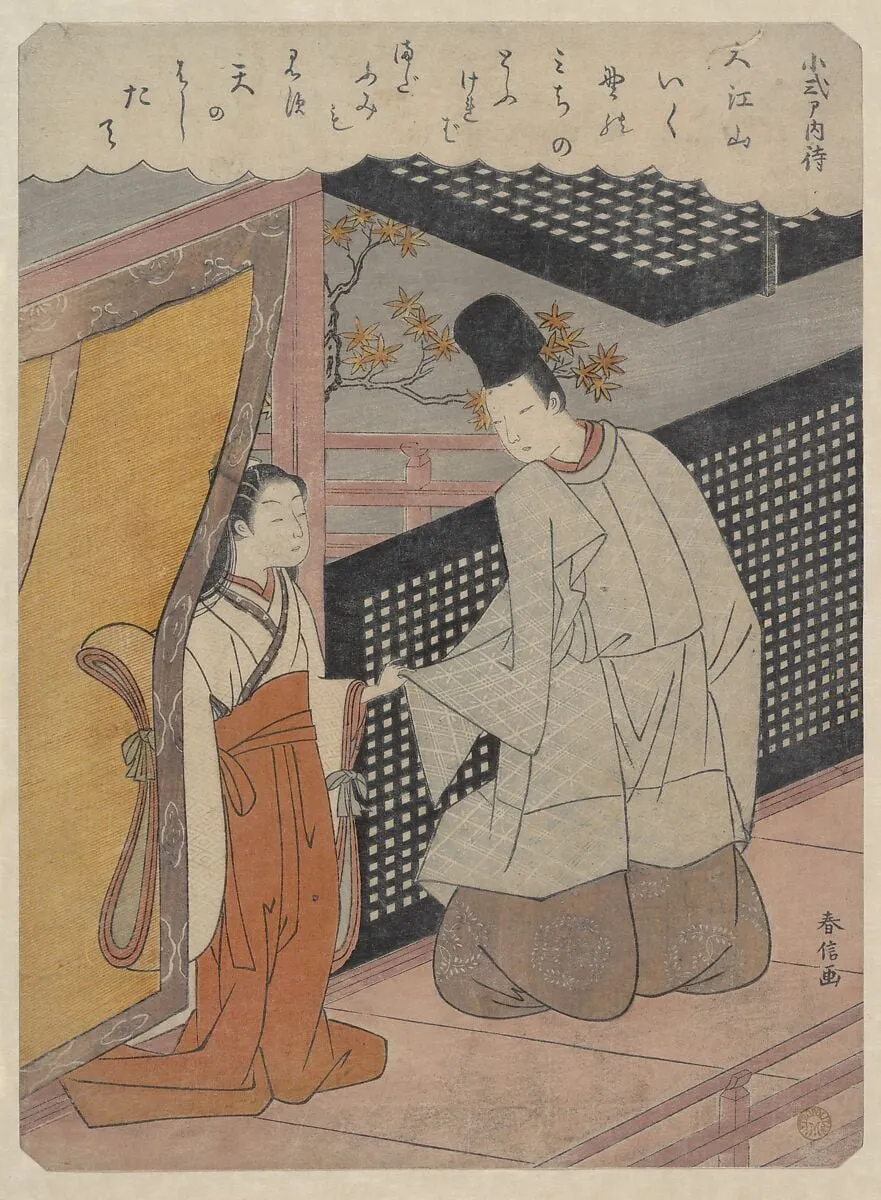
百人一首 小式の内持|Koshikibu no Naishi (999–1025), from "Hyakunin Isshu" (One Hundred Poems by One Hundred Poets) is an ink print by the Romanticist artist Suzuki Harunobu. It dates from 1768 and is held in the collection of the Metropolitan Museum of Art.
About this work
Overview
It depicts a quiet interior scene with two figures engaged in a contemplative moment, rendered in delicate ink and color on paper.
This woodblock print, dated around 1768, is part of Suzuki Harunobu’s series illustrating the Hyakunin Isshu anthology. It depicts a quiet interior scene with two figures engaged in a contemplative moment, rendered in delicate ink and color on paper. The composition balances stillness and subtle motion, reflecting the poetic tradition it illustrates. The print is currently held in the collection of The Metropolitan Museum of Art.
Subject & Meaning
The scene portrays Koshikibu no Naishi, a Heian-period poet, and an attendant. The figure kneeling with a scroll suggests the act of reading or composing poetry, while the standing figure, holding a fan, implies quiet observation. Autumn leaves falling outside the window evoke transience, a central theme in classical Japanese verse. The pairing of image and text invites reflection on the emotional weight of the poem attributed to the poet.
Technique & Style
Harunobu employed nishiki-e, a multi-block color printing method, to achieve subtle gradations and soft hues. Fine linework defines the figures’ robes and the interior architecture, while the exterior landscape is rendered with minimal detail, enhancing the sense of intimacy. The use of muted tones—particularly the orange sashes against pale backgrounds—draws attention without disrupting the calm atmosphere of the scene.
History & Provenance
Created during the Edo period, this print was produced as part of a popular series that made classical poetry accessible to a broader audience. Harunobu’s prints were widely distributed, often sold as collectible items. The work entered The Metropolitan Museum of Art’s collection through documented acquisitions in the 20th century, preserving its place in the history of Japanese printmaking.
Context
The Hyakunin Isshu anthology, compiled in the 13th century, selected one poem from each of a hundred poets, spanning centuries. By the 18th century, these poems were commonly illustrated in prints, blending literary culture with visual art. Harunobu’s series responded to a growing urban interest in refined aesthetics, connecting Heian-era poetry with contemporary Edo tastes through intimate, domestic scenes.
Legacy
Harunobu’s prints helped define the ukiyo-e genre’s capacity for lyrical expression beyond theatrical or erotic subjects. His delicate handling of emotion and environment influenced later artists and contributed to the enduring appeal of the Hyakunin Isshu as a cultural touchstone. This print remains a representative example of how poetry and visual art intersected in Edo-period Japan.
Artist & collection

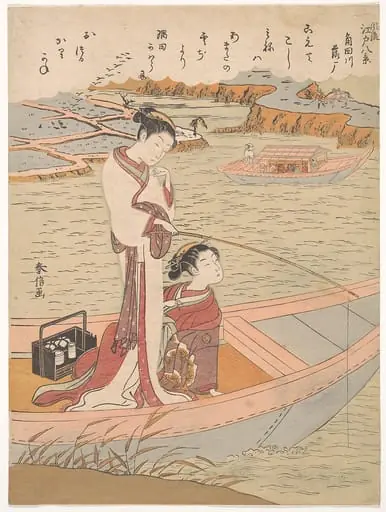
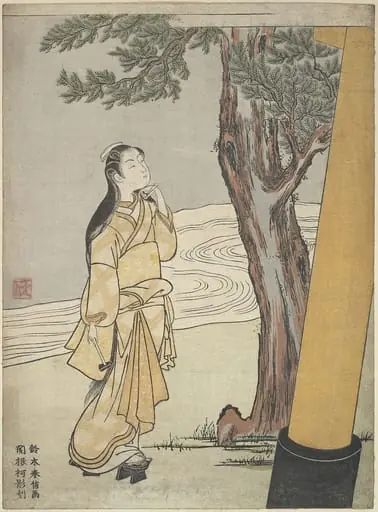
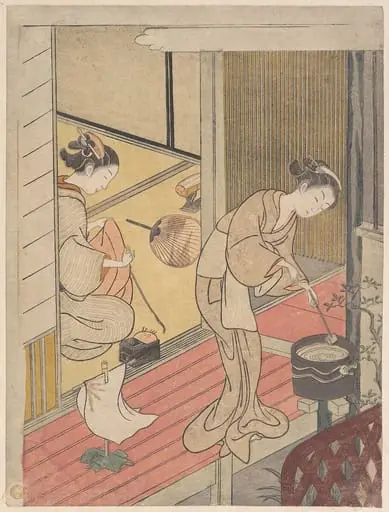
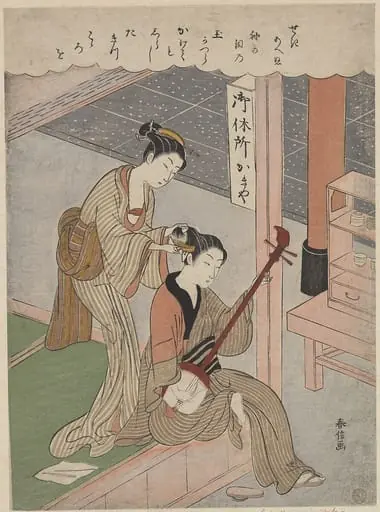
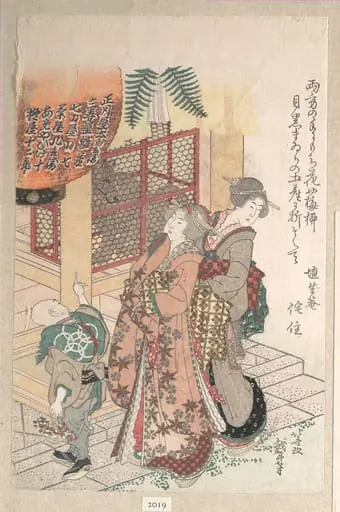 初詣|Young Women Visiting a Shinto Shrine
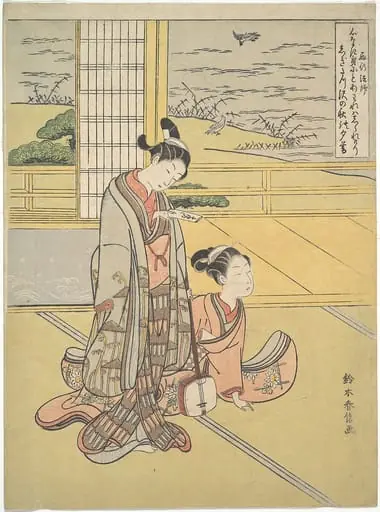 鈴木春信画 見立三夕 「西行法師」|A Young Man and Woman with a Shamisen; Monk Saigyō, from a series alluding to the Three Evening Poems (Sanseki waka)
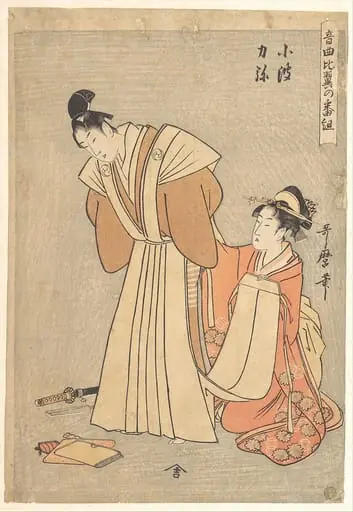 音曲比翼の番組 小波 力弥|Rikiya and Konami, from the series A Program with Music about Loving Couples (Ongyoku hiyoku no bangumi)
 Hatsuito of the Yamashiroya Likened to Bush Clover, from Beauties of the Floating World Compared to Flowers
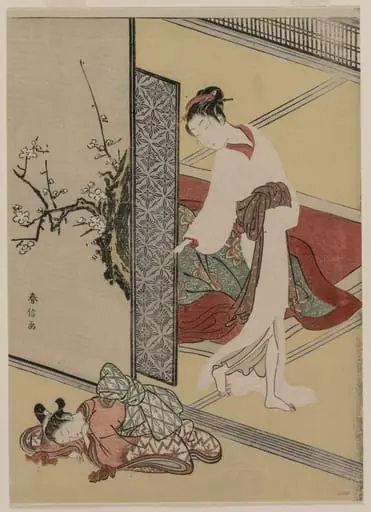 Courtesan and Sleeping Attendant
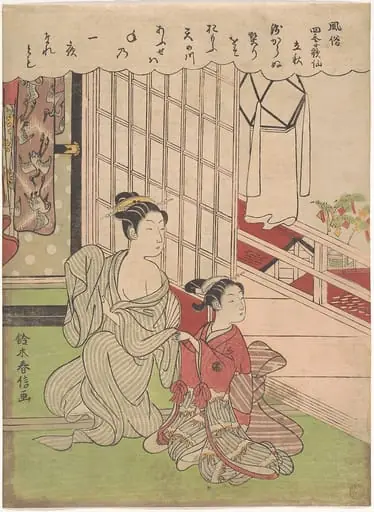 Aki|風俗四季歌仙 立秋|First Day of Autumn (Risshu)
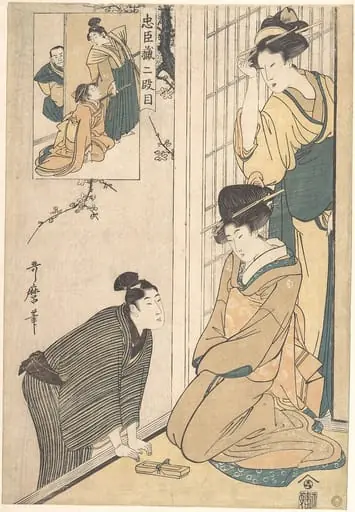 忠臣蔵二段目|A Young Man at the Side of a House
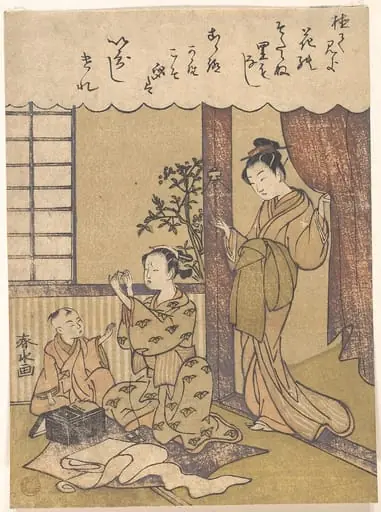 Untitled
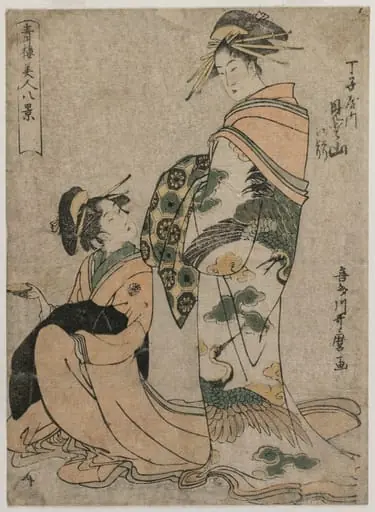 The Courtesan Misyama of Chojiya (from the series Eight Views of Beautiful Women of the Green Houses)
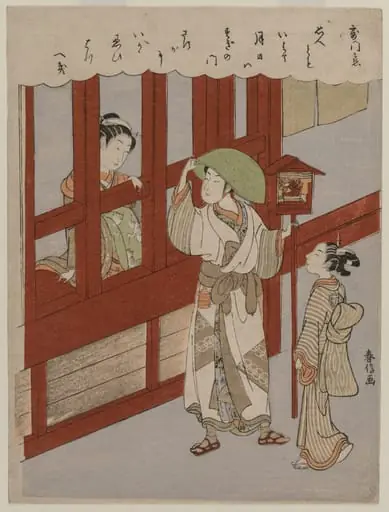 Love at the Brothel Gate
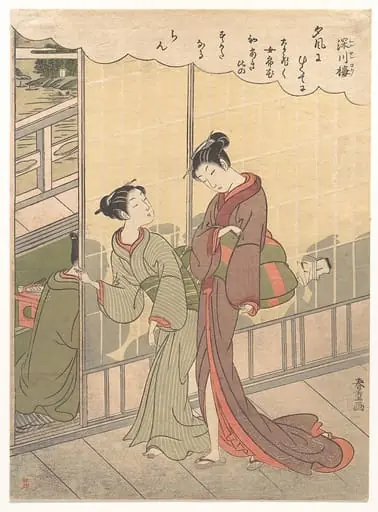 Untitled
 百人一首 藤原元真|Poem by Fujiwara no Motozane (ca. 860) from the Series Thirty-Six Poets