Artwork
Grèce - Athènes - Acropole – Propylees (Ελλάδα – Αθήνα – Ακρόπολη – Προπύλαια)
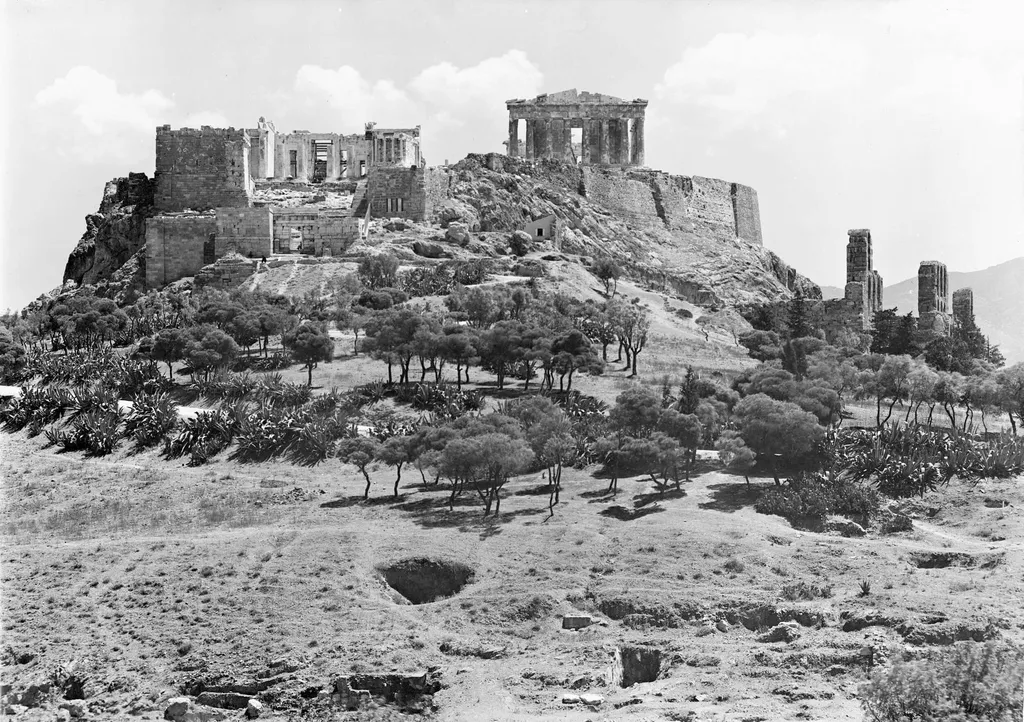
Grèce - Athènes - Acropole – Propylees (Ελλάδα – Αθήνα – Ακρόπολη – Προπύλαια) is a photography by Fred Boissonnas. It dates from 1908 and is held in the collection of the Metropolitan Organisation of Museums of Visual Arts of Thessaloniki – MOMus.
About this work
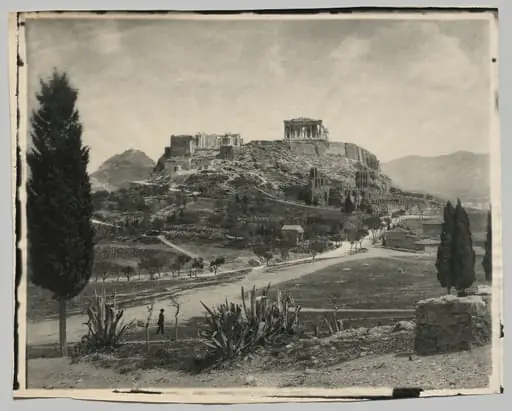
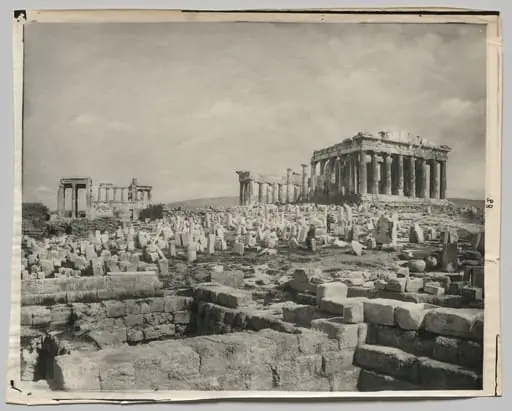
The biggest structure has tall columns standing in a row, while other crumbling walls and doorways scatter around it.
This black-and-white photo shows a rocky hilltop with old stone ruins. The biggest structure has tall columns standing in a row, while other crumbling walls and doorways scatter around it. Below, small trees and bushes dot the dry, uneven ground.
The photo was taken a long time ago—you can tell from the way the trees look pruned and the shadows are sharp. The ruins sit high above the landscape, making them look powerful even in decay.
Check out Boissonnas, Fred (1858-1946) to see more of his work.
Overview
Grèce - Athènes - Acropole – Propylees is a black-and-white photograph taken by Fred Boissonnas around 1908. It is part of the collection at the Museum of Ethnography.
Subject & Meaning
The image depicts the ruins of the Propylaea on the Acropolis in Athens, Greece. The photograph captures the site's ancient stone structures, including a row of tall columns, amidst a rocky landscape with sparse vegetation.
Technique & Style
The photograph is characterized by sharp shadows and a sense of aged, cultivated vegetation, indicating an early 20th-century photographic style. The image conveys a sense of the site's historical significance and grandeur despite its state of decay.
Artist & collection
Museum
Metropolitan Organisation of Museums of Visual Arts of Thessaloniki – MOMus
Continue through works from the same source collection.
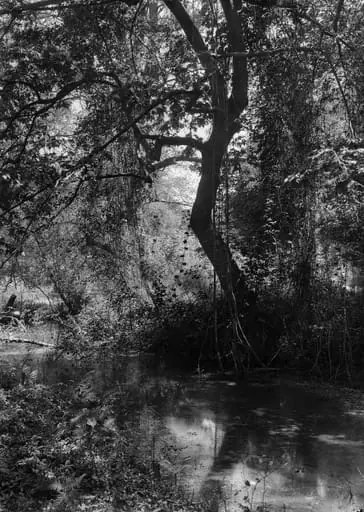 Grèce - Tempé, le Bain du Faune (Ελλάδα - Τέμπη, το Λουτρό του Πάνα)
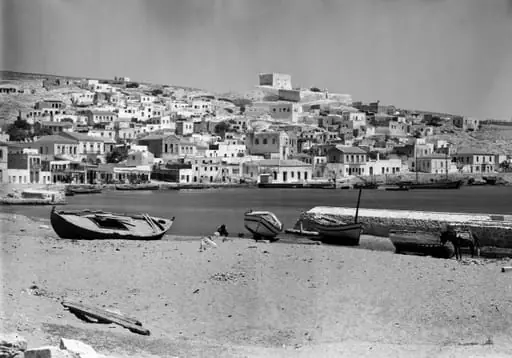 Crète - Sitias, la ville blanche au bord de la mer (de près), 18 VI 20 (Κρήτη - Σητεία, η λευκή πόλη δίπλα στη θάλασσα (από κοντά), 18 Ιουνίου 1920)
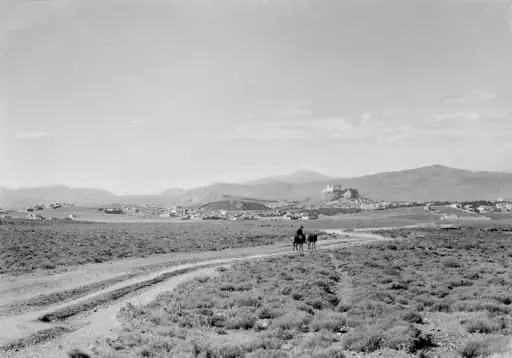 Athènes, vue de Kaisariani (Αθήνα, όψη από την Καισαριανή)
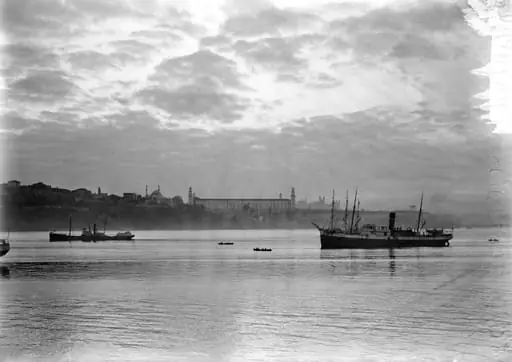 Constantinople, Scutari, lever du soleil, 18 XI 20 (Κωνσταντινούπολη, Σκουτάρι, ανατολή ηλίου, 18 Νοεμβρίου 1920)
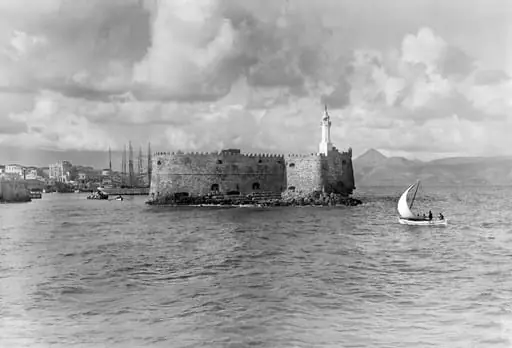 Crète, Herakleion ou Candie, Entrée du pont vue de la mer (Κρήτη, Ηράκλειο ή Κάντια, είσοδος του λιμανιού από τη θάλασσα)
![Céphalonie, Lixouri, (anciennement Odyssée 580) [Κεφαλονιά, Ληξούρι, (πρώην Οδύσσεια 580)], by Fred Boissonnas](https://artifactworldgallery.com/img/fred-boissonnas--cephalonie-lixouri-anciennement-odyssee-580-580--d8d058ce781d9c73-w320.webp) Céphalonie, Lixouri, (anciennement Odyssée 580) [Κεφαλονιά, Ληξούρι, (πρώην Οδύσσεια 580)]
Céphalonie, Lixouri, (anciennement Odyssée 580) [Κεφαλονιά, Ληξούρι, (πρώην Οδύσσεια 580)]