Artwork
Madonna on a Crescent
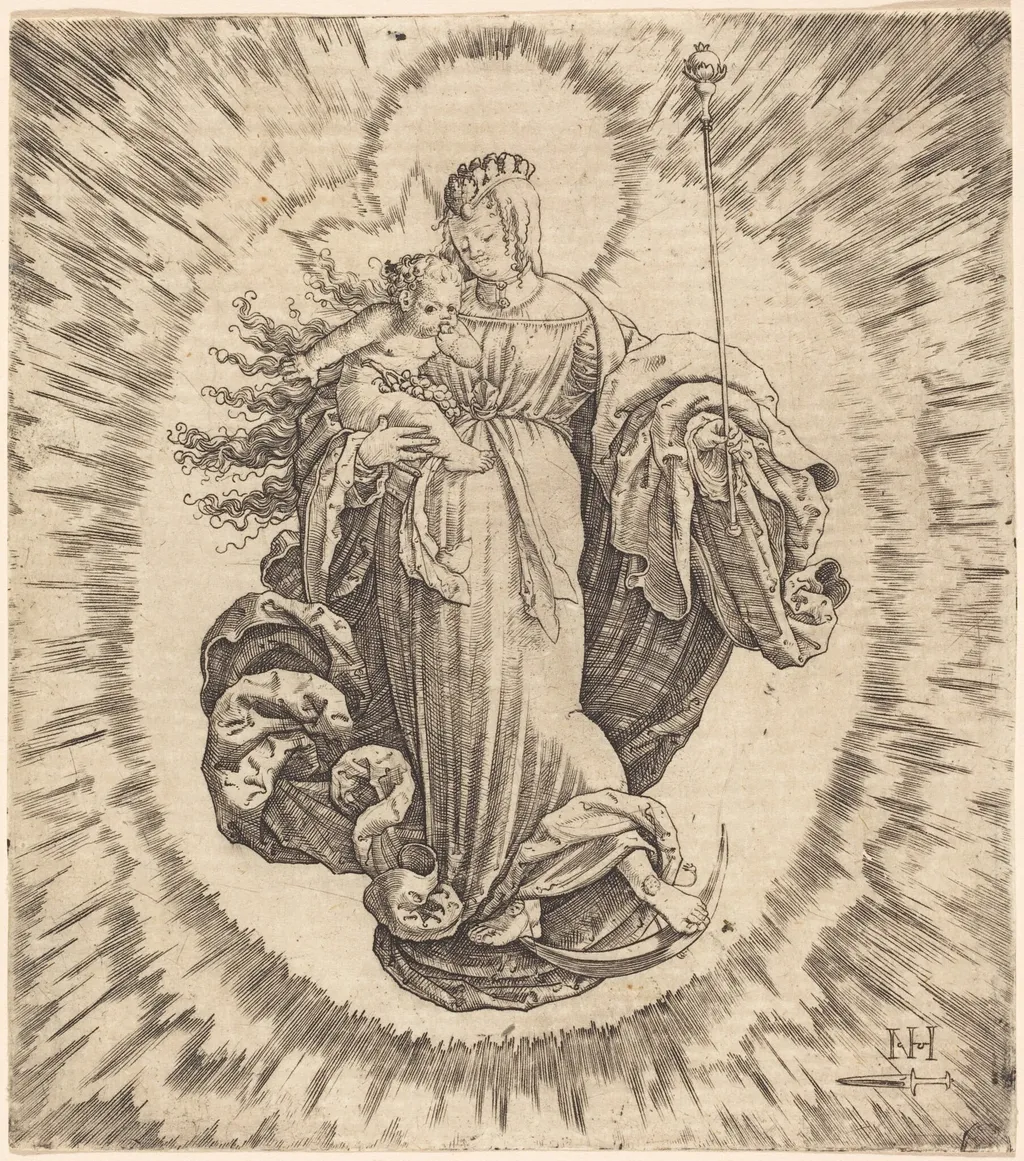
Madonna on a Crescent is an ink print by the Renaissance artist Master N.H. with the Dagger. It dates from 1515 and is held in the collection of the National Gallery of Art.
About this work
Overview
The composition is rendered in fine linear detail, characteristic of early 16th-century Northern European printmaking.
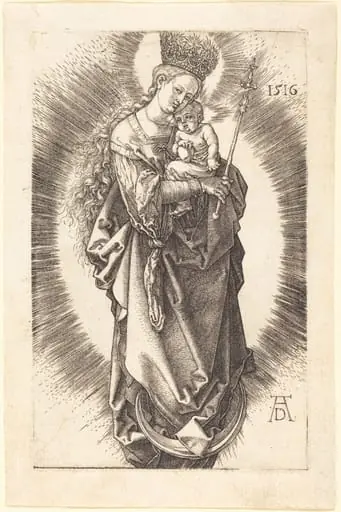
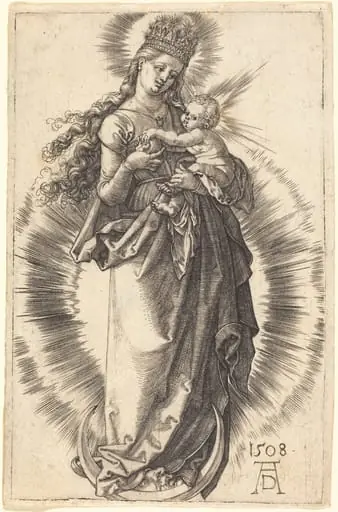
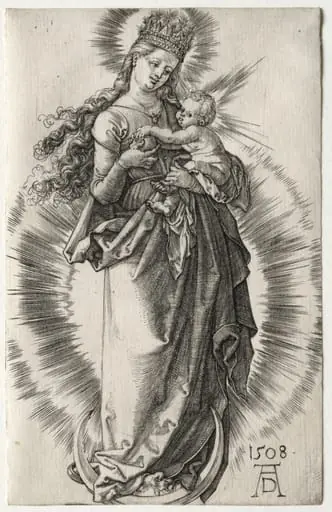
Madonna on a Crescent is a 1515 engraving by an artist known as Master N.H. with the Dagger. It depicts the Virgin Mary cradling the infant Jesus as they hover above a kneeling group. The composition is rendered in fine linear detail, characteristic of early 16th-century Northern European printmaking. The work belongs to a tradition of devotional imagery that blends celestial symbolism with intimate human presence.
Subject & Meaning
The Virgin Mary, crowned and robed, is shown ascending on a crescent moon—a reference to the apocalyptic woman of Revelation. The child reaches toward the viewer, suggesting divine engagement. Below, figures kneel in reverence, reinforcing the sacred hierarchy. The crescent may also allude to Marian titles associated with purity and celestial authority, common in late medieval iconography.
Technique & Style
The artist employed fine cross-hatching to model form and create depth, using tightly spaced parallel lines that intersect at angles. This technique builds subtle tonal gradations, giving the figures a sculptural presence against a dynamic background of slanted, radiating lines. The precision of the lines suggests mastery of the burin tool, typical of skilled engravers of the period.
History & Provenance
The engraving is attributed to Master N.H. with the Dagger, a shadowy figure active in the early 1500s, likely in the Rhineland or southern Germany. Few works by this hand survive, and none are signed. The print circulated in devotional contexts, possibly as a private altar image or a collector’s item among educated laypeople interested in religious symbolism.
Context
Created during the decades before the Protestant Reformation, the image reflects a Catholic devotional culture rich in Marian veneration. Engravings like this served as accessible religious aids, especially where literacy was limited. The celestial imagery aligns with contemporary sermons and liturgical texts that emphasized Mary’s role as intercessor and queen of heaven.
Legacy
Though not widely known today, the engraving exemplifies the quiet sophistication of early printmaking before the dominance of large-scale publishing. Its restrained symbolism and technical precision influenced later Northern artists who sought to merge spiritual gravity with meticulous draftsmanship. Surviving impressions are rare, preserved primarily in institutional collections.
Artist & collection


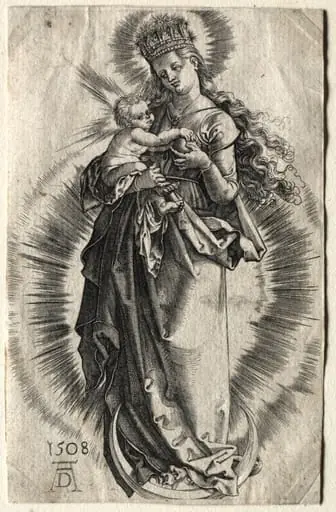 Virgin on a Crescent with a Starry Crown
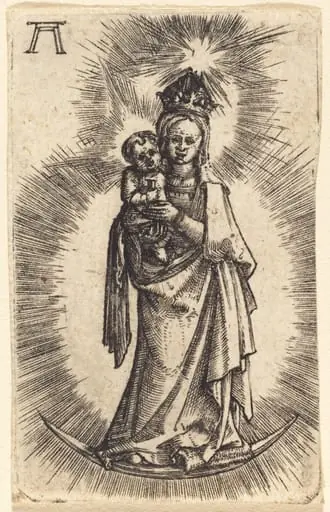 The Virgin on the Crescent
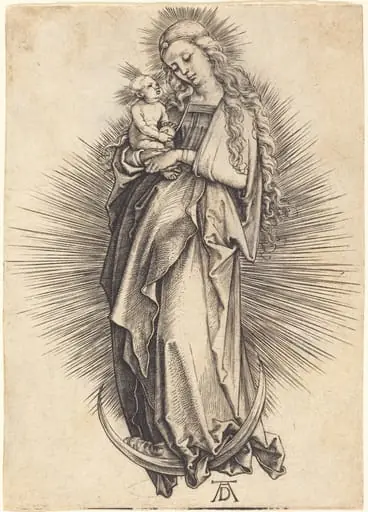 The Virgin on the Crescent
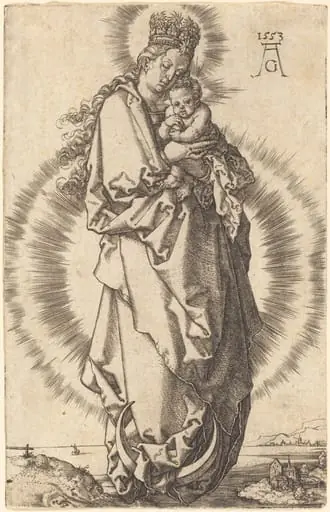 The Virgin with the Child on the Crescent
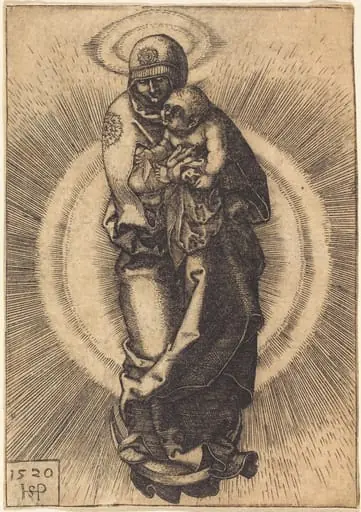 The Virgin and Child on the Crescent
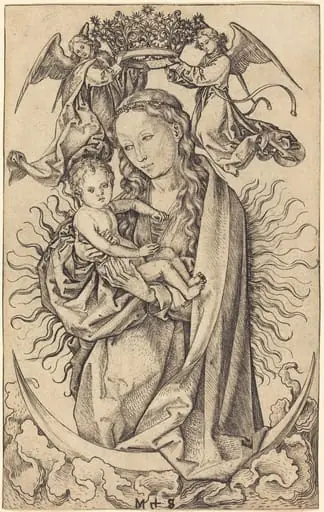 Madonna on the Crescent
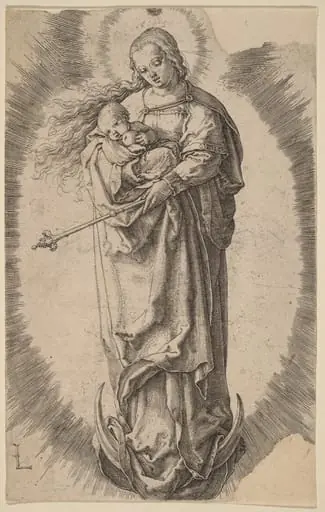 The Virgin and Child on the Crescent
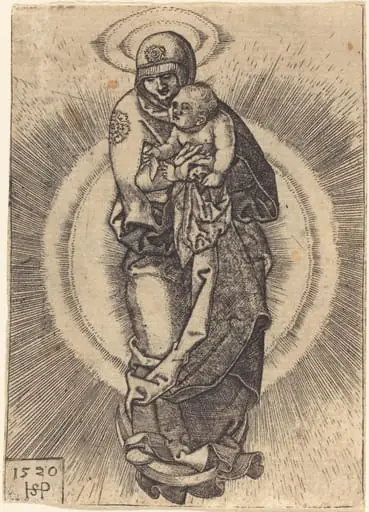 The Virgin and Child on the Crescent
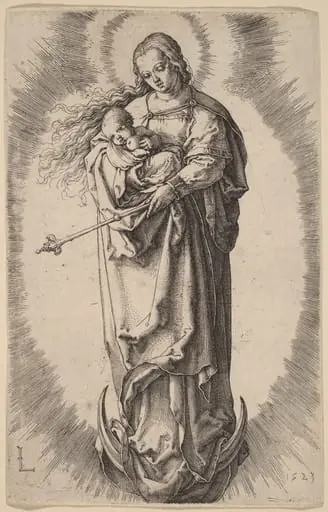 The Virgin and Child on the Crescent
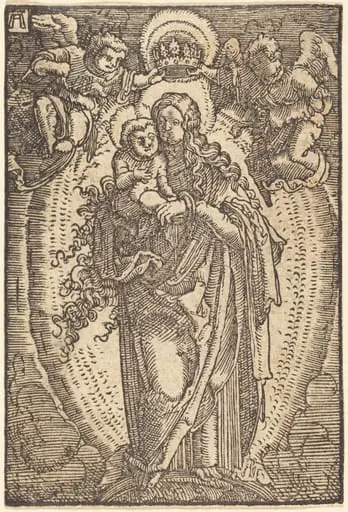 The Virgin and Child on a Crescent
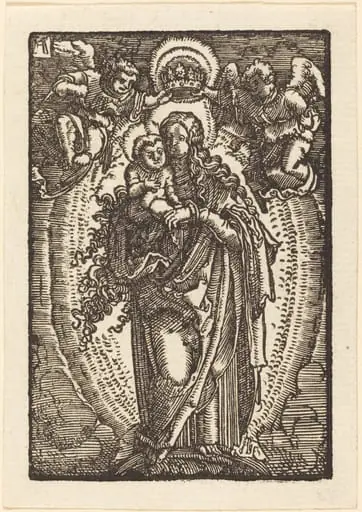 The Virgin and Child on a Crescent
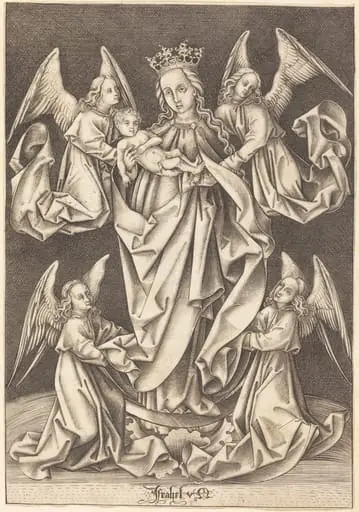 The Madonna and Child on the Crescent Supported by Four Angels