Artwork
Title Page to Saturne Ephemerides by Henry Isaacson
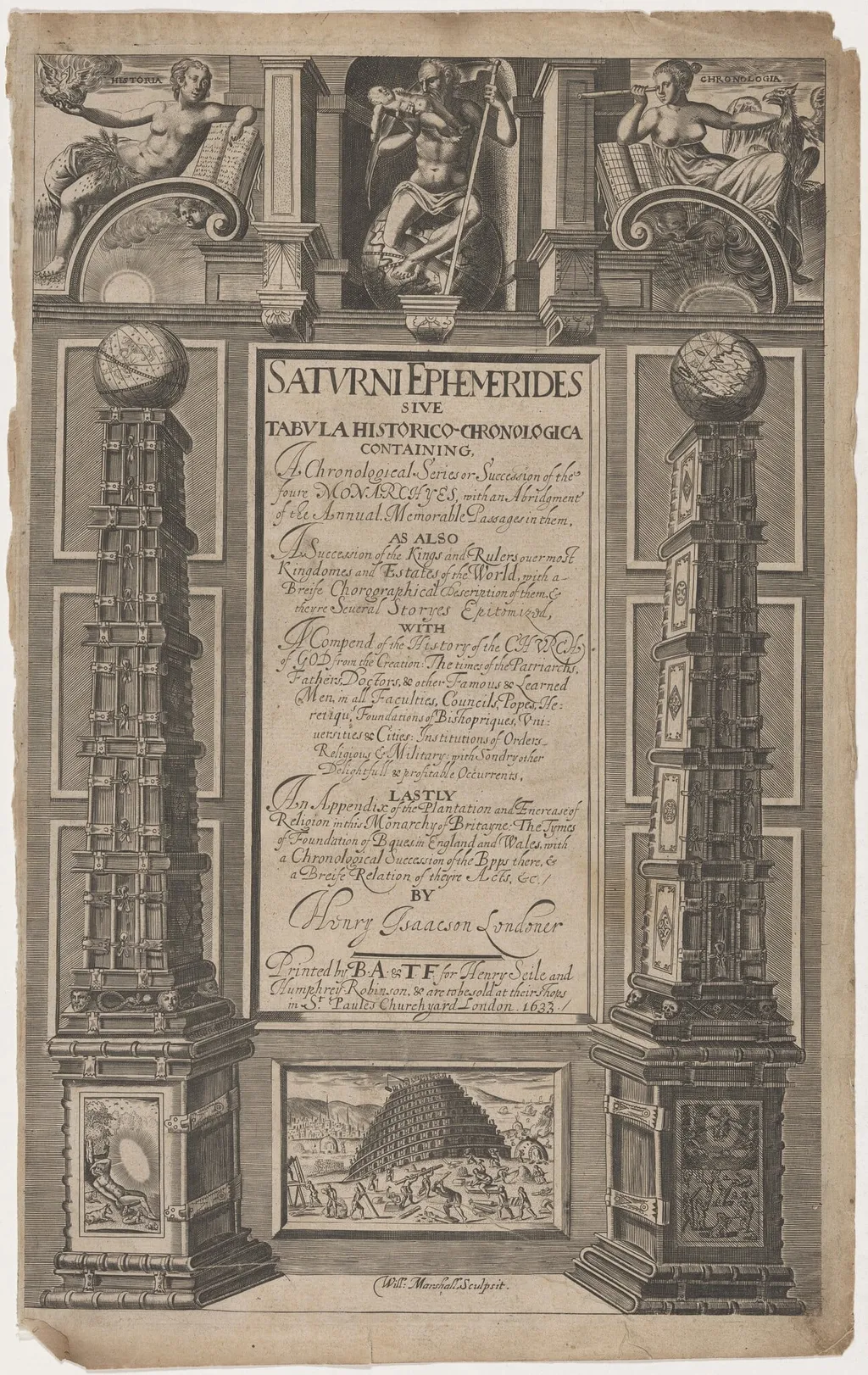
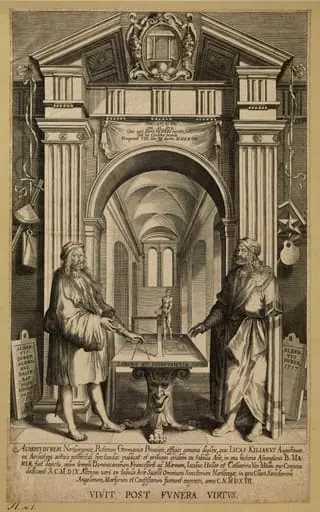
Title Page to Saturne Ephemerides by Henry Isaacson is an ink print by the Baroque artist William Marshall. It dates from 1633 and is held in the collection of the National Gallery of Art.
About this work
Overview
Rendered entirely in black and white, the composition is densely packed with intricate details, combining textual elements with allegorical imagery.
This 1633 engraving by William Marshall serves as the title page for Henry Isaacson's Saturne Ephemerides. Rendered entirely in black and white, the composition is densely packed with intricate details, combining textual elements with allegorical imagery. The technique relies on fine, controlled lines to create depth and texture, characteristic of early 17th-century engraving practices. Its purpose is both functional and symbolic, introducing the astronomical content while asserting intellectual authority.
Subject & Meaning
The image merges celestial and terrestrial themes. Floating figures above columns hold scrolls, suggesting divine or cosmic knowledge. The central title references kings and world events, linking astrology with historical narrative. Flanking pillars bear clocks and globes, symbolizing time and geography, while the lower scene—possibly a battle or urban activity—grounds the work in human affairs. Together, these elements frame the ephemerides as a tool for understanding fate through celestial patterns.
Technique & Style
Executed in the engraving technique, the image uses incised lines on a metal plate to produce sharp, precise contours and tonal gradations. Shading is achieved through cross-hatching and fine parallel lines, giving volume to figures and architectural elements. The composition is meticulously layered, with no color to distract from the interplay of line and form. This method was standard for scholarly prints, valued for its clarity and reproducibility.
History & Provenance
Created in 1633, the engraving was produced as the frontispiece to Isaacson’s astronomical almanac, likely commissioned for distribution among scholars and patrons. William Marshall, known for his work with scientific and literary publications, was a respected engraver in London at the time. The print’s survival in institutional collections suggests its early reception as a significant artifact of scientific publishing, though its original ownership remains undocumented.
Context
In the early 17th century, astrology and astronomy were closely intertwined in scholarly circles. Ephemerides—tables predicting planetary positions—were essential for navigation, medicine, and horoscopes. This title page reflects the era’s belief in cosmic influence over earthly events. The elaborate iconography aligns with contemporary printed works that sought to legitimize scientific texts through classical and allegorical imagery, blending erudition with visual spectacle.
Legacy
Though not widely reproduced today, the engraving exemplifies the visual language of early modern scientific publishing. Its fusion of text, symbolism, and technical precision influenced later title pages in astronomical and almanac literature. As a surviving artifact of print culture, it offers insight into how knowledge was presented and legitimized before the rise of modern scientific illustration.
Artist & collection

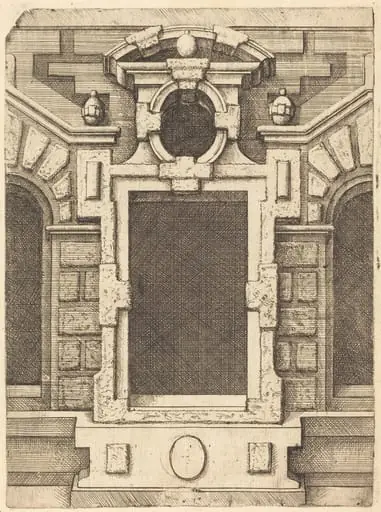 Pedimented Windows
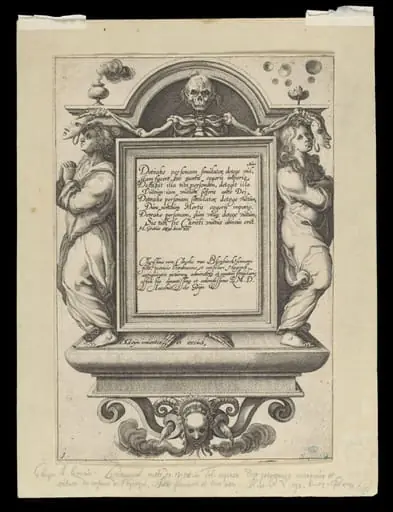 H Beard Print Collection
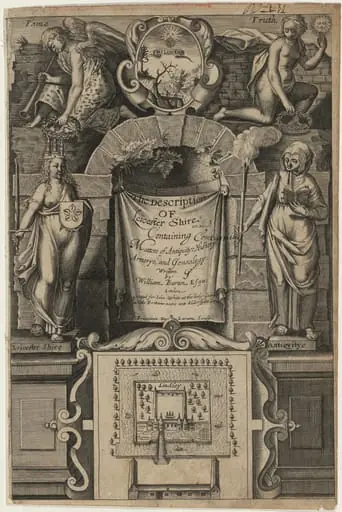 Frontispiece to William Burton, Description of Leicestershire
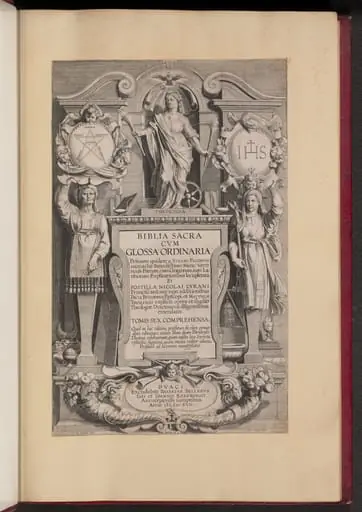 Title Page for Biblia Sacra Cvm Glossa Ordinaria
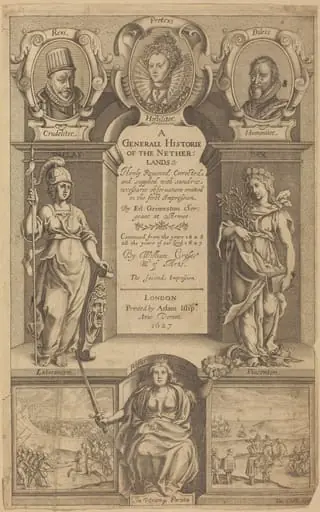 Frontispiece
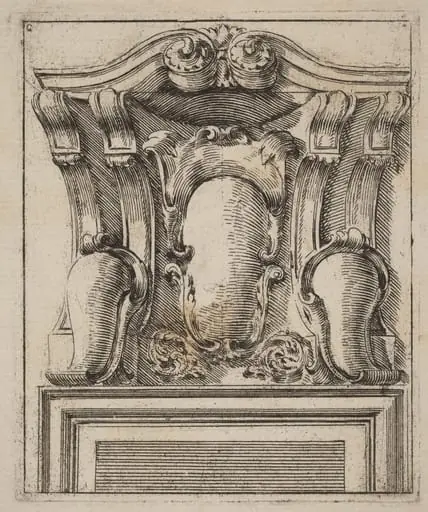 Architectural Motif with Three Shields
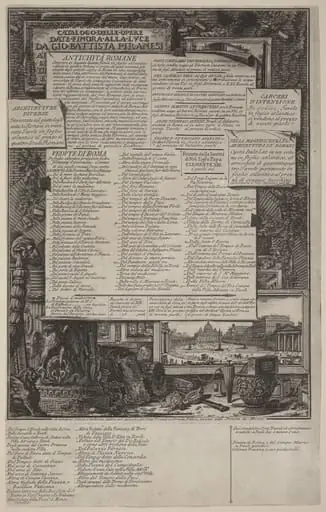 Catalogo delle Opere
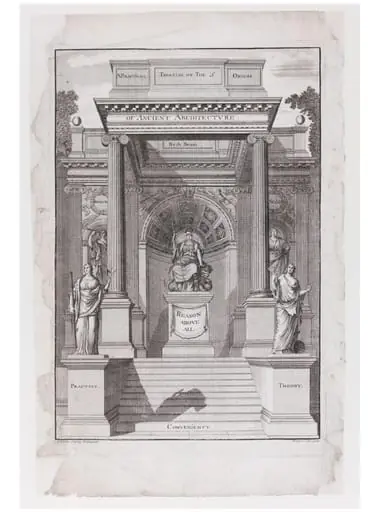 A Practical Treatise on the Five Orders of Ancient Architecture
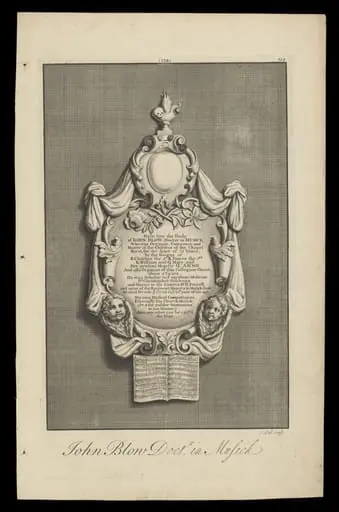 H Beard Print Collection
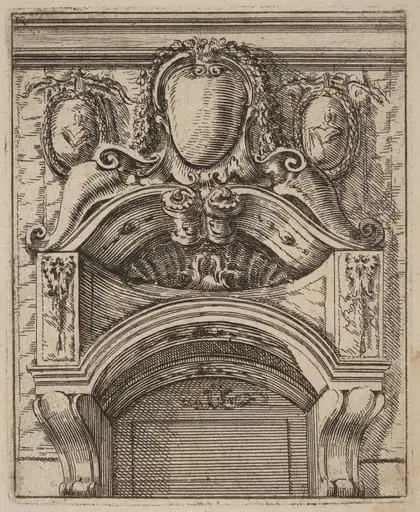 Architectural Motif with Three Shields, Two with Figures
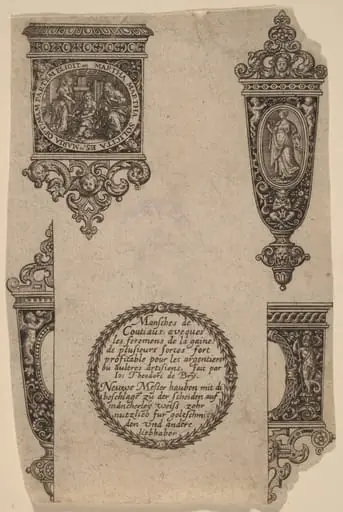 Ornament for Knife Handle
 The Temple of Honor