Artwork
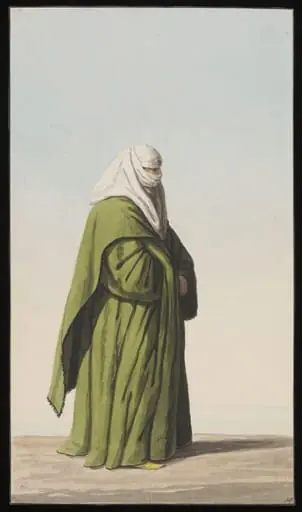
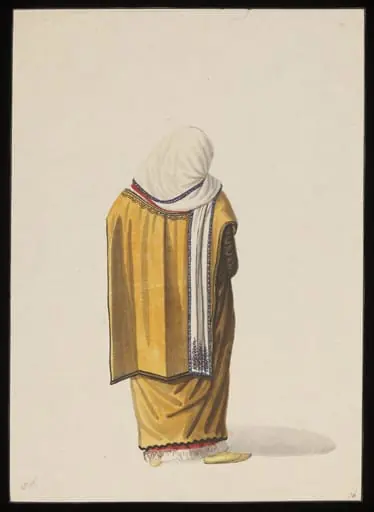
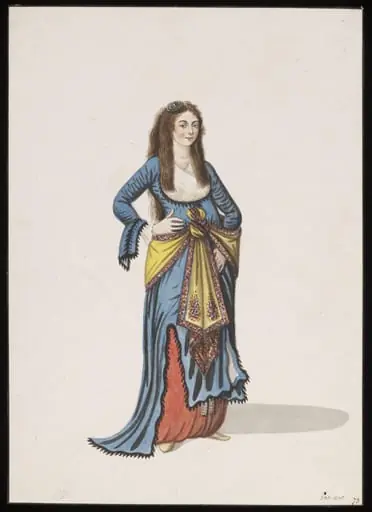
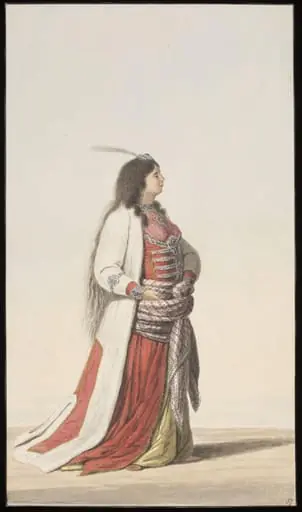
A Greek woman[?]
![A Greek woman[?], by Anonymous Greek artist, watercolor, 1809](https://artifactworldgallery.com/img/anonymous-greek-artist--a-greek-woman--6cf3019da43d0709-w1024.webp)
A Greek woman[?] is a watercolor work on paper by the Romanticist artist Anonymous Greek artist. It dates from 1809 and is held in the collection of the Victoria and Albert Museum.
About this work
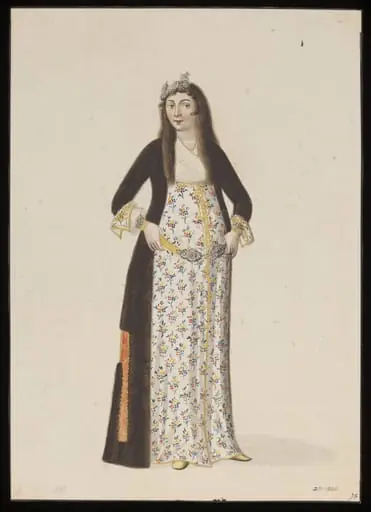
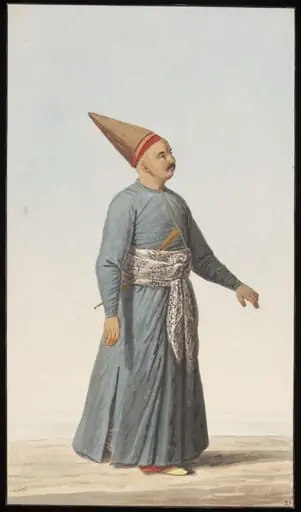
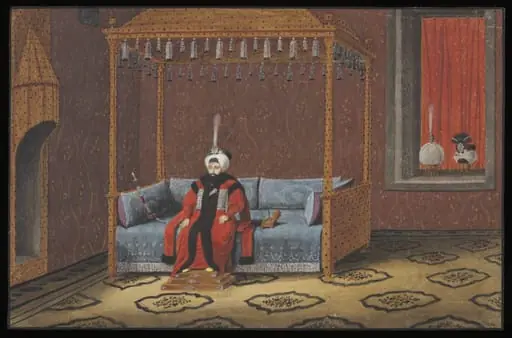
This watercolour shows a Greek woman from about 1809. It belongs to a set of pictures made for a British diplomat in Istanbul. The artist stayed anonymous, though some think he worked near Konstantin Kapidagli.
The pictures mix Ottoman watercolour style with European ways of drawing space. They open a window on life in the Ottoman world at the time.
Look up the Victoria and Albert Museum next.
Overview
This watercolour, dated around 1809, depicts a Greek woman and forms part of a larger series of Ottoman scenes commissioned by the British diplomat Stratford Canning. The works were created by an unidentified Greek artist, possibly linked to the workshop of Konstantin Kapidagli, and were acquired by the Victoria and Albert Museum in 1895 from Canning’s daughter.
Subject & Meaning
The image presents a solitary Greek female figure, offering a glimpse into the everyday attire and presence of Greek communities within the Ottoman capital. While no explicit narrative accompanies the picture, it functions as a visual record of the cultural diversity encountered by foreign visitors in early‑19th‑century Istanbul.
Technique & Style
The artist combines the rich, saturated water‑ and body‑colour techniques characteristic of Ottoman miniature painting with European conventions of linear perspective and spatial depth. This hybrid approach yields a vivid, yet orderly composition that reflects both local artistic traditions and the influence of Western visual standards.
History & Provenance
Stratford Canning, then a young secretary to the British mission in Istanbul, commissioned the series after extensive tours of Ottoman institutions. The anonymous Greek painter’s originals remained in the Canning family until Charlotte Canning sold them to the Victoria and Albert Museum in 1895, where they entered the public collection.
Context
The series was produced during a period of heightened British diplomatic activity in the Ottoman Empire, when officials like Canning sought visual documentation of the empire’s architecture, customs, and peoples. The works thus serve as part of a broader visual archive created for diplomatic and scholarly purposes in the early 1800s.
Artist & collection

![A Pasha travelling with his escort[?], by Anonymous Greek artist](https://artifactworldgallery.com/img/anonymous-greek-artist--a-pasha-travelling-with-his-escort--01de32b8fcf30843-w320.webp)