Artwork
A Solak or Kulkethüdagasi
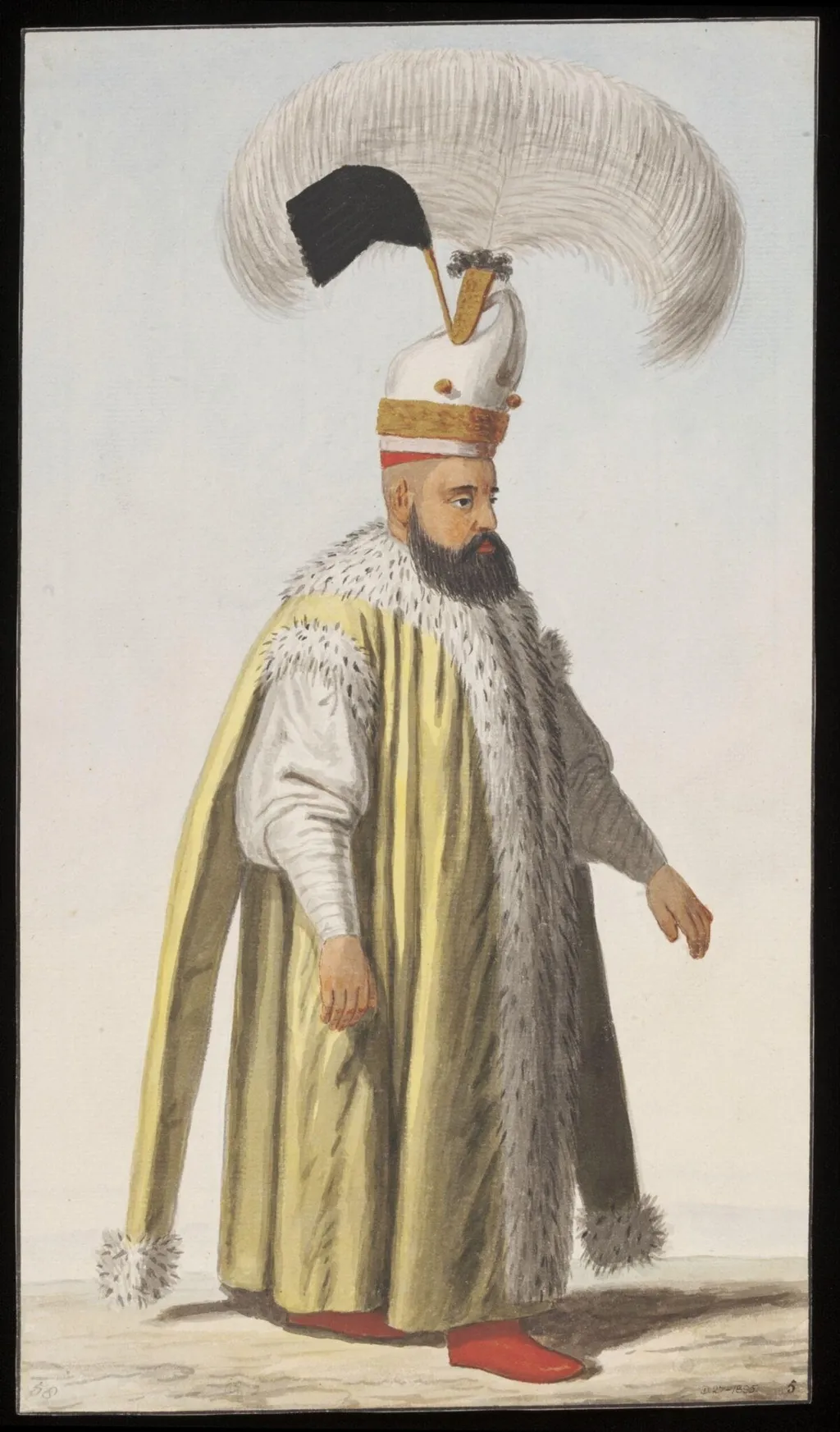
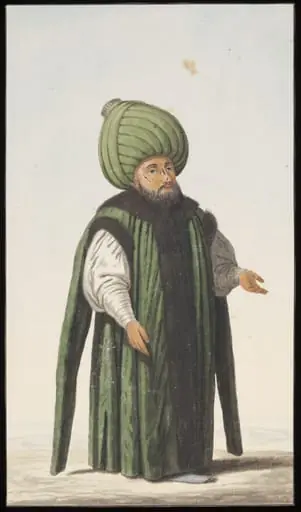
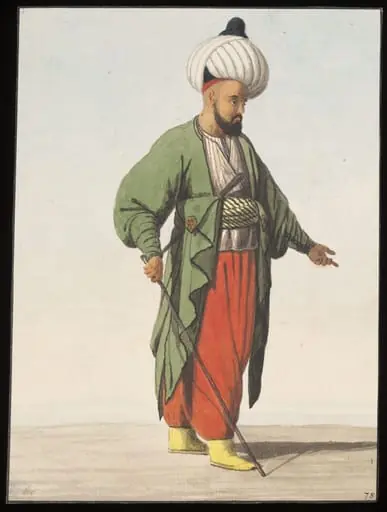
A Solak or Kulkethüdagasi is a watercolor work on paper by the Romanticist artist Anonymous Greek artist. It dates from 1809 and is held in the collection of the Victoria and Albert Museum. This watercolour depicts a Solak, a member of the Ottoman Sultan’s personal guard, identifiable by his ornate ostrich-plume headdress.
About this work
This watercolour portrait shows a Solak, one of the Sultan’s guards. The artist stays unknown, but their work was part of a larger set from 1809.
Stratford Canning hired a local artist to record Ottoman life while he served in Istanbul. The pictures mix official duties and personal curiosity.
Check the Victoria and Albert Museum for more from this 1809 series.
Overview
The works were intended as visual records of Ottoman institutions and daily life, assembled through direct observation and local artistic collaboration.
This watercolour depicts a Solak, a member of the Ottoman Sultan’s personal guard, identifiable by his ornate ostrich-plume headdress. Created around 1809, it is part of a larger series commissioned by British diplomat Stratford Canning during his early service in Istanbul. The works were intended as visual records of Ottoman institutions and daily life, assembled through direct observation and local artistic collaboration. The artist remains unidentified, though stylistic links suggest ties to Konstantin Kapidagli’s circle.
Subject & Meaning
The Solak represented both military authority and ceremonial tradition within the Ottoman court. His attire, particularly the plumed headdress, signaled rank and proximity to the Sultan. The portrait captures not just a figure but a role—part of a complex imperial apparatus that Canning sought to document systematically. These images served diplomatic and ethnographic purposes, offering a window into Ottoman hierarchy for European audiences unfamiliar with its visual codes.
Technique & Style
The watercolour blends Ottoman traditions of dense, luminous pigment application with European techniques in perspective and anatomical rendering. The artist employed bodycolour for heightened detail, particularly in textiles and plumes, while maintaining a flattened spatial depth characteristic of local practices. This hybrid approach reflects the cross-cultural environment of early 19th-century Istanbul, where local artisans adapted their methods to meet the expectations of foreign patrons.
History & Provenance
Stratford Canning commissioned the series during his tenure as first secretary to the British mission in Istanbul, beginning in 1808. The drawings remained in his family until 1895, when his daughter Charlotte donated the collection to the Victoria and Albert Museum. Charles Cockerell, who visited the embassy in 1810, encountered the artist and made copies of his architectural studies—now held in the British Museum—though he never recorded the painter’s name.
Context
Canning’s project emerged during a period of intense European interest in Ottoman society, as diplomatic missions increasingly sought to understand its structures beyond official channels. The series reflects a shift from exoticized depictions toward systematic documentation. Local artists, often trained in Istanbul’s established studios, became intermediaries between Ottoman visual culture and Western curiosity, producing works that bridged two aesthetic traditions.
Legacy
The collection remains a key resource for understanding Ottoman visual culture through the lens of foreign observation. While the artist’s identity is lost, the consistency and detail of the series attest to a skilled, culturally embedded hand. The works continue to inform scholarly studies on cross-cultural representation, Ottoman military dress, and the role of art in 19th-century diplomacy, preserved as a quiet but significant archive of a vanished world.
Artist & collection

![A Pasha travelling with his escort[?], by Anonymous Greek artist](https://artifactworldgallery.com/img/anonymous-greek-artist--a-pasha-travelling-with-his-escort--01de32b8fcf30843-w320.webp)
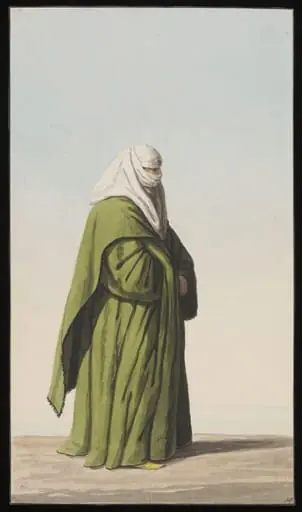
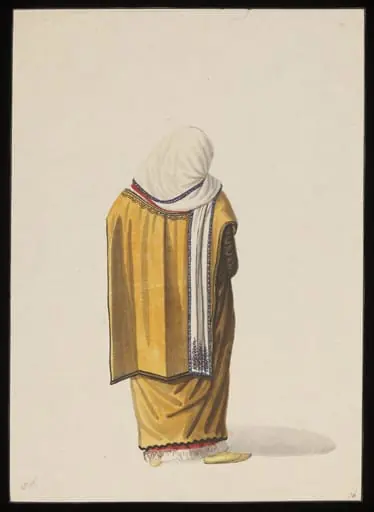
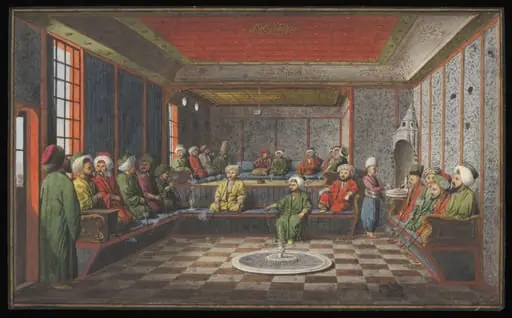
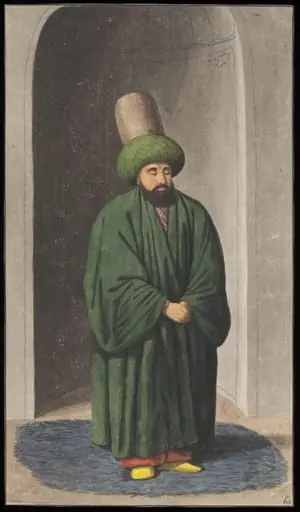
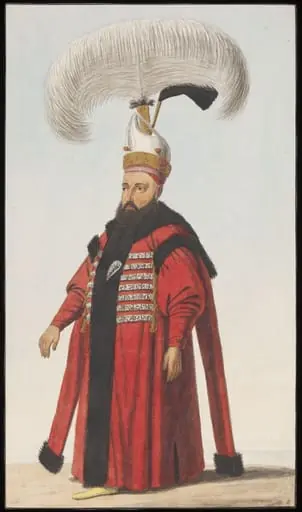 A Kulkethüdagasi or Commander of a Janissary Regiment
![A Dervish[?], by Anonymous Greek artist](https://artifactworldgallery.com/img/anonymous-greek-artist--a-dervish--3c8916f5a95abb6a-w320.webp) A Dervish[?]
A Dervish[?]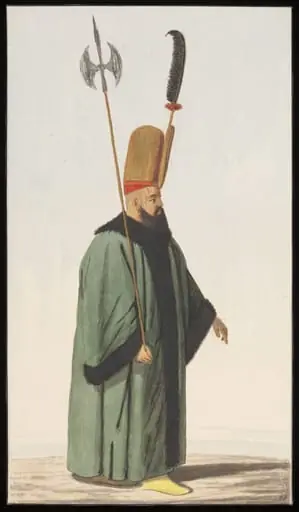 Yeniceriagasi, or General of the Janisseries
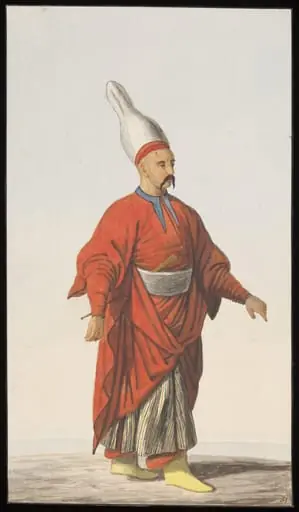 Kozbekçisi, or Steward of the Sultan's Wardrobe
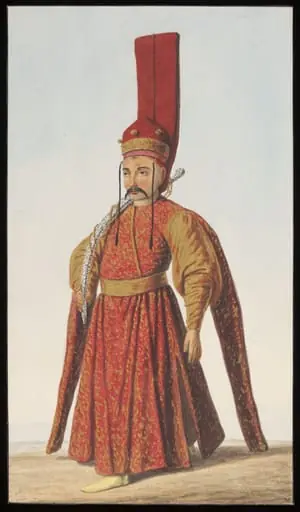 Silâhdar Aga, or sword bearer to the Sultan
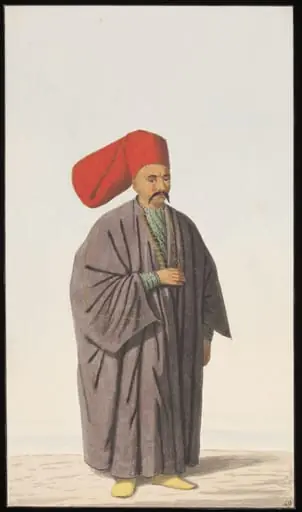 Bostancibasi, or member of the Imperial Guard
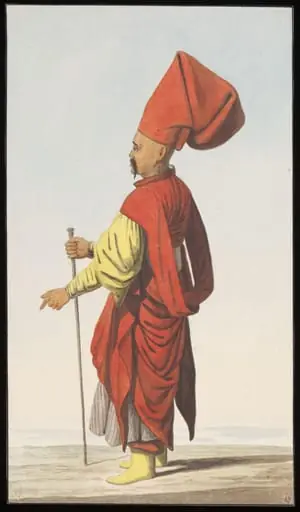 Rikaphasekisi, or stirrup-holder to the Sultan
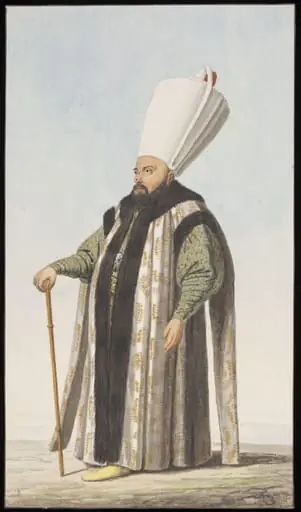 An Ottoman official, possibly a Miri Alem, or leader of troops
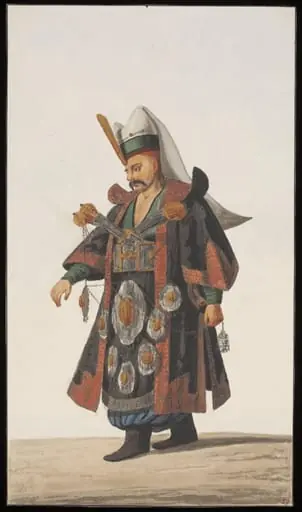 Ascibasi, or Commander of the Janisseries in ceremonial dress
 A senior Ottoman official
 A Turkish official