Artwork
Besik alayi, or the ceremony of the Procession of the Cradle
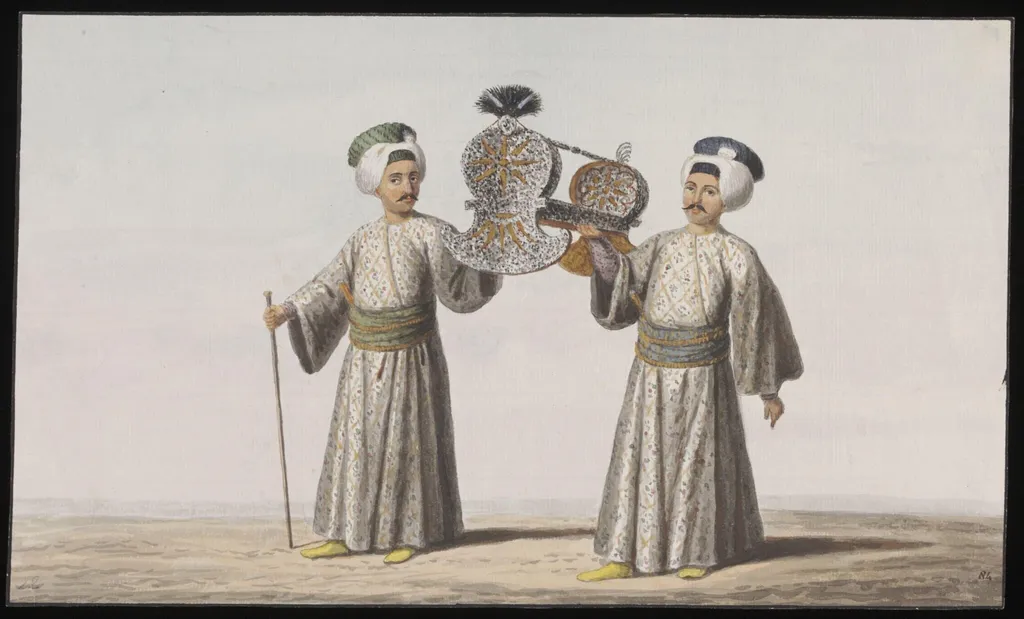
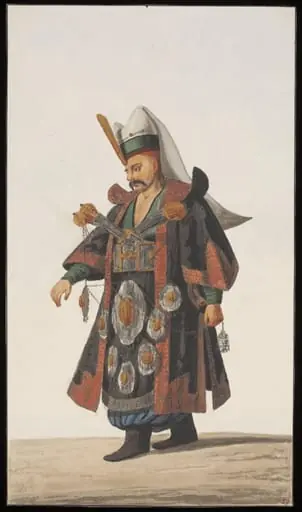
Besik alayi, or the ceremony of the Procession of the Cradle is a watercolor work on paper by the Romanticist artist Anonymous Greek artist. It dates from 1809 and is held in the collection of the Victoria and Albert Museum.
About this work
Overview
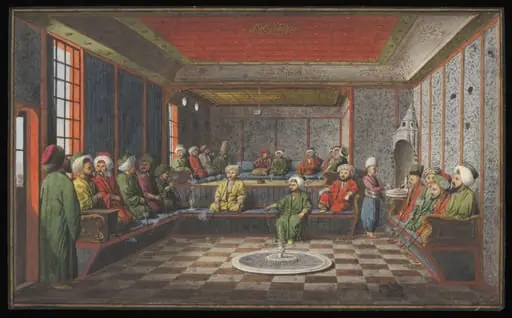
This watercolour depicts the Besik alayi, a ceremonial procession of the royal cradle held at the Ottoman Palace upon the birth of a Sultan's heir. It forms part of a larger series commissioned by Stratford Canning during his early diplomatic tenure in Istanbul.
Subject & Meaning
The artwork captures a unique Ottoman ritual, reflecting the intersection of royal tradition and ceremonial pageantry within the Palace. The scene offers a glimpse into the private, yet formally structured, life of the Sultan's family.
Technique & Style
The anonymous artist's style blends Ottoman watercolour and bodycolour techniques, characterized by dense, vibrant hues, with European perspectives on representation and spatial depth, indicative of cross-cultural artistic exchange.
History & Provenance
Commissioned by Stratford Canning (later Viscount Stratford de Redcliffe) during his 1808 mission to Istanbul, the series was later acquired by the Victoria and Albert Museum in 1895 from Canning's daughter, Charlotte.
Context
Created during a period of British diplomatic engagement with the Ottoman Empire, the work reflects Canning's curiosity about Ottoman institutions and customs. It was produced in a milieu where European observers like Canning and Charles Cockerell interacted with local artists, exchanging ideas on technique.
Legacy
While the artist remains unknown, the work contributes significantly to the visual documentation of 19th-century Ottoman court life. Its blend of artistic traditions also highlights the era's cultural exchanges between East and West.
Artist & collection

![A Pasha travelling with his escort[?], by Anonymous Greek artist](https://artifactworldgallery.com/img/anonymous-greek-artist--a-pasha-travelling-with-his-escort--01de32b8fcf30843-w320.webp)
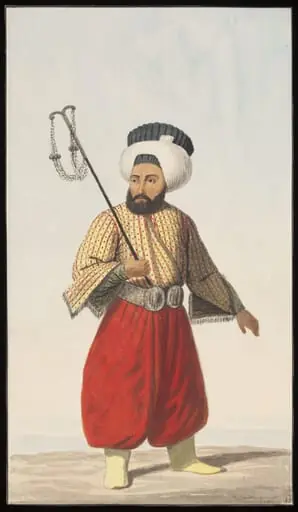
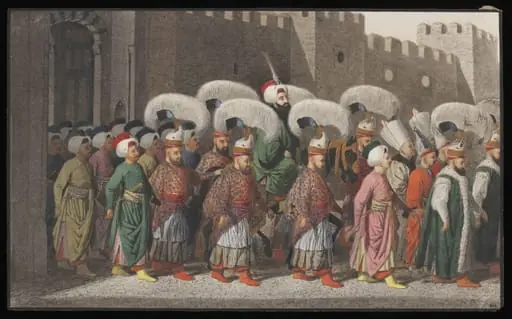
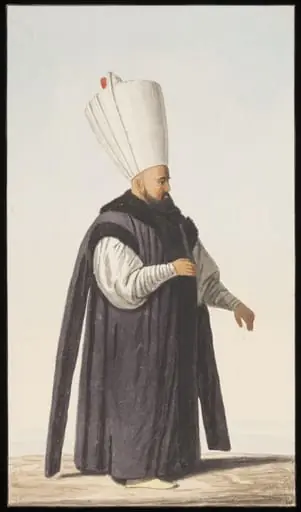
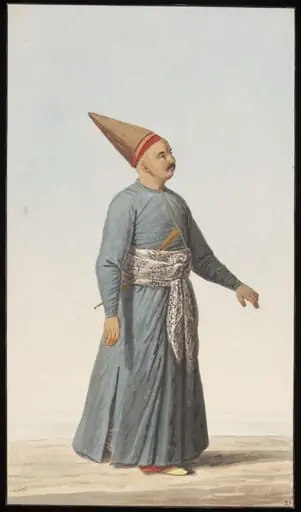 An official in the Sultan's palace
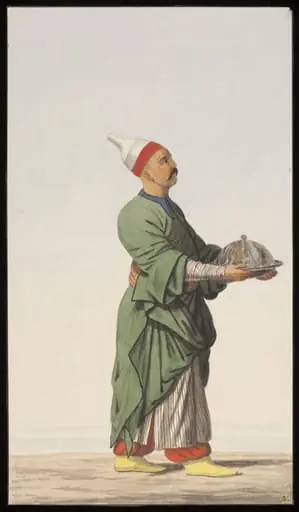 Saray Ekmekcisi, or Palace confectioner
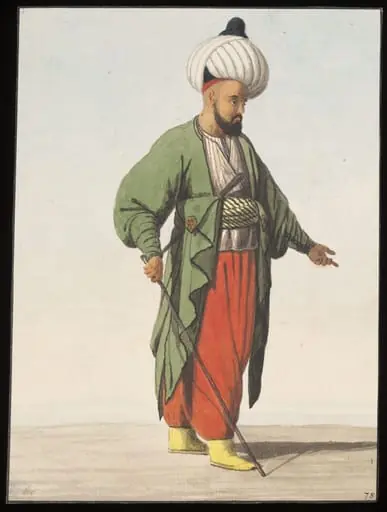 A Turkish official
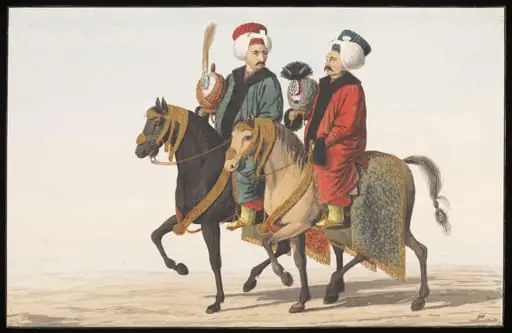 Two Royal Turban-Bearers on horseback
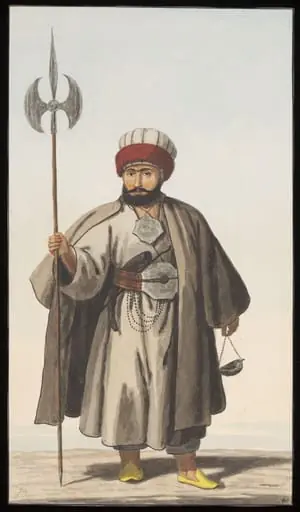 Bektasi, or Wandering Dervish
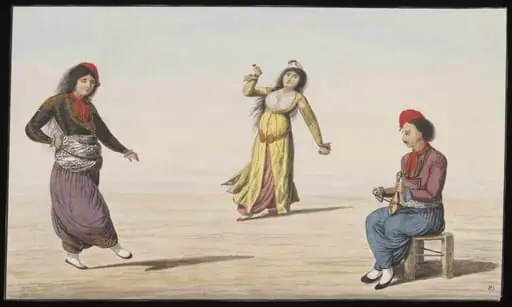 A scene of Gypsies dancing
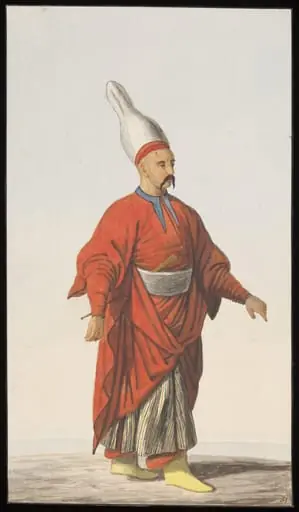 Kozbekçisi, or Steward of the Sultan's Wardrobe
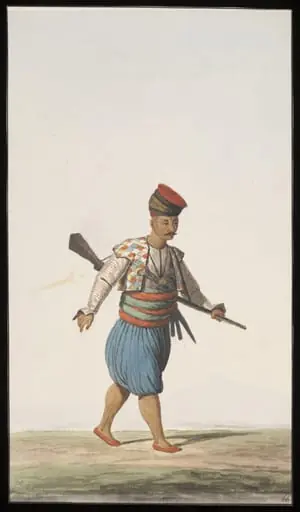 A heavily-armed man
 Ascibasi, or Commander of the Janisseries in ceremonial dress