Artwork
The Kizlar Aga, or the Hazinedar Aga
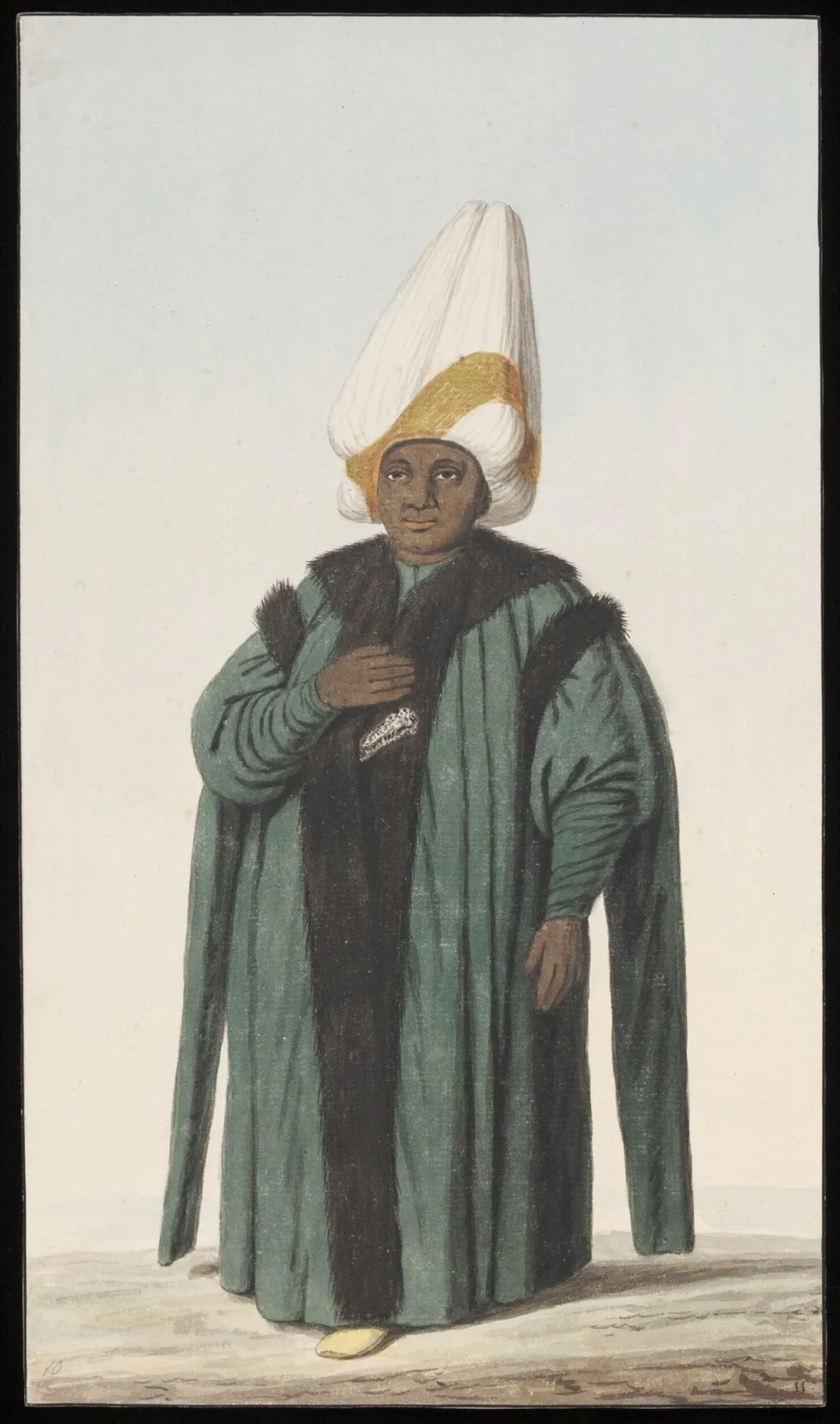
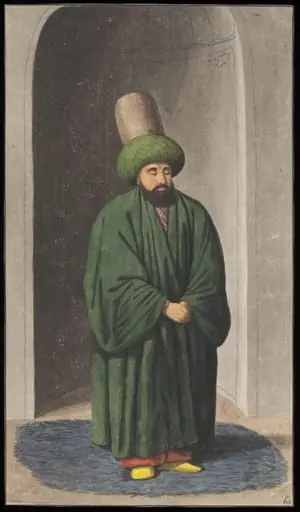
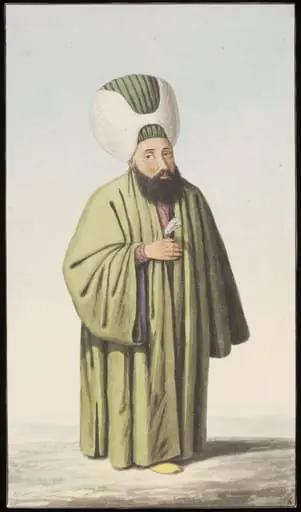
The Kizlar Aga, or the Hazinedar Aga is a watercolor work on paper by the Romanticist artist Anonymous Greek artist. It dates from 1809 and is held in the collection of the Victoria and Albert Museum.
About this work
This watercolour portrait shows a high-ranking Ottoman official from around 1809. The artist is unknown but worked for a British diplomat in Istanbul. The picture is part of a big set made for Stratford Canning.
The role of the Chief Black Eunuch was powerful but unclear. He ran the Harem and sometimes handled money too.
Check out the Victoria and Albert Museum.
Overview
This watercolour, dating to around 1809, depicts a senior Ottoman official traditionally identified as the Chief Black Eunuch, a figure who oversaw the imperial harem and, on occasion, managed financial affairs. The work forms part of a larger series commissioned by the British diplomat Stratford Canning during his early years in Istanbul.
Subject & Meaning
The portrait captures the authority and ceremonial dress of the eunuch, reflecting the ambiguous scope of his duties within the Ottoman court. By portraying him, the series documents a key, though often misunderstood, position that combined domestic control of the palace with occasional fiscal responsibilities.
Technique & Style
Executed in watercolour with vivid pigments, the image merges Ottoman miniature sensibilities—dense washes and decorative detail—with European conventions of perspective and realistic modelling. The anonymous artist, likely linked to the workshop of Konstantin Kapidagli, adapts local colour techniques to satisfy Western expectations of representational accuracy.
History & Provenance
Stratford Canning, later Viscount Stratford de Redcliffe, commissioned the series after arriving in Istanbul in 1808 as first secretary to Robert Adair.
Stratford Canning, later Viscount Stratford de Redcliffe, commissioned the series after arriving in Istanbul in 1808 as first secretary to Robert Adair. He employed a local Greek artist whose identity remains unknown, though contemporary accounts suggest a connection to Kapidagli’s circle. The original set passed to Canning’s daughter Charlotte and was acquired by the Victoria and Albert Museum in 1895.
Context
The early nineteenth‑century Ottoman Empire was a focal point for European diplomatic and scholarly interest. Canning’s systematic visual record of institutions, architecture, and court officials reflects a broader British effort to understand and catalogue Ottoman society during a period of increasing diplomatic engagement.
Artist & collection

![A Pasha travelling with his escort[?], by Anonymous Greek artist](https://artifactworldgallery.com/img/anonymous-greek-artist--a-pasha-travelling-with-his-escort--01de32b8fcf30843-w320.webp)
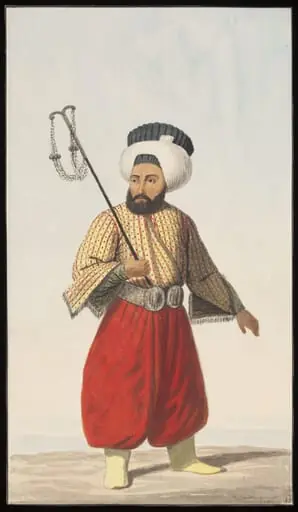
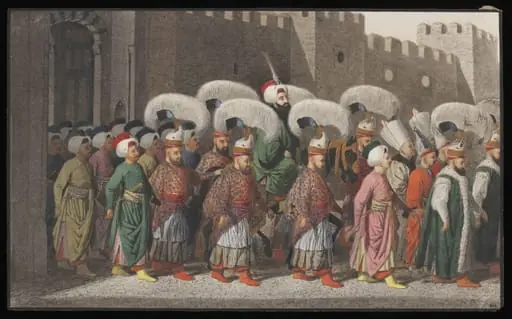
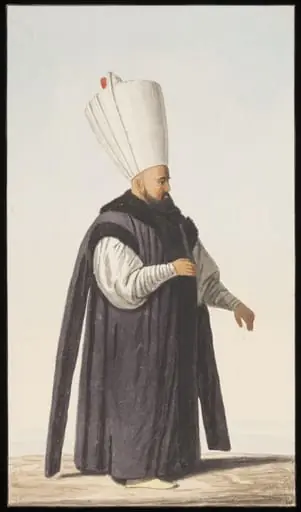
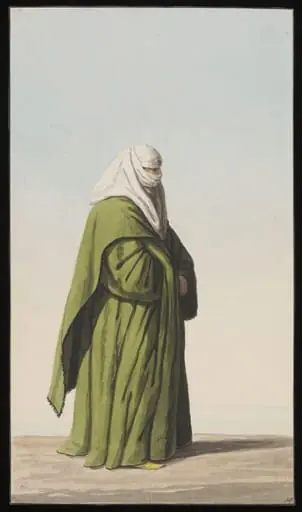
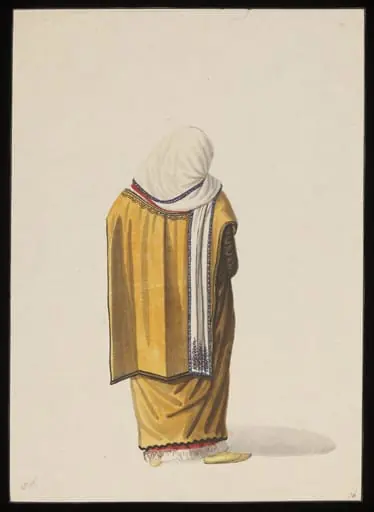
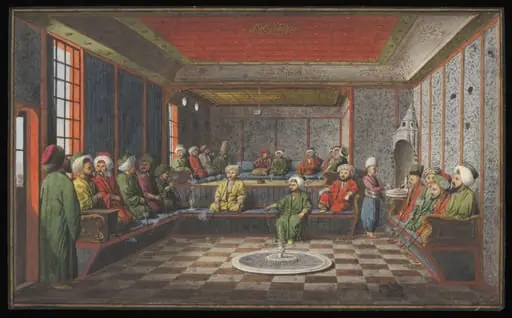
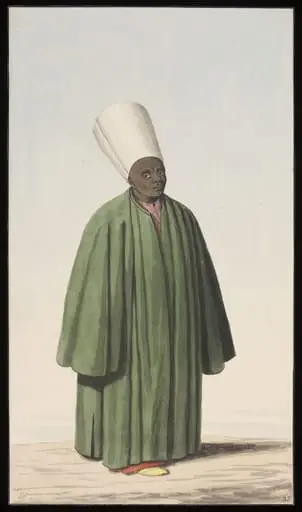 A Eunuch of the middle rank
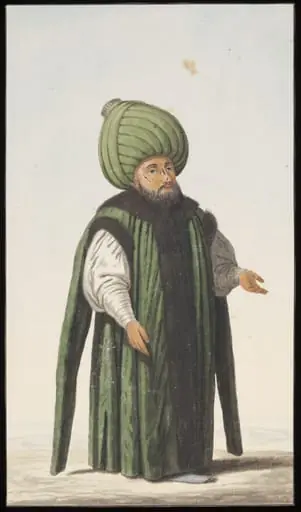 A senior Ottoman official
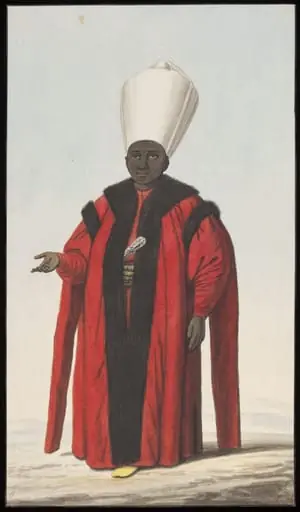 Kizlar Aga, or Chief Eunuch
![A Dervish[?], by Anonymous Greek artist](https://artifactworldgallery.com/img/anonymous-greek-artist--a-dervish--3c8916f5a95abb6a-w320.webp) A Dervish[?]
A Dervish[?]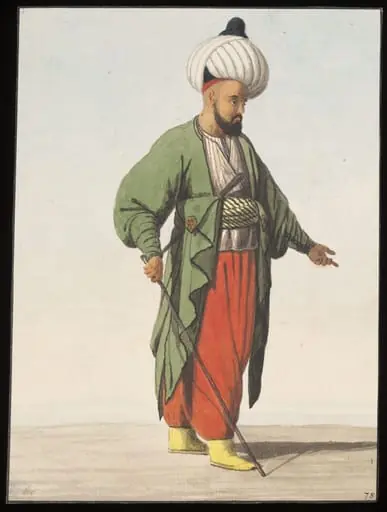 A Turkish official
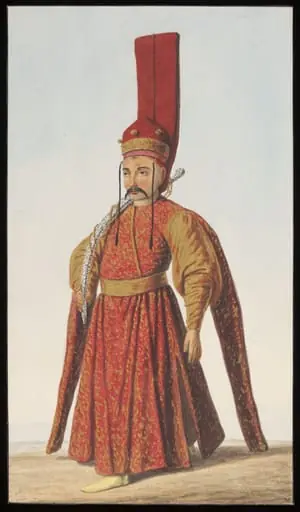 Silâhdar Aga, or sword bearer to the Sultan
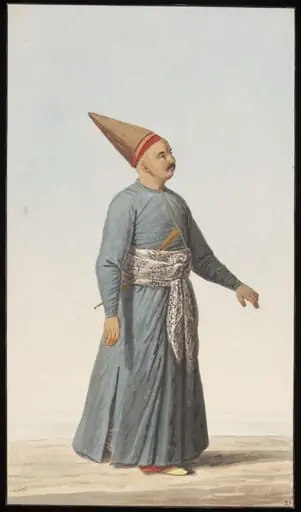 An official in the Sultan's palace
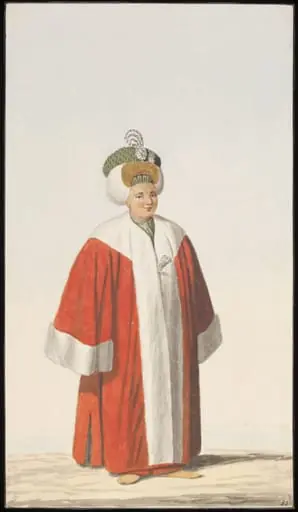 Sehzade, or heir to the throne
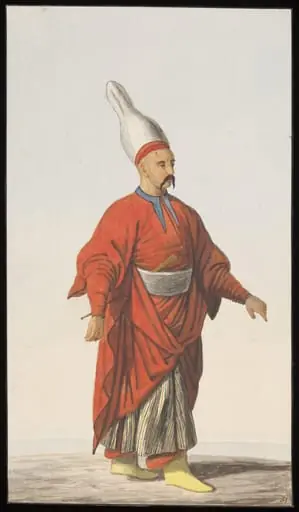 Kozbekçisi, or Steward of the Sultan's Wardrobe
 An Ottoman Military officer, possibly the Yeniçeriagasi, or Commander-in-chief of the Janissaries