Artwork
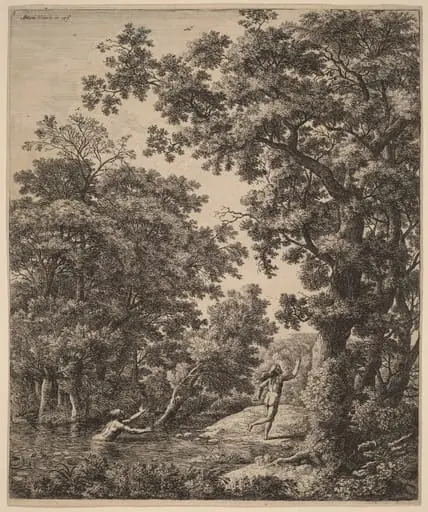
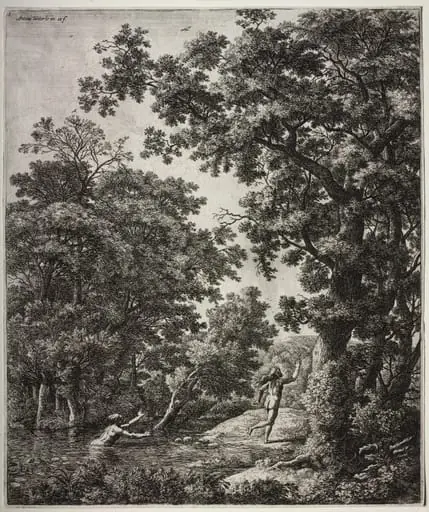
Six large upright landscapes with scenes from Ovid's Metamorphoses: Alpheus and Arethusa
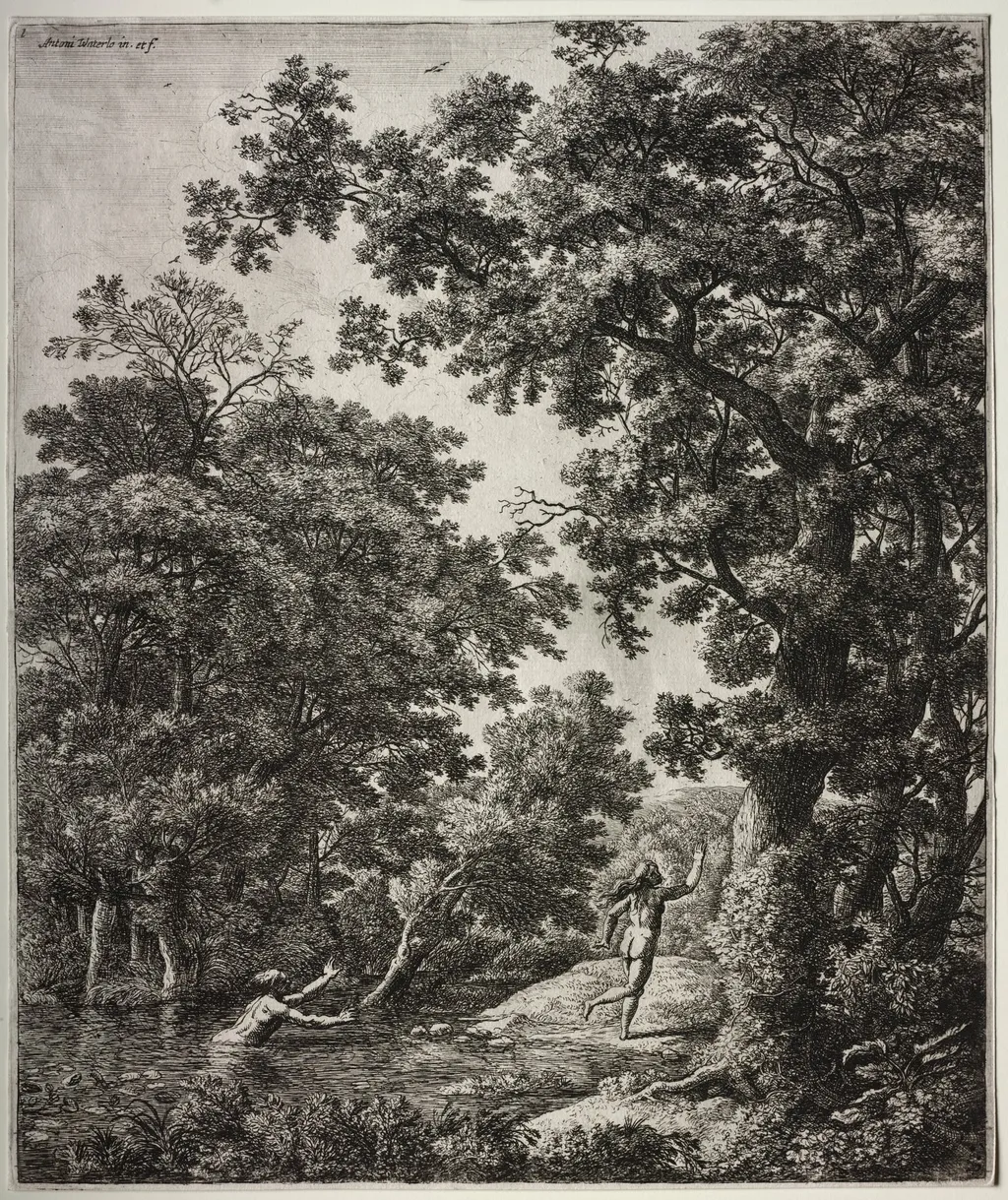
Six large upright landscapes with scenes from Ovid's Metamorphoses: Alpheus and Arethusa is a print by the Baroque artist Antonie Waterloo. It dates from 1665 and is held in the collection of the Cleveland Museum of Art.
About this work
Overview
Created in 1665 by Anthonie Waterloo, this black-and-white print presents a series of six vertical landscape scenes drawn from Ovid’s Metamorphoses.
Created in 1665 by Anthonie Waterloo, this black-and-white print presents a series of six vertical landscape scenes drawn from Ovid’s Metamorphoses. The work is held in the collection of The Cleveland Museum of Art and exemplifies the artist’s interest in mythological narratives rendered through naturalistic, atmospheric environments. The composition emphasizes dense foliage and dramatic lighting, characteristic of Northern European printmaking of the period.
Subject & Meaning
The central scene depicts Arethusa, a nymph pursued by the river god Alpheus, as she transforms to escape him, emerging from the water beneath a towering tree. The moment captures her transition between human and elemental form, a key theme in Ovid’s tales of metamorphosis. The untamed forest and flowing water symbolize nature’s power and the fragility of mortal boundaries, reflecting classical concerns with divine intervention and bodily change.
Technique & Style
Waterloo employed fine, incised lines and strong tonal contrasts to model the forest’s tangled undergrowth and the figure’s form. Deep shadows define the roots and foliage, while delicate hatching suggests light filtering through dense canopy. The print’s monochrome palette enhances its dramatic mood, aligning with the expressive conventions of Baroque graphic art, where emotional intensity was conveyed through chiaroscuro and dynamic composition.
History & Provenance
The print was produced in the mid-17th century, during Waterloo’s later years in the Netherlands, following his travels through Germany and Italy. It entered the Cleveland Museum of Art’s collection in the 20th century, likely through a broader acquisition of Northern European prints. Its survival in good condition reflects its careful preservation among collectors interested in mythological and landscape subjects of the era.
Context
Waterloo’s work emerged in a period when Northern artists increasingly turned to classical literature for subject matter, blending it with observed natural environments. His landscapes reflect the influence of Italianate traditions absorbed during his travels, yet retain a distinctly Northern attention to texture and atmospheric detail. The print aligns with broader trends in Dutch and Flemish print culture that favored narrative depth over grandeur.
Legacy
Though not widely reproduced, Waterloo’s series contributed to the continued engagement of 17th-century printmakers with Ovidian themes. Its emphasis on psychological tension within natural settings influenced later landscape artists interested in myth as a lens for human experience. The work remains a quiet but significant example of how classical stories were reimagined through the medium of print in early modern Europe.
Own this work as a print
Artist & collection

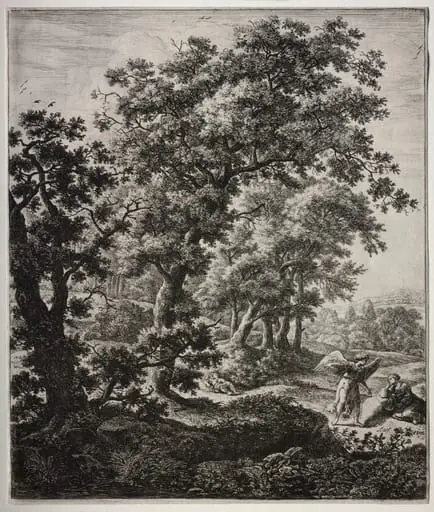 Six large upright landscapes with scenes from the Old Testament: Hagar Comforted by the Angel
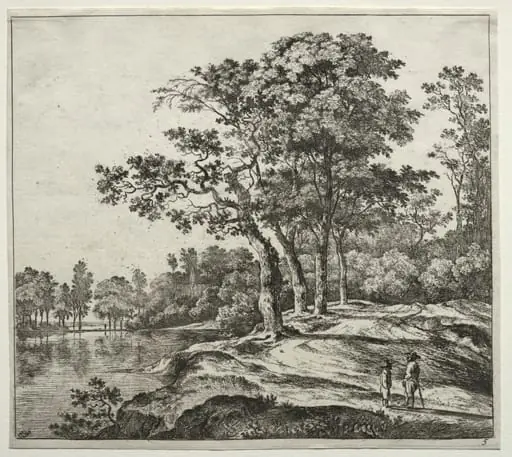 The Four Trees
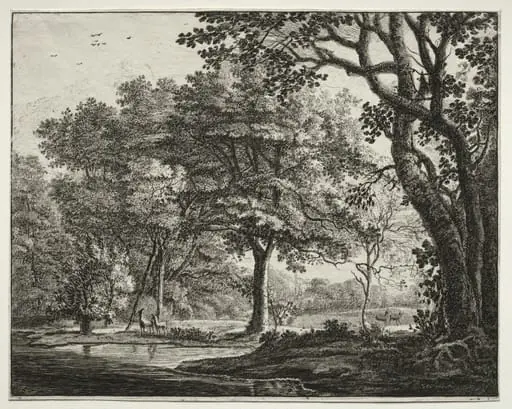 Six views in the Wood of the Hague: Plate 6, Two Deer
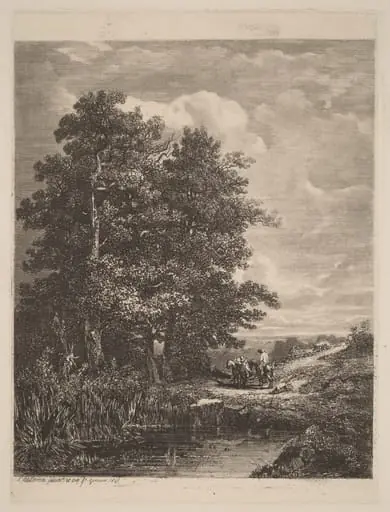 Riders by a Pond
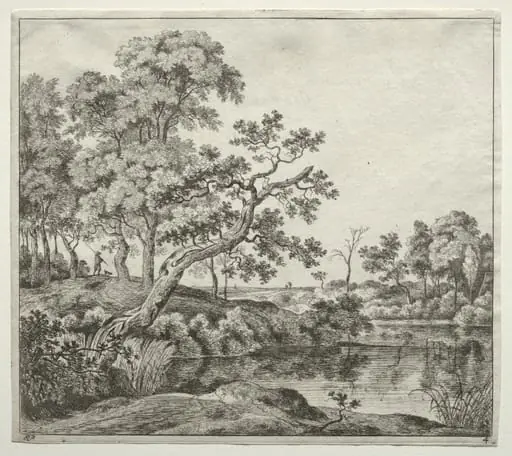 The Bent Tree
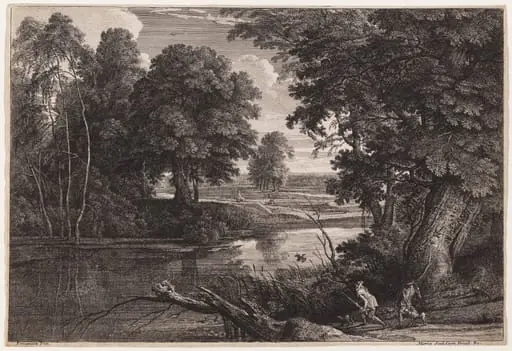 Landscape with Duck Hunters
 Landscape with a Bending Tree
 Six large upright landscapes with scenes from Ovid's Metamorphoses