Artwork
Six large upright landscapes with scenes from the Old Testament: The Unfaithful Prophet of Judah
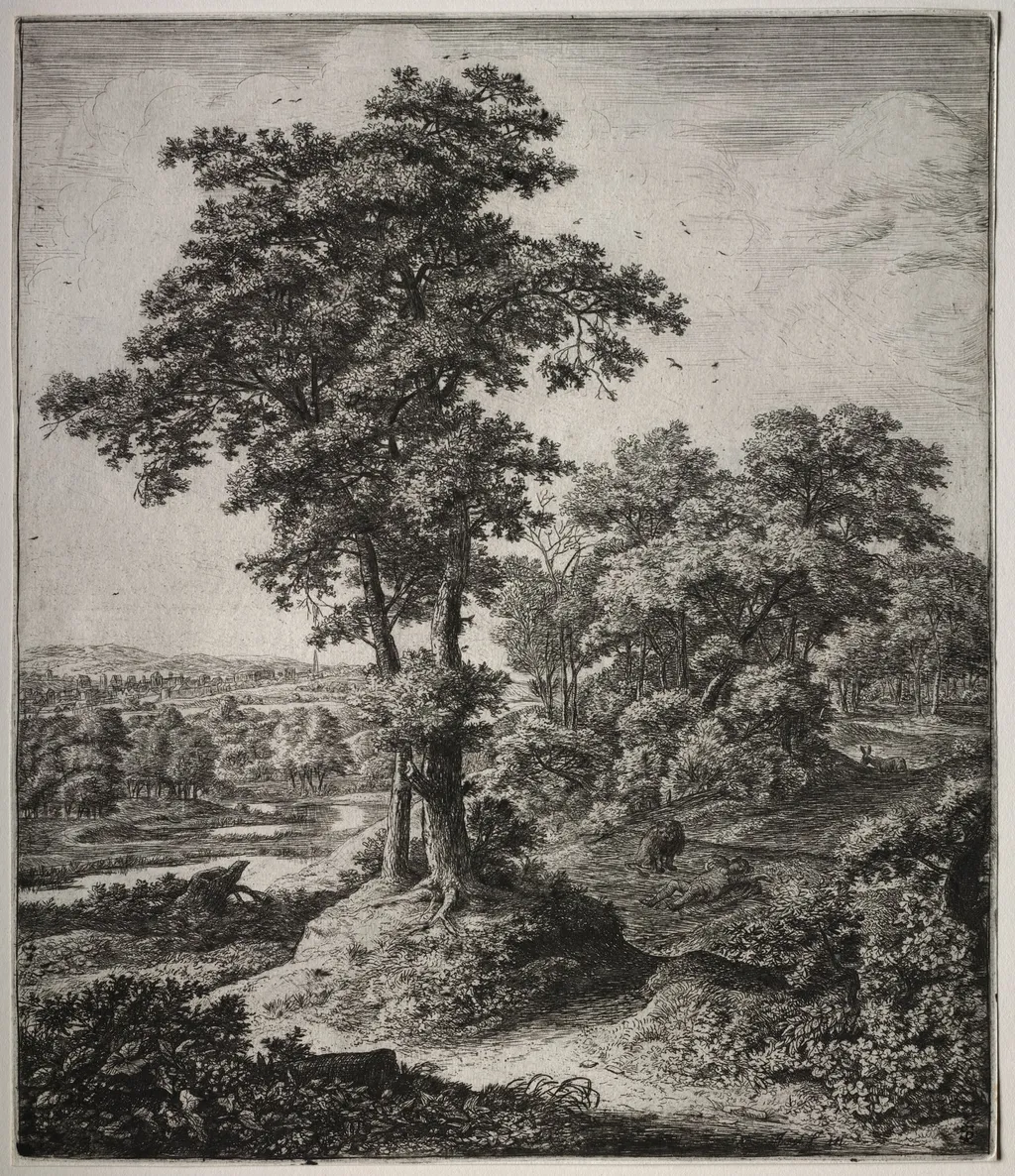
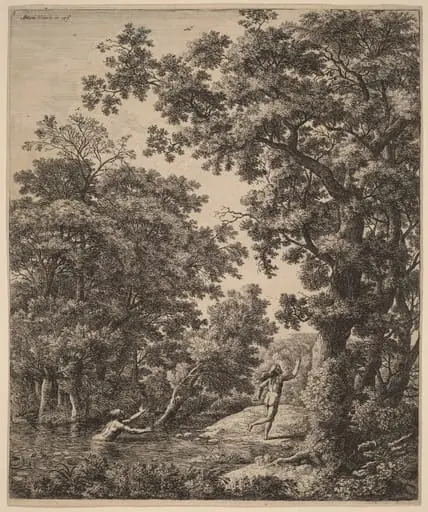
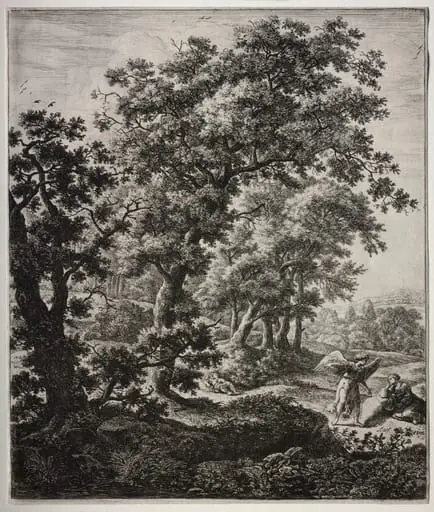
Six large upright landscapes with scenes from the Old Testament: The Unfaithful Prophet of Judah is a print by the Baroque artist Antonie Waterloo. It dates from 1665 and is held in the collection of the Cleveland Museum of Art. Anthonie Waterloo's 'The Unfaithful Prophet of Judah' (1665) is a print depicting an Old Testament scene within a landscape format.
About this work
Overview
Anthonie Waterloo's 'The Unfaithful Prophet of Judah' (1665) is a print depicting an Old Testament scene within a landscape format. Currently part of The Cleveland Museum of Art's collection, it showcases the artist's use of monochromatic techniques to convey depth and narrative.
Subject & Meaning
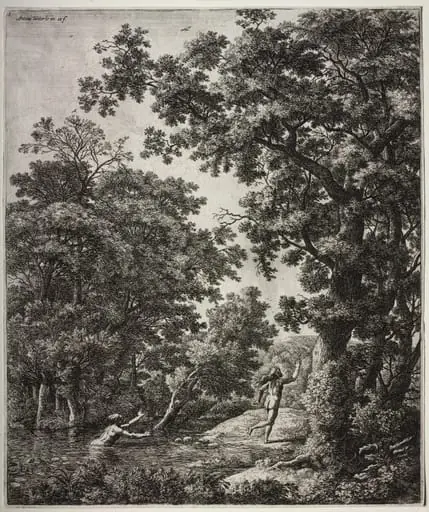
While the title references a specific biblical narrative, the print's visual focus is on a serene wooded landscape dominated by a single tall tree, with distant architectural hints. The biblical subject ('The Unfaithful Prophet of Judah') is not immediately apparent in the composition, suggesting a subtle approach to illustrating the Old Testament theme.
Technique & Style
The print relies solely on black lines and shading, a common practice in 17th-century printmaking. This monochromatic approach creates pronounced depth, with the tree and shadows contrasting against a lighter background, exemplifying principles akin to chiaroscuro.
History & Provenance
Created in 1665 by Anthonie Waterloo, the print is now housed at The Cleveland Museum of Art, though detailed provenance history prior to its current ownership is not provided here.
Own this work as a print
Artist & collection

 Six large upright landscapes with scenes from the Old Testament: Hagar Comforted by the Angel
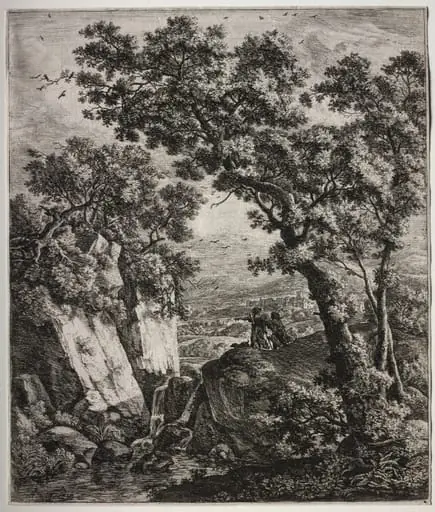 Six large upright landscapes with scenes from the Old Testament: Tobias and the Angel
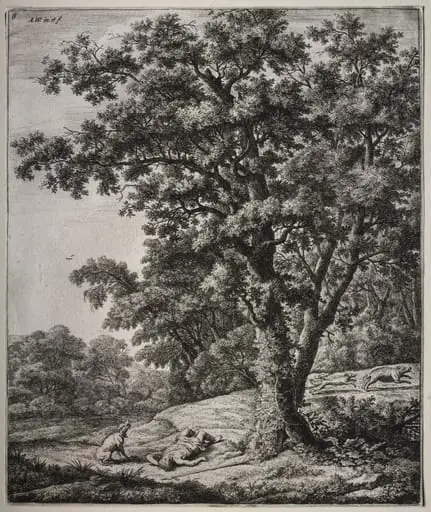 Six large upright landscapes with scenes from Ovid's Metamorphoses: The Death of Adonis
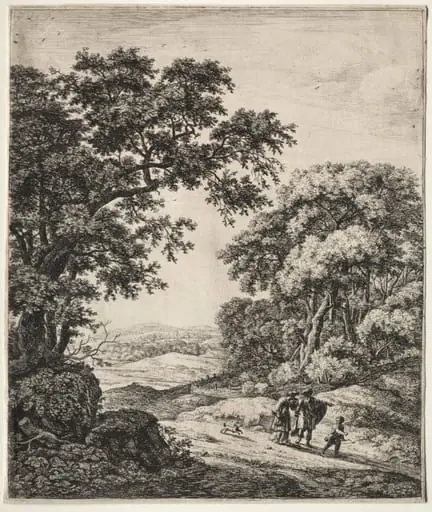 Six large upright landscapes with scenes from the Old Testament: Abraham Dismissing Hagar and Ishmael
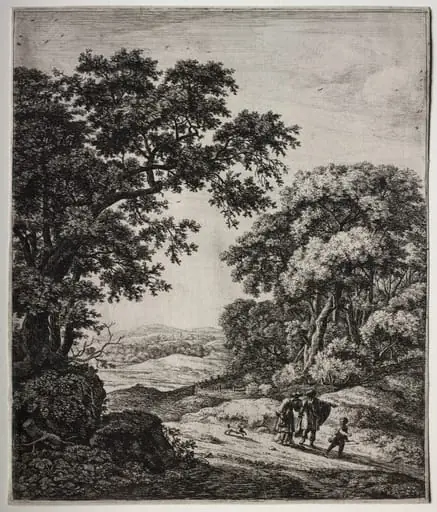 Six large upright landscapes with scenes from the Old Testament
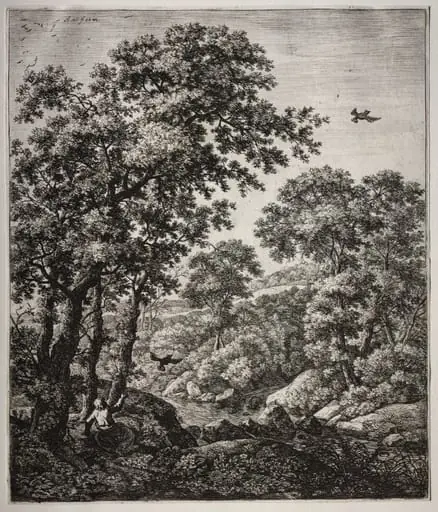 Six large upright landscapes with scenes from the Old Testament: Elijah Fed by the Ravens
 Six large upright landscapes with scenes from Ovid's Metamorphoses
 Six large upright landscapes with scenes from Ovid's Metamorphoses: Mercury and Argus