Artwork
Reverberations of Taiga, Volume 2 (leaf 27)
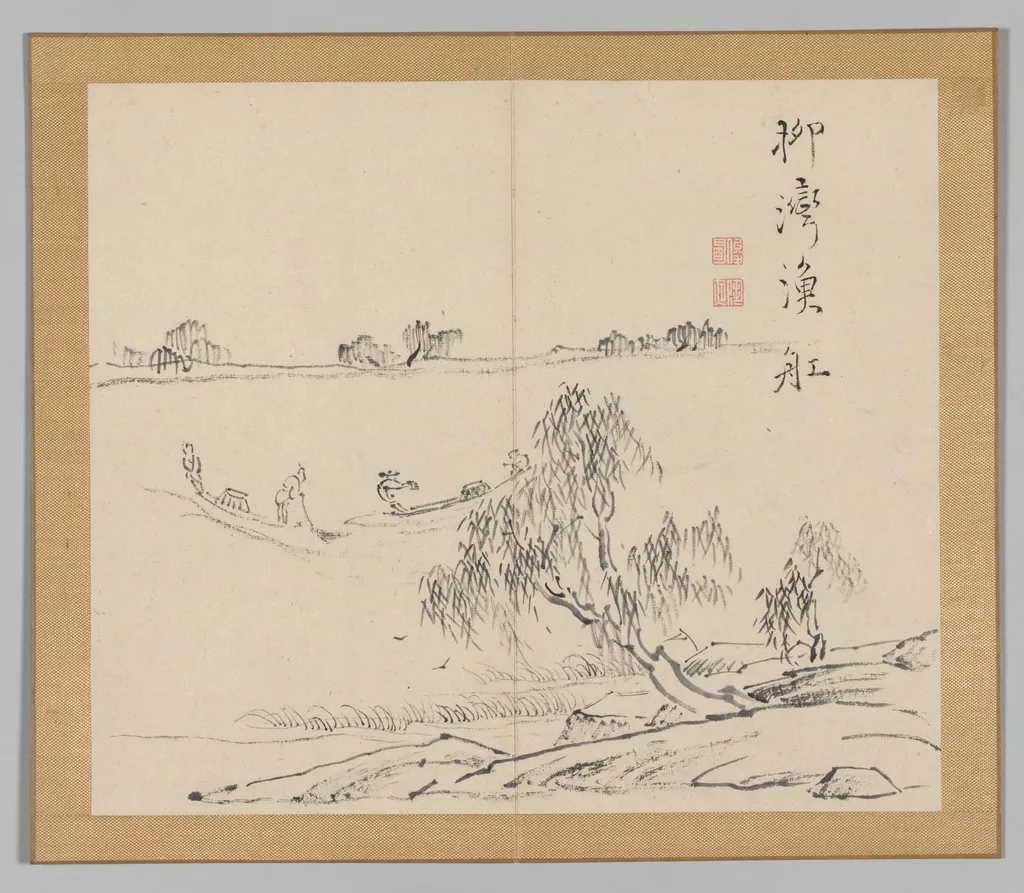
Reverberations of Taiga, Volume 2 (leaf 27) is a work on paper by the Baroque artist Aoki Shukuya. It dates from 1704 and is held in the collection of the Cleveland Museum of Art.
About this work
The student, Aoki Shukuya, was practicing by drawing rocks and trees.
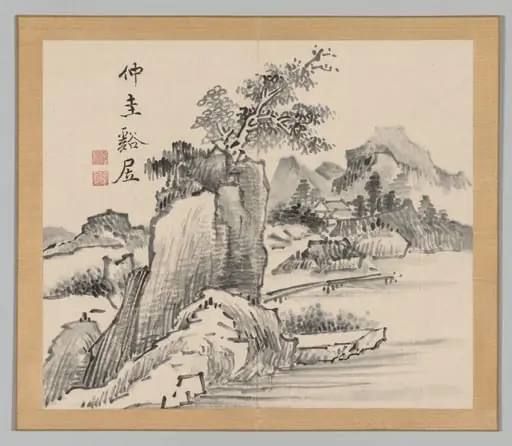
This painting shows rocks, trees, and mountains in a simple style.
It was created by a young artist learning from a master.
The artist was copying their teacher's style to learn techniques.
The teacher, Ikeno Taiga, was a famous artist in Kyoto.
The student, Aoki Shukuya, was practicing by drawing rocks and trees.
This helped them learn how to use ink and brushes.
You can learn more about the artist who taught Aoki Shukuya, Ikeno Taiga is not the choice but another artist is not mentioned so: check out the subject: japan, edo period (1615–1868).
Overview
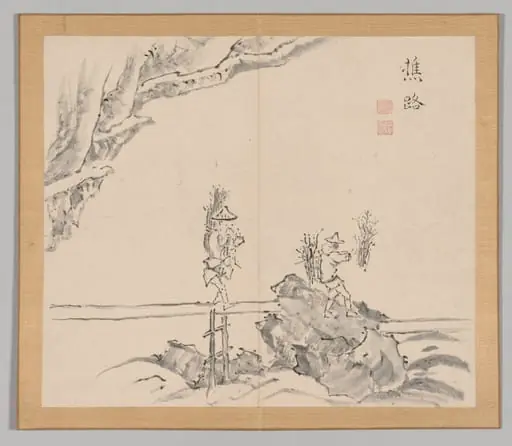
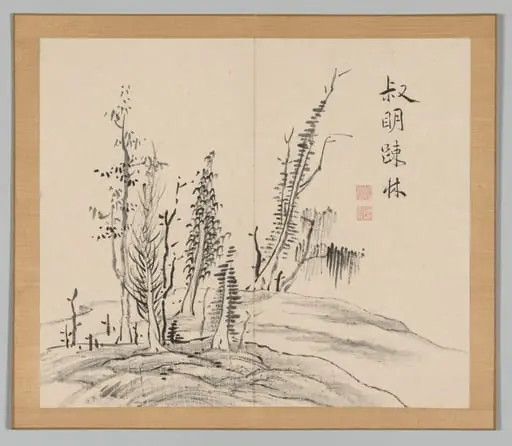
This leaf is part of a portfolio by Aoki Shukuya, a young artist in Edo-period Japan, documenting his training through ink sketches. Created as an exercise in emulation, it reflects the standard pedagogical practice of apprentices copying their master’s compositions to internalize brushwork and compositional principles. The subject matter—rocks, trees, and mountains—was central to ink painting traditions.
Subject & Meaning
The imagery depicts natural elements common in literati painting: rugged rocks, gnarled trees, and distant peaks. These motifs were not merely decorative but carried cultural associations with endurance, solitude, and harmony with nature. Shukuya’s renderings follow his teacher’s approach, prioritizing expressive simplicity over detailed realism, aligning with scholarly ink traditions.
Technique & Style
Shukuya employed monochrome ink washes with controlled brushstrokes, varying pressure to suggest texture and depth. The style is restrained, avoiding ornamental detail in favor of suggestive forms. His handling of ink—sometimes dry and scratchy, at other times soft and blurred—demonstrates his effort to replicate the tonal subtleties characteristic of Ikeno Taiga’s technique.
History & Provenance
The work originates from the mid-18th century, during Shukuya’s formative years under Ikeno Taiga in Kyoto. As part of a learning portfolio, it was likely kept privately, not intended for public display. Its survival suggests it was valued as a record of artistic development, possibly preserved by the artist or his circle.
Context
In Edo-period Japan, artistic training was structured around master-apprentice relationships, especially in ink painting circles influenced by Chinese literati ideals. Kyoto remained a center for such traditions, where artists like Taiga blended Chinese models with local sensibilities. Shukuya’s sketches reflect this lineage, positioning him within a broader network of scholarly painters.
Legacy
Though Shukuya did not achieve the same prominence as his teacher, his surviving exercises offer insight into the transmission of artistic knowledge in 18th-century Japan. These pages serve as tangible evidence of how techniques were passed down through disciplined repetition, preserving stylistic continuity across generations.
Artist & collection

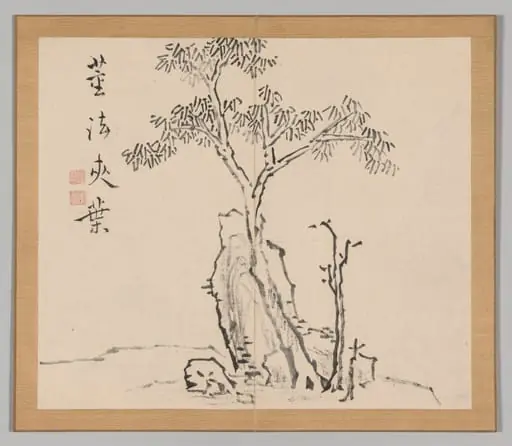 Reverberations of Taiga, Volume 1 (leaf 4)
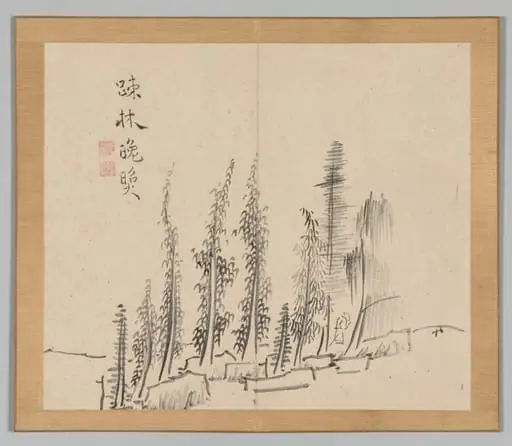 Reverberations of Taiga, Volume 2 (leaf 30)
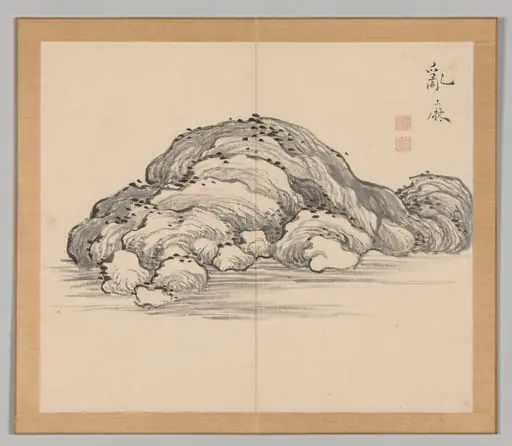 Reverberations of Taiga, Volume 1 (leaf 12)
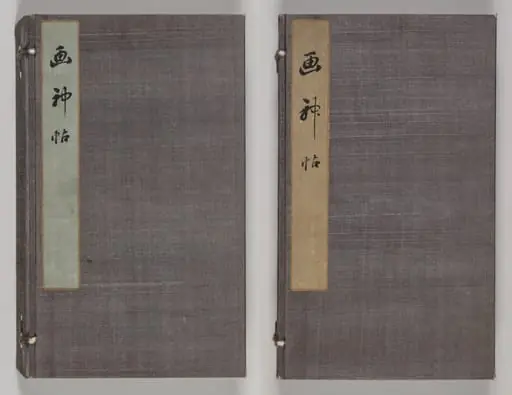 Reverberations of Taiga
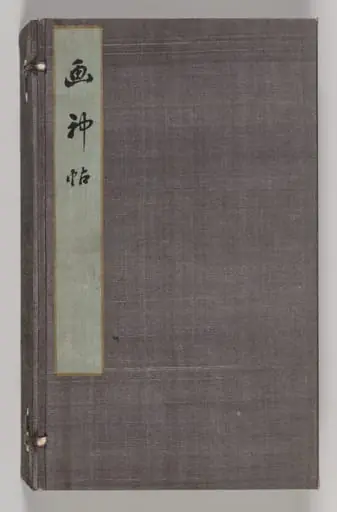 Reverberations of Taiga (Volume 1)
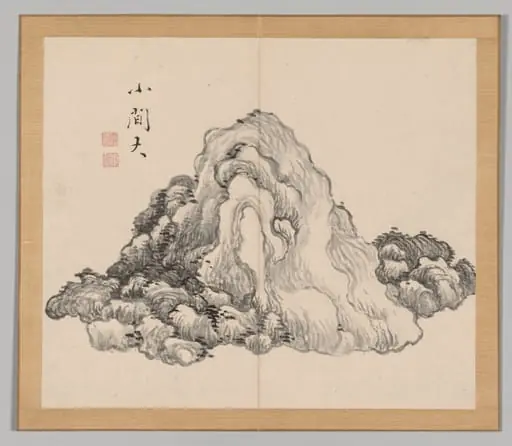 Reverberations of Taiga, Volume 1 (leaf 7)
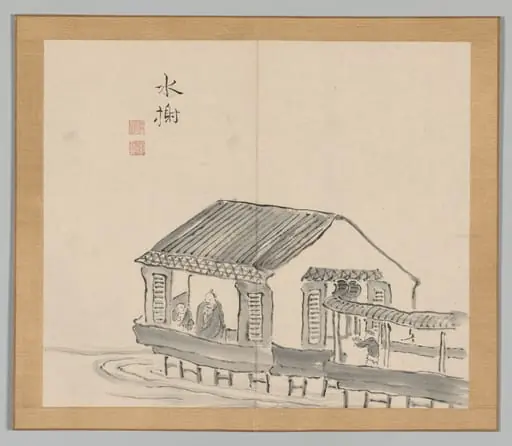 Reverberations of Taiga, Volume 2 (leaf 29)
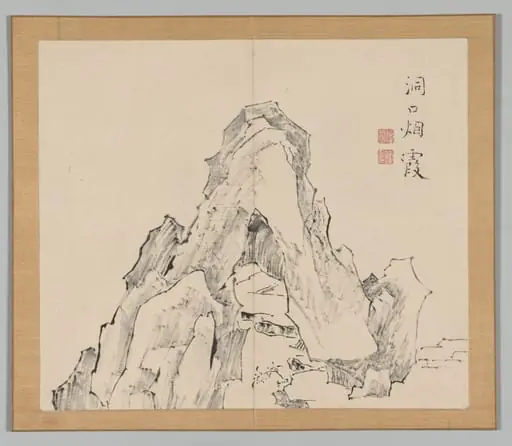 Reverberations of Taiga, Volume 2 (leaf 20)
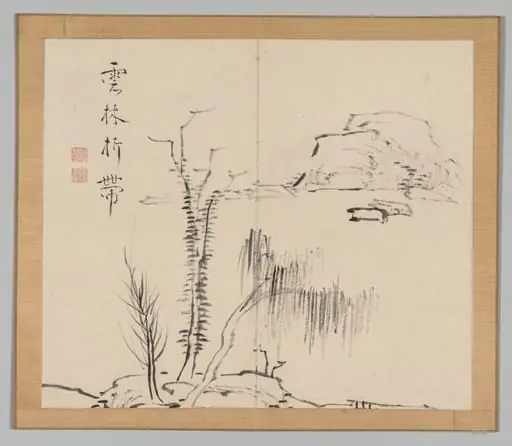 Reverberations of Taiga, Volume 2 (leaf 16)
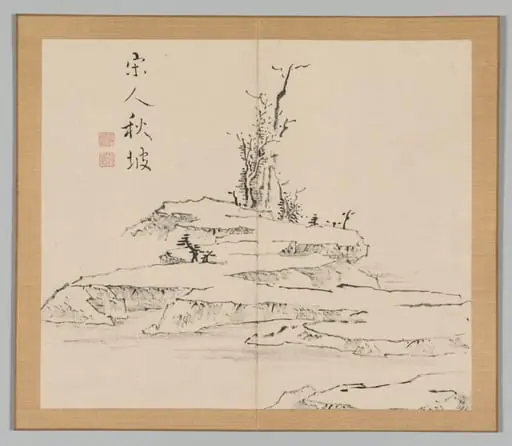 Reverberations of Taiga, Volume 2 (leaf 12)
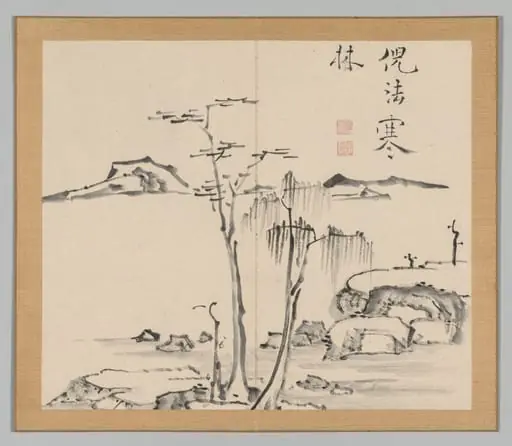 Reverberations of Taiga, Volume 2 (leaf 15)
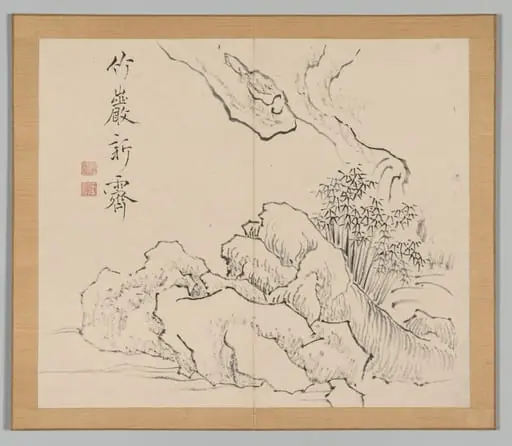 Reverberations of Taiga, Volume 2 (leaf 19)
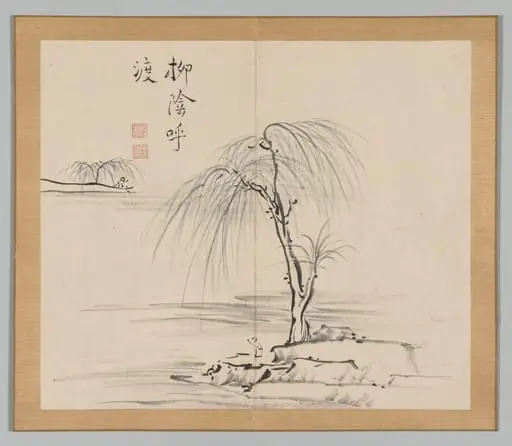 Reverberations of Taiga, Volume 2 (leaf 18)
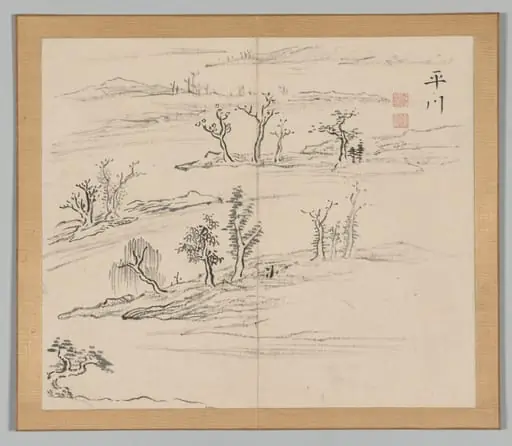 Reverberations of Taiga, Volume 2 (leaf 9)
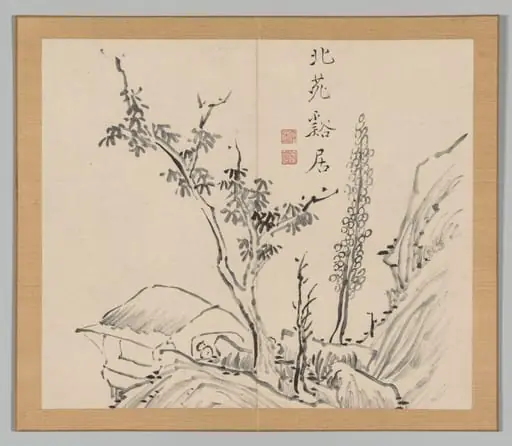 Reverberations of Taiga, Volume 2 (leaf 13)
 Reverberations of Taiga, Volume 2 (leaf 14)
 Reverberations of Taiga, Volume 1 (leaf 32)
 Reverberations of Taiga, Volume 2 (leaf 17)