Artwork
Carrefour de l'Epine
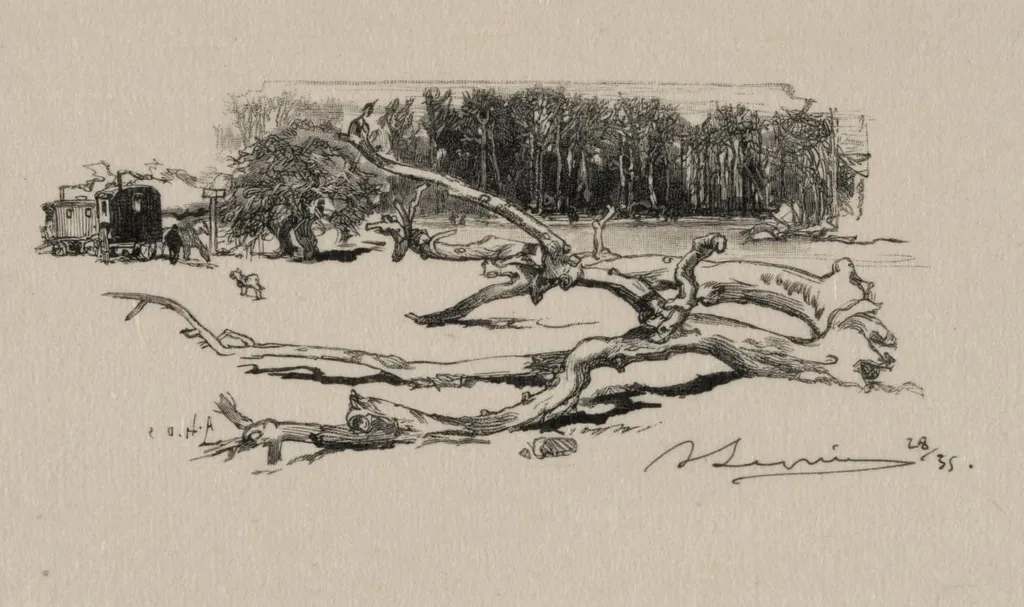
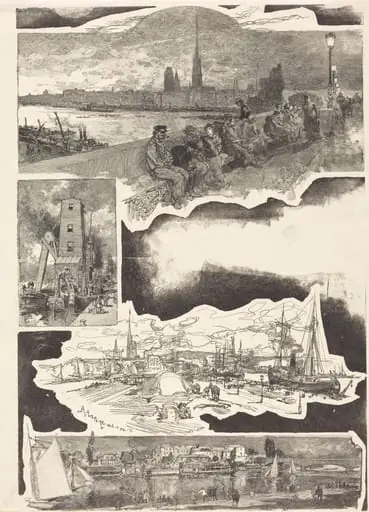
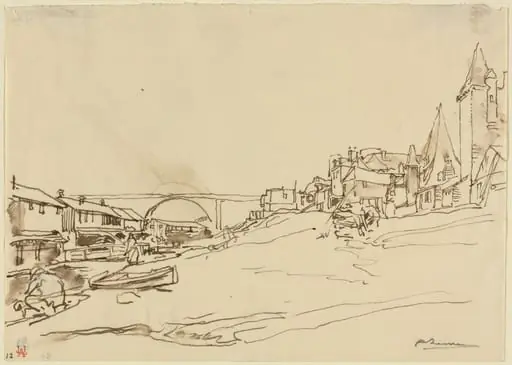
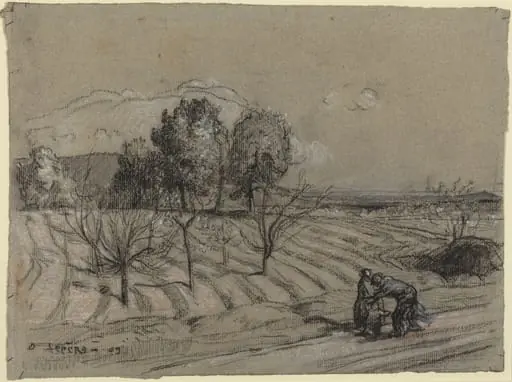
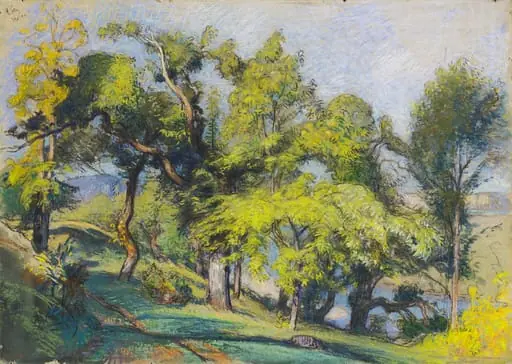
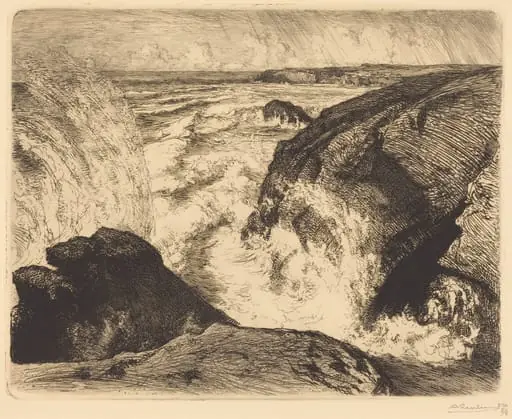
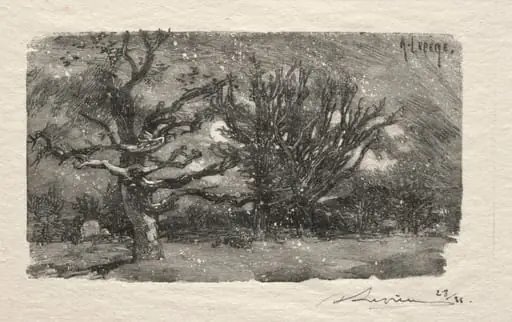
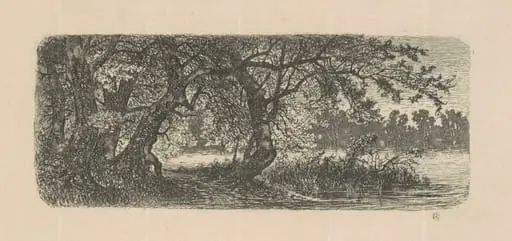
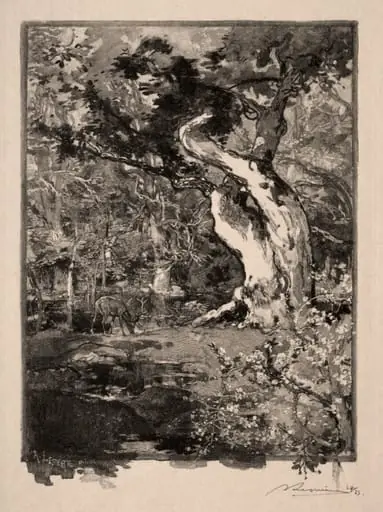
Carrefour de l'Epine is a print by the Impressionist artist Auguste Lepère. It dates from 1887 and is held in the collection of the Cleveland Museum of Art.
About this work
Overview
Lepère, known for his technical precision and interest in natural subjects, captured a quiet rural scene with immediacy.
Created in 1887 by French artist Auguste Louis Lepère, *Carrefour de l'Epine* is a wood engraving that exemplifies the revival of the medium in late 19th-century Europe. Lepère, known for his technical precision and interest in natural subjects, captured a quiet rural scene with immediacy. The work resides in the collection of The Cleveland Museum of Art, where it is valued for its intimate portrayal of everyday landscape and its refined use of line and tone.
Subject & Meaning
The scene depicts a forest path obstructed by a fallen tree, its branches splayed across the ground. A distant train rests beside a modest structure, suggesting the encroachment of industrialization on rural life. The composition avoids narrative drama, instead inviting contemplation of nature’s disruption and quiet human presence. The absence of figures emphasizes solitude and the subtle tension between wilderness and progress.
Technique & Style
Lepère employed wood engraving with a rapid, assured hand, using fine, dark lines to suggest texture and depth. The fallen branches are rendered with loose yet controlled strokes, capturing the play of light across fractured surfaces. Background trees are simplified into rhythmic marks, enhancing the sense of spontaneity. The technique mirrors the immediacy of a sketch, yet achieves the tonal richness characteristic of fine printmaking.
History & Provenance
Lepère produced *Carrefour de l'Epine* during a period of renewed interest in wood engraving as an artistic medium, distinct from commercial reproduction. The work entered The Cleveland Museum of Art’s collection through established acquisition channels in the 20th century. Its preservation reflects institutional recognition of Lepère’s role in elevating printmaking to the status of fine art in France and beyond.
Context
In the 1880s, French artists increasingly turned to nature and transient effects as subjects, influenced by emerging photographic practices and plein air painting. Lepère’s focus on a single, unidealized moment aligns with broader trends in realism and early modernism. While not an Impressionist, his emphasis on light, movement, and direct observation connects him to the era’s shifting aesthetic priorities.
Legacy
Lepère’s work contributed to the reestablishment of wood engraving as a vehicle for personal expression rather than mere illustration. *Carrefour de l'Epine* stands as an example of how traditional techniques could be adapted to convey modern sensibilities. His influence extended to later printmakers who valued craftsmanship and observational rigor over decorative flourish.
Artist & collection
Artist
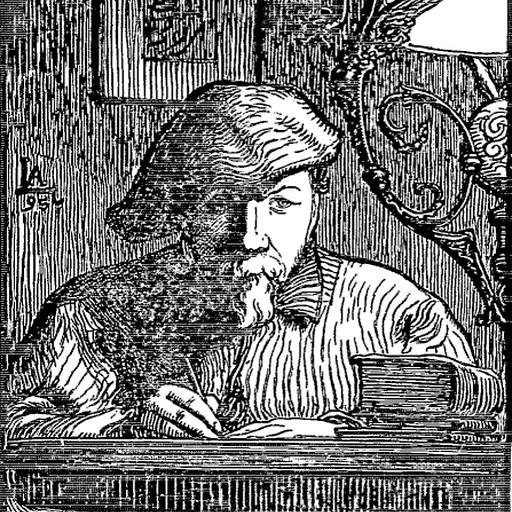
Louis-Auguste Lepère (30 November 1849 – 20 November 1918) was a French painter and etcher. Lepère is also considered a leader in the creative revival of wood engraving in Europe.