Artwork
Les Pêcheuses de Pignons, Saint-Jean-de-Mont
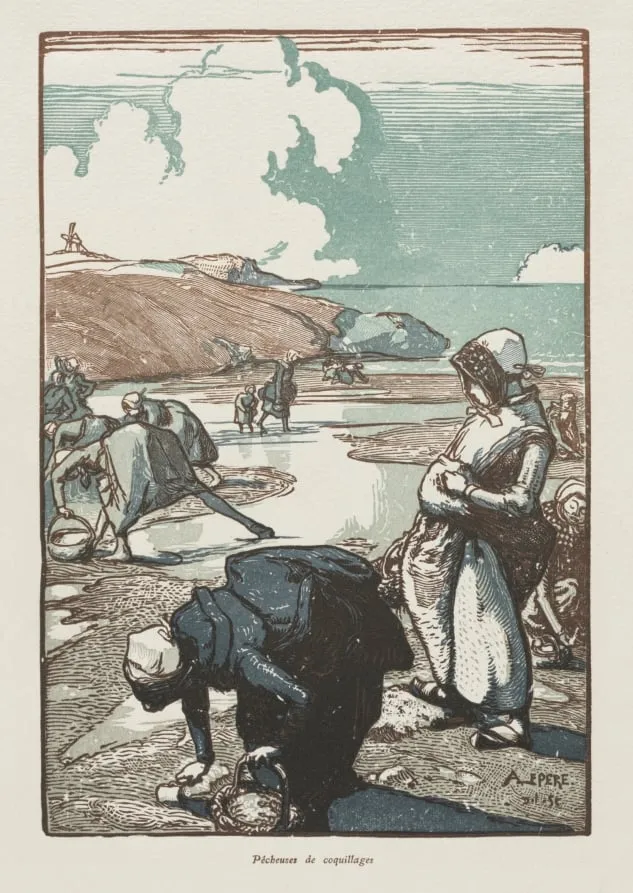
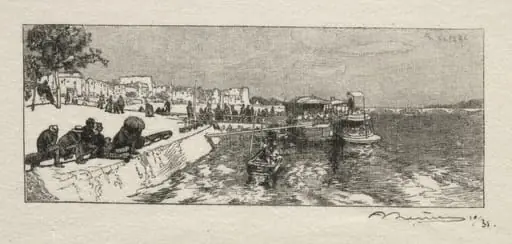
Les Pêcheuses de Pignons, Saint-Jean-de-Mont is a print by Auguste Lepère. It dates from 1903 and is held in the collection of the Cleveland Museum of Art.
About this work
Overview
The work is part of The Cleveland Museum of Art’s collection, reflecting his dedication to depicting rural life through finely detailed printmaking.
Created in 1903 by French artist Auguste Louis Lepère, *Les Pêcheuses de Pignons, Saint-Jean-de-Mont* is a wood engraving that captures a quiet coastal labor scene. Lepère, instrumental in the revival of wood engraving in Europe, used this medium to render intimate, everyday moments with precision. The work is part of The Cleveland Museum of Art’s collection, reflecting his dedication to depicting rural life through finely detailed printmaking.
Subject & Meaning
The print portrays women engaged in the gathering of pine nuts along a windswept shore near Saint-Jean-de-Mont. Their postures—bent, focused, and unhurried—convey the rhythm of subsistence work. The title suggests a regional practice, though the exact nature of the harvest remains ambiguous. The scene avoids romanticism, instead presenting labor as a quiet, unremarkable part of coastal existence.
Technique & Style
Lepère employed wood engraving to achieve fine tonal gradations and delicate line work, characteristic of his technical mastery. The composition uses restrained contrast and soft atmospheric effects to suggest the pale sky and dry, rocky terrain. Figures are rendered with subtle detail, their clothing and gestures rendered without exaggeration, reinforcing the work’s understated realism and quiet dignity.
History & Provenance
The print was produced during the height of Lepère’s career, when he was actively promoting wood engraving as a fine art medium in France. It entered The Cleveland Museum of Art’s collection through documented acquisition, likely as part of early 20th-century efforts to build a holdings of European prints. Its preservation reflects institutional recognition of Lepère’s role in print revival.
Context
Lepère’s work emerged amid a broader European interest in rural life and artisanal craft, reacting against industrialization. His choice of coastal laborers aligns with regionalist tendencies in French art, where everyday activities were elevated through careful observation. Unlike urban scenes favored by contemporaries, Lepère turned to remote locales, emphasizing continuity and quiet resilience.
Legacy
Though not widely known outside printmaking circles, Lepère’s technical innovations influenced later generations of printmakers seeking to elevate wood engraving beyond illustration. *Les Pêcheuses de Pignons* exemplifies his commitment to documenting marginalized labor with restraint and dignity. The work remains a reference point in studies of early 20th-century European print revival.
Artist & collection
Artist
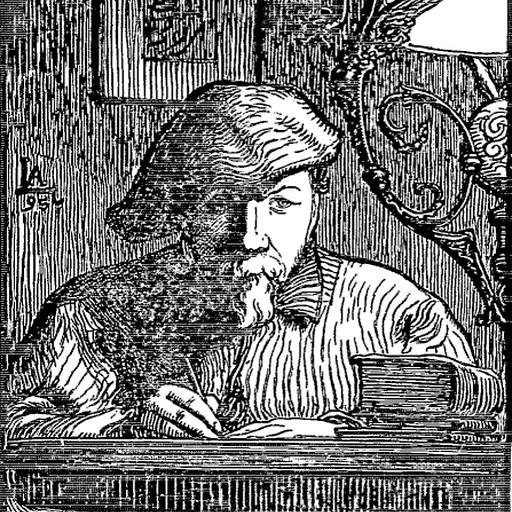
Louis-Auguste Lepère (30 November 1849 – 20 November 1918) was a French painter and etcher. Lepère is also considered a leader in the creative revival of wood engraving in Europe.

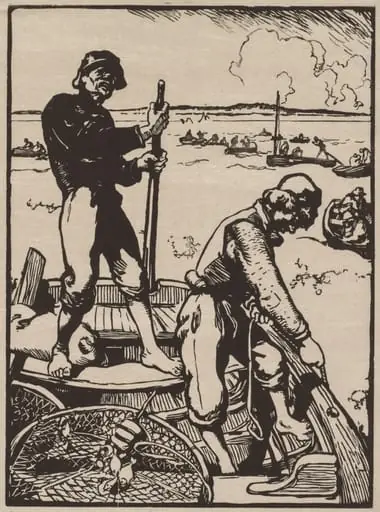 Shrimp Fishermen
![[Peasants by a Dock, Paris], by Auguste Lepère](https://artifactworldgallery.com/img/auguste-lepere--peasants-by-a-dock-paris--be27cb4200b9108b-w320.webp) [Peasants by a Dock, Paris]
[Peasants by a Dock, Paris]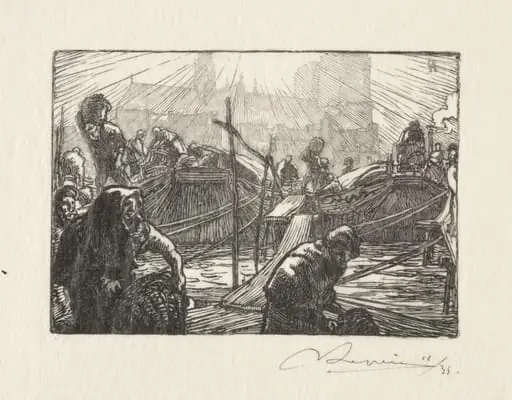 Notre Dame vue du Marché aux pommes
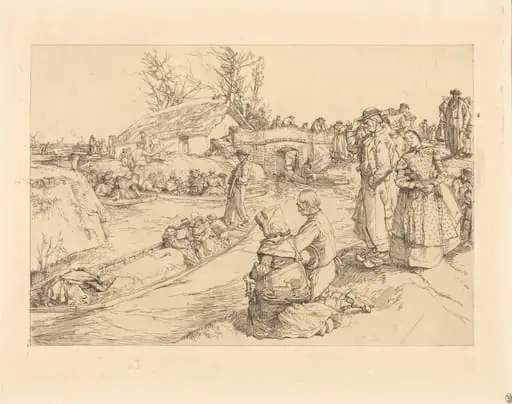 Burial in the Vendeen Marsh (Un enterrement dans le marais Vendeen)
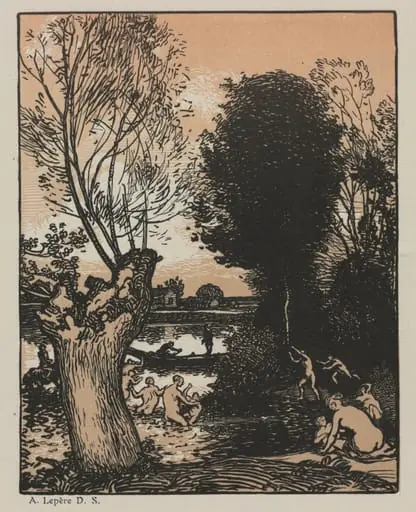 Summer Evening
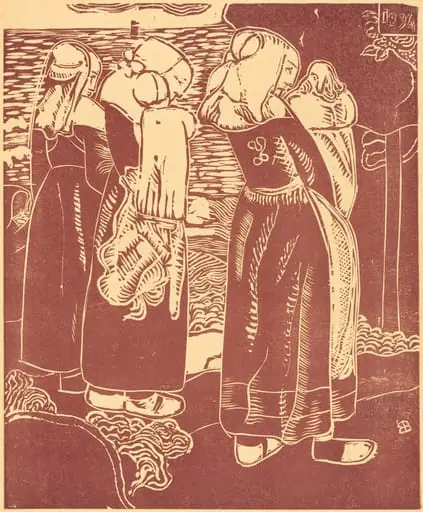 Three Breton Women with Infants
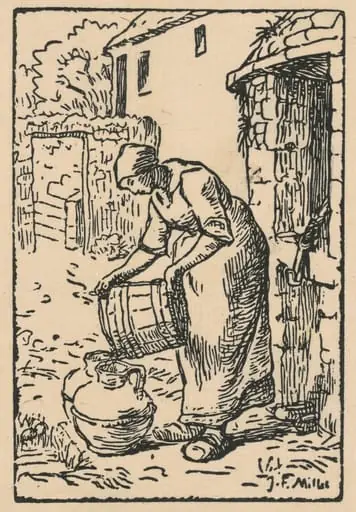 Woman Filling a Water Jug (Femme vidant un seau)
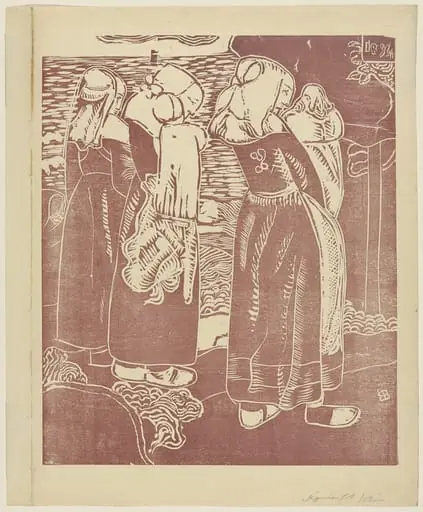 Untitled
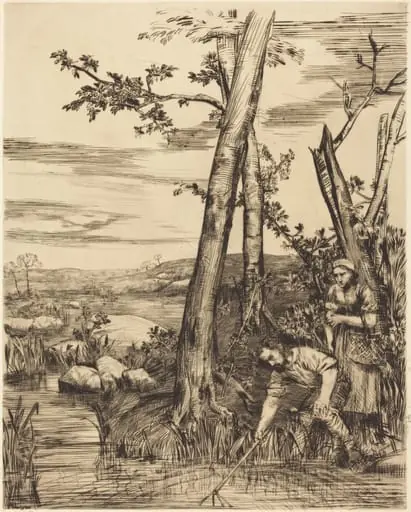 Fishing for Crayfish (Les pecheurs d'ecrevisses)
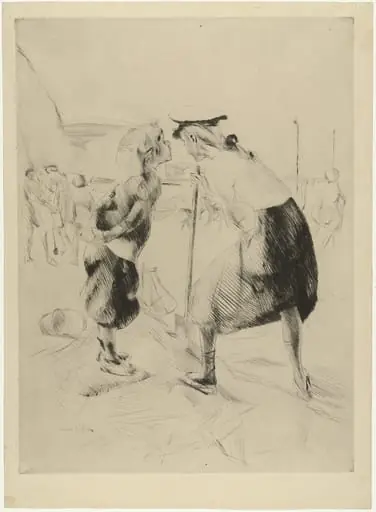 Untitled
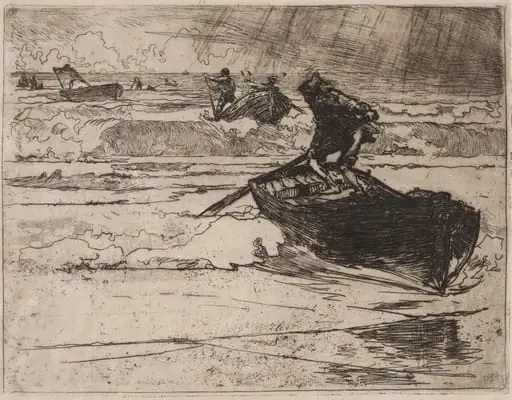 Pêcheurs Fuyants devant l'Orage
 Embarcadére a Bercy