Artwork
[Peasants by a Dock, Paris]
![[Peasants by a Dock, Paris], by Auguste Lepère, 1894](https://artifactworldgallery.com/img/auguste-lepere--peasants-by-a-dock-paris--be27cb4200b9108b-w1024.webp)
[Peasants by a Dock, Paris] is a print by the Impressionist artist Auguste Lepère. It dates from 1894 and is held in the collection of the Cleveland Museum of Art. Created in 1894 by Auguste Louis Lepère, this wood engraving captures a quiet moment along a Parisian riverbank.
About this work
Overview
Created in 1894 by Auguste Louis Lepère, this wood engraving captures a quiet moment along a Parisian riverbank. Lepère, instrumental in revitalizing wood engraving as a fine art medium, turned his focus to ordinary urban life, blending rural figures with the industrial edges of the city. The composition avoids grandeur, instead emphasizing the rhythm of daily labor and stillness.
Subject & Meaning
The scene portrays peasants engaged in routine tasks near the water: a woman inspects a fish, a child sits quietly on a stone, and another figure sorts a catch.
The scene portrays peasants engaged in routine tasks near the water: a woman inspects a fish, a child sits quietly on a stone, and another figure sorts a catch. Their presence in a city setting suggests the lingering connection between rural livelihoods and urban economies. No drama or narrative is imposed; the work honors the dignity of unremarkable labor, grounded in observation rather than idealization.
Technique & Style
Lepère employed fine, softly blended lines to model light and form, creating a muted, atmospheric effect. The wood engraving technique allowed for subtle tonal gradations, evoking the hazy quality of dawn or dusk. Rather than sharp outlines, the figures emerge from delicate textures, enhancing the sense of quiet intimacy and transient light that defines the moment.
History & Provenance
The print was produced during a period when Lepère was actively promoting wood engraving as a serious artistic medium in France. It was likely part of a series documenting everyday life in and around Paris, circulated among collectors and artists interested in the revival of traditional printmaking. Its survival reflects its role in the broader 19th-century print renaissance.
Context
In late 19th-century France, industrialization reshaped rural migration patterns, bringing agricultural workers into urban peripheries. Lepère’s depiction aligns with Realist traditions that valued truthful representation over romanticism. Unlike academic scenes, this work offers no moralizing or spectacle—only the unembellished presence of people adapting to changing social landscapes.
Legacy
Lepère’s prints, including this one, helped reestablish wood engraving as a legitimate art form in Europe, influencing later generations of printmakers. His focus on ordinary subjects contributed to a broader shift in artistic priorities, where the authenticity of daily life gained recognition over historical or mythological themes. The work remains a quiet testament to the persistence of traditional labor in modernizing cities.
Artist & collection
Artist
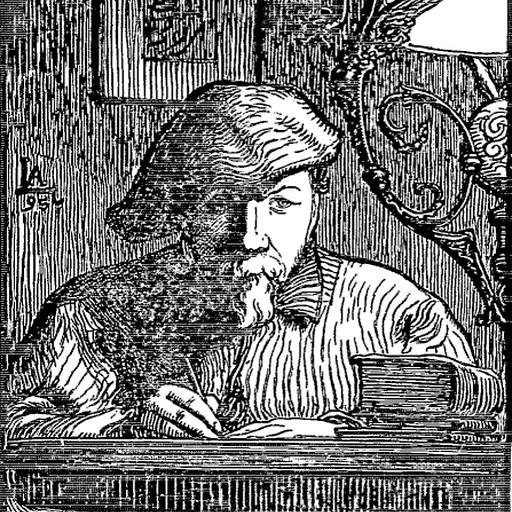
Louis-Auguste Lepère (30 November 1849 – 20 November 1918) was a French painter and etcher. Lepère is also considered a leader in the creative revival of wood engraving in Europe.

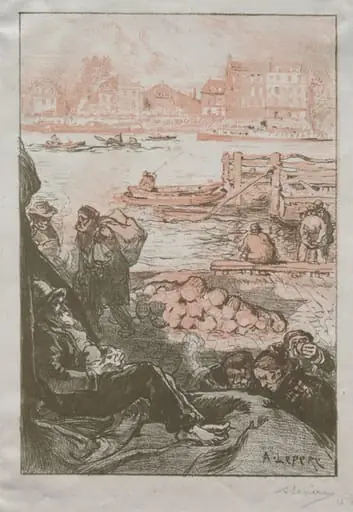 The River Porter, Monday
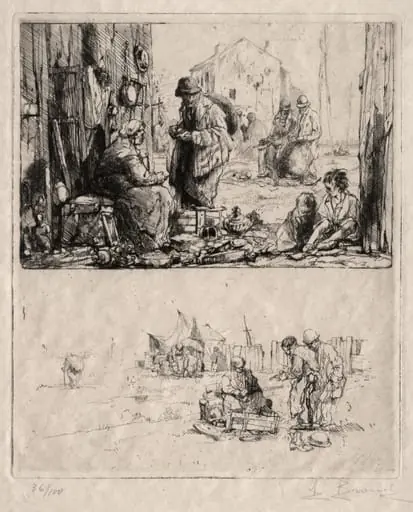 On the Fortifications at Saint-Ouen
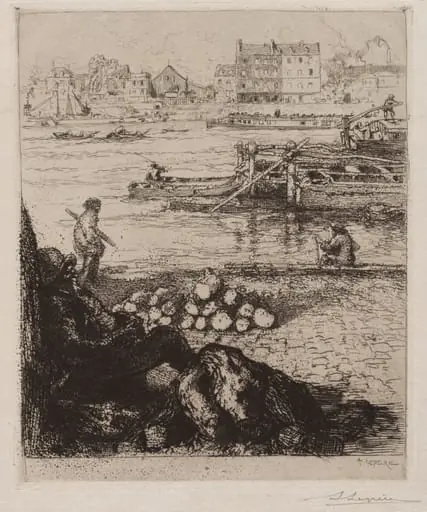 Le Débardeur: Quai de la Gare
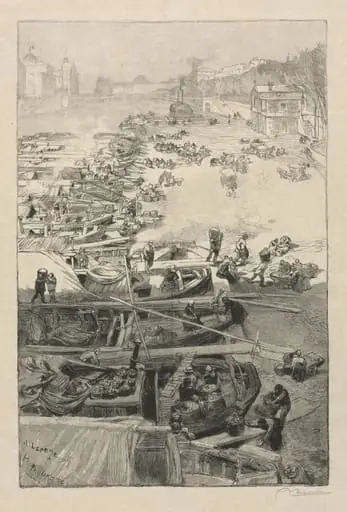 Potatoes Arriving at the Hôtel de Ville
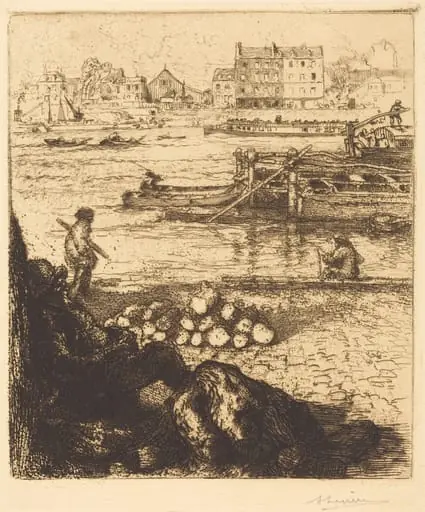 Dockman, Pier at La Gare (Le debardeur, quai de La Gare)
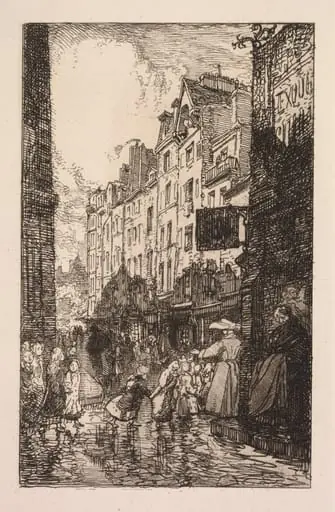 La Biévre, Les Gobelins, Saint-Séverin: Le Quartier Saint-Séverin: La Rue des Prêtres Saint-Séverin
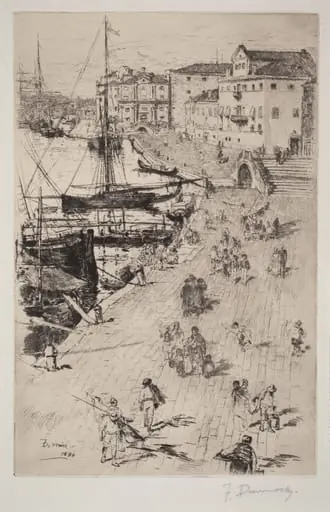 Riva degli Schiavoni, No. 2
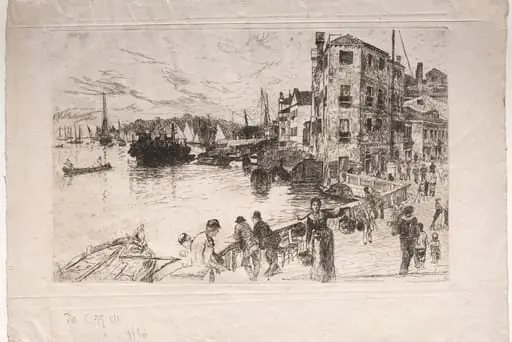 Castello Quarter, Riva
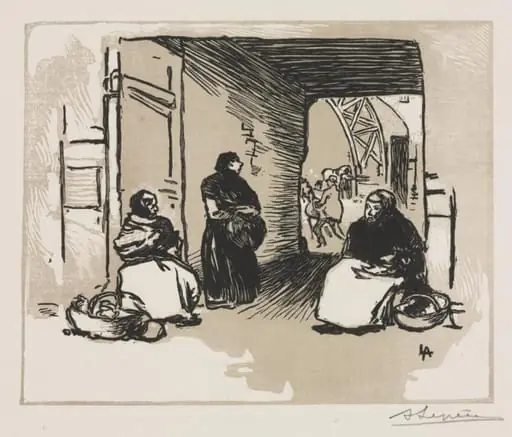 Bread-Sellers
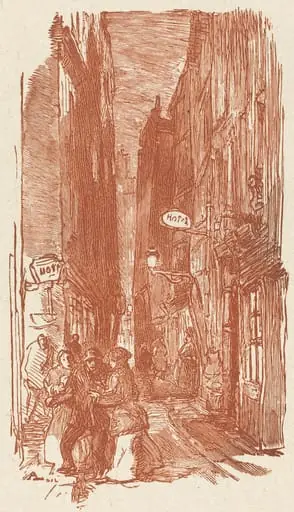 Rue Saint-Severin
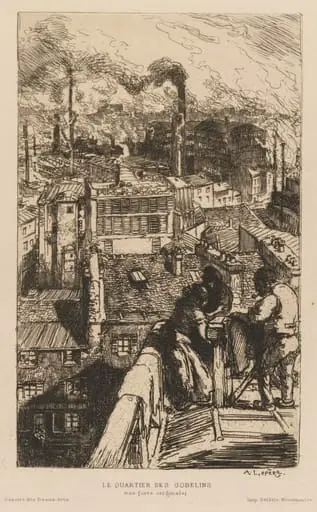 Gazette des Beaux-Arts: Le Quartier des Gobelins
![[Large Steamer Ship at Dock, Paris], by Auguste Lepère](https://artifactworldgallery.com/img/auguste-lepere--large-steamer-ship-at-dock-paris--ed31099e42153820-w320.webp) [Large Steamer Ship at Dock, Paris]
[Large Steamer Ship at Dock, Paris]