Artwork
Louvain
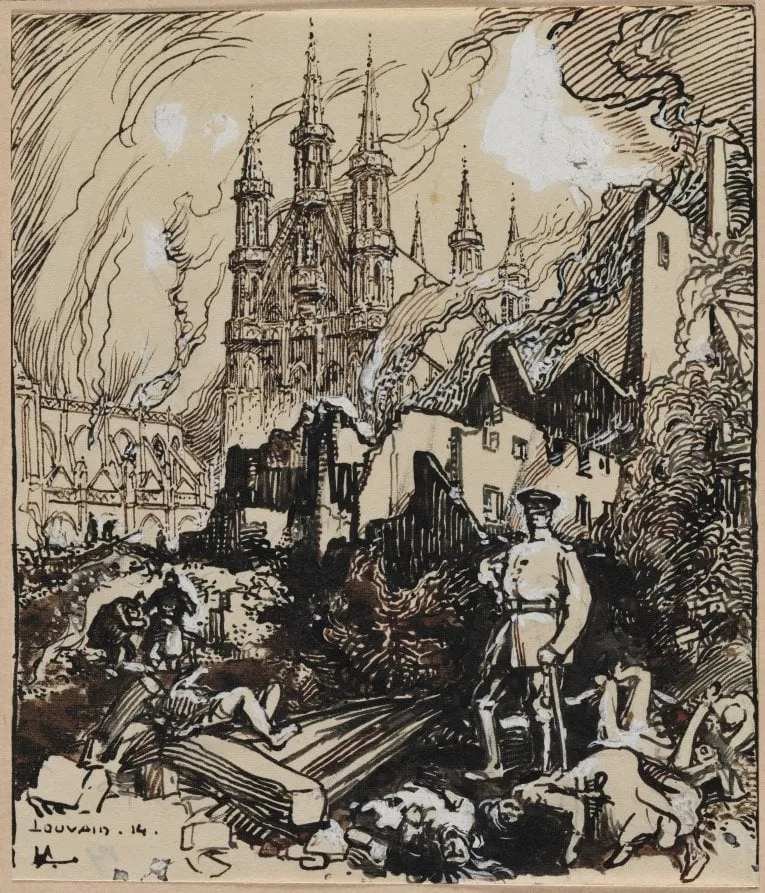
Louvain is a drawing by Auguste Lepère. It dates from 1914 and is held in the collection of the Cleveland Museum of Art.
About this work
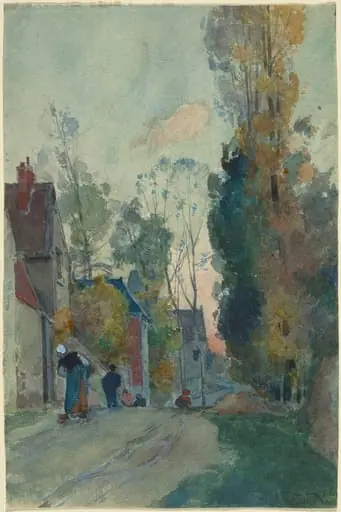
You see a quiet town scene in this painting.
The artist used soft colors to create a peaceful mood. This painting is interesting because it shows a calm moment in a time of war - it was made in 1914, just as World War I was starting.
You can learn more about this style by looking into the technique of sfumato.
Overview
Lepère, recognized for his role in revitalizing wood engraving, turned to delicate graphic media to capture quiet architectural scenes.
Louvain is a pencil and watercolor drawing by French artist Auguste Louis Lepère, completed in 1914. It belongs to the collection of The Cleveland Museum of Art. Lepère, recognized for his role in revitalizing wood engraving, turned to delicate graphic media to capture quiet architectural scenes. This work reflects his interest in tonal subtlety and restrained composition, distinct from his more widely known printmaking.
Subject & Meaning
The drawing depicts the Belgian town of Louvain with minimal human presence, focusing on its medieval buildings and quiet streets. Rendered at the outset of World War I, the image stands in quiet contrast to the violence soon to engulf the region. Its stillness may reflect nostalgia or an unspoken awareness of impending disruption, offering a contemplative counterpoint to the era’s turmoil without explicit commentary.
Technique & Style
Lepère employed soft graphite lines and translucent watercolor washes to build gentle gradations of light and shadow. The palette is muted, dominated by greys, ochres, and pale blues, enhancing the scene’s serenity. His handling avoids sharp contours, favoring blended edges that suggest atmosphere over detail. This approach aligns with a broader interest in tonal harmony rather than dramatic contrast.
History & Provenance
Created in 1914, the drawing was likely made during Lepère’s travels in Belgium. It entered The Cleveland Museum of Art’s collection through a later acquisition, though specific provenance details prior to its museum ownership are not widely documented. Its survival through wartime upheaval adds a layer of historical resonance, as Louvain was later heavily damaged by German forces later that year.
Context
In 1914, as Europe moved toward war, many artists turned to intimate, non-political subjects as a form of quiet resistance or retreat. Lepère’s focus on a tranquil townscape reflects this tendency among illustrators and printmakers who valued craftsmanship and calm observation amid rising nationalism and militarism. His work exists within a tradition of European topographical drawing, not propaganda.
Legacy
Though Lepère is primarily remembered for his wood engravings, Louvain exemplifies his skill in graphic media beyond print. The drawing remains a modest but evocative record of a place on the brink of destruction. It contributes to a broader understanding of how artists responded to historical crisis through restraint, observation, and the preservation of everyday beauty.
Artist & collection
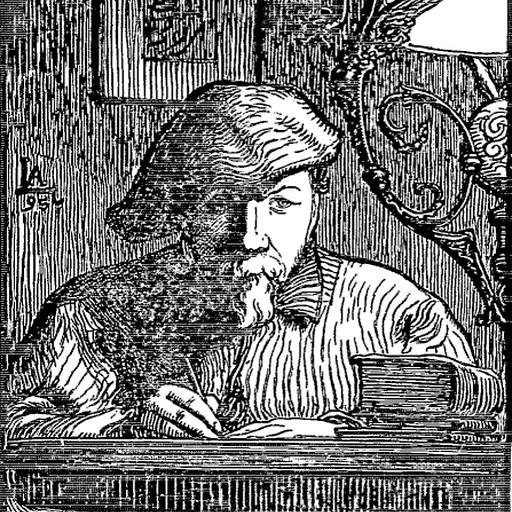
Artist
Louis-Auguste Lepère (30 November 1849 – 20 November 1918) was a French painter and etcher. Lepère is also considered a leader in the creative revival of wood engraving in Europe.

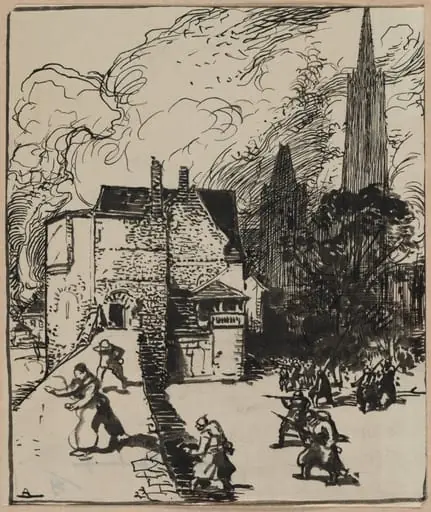 Siège des Maubeuge
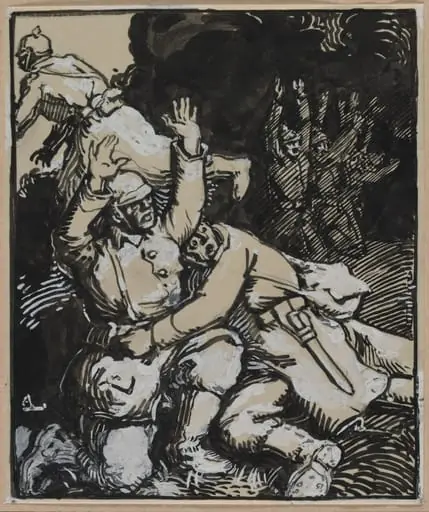 Dans une tranchée, des soldats allemands se rendent
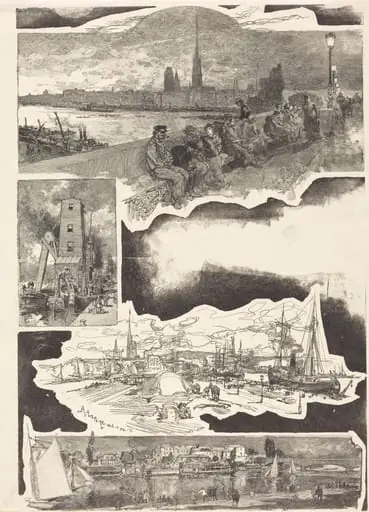
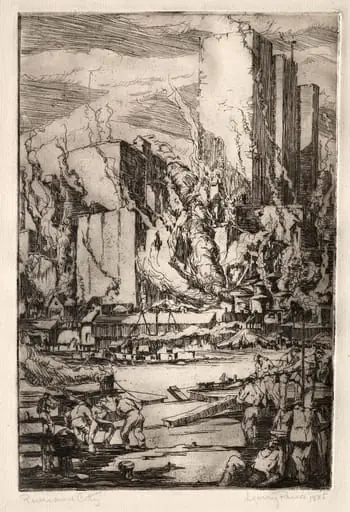 River and City
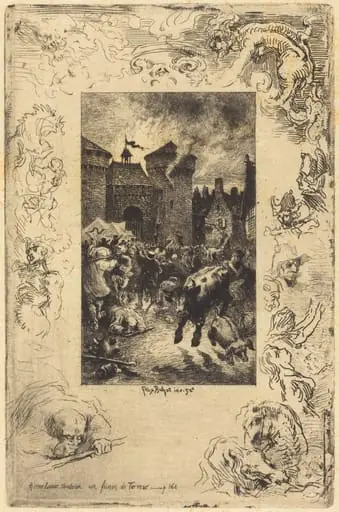 A cette lueur soudaine... (In the sudden gleam of light...)
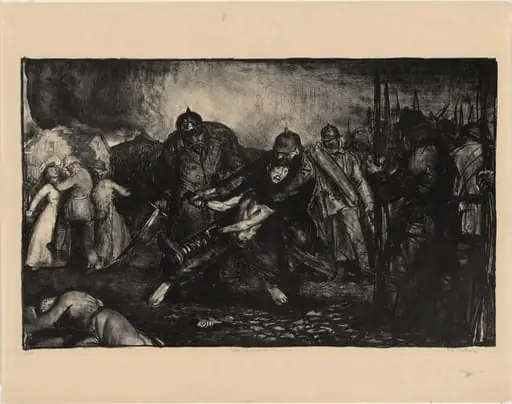 The Germans Arrive
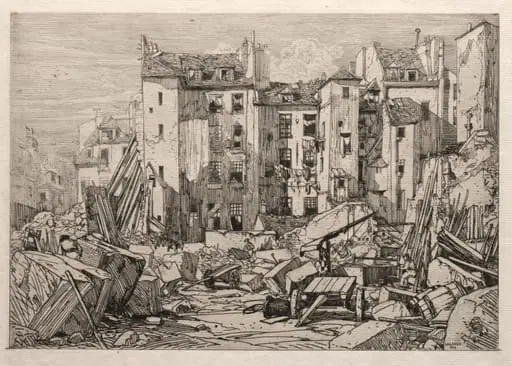 Demolition of Old Houses in Paris
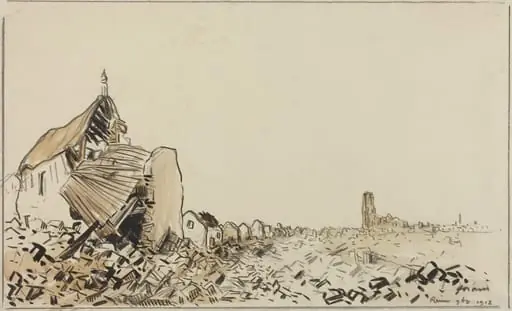 Reims 9bre 1918
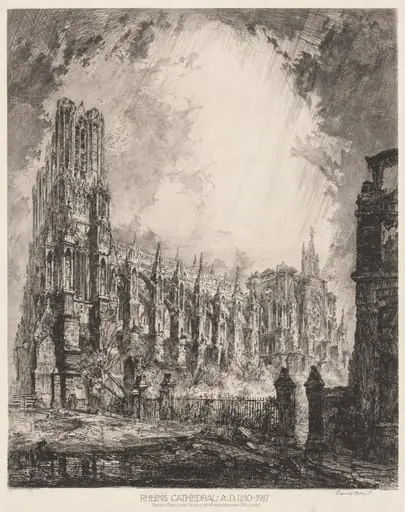 Rheims Cathedral and Ruins of Archbishop's Palace
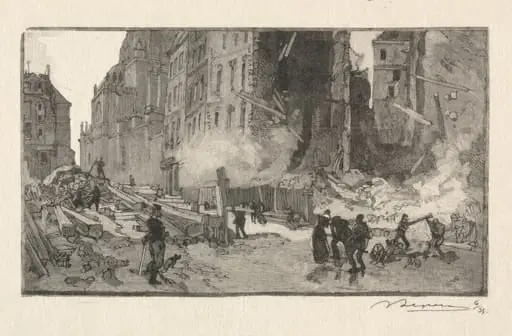 Place Gerson and Rue Restot
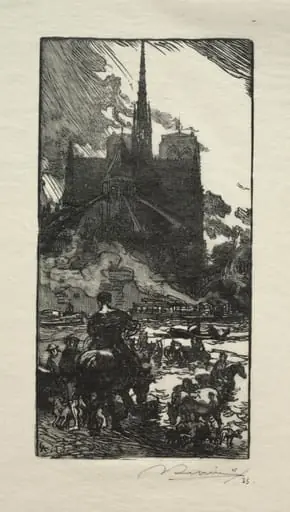 L'Abreuvoir au Point St. Louis
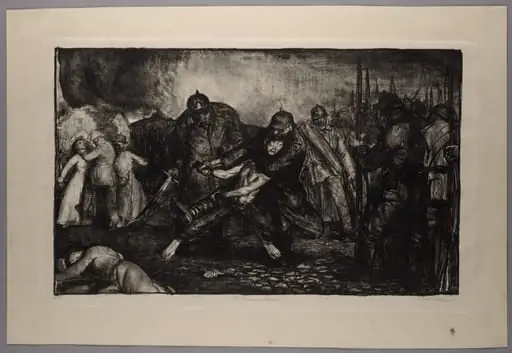 War Series: The Germans Arrive
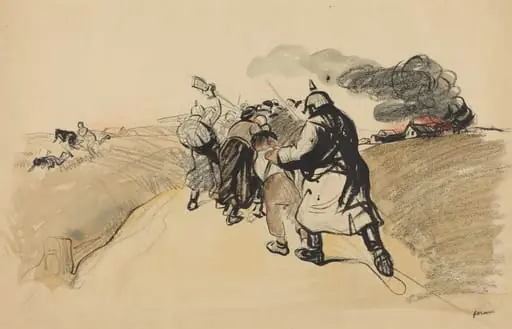 German Raid on a Village