Artwork
L'Abreuvoir au Point St. Louis
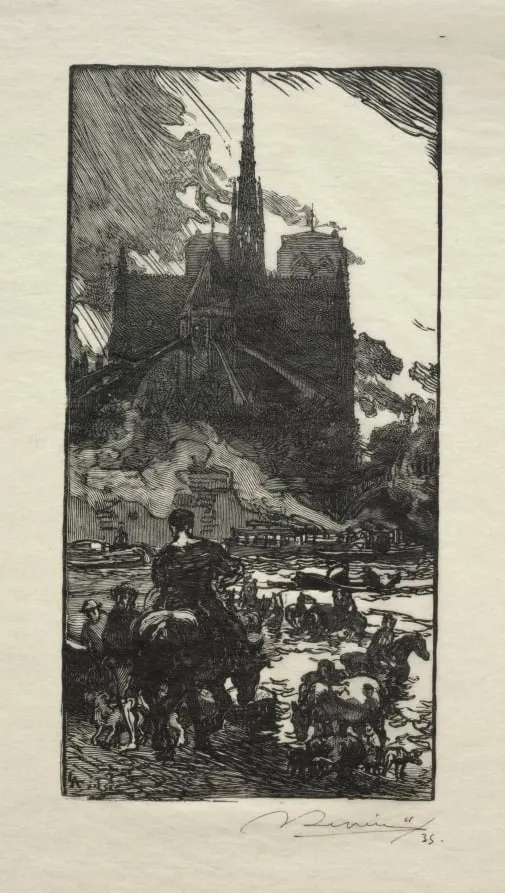
L'Abreuvoir au Point St. Louis is a print by Auguste Lepère. It dates from 1902 and is held in the collection of the Cleveland Museum of Art. Created in 1902 by French artist Auguste Louis Lepère, *L'Abreuvoir au Point St.
About this work
Overview
It resides in the collection of The Cleveland Museum of Art, where it is recognized for its technical precision and atmospheric depth.
Created in 1902 by French artist Auguste Louis Lepère, *L'Abreuvoir au Point St. Louis* is a wood engraving that exemplifies his role in the early 20th-century revival of the medium. The print captures a quiet moment at a rural watering place near the Seine, rendered with intricate line work and tonal contrast. It resides in the collection of The Cleveland Museum of Art, where it is recognized for its technical precision and atmospheric depth.
Subject & Meaning
The scene depicts a group of people and horses gathered at a shallow basin, likely for watering livestock. The setting suggests a working riverside community, where daily routines unfold against the backdrop of a prominent church with twin spires. The composition conveys a sense of quiet labor and communal rhythm, without overt sentimentality. The swirling clouds above hint at shifting weather, adding a layer of transient natural force to the human activity below.
Technique & Style
Lepère employed fine, controlled wood engraving techniques to build dense textures and dramatic contrasts. Deep blacks define forms and shadows, while delicate lines suggest light filtering through clouds and water. The use of chiaroscuro enhances spatial depth, giving the flat surface a sculptural quality. His method prioritizes tonal gradation over color, relying on the interplay of ink and paper to evoke mood and volume.
History & Provenance
The print was produced during a period when Lepère was instrumental in redefining wood engraving as a fine art form in Europe, moving beyond commercial reproduction. It entered the Cleveland Museum of Art’s collection in the 20th century, where it has been preserved as an example of modern printmaking’s revival. No significant alterations or restorations are documented in its provenance.
Context
Lepère worked at a time when traditional printmaking was being reevaluated amid industrial advances. His focus on rural French life aligned with broader artistic interests in everyday scenes, distinct from urban modernism. The church in the background reflects the enduring presence of religious architecture in French villages, while the watering hole speaks to pre-industrial modes of animal husbandry and water use.
Legacy
Lepère’s work, including this print, influenced a generation of printmakers who sought to elevate wood engraving beyond illustration. His emphasis on handcrafted detail and atmospheric tone helped reestablish the medium as a vehicle for artistic expression. Though less widely known today, his contributions remain foundational to the history of modern European printmaking.
Artist & collection
Artist
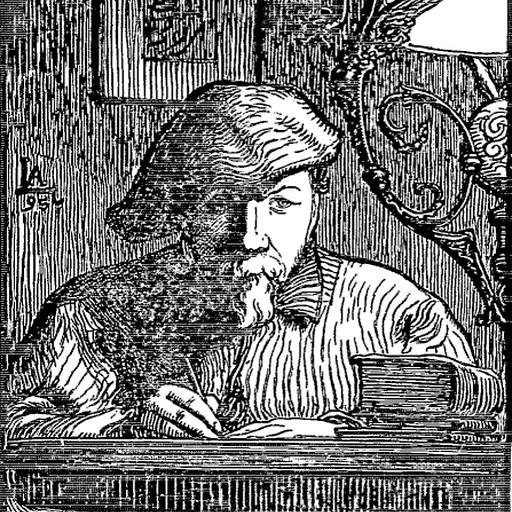
Louis-Auguste Lepère (30 November 1849 – 20 November 1918) was a French painter and etcher. Lepère is also considered a leader in the creative revival of wood engraving in Europe.

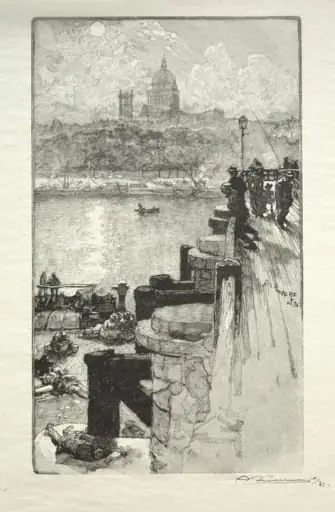 Montagne Ste. Genevieve
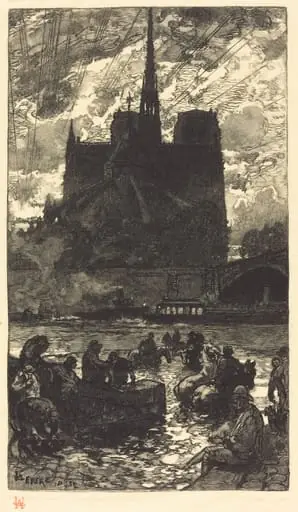 Watering-place behind Notre-Dame (L'abreuvoirderriere Notre-Dame)
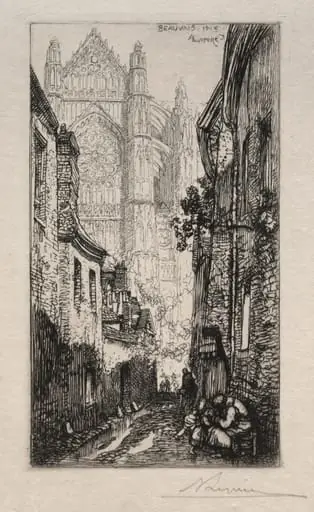 Narrow Street, Beauvais (Une Ruelle, Beauvais)
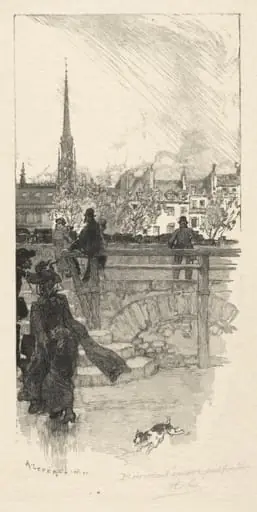 Quai des Grands Augustins, Paris
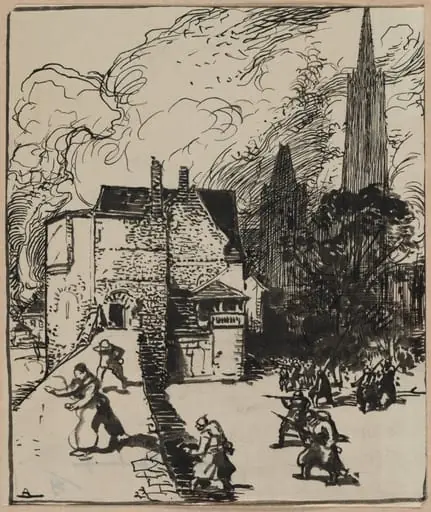 Siège des Maubeuge
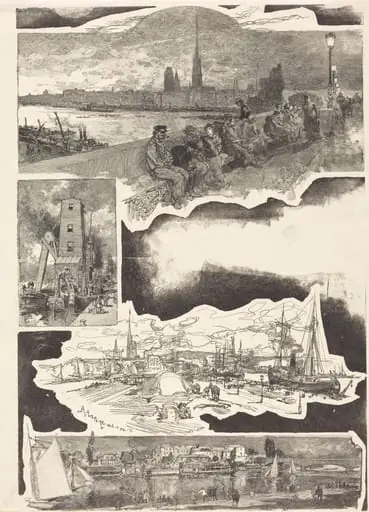
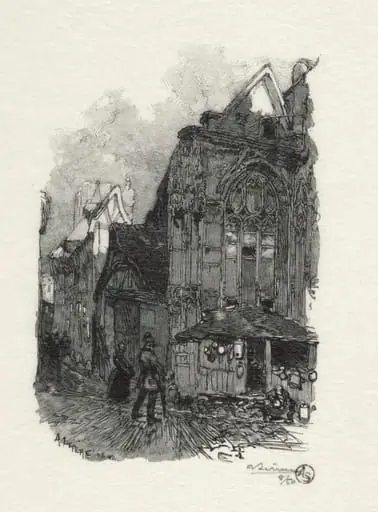 Rouen Illustré: Saint Etienne des Tonneliers
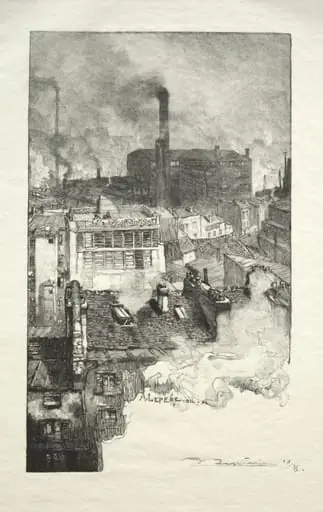 Quartier des Gobelins
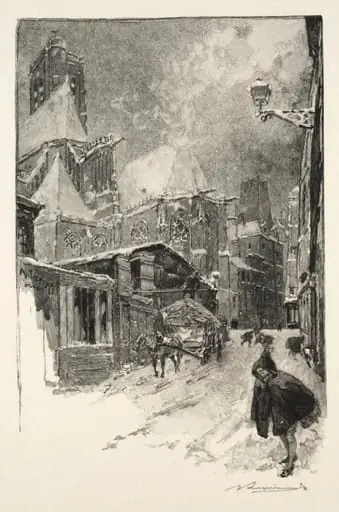 La Rue des Barres
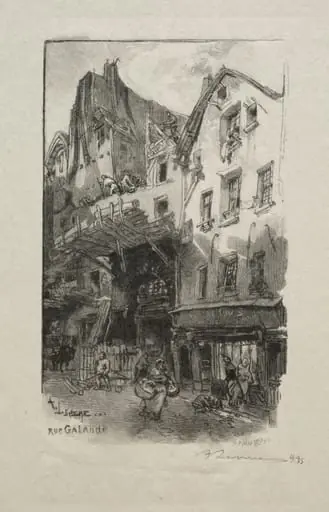 Rue Galande
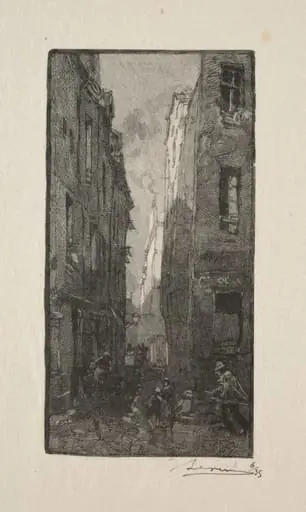 La Rue des Cordiers
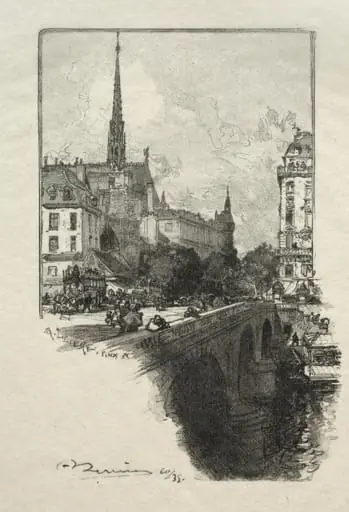 Le Pont St. Michel
 Pour moi le plus diffile c'est de m'habituer à porter un chapeau