Artwork
Petit bras au Pont St. Michel
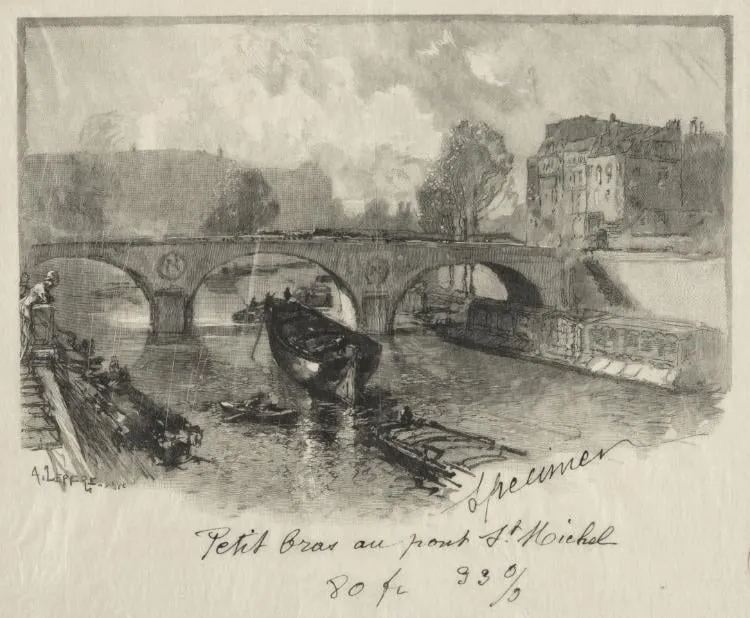
Petit bras au Pont St. Michel is a print by the Impressionist artist Auguste Lepère. It dates from 1891 and is held in the collection of the Cleveland Museum of Art. Created in 1891 by French artist Auguste Louis Lepère, *Petit bras au Pont St.
About this work
This painting shows a single arm resting on the stone railing of a Paris bridge.
This painting shows a single arm resting on the stone railing of a Paris bridge. The hand wears a simple glove. Sunlight hits the wrist just right.
Look closer: the artist didn’t paint the whole person. Just that arm and a scrap of sleeve. The background is blurry. It feels like a quick sketch, not a polished picture.
It makes you wonder why the rest is missing. Check out Auguste Louis Lepère (French, 1849–1918) next.
Overview
Created in 1891 by French artist Auguste Louis Lepère, *Petit bras au Pont St. Michel* is a wood engraving that captures a fragment of urban life in Paris. Unlike traditional compositions, it focuses narrowly on a single arm resting on a bridge railing, omitting the rest of the figure. The work exemplifies Lepère’s role in revitalizing wood engraving as a fine art medium in late 19th-century Europe, emphasizing intimacy over grandeur.
Subject & Meaning
The image isolates a gloved arm against the stone parapet of the Pont Saint-Michel, suggesting a fleeting, anonymous moment in city life. By excluding the body and blurring the background, Lepère invites contemplation of absence and transience. The hand, caught in quiet repose, becomes a symbol of the unseen individuals who populate public spaces, evoking solitude without narrative.
Technique & Style
Lepère employed wood engraving with precision, using fine lines to render texture in the stone railing and the soft fold of fabric. Sunlight is suggested through subtle tonal shifts rather than explicit shading, enhancing the sketchlike immediacy. The cropped composition and lack of context reflect an interest in modernist fragmentation, aligning with contemporary photographic and impressionist sensibilities.
History & Provenance
The print entered the collection of The Cleveland Museum of Art as part of its broader acquisition of late 19th-century European prints. Lepère, active in Parisian artistic circles, produced this work during a period of renewed interest in handcrafted printmaking. Its survival and preservation reflect its recognition among collectors of the era who valued the medium’s revival.
Context
In the 1890s, Parisian artists increasingly turned to everyday scenes and partial views, influenced by photography and Japanese prints. Lepère’s focus on a single limb aligns with this trend, rejecting monumental subjects in favor of quiet, unposed moments. His work contributed to a broader shift in printmaking toward personal expression and technical experimentation.
Legacy
Lepère’s *Petit bras au Pont St. Michel* stands as a quiet testament to the potential of wood engraving to convey emotional nuance through restraint. Though not widely known today, it influenced later printmakers who embraced fragmentation and minimalism. The work remains a key example of how technical mastery can serve poetic suggestion rather than literal representation.
Artist & collection
Artist
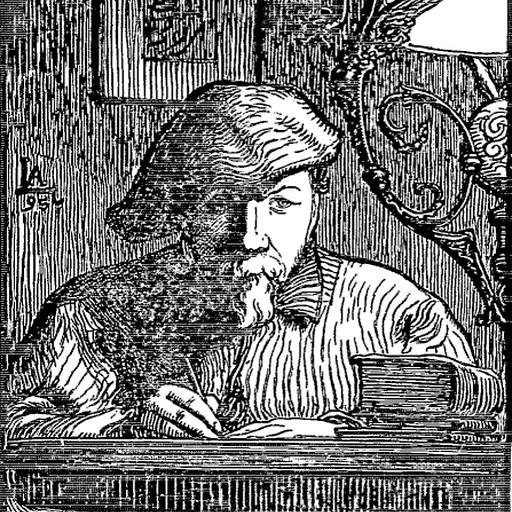
Louis-Auguste Lepère (30 November 1849 – 20 November 1918) was a French painter and etcher. Lepère is also considered a leader in the creative revival of wood engraving in Europe.

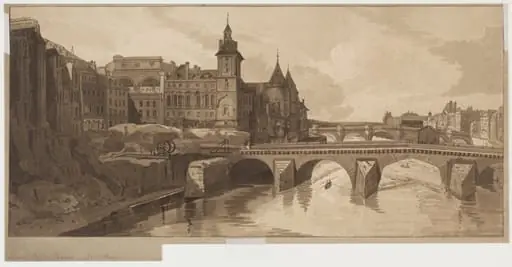 Selection of Twenty of the Most Picturesque Views in Paris:View of Pont au Change
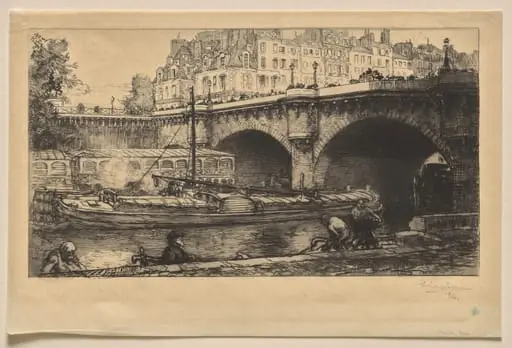 Le Pont Neuf
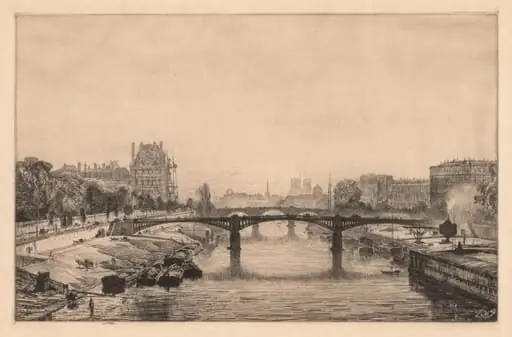 Paris, View from the Concorde Bridge
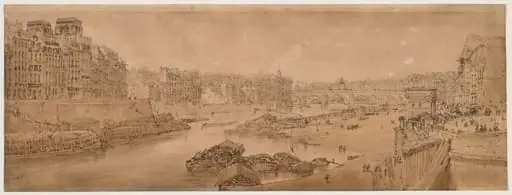 A Selection of Twenty of the Most Picturesque Views in Paris: View of the City with the Louvre taken from the Pont Marie
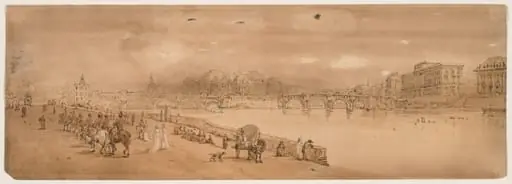 A Selection of Twenty of the Most Picturesque Views in Paris: View of Pont Neuf, and the Mint
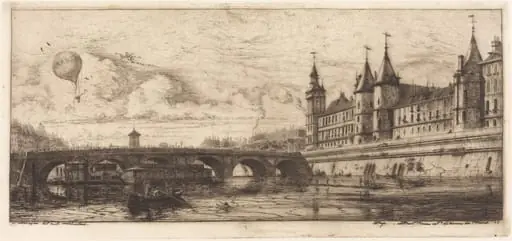 Le Pont-au-Change, Paris
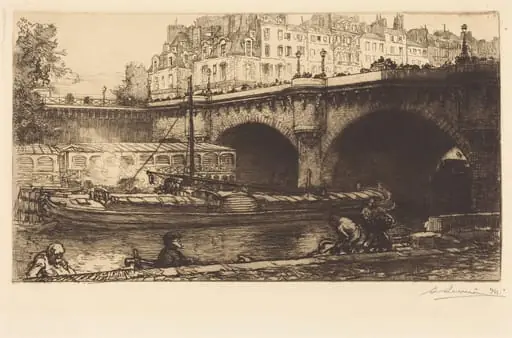 Pont Neuf
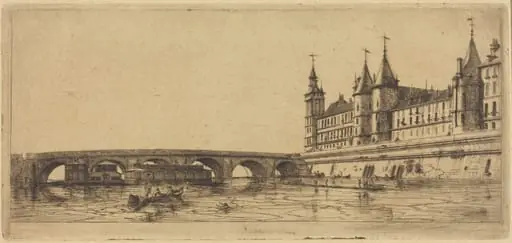 Le Pont-au-Change, Paris