Artwork
Quai de l'Hôtel de Ville
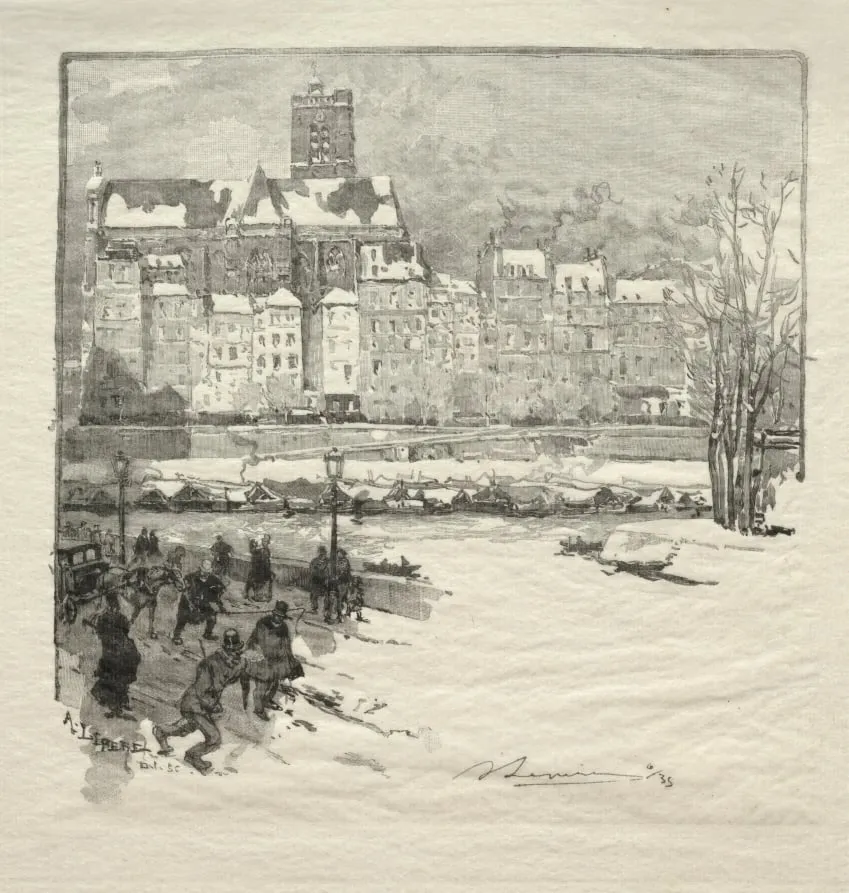
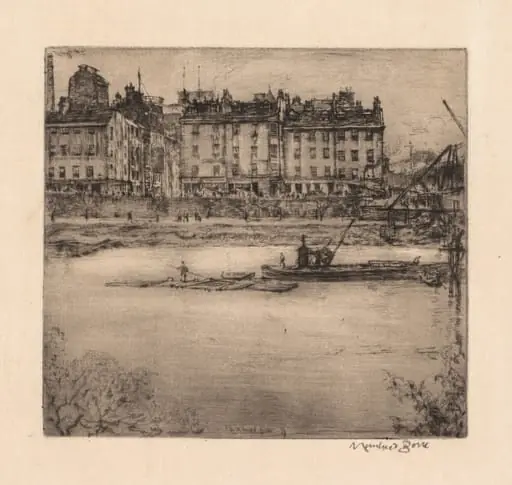
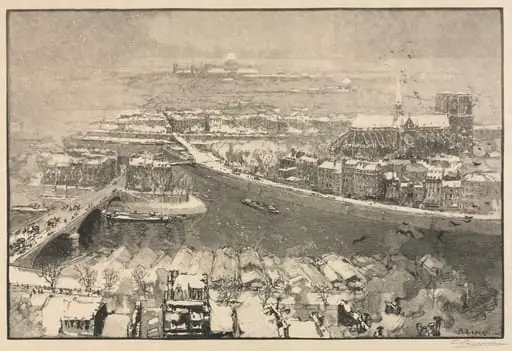
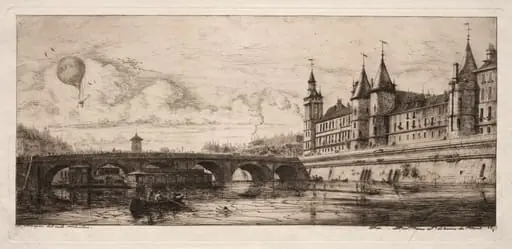
Quai de l'Hôtel de Ville is a print by the Impressionist artist Auguste Lepère. It dates from 1886 and is held in the collection of the Cleveland Museum of Art.
About this work
Overview
Lepère, known for revitalizing wood engraving as a fine art medium, used the technique to render the quiet stillness of a frozen urban riverside.
Created in 1886 by French artist Auguste Louis Lepère, this wood engraving captures a winter scene along the Seine near Paris’s Hôtel de Ville. Lepère, known for revitalizing wood engraving as a fine art medium, used the technique to render the quiet stillness of a frozen urban riverside. The work reflects his interest in everyday urban life and the potential of printmaking to convey atmospheric detail with precision.
Subject & Meaning
The scene portrays ordinary Parisians navigating a snow-covered quay, their figures bundled against the cold. A clock tower rises above the rooftops, anchoring the composition in a recognizable civic space. Boats frozen in the ice and a bare tree bending over the bank suggest the pause of winter. The image avoids grandeur, instead emphasizing the subdued rhythm of daily life in a city hushed by snow.
Technique & Style
Lepère employed wood engraving, carving fine lines into a hardwood block to achieve subtle tonal contrasts. His loose, rapid strokes convey texture—snowfall, wool coats, ice cracks—without overdetailing. The composition favors asymmetry and atmospheric depth, with the tower providing vertical counterpoint to the horizontal riverbank. The technique allows for both clarity and spontaneity, aligning with contemporary interest in capturing transient moments.
History & Provenance
Lepère produced this print during a period of renewed interest in hand-printed wood engravings in late 19th-century France. He was part of a small circle of artists seeking to elevate the medium beyond commercial illustration. While the print’s early ownership is undocumented, it was likely circulated among collectors and print societies interested in modern, non-academic art forms.
Context
In the 1880s, Paris was undergoing rapid modernization, yet artists like Lepère turned to quieter, overlooked corners of the city. His focus on winter scenes paralleled broader European trends in depicting weather and light, though he avoided the brushwork of Impressionist painting. Instead, he used the controlled precision of engraving to evoke similar moods—stillness, transience, and the quiet beauty of ordinary moments.
Legacy
Lepère’s work contributed to the recognition of wood engraving as a legitimate artistic medium in Europe. Though less known today than his painter contemporaries, his prints influenced later generations of printmakers who valued technical discipline and intimate subject matter. 'Quai de l'Hôtel de Ville' remains a quiet testament to the artistic potential of everyday urban observation.
Artist & collection
Artist
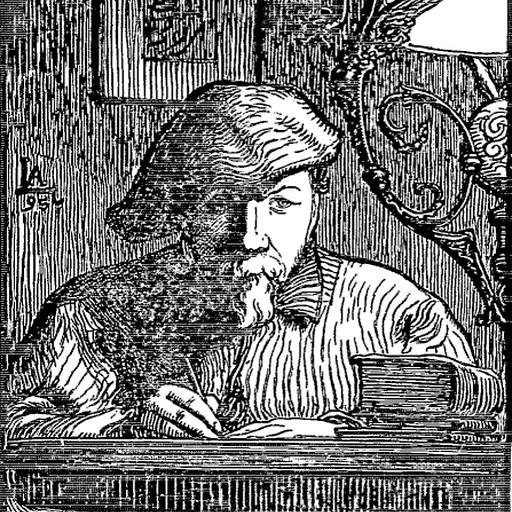
Louis-Auguste Lepère (30 November 1849 – 20 November 1918) was a French painter and etcher. Lepère is also considered a leader in the creative revival of wood engraving in Europe.

![[Large Steamer Ship at Dock, Paris], by Auguste Lepère](https://artifactworldgallery.com/img/auguste-lepere--large-steamer-ship-at-dock-paris--ed31099e42153820-w320.webp)