Artwork
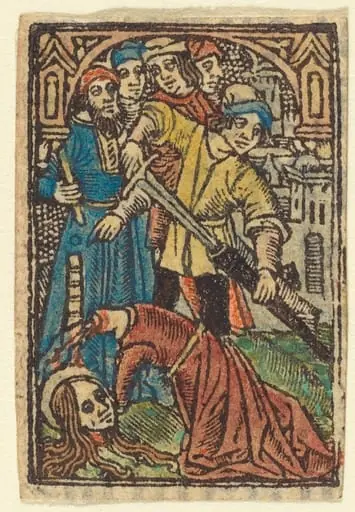
Martyrdom of a Saint
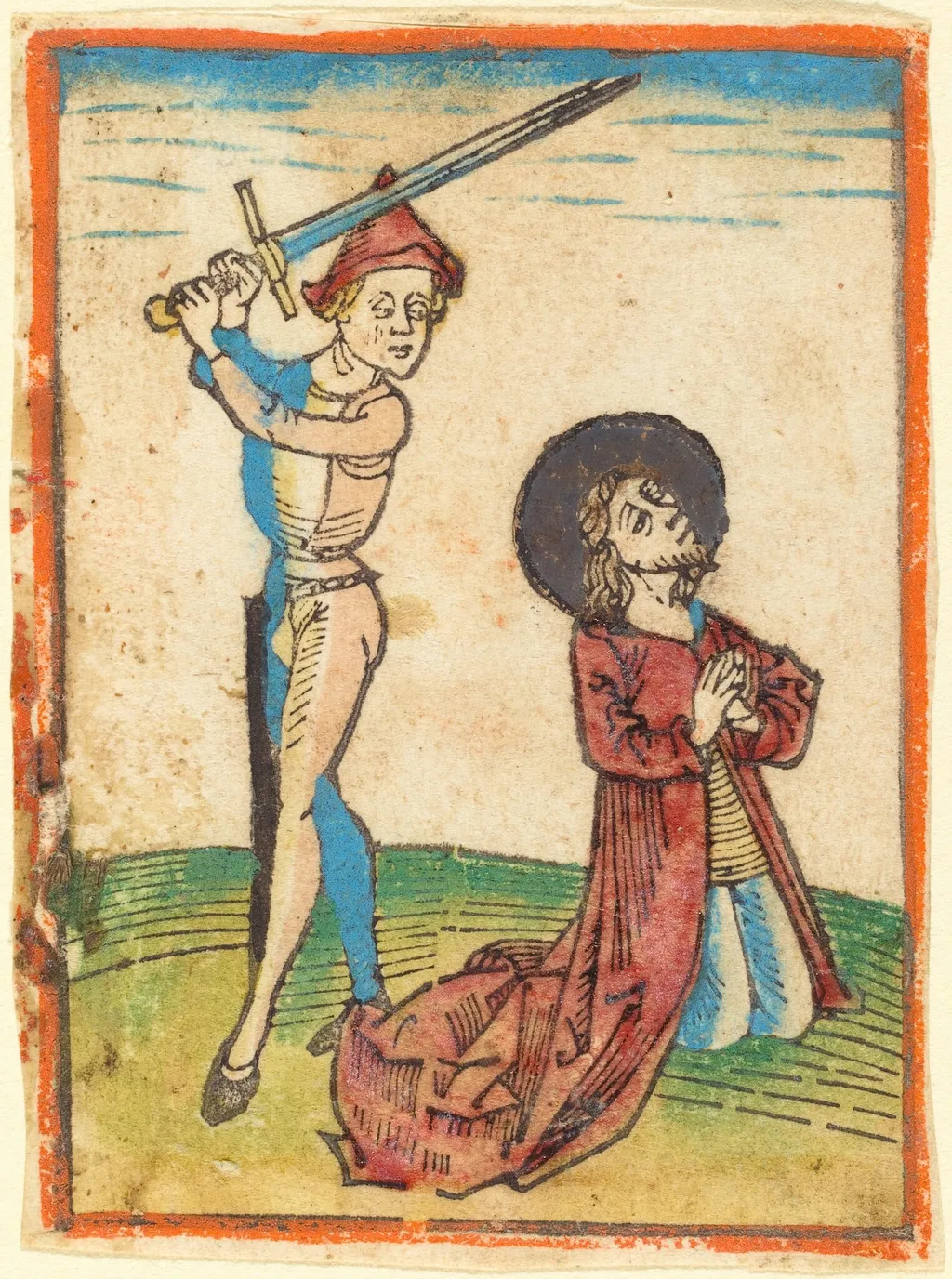
Martyrdom of a Saint is an ink print by the Renaissance artist German 15th Century. It dates from 1480 and is held in the collection of the National Gallery of Art.
About this work
Overview
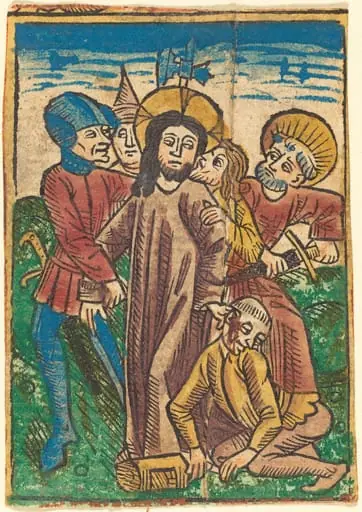
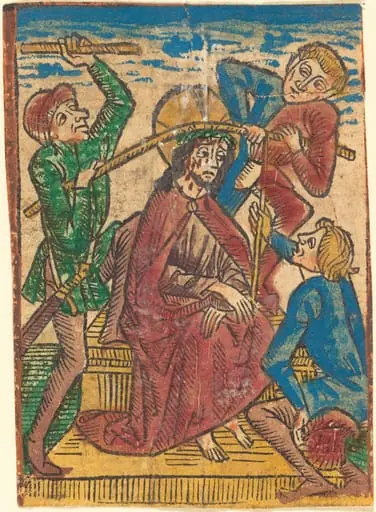
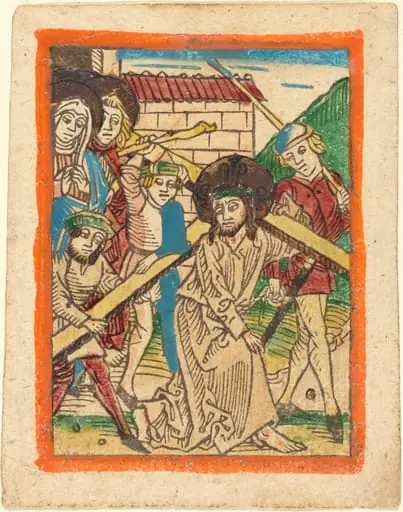
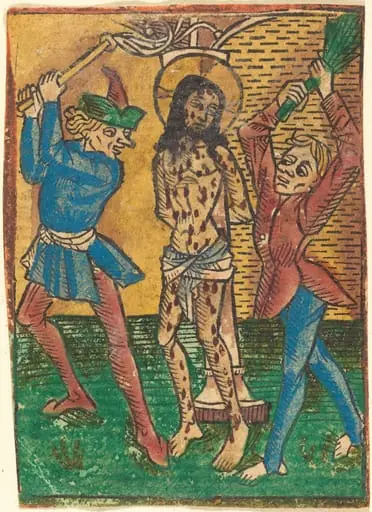
The work is a hand‑colored woodcut titled *Martyrdom of a Saint*. Executed on paper, the image depicts a kneeling figure of a saint confronted by armed soldiers, their swords raised. A vivid spray of red blood spreads across the ground, while a halo behind the saint is highlighted with gold leaf. The piece employs a palette of red lake, green, yellow, blue, rose, gold and orange applied by hand.
Subject & Meaning
The composition centers on the saint’s martyrdom, emphasizing sacrifice through the stark contrast between the calm, kneeling figure and the threatening soldiers. The halo and gold background suggest sanctity, while the surrounding violence underscores the narrative of faith confronted by persecution.
Technique & Style
Woodcut printing allowed for relatively rapid production of multiple copies, yet each impression was individually hand‑colored. The artist brushed pigments onto the printed outline, using red lake for blood, green for the saint’s cloak, and gold leaf for the halo, creating a vivid, multi‑colored surface that retains its intensity after five centuries.
History & Provenance
The print dates from the early modern period, a time when hand‑colored woodcuts were popular for disseminating religious imagery. Its survival in such condition indicates careful preservation, though specific details of its ownership history are not recorded in the available information.
Context
During the era of its creation, woodcuts served both devotional and didactic purposes, reaching a broad audience beyond elite patrons. The vivid coloration and dramatic subject matter reflect contemporary tastes for emotionally charged religious scenes intended to inspire piety.
Legacy
The work exemplifies the intersection of print technology and painterly color, illustrating how artisans enhanced reproducible images with individualized hand‑coloring. Its enduring visual impact continues to inform studies of early modern religious printmaking and the material culture of devotional art.
Artist & collection

Artist
This 15th-century German artist carved vivid religious scenes into metal and wood, then hand-painted them in bright, symbolic colors.

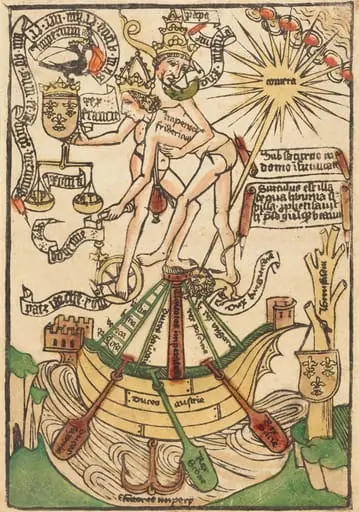 Allegory of the Meeting of Pope Paul II and Emperor Frederick III
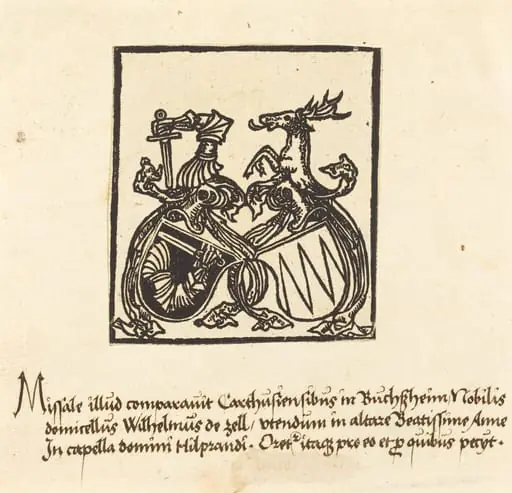 Bookplate of Wilhelm von Zell
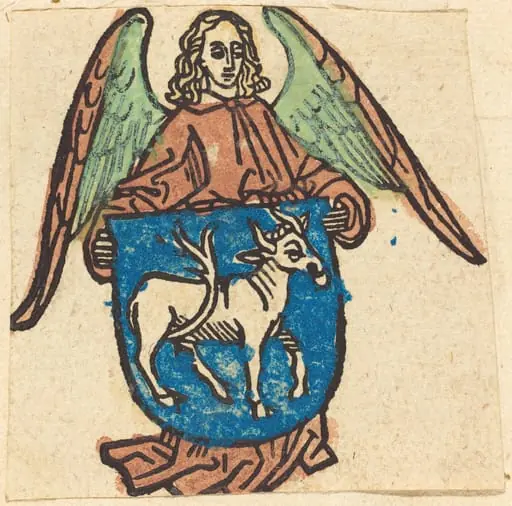 Bookplate of Hilprand Brandenburg of Bibrach
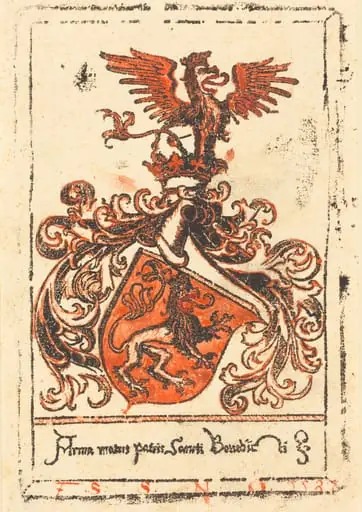 Bookplate of the Abbey of Ottobeuren
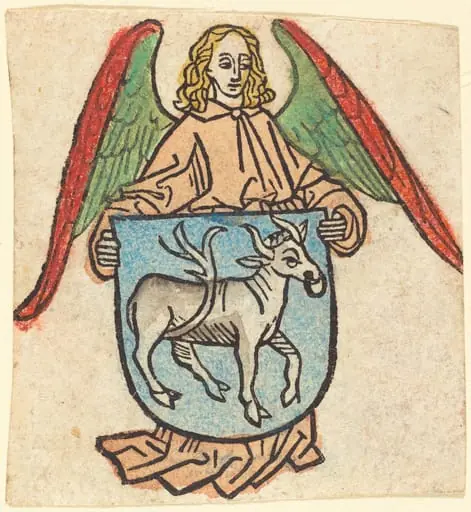 Bookplate of Hilprand Brandenburg of Bibrach
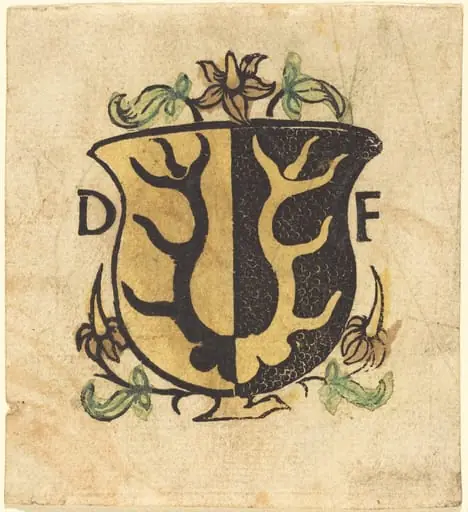 Bookplate of Dominicus Frauenfelder
![Studies for Six Figures (sheet from a model book) [recto], by German 15th Century](https://artifactworldgallery.com/img/german-15th-century--studies-for-six-figures-sheet-from-a-model-book-recto--4837429e0755bc3f-w320.webp) Studies for Six Figures (sheet from a model book) [recto]
Studies for Six Figures (sheet from a model book) [recto]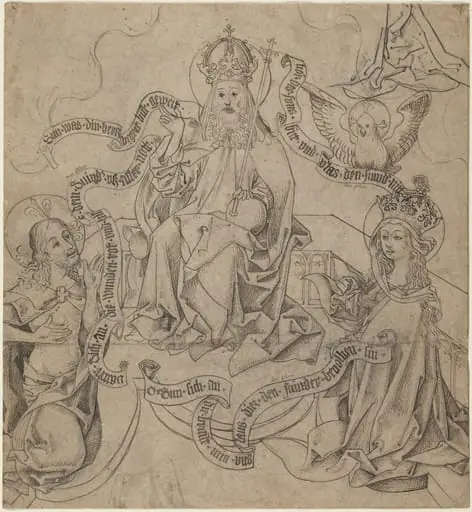 Christ and Mary Interceding with God the Father