Artwork
The Prima Macchina for the Chinea of 1785: The Temple of Jupiter Begun by Tarquinius Priscus with the Marvel of Accius Naevius
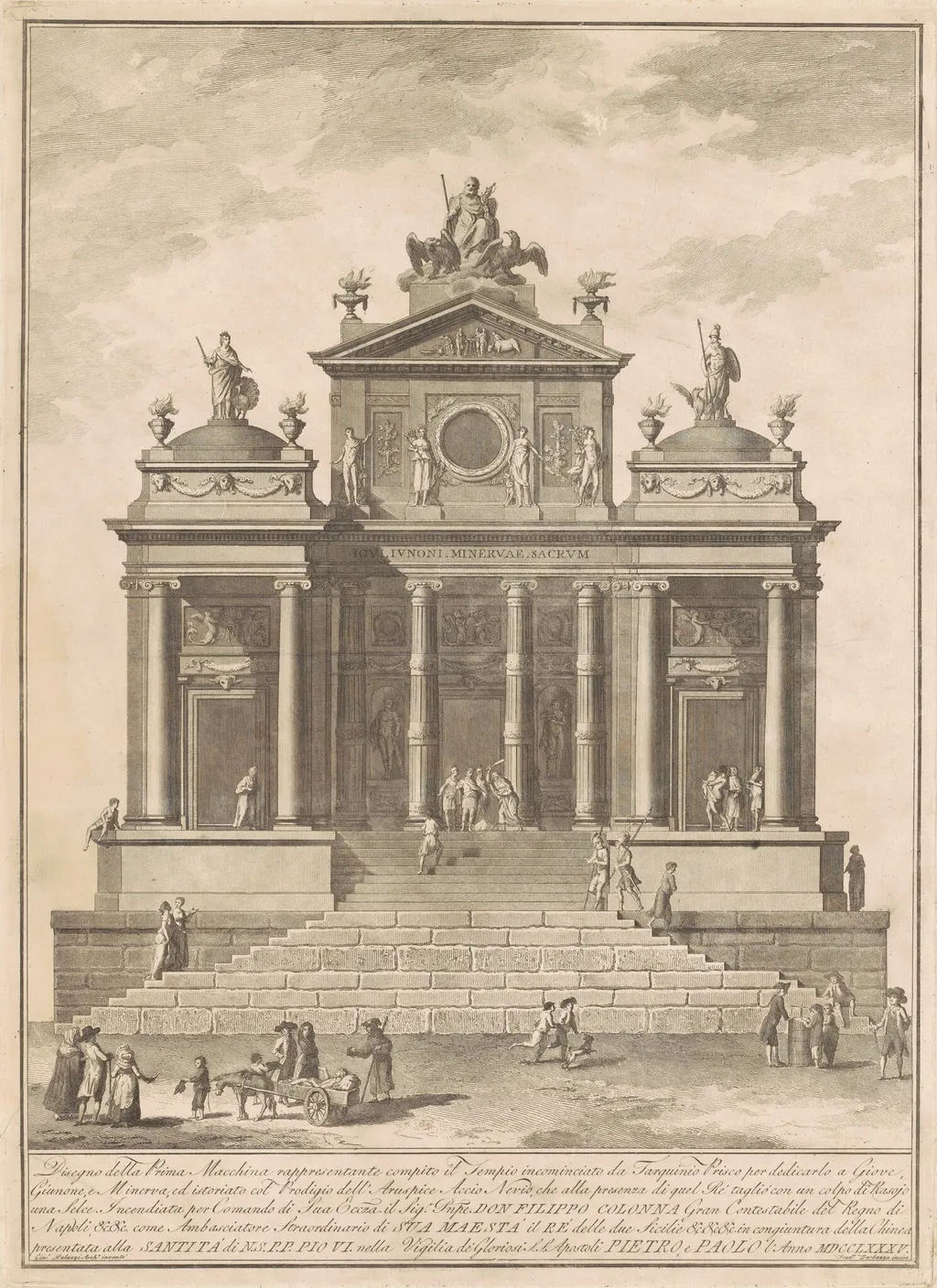
The Prima Macchina for the Chinea of 1785: The Temple of Jupiter Begun by Tarquinius Priscus with the Marvel of Accius Naevius is an ink print by the Romanticist artist Francesco Barbazza. It dates from 1785 and is held in the collection of the National Gallery of Art.
About this work
Some figures stand on the steps or near the base, while others work below, like moving a cart or carrying tools.
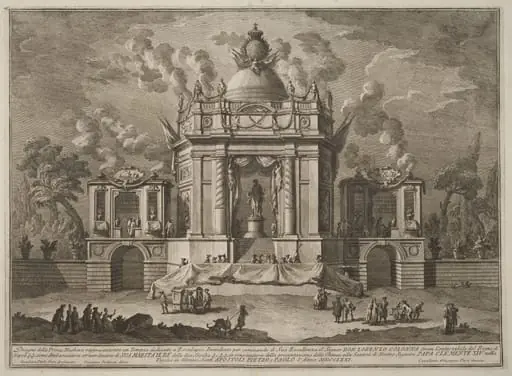
This drawing shows a grand, fake temple built for a parade. It has tall columns, statues on the roof, and people walking around it. Some figures stand on the steps or near the base, while others work below, like moving a cart or carrying tools. The temple’s front has carvings and a round window, and the whole scene looks like a stage set.
The text below says this was made for a special event in 1785, mixing history with theater. The temple is named after Jupiter, but it’s not real—it’s a temporary structure for a show.
If you like this kind of detailed drawing, look up etching to see how artists create these precise lines.
Overview
This 1785 etching by Francesco Barbazza depicts a fantastical architectural structure. The print showcases a grand, temporary temple constructed for a ceremonial event.
Subject & Meaning
The scene represents the Temple of Jupiter, begun by Tarquinius Priscus, incorporating the legend of Accius Naevius. The image blends historical reference with theatricality, featuring statues, ornate carvings, and numerous figures interacting with the temple.
Technique & Style
Executed in etching, the print is characterized by precise lines and detailed renderings of the temple's architecture and surrounding figures. The level of detail suggests a high degree of technical skill.
History & Provenance
Created for the Chinea of 1785, a special ceremonial event, this print documents a temporary structure built for the occasion. The Chinea was an annual festival held in Rome.
Context
The Prima Macchina was part of a larger tradition of constructing elaborate, ephemeral structures for ceremonial purposes. Such events often featured a mix of history, mythology, and spectacle.
Artist & collection


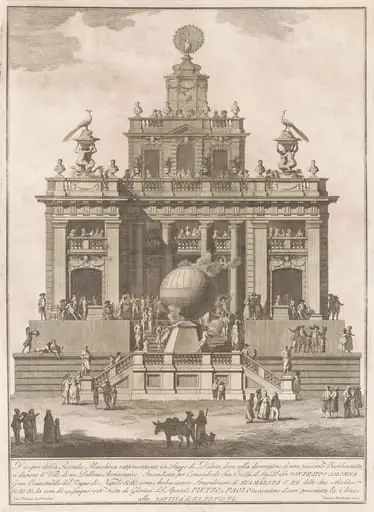 The Seconda Macchina for the Chinea of 1785: A Pleasure Palace with an Air Balloon
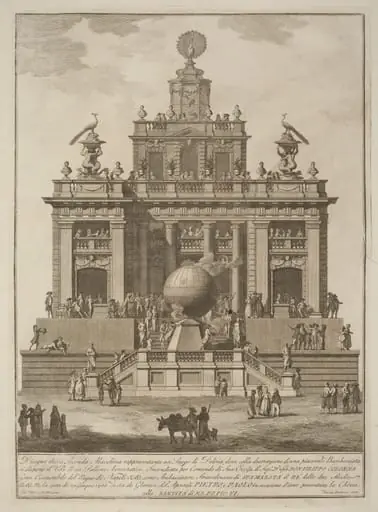 The Seconda Macchina for the Chinea of 1785: A Pleasure Palace with an Air Balloon
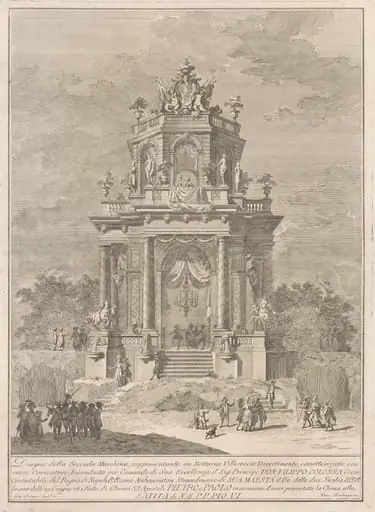 The Seconda Macchina for the Chinea of 1782: A Countryside Festival at Night
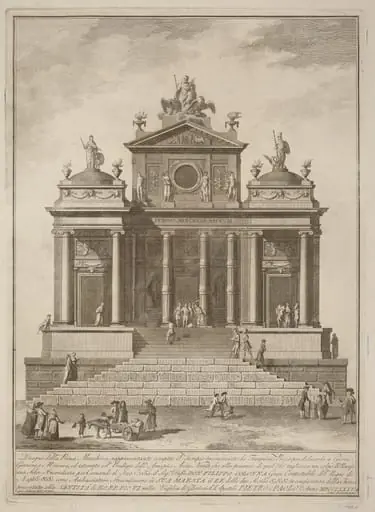 The Prima Macchina for the Chinea of 1785: The Temple of Jupiter Begun by Tarquinius Priscus with the Marvel of Accius Naevius
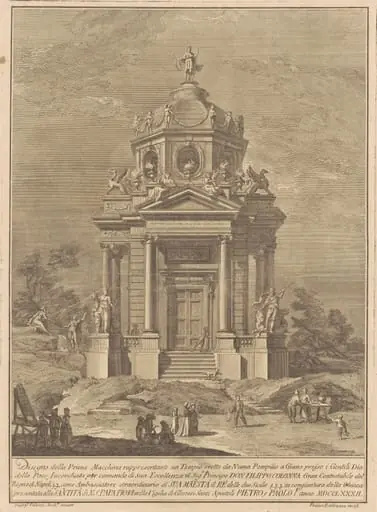 The Prima Macchina for the Chinea of 1782: The Temple of Janus Built by Numa Pompilius
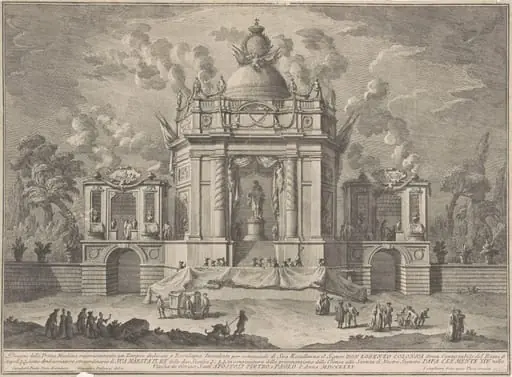 The Prima Macchina for the Chinea of 1771: The Temple of Asclepius
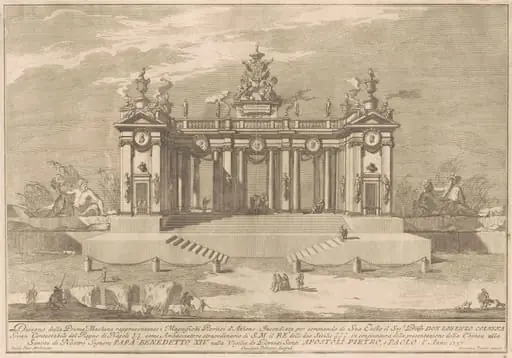 The Prima Macchina for the Chinea of 1757: The Colonnade of the Athenian Lyceum
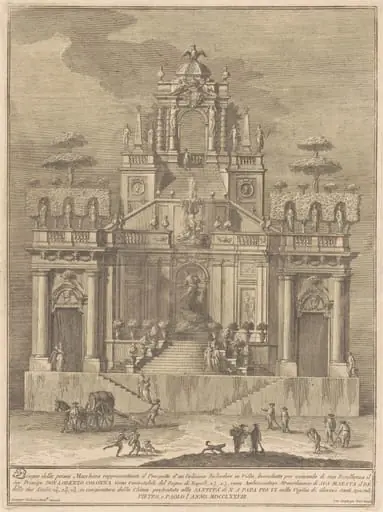 The Prima Macchina for the Chinea of 1778: A Countryside Belevedere with Hercules and Antaeus
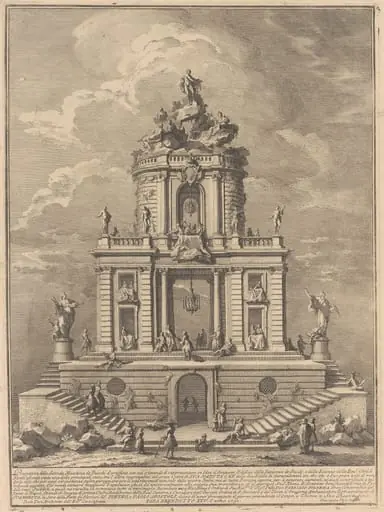 The Seconda Macchina for the Chinea of 1751: The Palace of Wisdom, Studies, and the Sciences
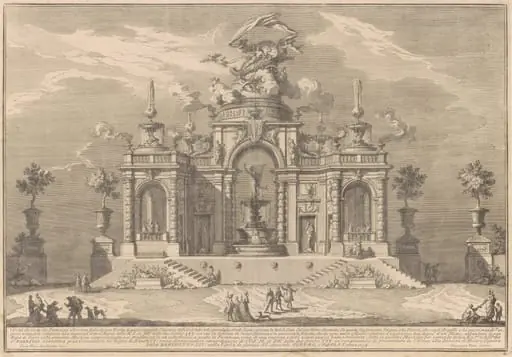 The Prima Macchina for the Chinea of 1754: The Palace of Venus in Cyprus
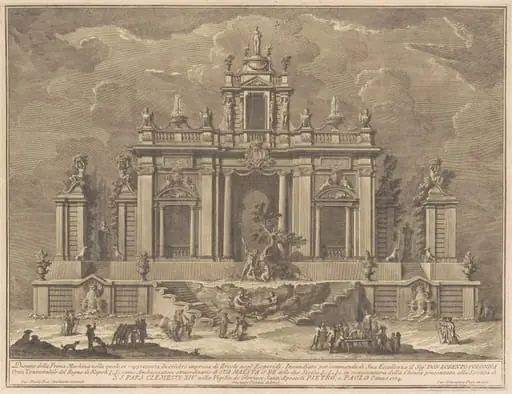 The Prima Macchina for the Chinea of 1774: Hercules and the Dragon in the Garden of the Hesperides
 The Prima Macchina for the Chinea of 1771: The Temple of Asclepius
 The Prima Macchina for the Chinea of 1751: Triumphal Arch for Roger I of Sicily